In 2026, the era of "guessing" what makes a viewer click is officially dead. For over a decade, creators relied on a mixture of gut instinct and hours of manual labor in tools like Adobe Photoshop or Canva to craft the perfect YouTube thumbnail. But as the Generative AI in Content Creation market skyrockets to $24.08 billion this year, according to Precedence Research, the technical friction of design has been replaced by the precision of data science.
Today, over 80% of top YouTube creators have fully integrated AI-native workflows into their production pipelines. We aren't just making "pretty" images anymore; we are using AI eye tracking for thumbnails to predict human behavior before a video even goes live. If you are still moving pixels around manually, you aren't just slow—you're likely leaving a 35% increase in CTR on the table.
The Death of Manual Design: Why Creators are Ditching Canva and Photoshop
The primary reason creators are ditching Canva and Photoshop in 2026 isn't just about speed—it's about the integration of predictive analytics. While manual tools offer infinite creative freedom, they offer zero feedback. A designer might spend two hours on a high-contrast layout, only to have the YouTube algorithm ignore it because the "curiosity gap" wasn't wide enough.
Specialized platforms like Pikzels and Juma have shifted the focus from execution to judgment. As Nabil Bashir, a leading thumbnail expert, recently noted in a YouTube Analysis, AI is now better than a beginner designer at understanding visual hierarchy. The cost of a professional designer has climbed to $150 per image, while AI suites like vidIQ offer unlimited generation for a fraction of the price.
"AI isn't just a tool; it's a substitute for the technical friction of design. We are transitioning to generative-AI-centered production." — Samuel Goldberg, Stanford University Professor.
| Feature | AI Generation (2026) | Manual (Photoshop/Canva) |
|---|---|---|
| Time per Thumbnail | < 5 Minutes | 30 - 120 Minutes |
| Cost | ~$10/mo (Unlimited) | $50 - $150 per image |
| Data Integration | Built-in CTR prediction | Intuition only |
| Skill Barrier | None (Prompt-based) | High (Technical mastery) |
Moving Beyond Aesthetics: Real-Time Heatmapping and Eye-Focus
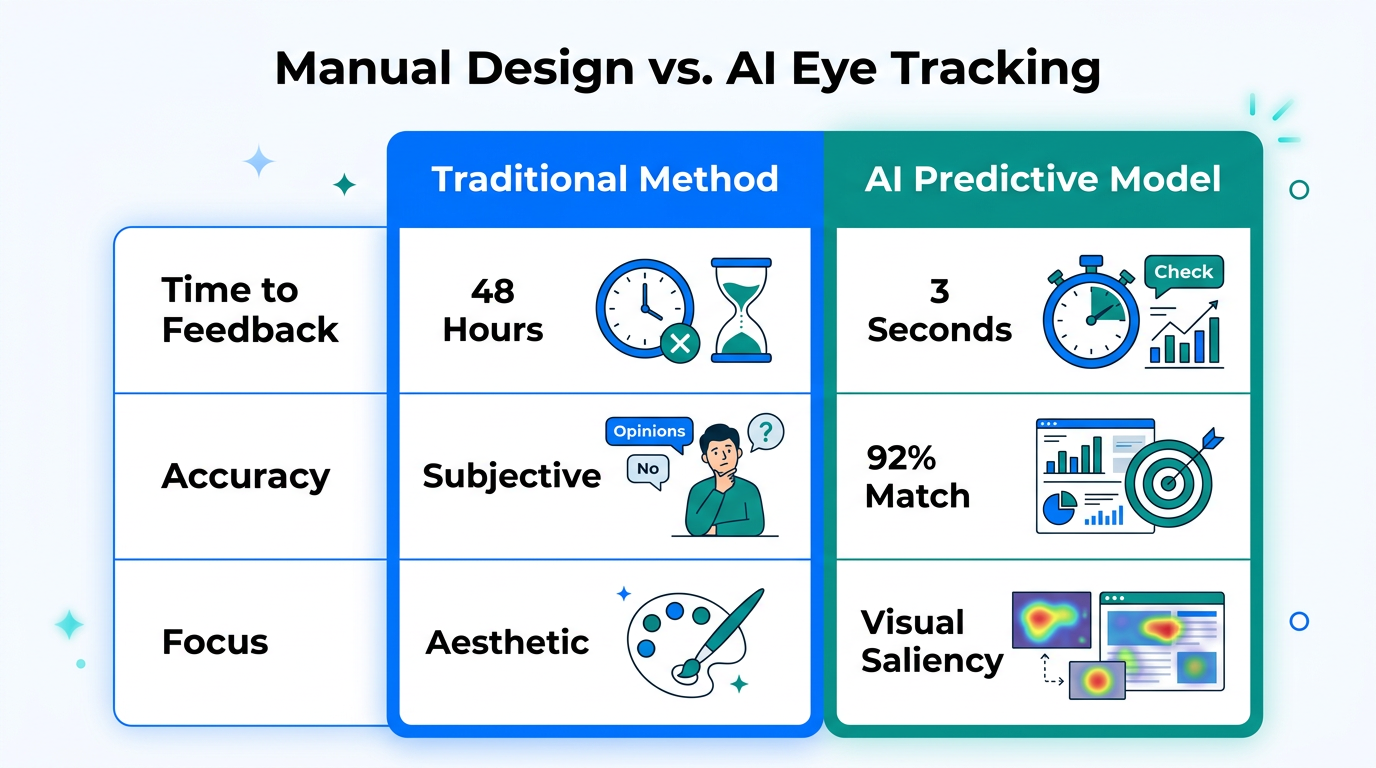
The most significant breakthrough this year is the democratization of AI eye tracking for thumbnails. In the past, eye-tracking was a lab-based luxury. Now, tools provide instant heatmaps that show exactly where a viewer's gaze will land on a 120px mobile screen. If your heatmap shows attention is focused on an empty corner rather than your subject's expression, you can pivot in seconds.
Digital strategist Geraldine explains on Medium that in 2026, the thumbnail is a micro-advertisement. Success is no longer about beauty; it’s about psychology. Platforms like Test My Thumbnails allow creators to A/B testing YouTube thumbnails 2026 style by comparing the curiosity gaps of different compositions before they even hit the Google Ads ecosystem or organic feeds.
Agentic AI: Turning Video Transcripts into Viral Visuals
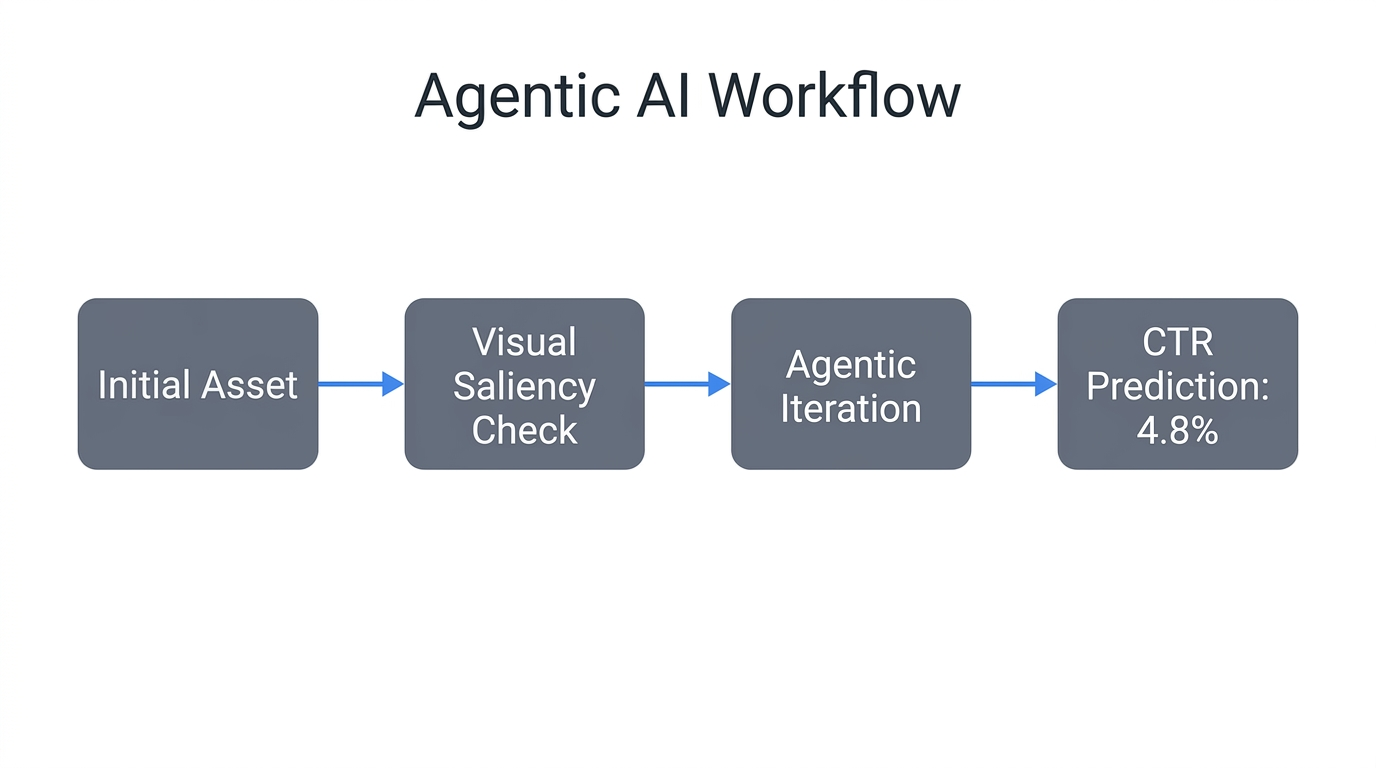
We have moved past simple prompt-to-image generators. 2026 is the year of "Agentic AI." Modern tools like Thumbmagic and vidIQ can now analyze an entire video transcript, identify the high-retention "climax," and automatically suggest five thumbnail concepts that match that specific moment. This ensures total congruency between the click and the content, which is vital for maintaining high average view duration.
This level of automation is why top influencer marketing agencies use Stormy AI to identify high-performing creators who are already leveraging these tech stacks. When a brand partners with a creator using a data-driven thumbnail design workflow, the ROI on sponsored content increases significantly because the distribution risk is minimized.
"If your heatmap shows attention is focused on an empty space, the AI has failed its primary job of psychology."
The Science of 'Netflix-style' Cinematic Compositions in 2026
The visual trends of 2026 have moved away from the neon-soaked, cluttered look of 2024. The current meta favors a cinematic "Netflix" aesthetic. This involves organic text embedding where words are placed behind subjects or integrated into the 3D environment using AI depth maps in tools like Framer. This creates a more premium, trustworthy feel that counters the "AI-Uncanny" look that many viewers have begun to ignore.
Furthermore, the "MrBeast Shocked Face" is seeing a decline in certain niches. A massive study of 300,000 viral videos in 2025 found that in tech and finance, thumbnails focused on an "Object of Interest" or a specific curiosity gap often outperformed faces by 12%, according to Search Engine Journal. To achieve this look without a studio, creators use "Face Kits" on platforms like Remaker AI to swap their high-res, branded expressions onto AI-generated cinematic scenes with perfect lighting matching.
The 5-Minute "Viral" Playbook: A Step-by-Step Guide
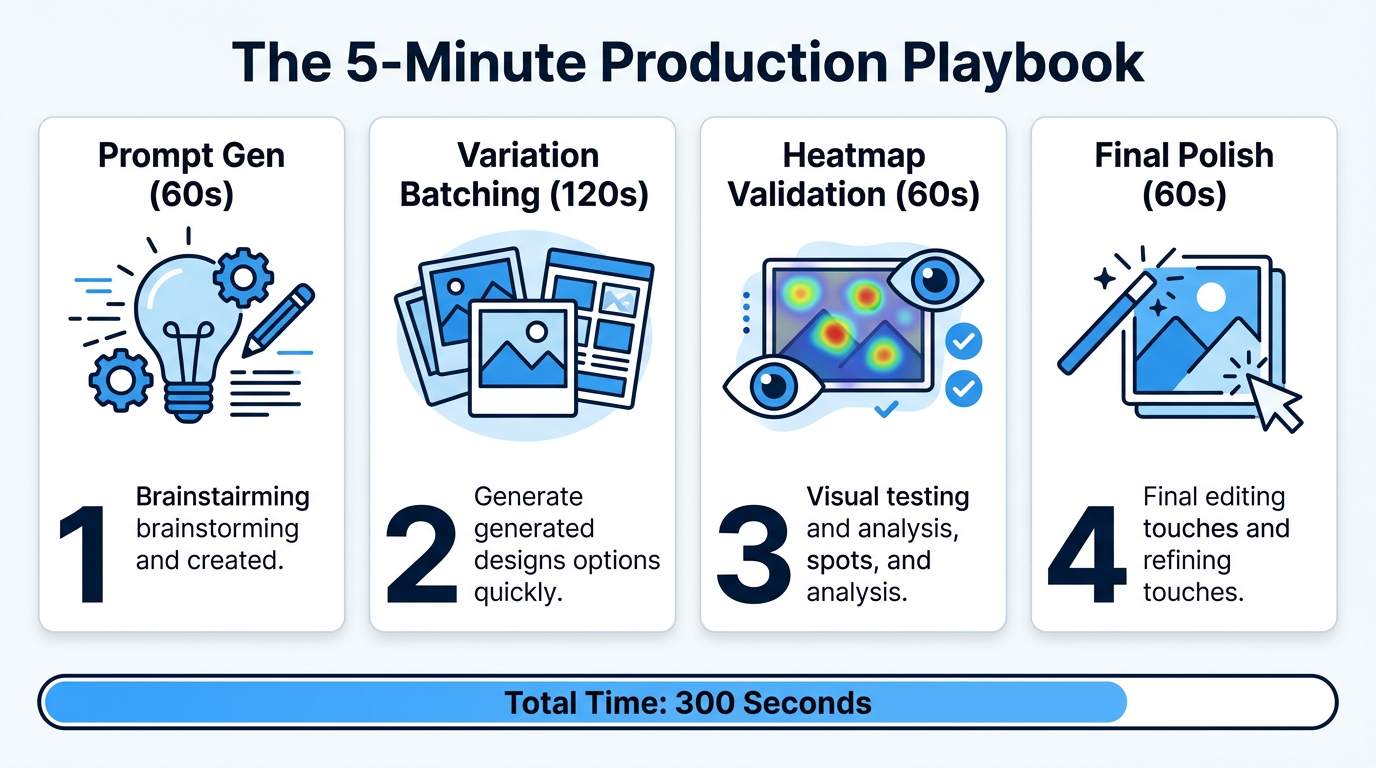
Ready to automate? Here is the exact agentic strategy used by high-volume creators to hit the 4.8% CTR benchmark in 2026.
Step 1: Contextual Input
Paste your video link or draft transcript into Test My Thumbnails. The AI will scan the content to identify the most "clickable" curiosity gap (e.g., the moment a product breaks or a secret is revealed).
Step 2: Persona Injection
Use a Face Swap tool to inject your pre-saved 8K "Face Kit" into the AI-generated scene. This ensures brand consistency without needing to set up a camera and lighting for every new video idea.
Step 3: Heatmap Validation
Run your top three variations through a YouTube CTR prediction tool. Check the eye-tracking heatmap to ensure the viewer's focus is hitting the "Object of Interest" and the text within the first 500 milliseconds.
Step 4: A/B Test & Deploy
Upload the winning variants to YouTube’s native "Test & Compare" feature. By using AI to generate three distinct concepts (e.g., "The Action," "The Result," and "The Mystery"), you give the algorithm the best possible data to work with.
Navigating the Limitations: The Uncanny Valley of 2026
Despite the power of AI, there are still pitfalls. Research from MIT CSAIL shows that viewers are developing "ad blindness" toward overly smooth, plastic-looking AI faces. This "Uncanny Valley" effect can trigger distrust.
To combat this, the most successful creators in 2026 use a hybrid workflow. They use AI for the heavy lifting—backgrounds, 3D assets, and lighting—but perform the final "judgment-based" tweaks in tools like Adobe Express to add film grain, realistic textures, or slight imperfections that signal human authenticity.
"In 2026, the market has shifted from how to use Photoshop to knowing which AI output will actually make someone click."
The Future of Data-Driven Design
The transition from manual design to data-driven thumbnail design is no longer optional for those who want to compete in the 2026 creator economy. By ditching Canva and Photoshop for agentic AI workflows, you aren't just saving 90% of your production time—you are gaining a statistical advantage that intuition alone cannot match.
Whether you are a solo creator or a brand managing hundreds of influencers, the goal remains the same: capture attention in a fraction of a second. Using AI eye tracking for thumbnails and rigorous A/B testing ensures that every video you publish has the highest possible chance of going viral. Stop guessing, start predicting, and let the data lead your creative strategy.