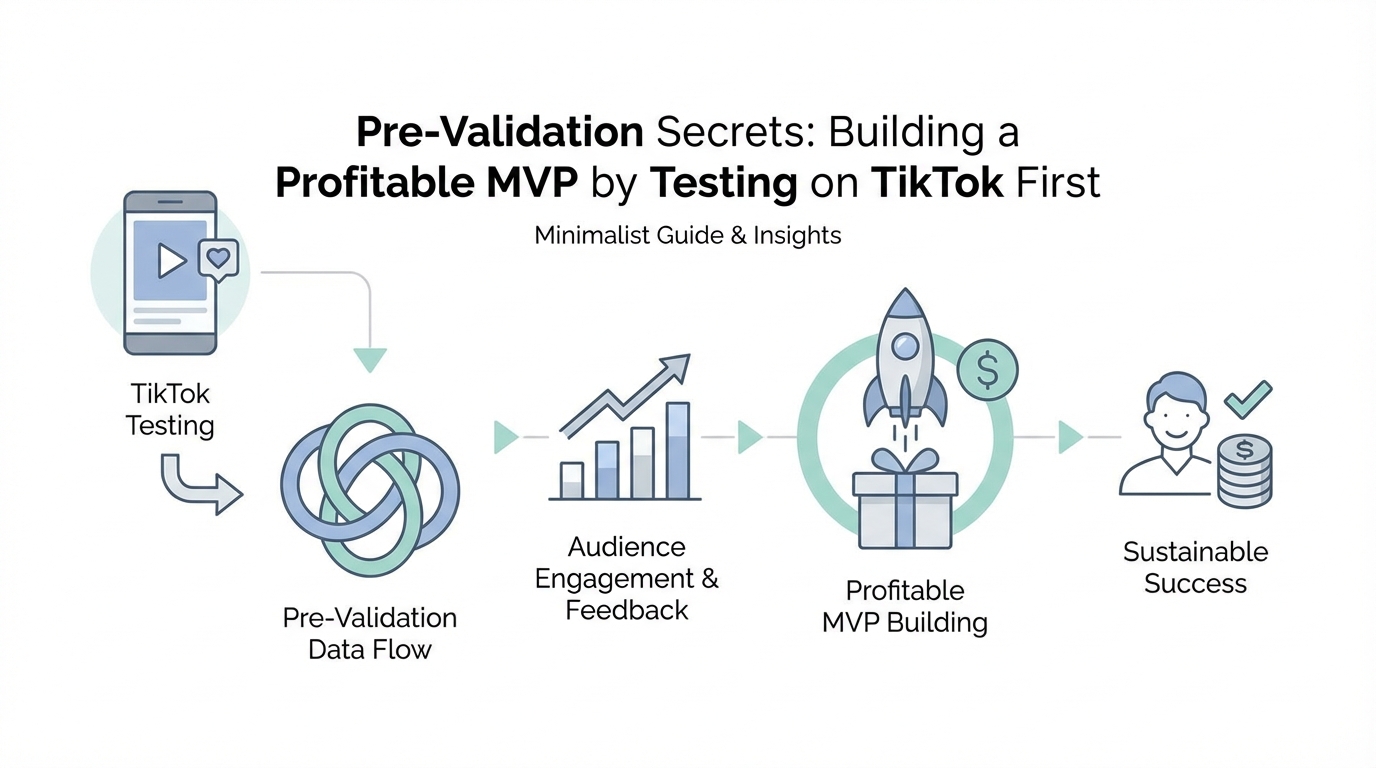
Most founders spend months, sometimes years, locked in a basement writing code for a product that no one actually wants. They launch with a whimper, burn through their savings on Google Ads, and eventually realize they missed the mark on product-market fit. But what if you could flip the script? What if you could prove your app was going to be a hit before you even hired a developer or opened a code editor? This is the story of Pushcroll, an app that reached $30,000 in monthly profit using a "Social-First" development strategy. By prioritizing app idea validation on TikTok before writing a single line of code, the founders bypassed the traditional struggle for mobile app product market fit and built a viral sensation in just 14 days.
The Zero-Product Launch: Validating on TikTok First
The journey of Pushcroll didn't start with a technical specification; it started with a single 15-second video. Alejandro, the co-founder, had a hypothesis: people want to stop doom scrolling, and they also want to get fit. He created a "fake" app demo—a video showing him doing push-ups to "unlock" his phone. At the time, the app literally did not exist. He was simply testing a concept to validate a startup idea on TikTok.
The video's hook was simple: "You could stop your doom scrolling addiction by doing 20 push-ups." He used a stock clip of an AI skeleton diagram over a person doing push-ups and asked his audience, "Should I build this?" The algorithm exploded. This mvp for mobile apps wasn't code; it was a conversation. Within hours, the comments were flooded with people demanding the download link. This is the ultimate form of validation—when the market is screaming for a solution before you've even built it.
Novelty is the primary currency of short-form video. The TikTok algorithm is highly sensitive to novel concepts that stop the scroll. By presenting a mobile app product market fit experiment as a visual "flex," Alejandro bypassed the need for a marketing budget. If you are struggling with app idea validation, your first step shouldn't be Figma; it should be a smartphone and a compelling hook.
Speed to Market: The 14-Day Lean Build

Once the validation was clear, the clock started ticking. To maintain the momentum of a viral video, you cannot wait months to launch. Alejandro turned to YC co-founder matching to find a technical partner. He met Mario, a developer who had already been working on a screen time app. Because Mario already had the "plumbing" for blocking apps, they were able to pivot his existing code into the Pushcroll MVP in just two weeks.
They didn't build a custom AI engine from scratch. Instead, they leveraged existing APIs to achieve lean app development. By using Google MediaPipe for visual recognition, they implemented a functional push-up counter that worked locally on the device. To find the right influencers to showcase these technical features, founders can use Stormy AI, an AI search engine that finds matching creators across TikTok and Instagram using natural-language prompts. This ensured high performance and addressed privacy concerns—two critical factors for early adopters.
The MVP was incredibly scrappy, consisting of only two main screens: a selection screen to choose which apps to block and the AI-powered push-up counter. They didn't even have a formal onboarding flow during the first week. They focused entirely on the core value proposition: no push-ups, no scrolling. This focus on the "atomic unit" of value is what separates successful lean app development from over-engineered failures.
The Skeleton Hack: Designing for Social-First Growth
Pushcroll’s growth wasn't just about the idea; it was about the visual appeal of the app on camera. When designing an app today, you must consider how it looks when someone records themselves using it. The "skeleton diagram" that tracks the user’s joints isn't just a technical necessity—it’s a visual hook that stops people on Meta Ads Manager or TikTok.
Every feature in your MVP should be evaluated through the lens of "Is this shareable?" Pushcroll shifted their AI detection from a side-view to a front-view specifically so users could record their faces while doing push-ups. This Social-First Development strategy makes it significantly easier to run influencer/UGC strategies because the app itself provides the content. If you're looking to scale, Stormy AI for finding UGC creators and influencers can help you find creators who specialize in this kind of high-energy, visually-driven content.
Key Visual Elements for Social Apps:
- High Contrast UI: Needs to be visible even on a grainy phone screen recording.
- Progress Visualization: Skeleton diagrams, filling bars, or changing colors that react in real-time.
- Flex Factor: Features that allow the user to show off an achievement (like 300 push-ups).
The 10% Conversion Playbook: Launch Week Incentives
The launch video for Pushcroll is a masterclass in driving app install campaigns. Alejandro posted a video announcing the app was live, but he added a powerful scarcity hook: Lifetime Free Premium for anyone who downloaded the app in the first week. This simple offer drove a 10% view-to-download conversion rate. Out of 175,000 views, they secured 20,000 downloads in days.
Standard benchmarks for view-to-download conversion usually hover around 1% or less. By using a time-limited "OG" incentive, Pushcroll turned passive viewers into active users. This strategy also helped seed their initial Discord community with their most loyal fans. For developers using Apple Search Ads, combining these organic spikes with paid search can create a powerful "halo effect" on the App Store rankings.
Step-by-Step Launch Strategy
- The Scarcity Hook: Offer a "Lifetime Free" or "Founder Member" status for the first 48-72 hours.
- The Share Trigger: Require users to share a video or invite a friend to lock in the lifetime deal.
- The Multi-Platform Rollout: Release on Android first to gather bug reports, then use the "hype" to fuel an even bigger iOS launch 14 days later.
Building a Community to Shape the Product
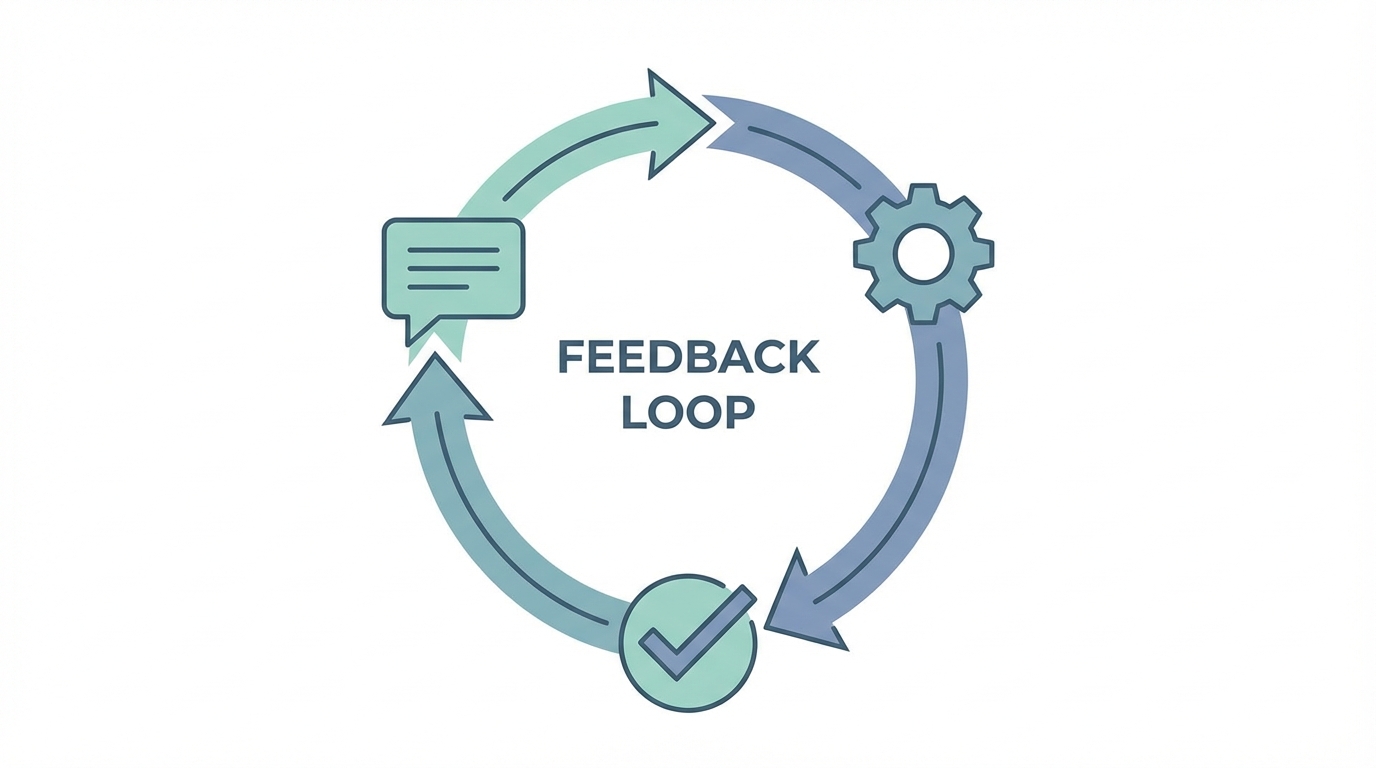
Pushcroll maintains a 4,000-person Discord community that acts as their R&D department. Instead of guessing which features to build next, they run polls. They ask users to vote on logo designs, onboarding screens, and new exercise types. This tight feedback loop allows them to turn user suggestions into live features within days.
For example, users suggested a "Minute Debt" feature where they could "borrow" screen time during a plane trip and pay it back with push-ups later. This feature alone significantly increased retention because it adapted to real-world user behavior. By listening to the "OG" users, the founders ensured they were reaching mobile app product market fit through qualitative data rather than just staring at a spreadsheet.
Monetization: The Hormozi Value Equation

To reach $30,000 in monthly profit, the founders had to move beyond the free lifetime offer and build a high-converting paywall. They redesigned their onboarding using Alex Hormozi’s Value Equation, which focuses on four levers: Dream Outcome, Perceived Likelihood of Achievement, Time Delay, and Effort/Sacrifice.
Their onboarding isn't just a signup form; it’s a consultative conversation. They ask the user about their specific goals—sleeping better, reducing anxiety, or getting jacked. They then show real research citations and social proof to increase the likelihood of achievement. By the time the user hits the paywall managed through Superwall, they are mentally committed to the solution. This "long-form" onboarding (sometimes 15+ screens) actually increases conversion rates because it educates the user on the value of the app before asking for money.
Automating Engagement: The ManyChat Hack
One of the most tactical secrets to Pushcroll's virality is their use of ManyChat automation. In every video, they tell users to "Comment 'APP' for the link." This serves two purposes. First, it triggers an automated DM with a direct download link, which has a higher conversion rate than a "link in bio." Second, it generates insane engagement metrics.
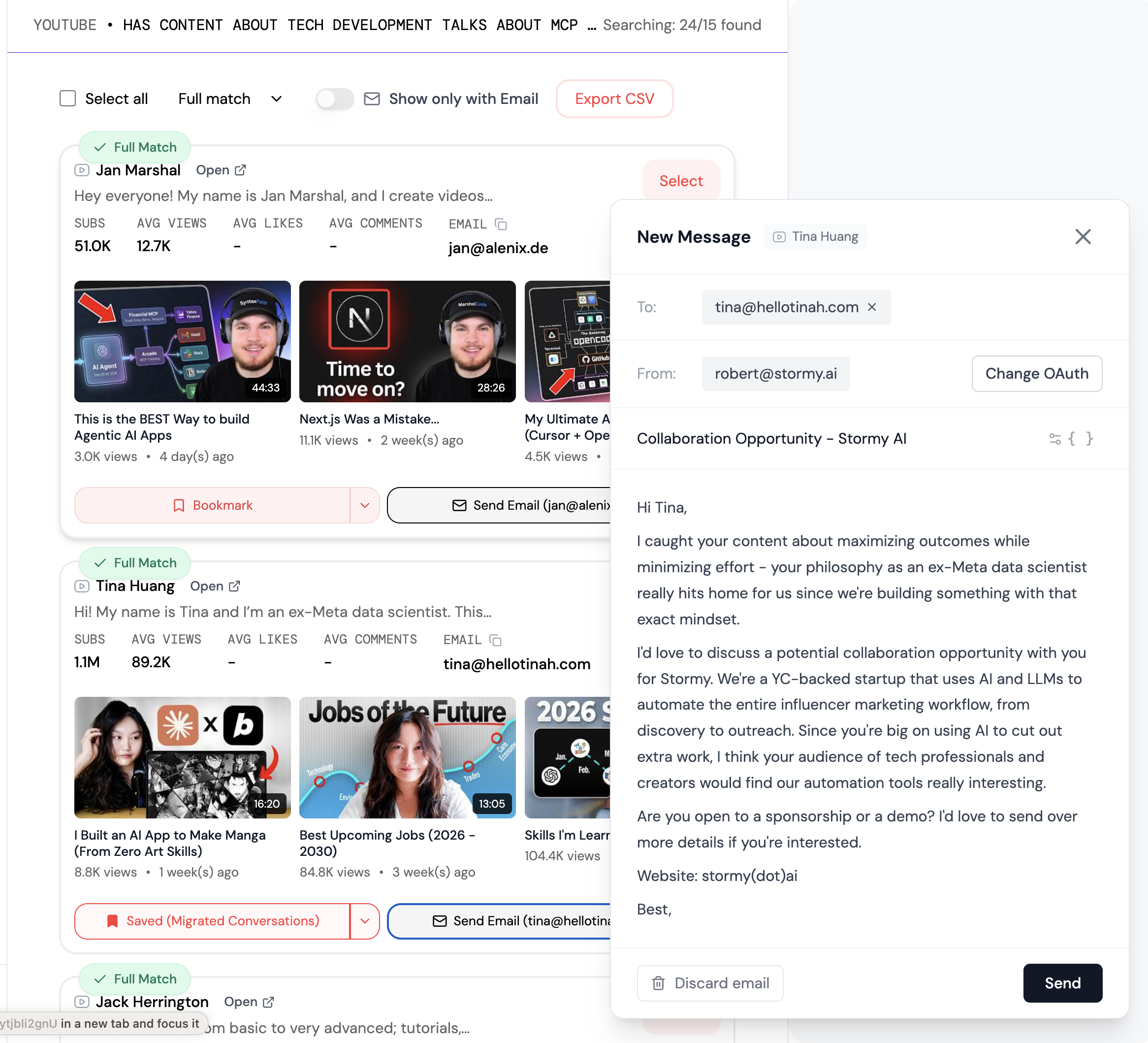
One of their videos received over 62,000 comments. To the Instagram and TikTok algorithms, a video with a 10% comment-to-view ratio is a signal to push it to millions of new users. By using tools like Stormy AI to find creators and manage an AI agent that automates outreach and follow-ups, you can create an "engagement loop" that feeds the algorithm for weeks after a video is posted.
Lean Budgeting: $30k/Month Without VC Funding

Pushcroll is a "pure profit" machine because the founders stopped spending money on what didn't work. Early on, they lost $2,000 on influencer marketing that failed to convert. They realized that paying big influencers for "shoutouts" was less effective than their own organic content system. To avoid fraud, you can use Stormy AI to vet creators, detecting fake followers and engagement fraud in seconds with deep audience quality reports.
They now focus on UGC (User-Generated Content) from students in the US to penetrate the American market. They've found that European audiences convert at half the rate of US users, so they prioritize American creators for their app install campaigns. If you want to replicate this, you can learn more about viral frameworks at specialized schools like the Mino Lee Academy, which teaches the science of the 3-second hook.
Conclusion: The Social-First Playbook
Pushcroll’s success proves that app idea validation on social media is the fastest path to profitability in 2024. By building an mvp for mobile apps that is visually shareable, using lean app development cycles to ship in 14 days, and leveraging engagement hacking via ManyChat, they created a $30k/month business without a single dollar of venture capital. Stop coding in the dark. Go find a viral hook, validate your idea on TikTok, and build only what the market is already asking for. The future of mobile apps is not built in a vacuum; it’s built in the comments section.