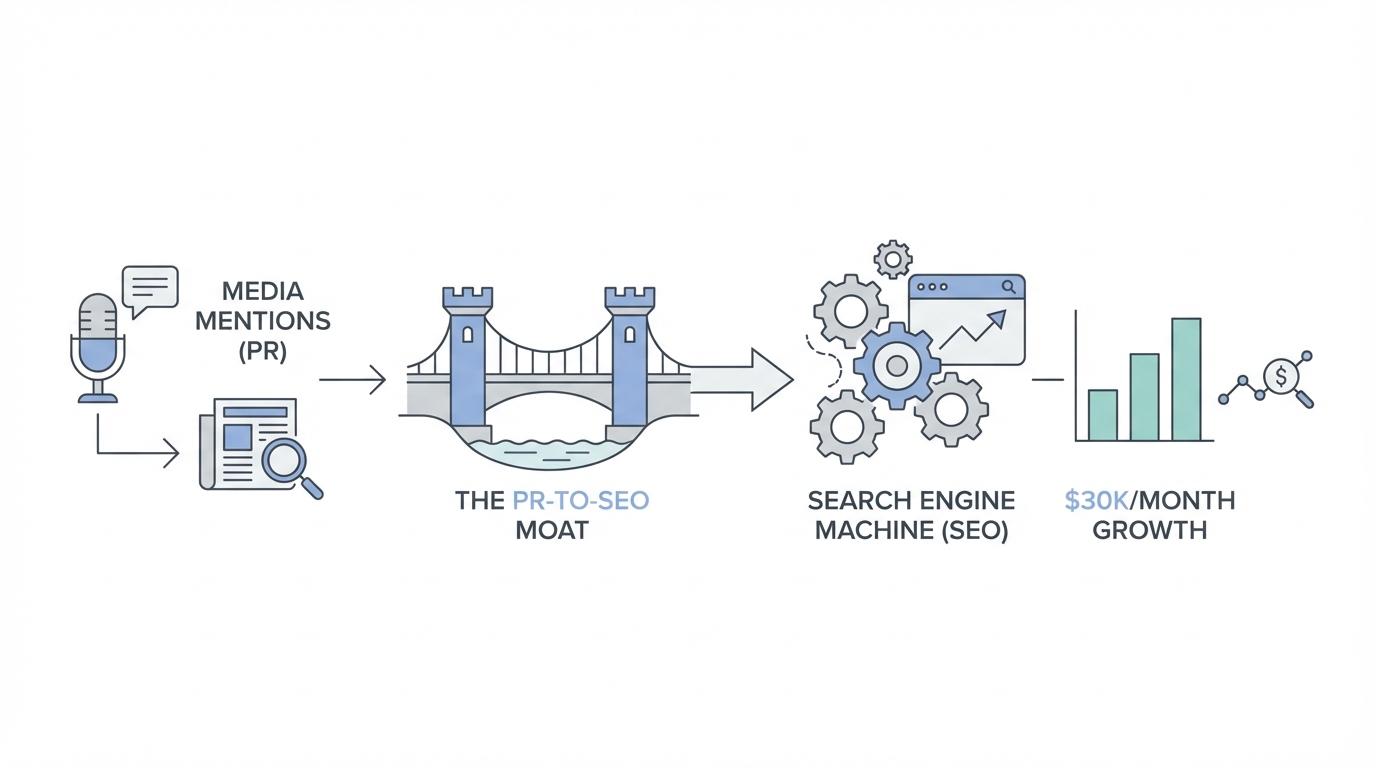
Most founders view a feature in the Wall Street Journal or CNBC as the ultimate finish line—a viral moment that will solve their user acquisition woes overnight. The reality is often more sobering. While a major media mention provides a temporary spike in traffic, it rarely results in a sustainable flow of paying customers. However, for the strategic marketer, these PR wins are not the end of the journey; they are the high-octane fuel for a massive startup SEO moat. By leveraging the Domain Authority (DA) granted by top-tier news outlets, you can leapfrog years of backlink building and start ranking for high-intent keywords immediately.
The PR Illusion: Why Viral Moments Aren't Enough
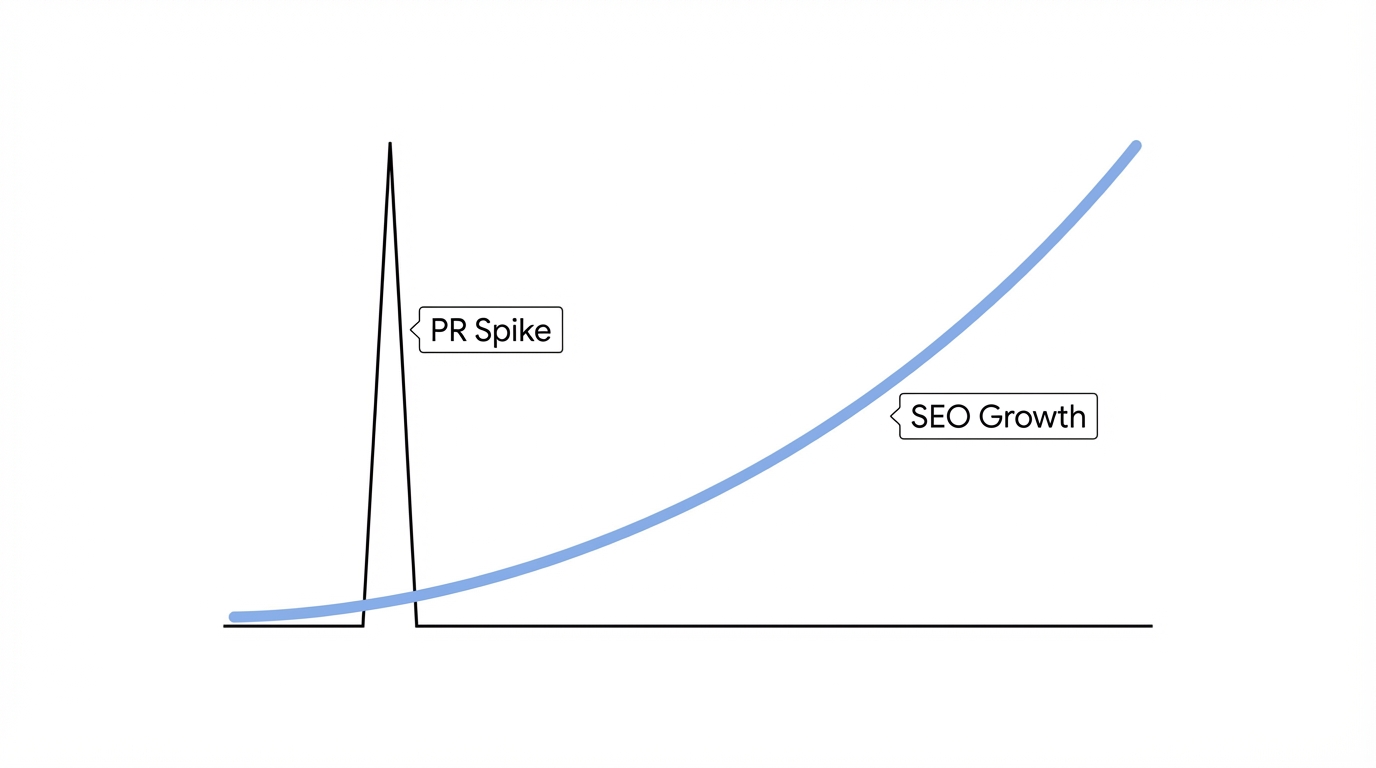
When Dimitri, the founder of YourMove AI, landed placements on Fox Business, Wired, and the Washington Post, he expected a flood of revenue. The app, which uses AI to help users navigate online dating, was perfectly timed for the AI explosion. Yet, as he noted, the PR itself didn't generate significant direct income. A feature on a major cable news network actually brought in fewer views than a single decent Reddit post. The "spike" is a vanity metric; the true value lies in the hyperlink embedded in that article.
These links from high-authority domains signal to search engines that your site is a trusted source. In the world of organic growth for apps, this is often referred to as having "domain authority at the door." Instead of spending years begging for guest posts, Dimitri used the prestige of a Wall Street Journal mention to establish a foundation that allowed his content marketing playbook to actually work. This transition from viral news to sustainable SEO eventually scaled his business to $30,000 a month at an 80% profit margin.
Phase One: Building the Authority Foundation

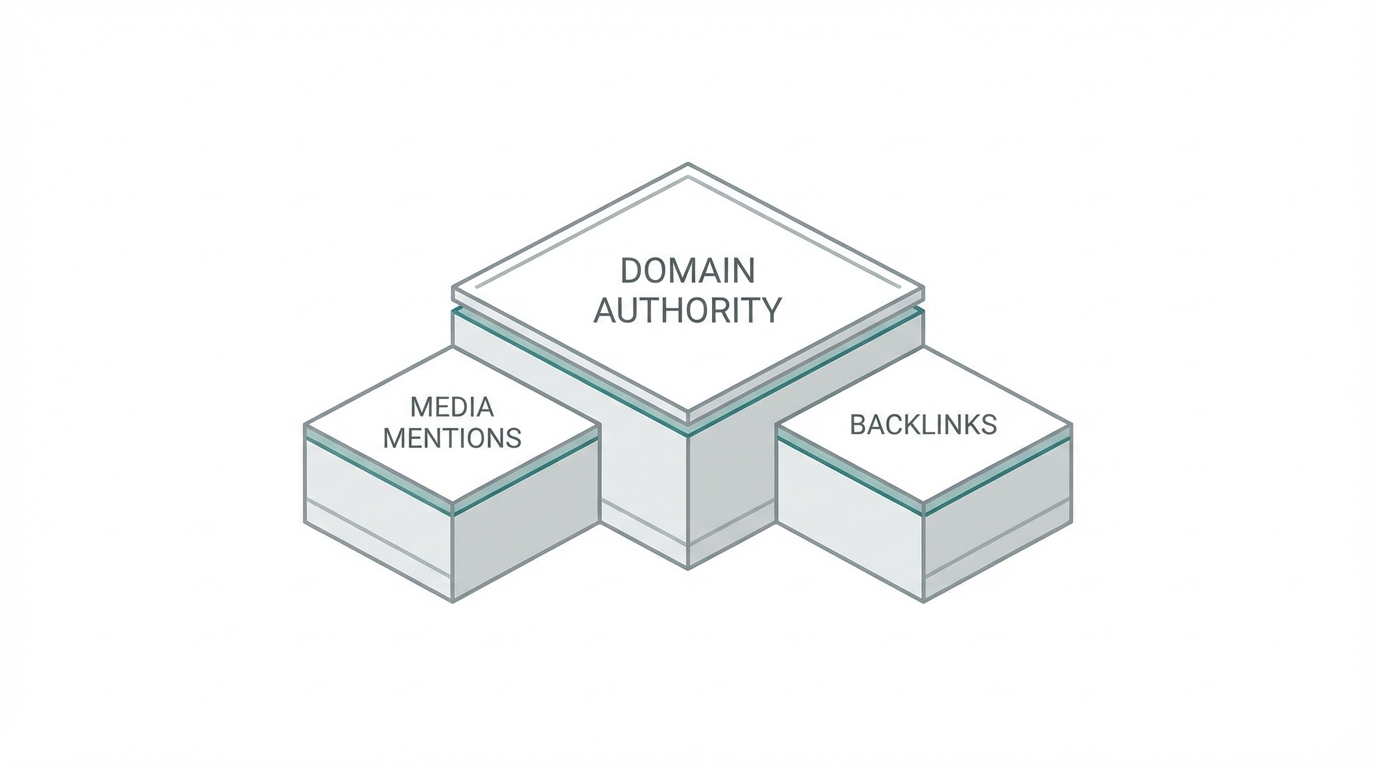
To build domain authority with PR, you must first understand that Google treats links from the CNBC or Newsweek differently than a link from a random blog. This authority is the "moat" that protects your rankings from competitors. If you are early to a niche—like Dimitri was with GPT-3 before ChatGPT became a household name—the novelty of your product is your best pitch.
Dimitri’s journey began with a "soft paywall" strategy, allowing the product to gain traction while he focused on authority. For many founders, especially those building in the mobile app space, this initial authority is what allows your landing pages to rank for competitive terms. If you are struggling to find the right angle for your content, Stormy AI is an AI-powered platform for creator discovery, especially for mobile app marketing and UGC campaigns, that can help you identify UGC creators who can generate authentic content that also attracts social mentions and potential media interest, further fueling your authority loop.
Phase Two: Identifying Latent Demand
Once your domain authority is established, the next step in the SEO strategy for startups is identifying "latent demand." Latent demand refers to existing search volume for problems your product solves. Unlike Meta Ads or TikTok, where you must "induce demand" by interrupting a user's scroll, Google Search captures users who are already proactively looking for a solution.
For YourMove AI, the team targeted keywords that users were already searching for, such as "pickup lines" or "how to text a crush." These are high-intent, low-competition keywords in the dating niche. By creating high-quality blog posts around these terms, Dimitri was able to capture users at the exact moment they felt the "pain" of not knowing what to say on a dating app. This is the essence of a painkiller vs. vitamin strategy: dating is a core human need, and solving a specific friction point (like a blank chat screen) is a high-value painkiller.
The Content Marketing Playbook for Apps

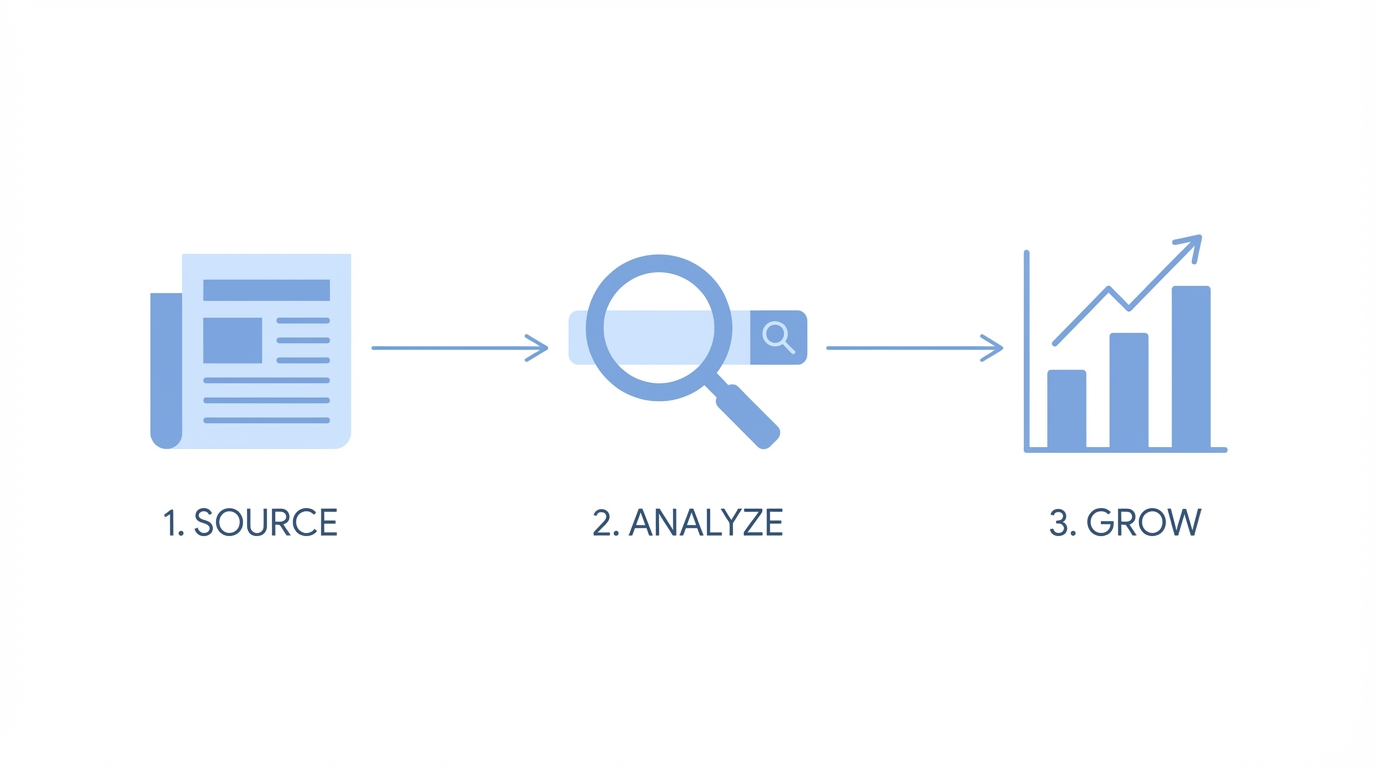
Scaling a content machine requires more than just writing a few articles. It requires a repeatable system. Dimitri built his SEO machine while still working a full-time job as a data science manager at OpenDoor. His secret? A team of specialized contractors managed through Upwork.
Step 1: Hire for Specialized Tasks
Don't look for a "general marketer." Dimitri at one point had 10 to 12 different contractors, most working only a few hours per week. He hired specialists for email sequences, Webflow management, and SEO-specific writing. By using his salary from his 9-to-5 to fund these roles, he could afford to be unprofitable while building the machine.
Step 2: Use Data to Guide Content
Leverage tools to see what is already working. For example, many mobile app founders use SpyTok to find viral trends or paywallexperiments.com to optimize their conversion funnels. In the content world, this means using Stormy AI to vet potential creators for quality while looking at what competitors are ranking for and creating "10x content"—articles that are significantly better, more data-driven, or more actionable than what currently exists.
Step 3: Bridge the Gap from Content to Conversion
Traffic is useless if it doesn't convert. YourMove AI used targeted internal ads within blog posts. If a user was reading an article about "100 good morning text messages," they would see a call-to-action (CTA) for an AI tool that generates personalized pickup lines. This contextual relevance is why SEO traffic often converts better than social traffic.
Case Study: YourMove AI’s Evolution
The success of YourMove AI wasn't an overnight miracle; it took two and a half years of grinding. For the first 18 months, the business made almost nothing. It took a year to hit the first $1,000 in monthly revenue. However, once the SEO machine—fueled by the PR mentions—kicked in, the growth became exponential. Within another year, the app hit $10,000, and a year after that, it peaked at $30,000.
Dimitri’s technical background in machine learning allowed him to build with OpenAI's early models (like DaVinci-2) before the ChatGPT craze. This early-mover advantage, combined with his "Ship It Sundays" community in New York, kept the momentum going. Even as a "non-marketer," he learned that the highest leverage activity wasn't coding the front-end, but managing the acquisition channels that brought in users.
For those looking to replicate this for mobile apps, finding UGC creators is often the modern equivalent of early-AI novelty. Using Stormy AI to find creators who can produce authentic content for your app can provide the initial social proof needed to catch the attention of journalists and major publications, starting the authority loop from scratch.
Understanding the Search Volume Ceiling
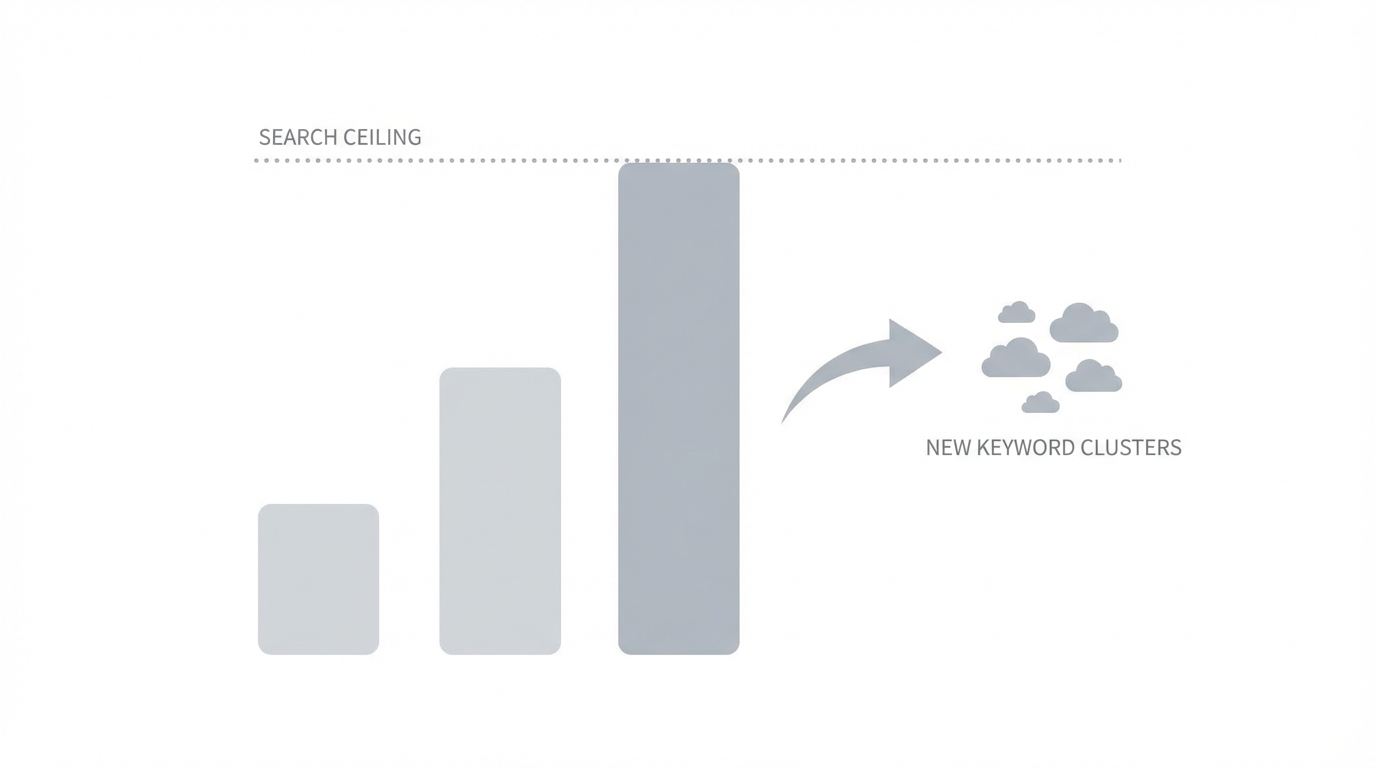
While SEO is a powerful moat, it has a built-in limitation: the search volume ceiling. Unlike social media ads, where you can keep spending money to find more users (induced demand), SEO is limited by how many people are actually searching for your keywords. Dimitri explains that when you rely on Google Ads and SEO, you are capturing latent demand—the area under the curve of existing search intent.
If you hit that ceiling, you must either expand your keyword list or move into induced demand channels like Meta Ads or TikTok. However, the beauty of the SEO moat is that once it's built, it "prints money in your sleep." To maintain this efficiency, you can use Stormy AI to track all your campaign performance and post metrics in one dashboard. At his peak, Dimitri was working only 20 to 30 hours a week while the business continued to generate $30k/month, allowing him to travel and eventually sell the company.
Conclusion: The Slow Path to Freedom
The "PR-to-SEO" strategy is a masterclass in long-term thinking. Instead of chasing the temporary high of a viral article, use that authority to build a defensible search moat. By targeting latent demand, hiring a lean team of contractors, and being patient through the 18-month "zero revenue" valley, you can create a business that offers true financial independence.
Key takeaways for your SEO playbook:
- Don't waste the link: If you get PR, ensure the publication links back to your main domain to boost your DA.
- Hire early, but small: Use platforms like Upwork to delegate the grunt work of content creation while you focus on strategy.
- Optimize for intent: Focus on "painkiller" keywords that solve immediate, visceral problems for your users.
- Automate the outreach: Use Stormy AI to set up an autonomous AI agent that handles creator discovery and personalized outreach daily.
- Test your conversion: Use tools like Superwall to A/B test your paywalls and ensure your SEO traffic actually turns into revenue.
By treating your 9-to-5 as a venture fund for your side project and leveraging the authority of the media, you can build a sustainable machine that eventually sets you free.