In the high-stakes world of global retail, few stories are as polarizing or as profitable as the meteoric rise of PopMart and its star IP, Labubu. By mid-2026, PopMart has transformed from a niche designer toy store into a $44 billion empire—a valuation that rivals major tech acquisitions and traditional luxury conglomerates. But this isn't just about selling plastic dolls. It is a masterclass in behavioral economics, leveraging the 'Gacha' mechanic, the 'Lipstick Effect,' and a radical shift in aesthetic standards to capture the hearts (and wallets) of the 'kidult' demographic.
The Blind Box Marketing Strategy: Harnessing the 'Gotcha' Mechanic
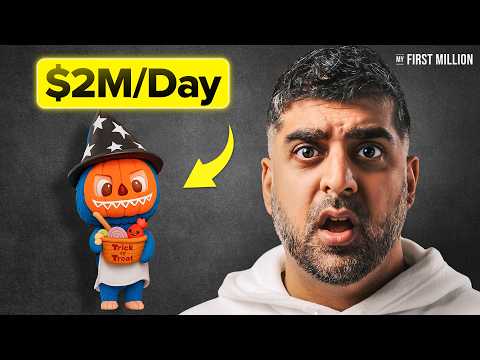 4:41
4:41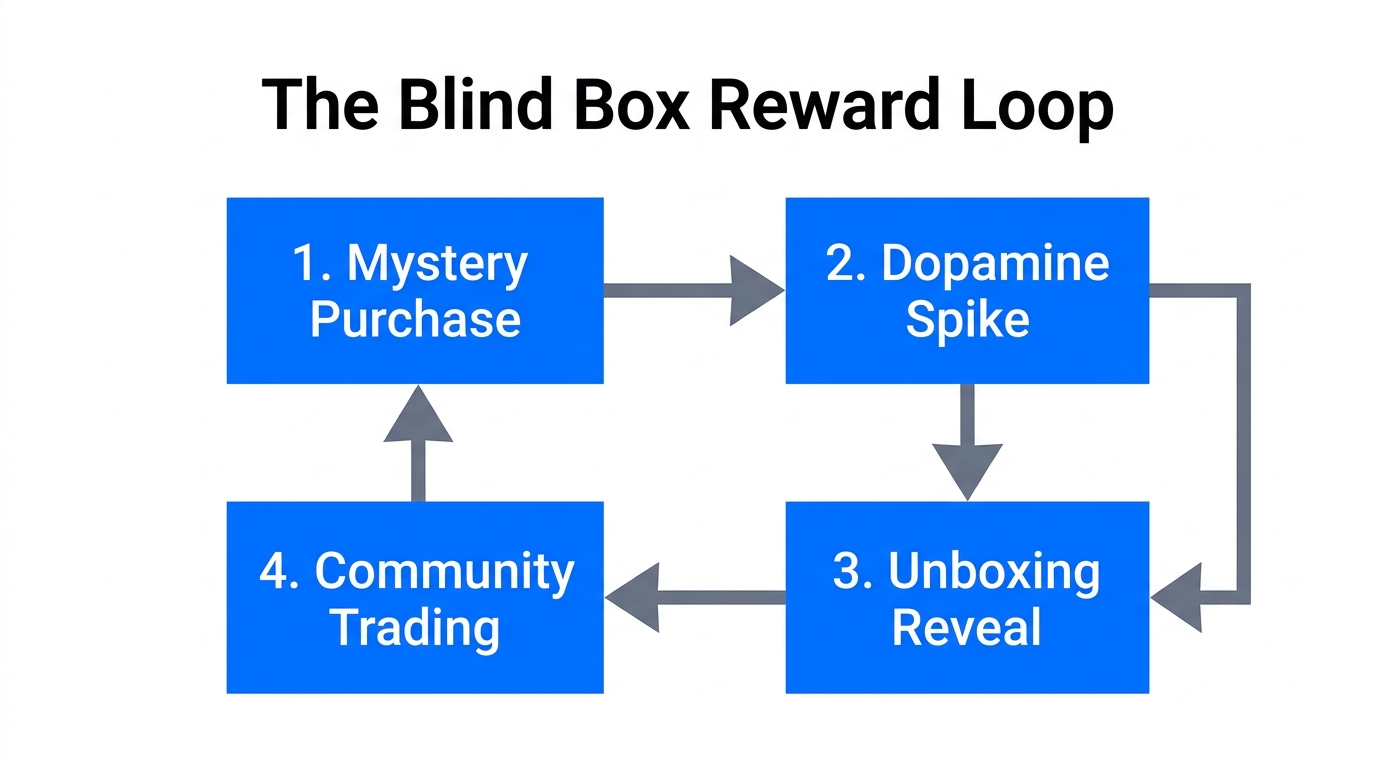
At the core of PopMart's success is the blind box marketing strategy. Unlike traditional retail where the consumer knows exactly what they are purchasing, blind boxes offer a randomized selection from a specific series. You might get the common character you like, or you might find the 'secret' figure that carries a resale value of 10x to 100x its retail price. This is known in the gaming world as the 'Gacha' mechanic, and its application to physical retail has been revolutionary.
Why does it work? It triggers the variable reward schedule, the same psychological principle that makes slot machines and TikTok algorithms so addictive. The uncertainty creates a dopamine spike that is significantly higher than a standard transaction. In 2026, data suggests that the 'treasure hunt' nature of blind boxes drives repeat purchase rates that are nearly ten times higher than traditional toy retail. For brands looking to replicate this, understanding the balance between 'common' and 'chase' items is critical for maintaining long-term engagement without frustrating the consumer base.
"The 'Gotcha' mechanic creates a level of spending that is totally irrational on paper, but deeply satisfying to the primitive parts of the human brain."
The Lipstick Effect in 2026: Small Luxuries in a Choppy Economy
10:52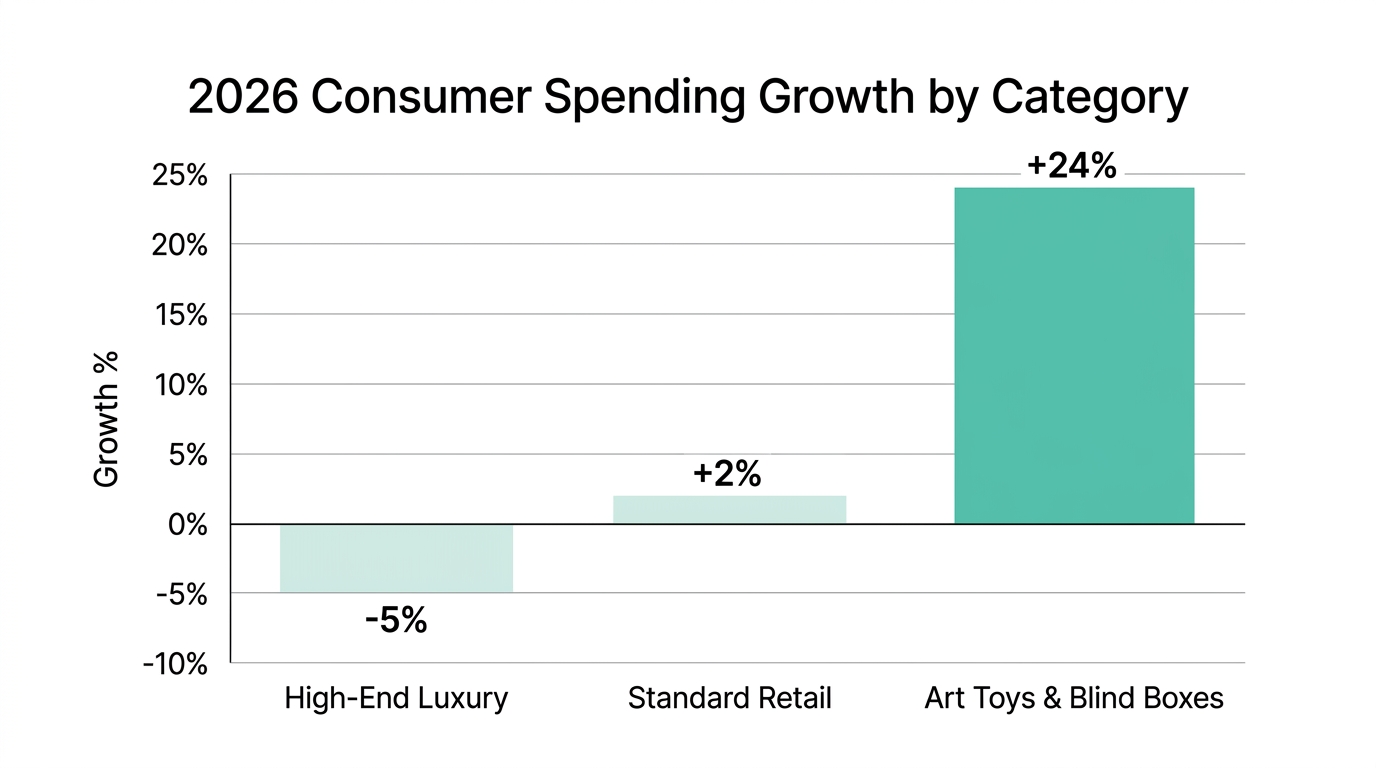
Economic historians often reference the 'Lipstick Effect'—the theory that during periods of financial pressure, consumers forgo big-ticket luxury items (like designer handbags or cars) in favor of small, affordable luxuries (like high-end lipstick). In 2026, as wage pressure and inflation continue to influence global spending habits, Labubu has become the 'lipstick' of the collectible world.
A $25 blind box provides a sense of luxury, exclusivity, and 'newness' without the four-figure price tag of a high-fashion accessory. PopMart has masterfully positioned these items as luxury-adjacent. By partnering with icons like Lisa from Blackpink or being spotted on the bags of Rihanna, these 'ugly cute' monsters have transcended the toy aisle. They are now status symbols that fit onto the strap of a Shopify-sourced designer tote. This shift from 'toy' to 'accessory' is what allows a $25 item to generate $700 million in annual revenue for a single character line.
| Metric | Traditional Retail | PopMart / Labubu Model |
|---|---|---|
| Repeat Purchase Rate | Low - Moderate | High (Gacha driven) |
| Unit Price | Variable | Fixed Small Luxury ($25) |
| Emotional Driver | Utility / Need | Dopamine / Status |
| Secondary Market | Minimal | Exponential Growth |
The 'Ugly Cute' Aesthetic: Breaking the Perfection Barrier
7:47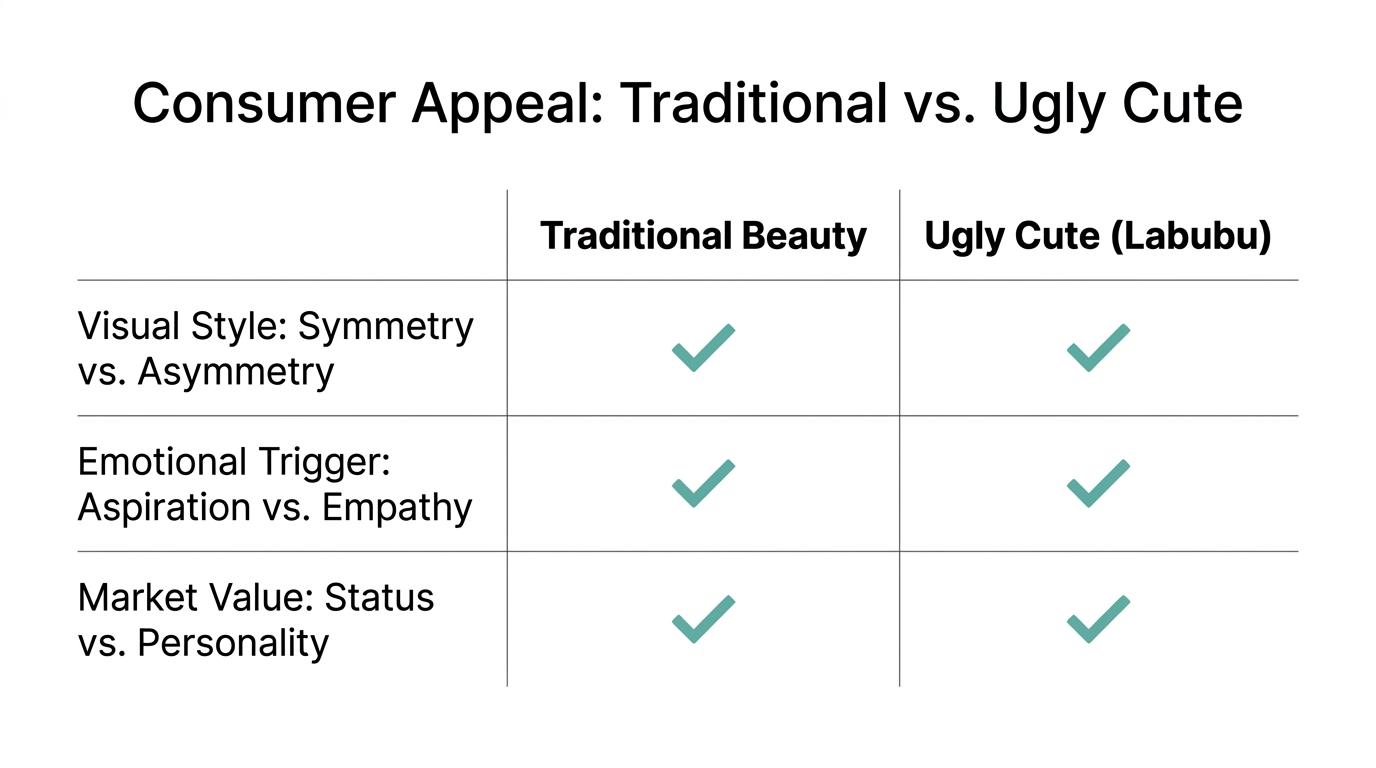
In a saturated market of 'perfect' dolls and traditionally beautiful designs, Labubu stands out because of its 'ugly cute' aesthetic. Designed by Kasing Lung, Labubu is a monster with serrated teeth, a mischievous grin, and a gremlin-like appearance. This polarizing design is a deliberate behavioral economics in marketing play: it invites curiosity and creates a distinct brand identity that is impossible to ignore.
The 'Ugly Cute' trend taps into a desire for authenticity and character over sanitized perfection. In 2026, consumers are increasingly drawn to products that feel 'edgy' or 'weird.' For marketers, this means that polarization is a feature, not a bug. If everyone likes your product, it might be too boring to go viral. If half the people love it and half the people are confused by it, you have the ingredients for a mimetic hurricane. To find creators who embody this aesthetic, many brands are using the search and discovery tools on Stormy AI to identify influencers who specialize in niche, visually distinct unboxing content.
"Labubu succeeds because it doesn't look like it belongs in a toy store; it looks like it belongs in a contemporary art gallery or a high-end streetwear boutique."
Kidult Marketing: Emotional Relief for the Modern Adult
The term 'Kidult' refers to adults who actively engage with childhood-coded hobbies, from Legos to high-end collectibles. In 2026, kidult marketing is a multi-billion dollar segment. This isn't just nostalgia; it's a stress-relief mechanism. Behavioral psychologists note that as global events become more complex and stressful, adults seek emotional relief in tactile, collectible items that offer a sense of control and comfort.
PopMart stores are designed to be 'sanctuaries' of color and play. They utilize over 2,000 vending machines worldwide to make the 'hit' of a new toy accessible in high-stress environments like airports and transit hubs. By catering to the emotional needs of adults, PopMart has expanded its Labubu business model far beyond the demographic of children, reaching a high-disposable-income audience that treats collecting as a form of self-care and curated identity.
The Retention Playbook: Outfits, Accessories, and LTV
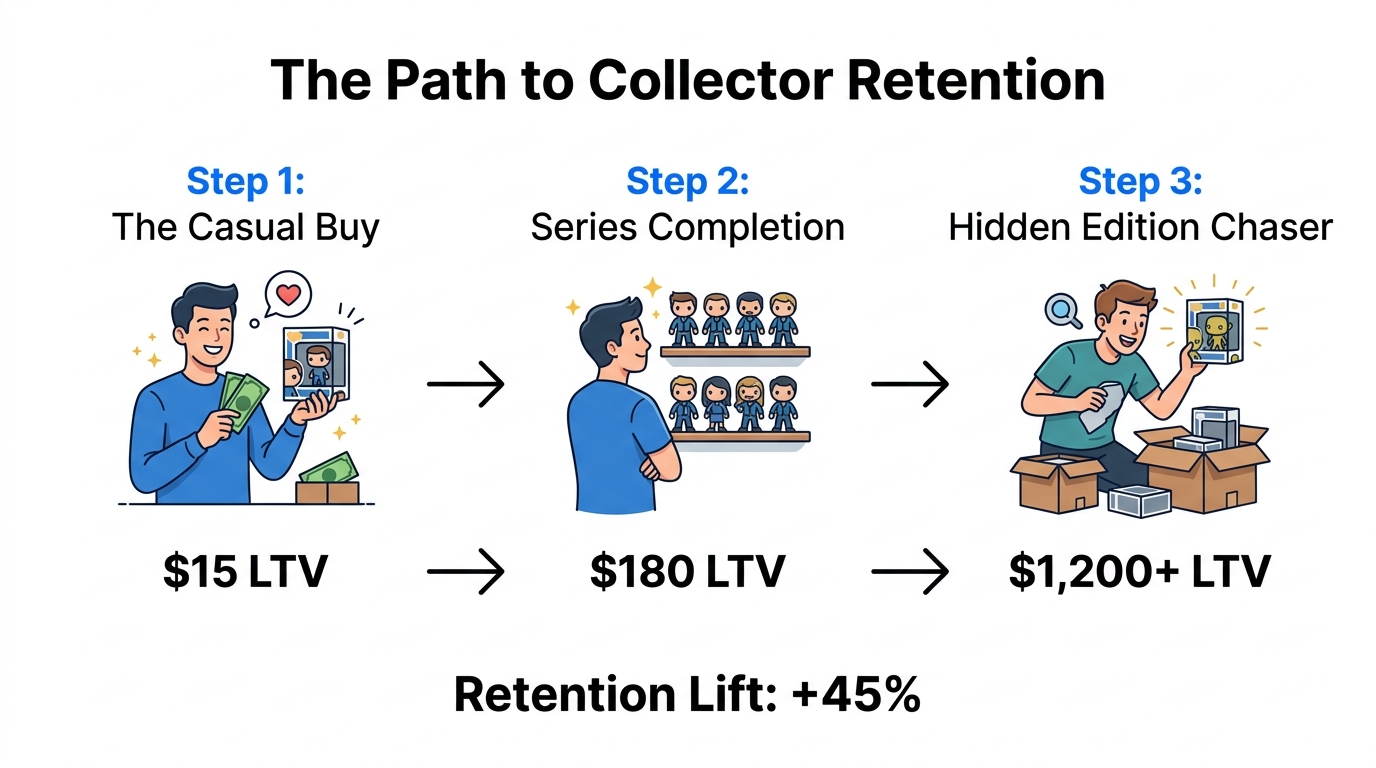
How does a brand keep a consumer coming back after they've found their favorite character? PopMart's answer is customization. By introducing seasonal outfits, limited-edition accessories, and different size formats (from 2-inch keychains to 2-foot 'mega' statues), they have significantly increased the Lifetime Value (LTV) of their customers.
The addition of the simple bag clip was perhaps the most ingenious move in the Labubu playbook. It turned a stationary toy into a mobile advertisement. When a consumer clips a Labubu to their bag, they are engaging in passive influencer marketing every time they walk down the street. In 2026, the brands that win are those that find ways to make their products 'wearable' or 'sharable' in the physical world, creating a feedback loop between offline visibility and online virality. Modern brands often use platforms like Stormy AI to track these trends across TikTok and Instagram, ensuring their outreach strategies align with what's currently 'clipped' to the bags of the world's elite creators.
PopMart Retail Analytics: Is the Craze Sustainable?
While the current PopMart retail analytics show a 7x stock growth in a single year, skeptics point to historical crazes like Beanie Babies or Cabbage Patch Kids as cautionary tales. These trends often have a 2-3 year peak before a sharp decline. However, the Labubu model is different in its integration of modern IP management and digital-social loops. By constantly rotating artists and characters, PopMart functions more like a media house than a toy manufacturer.
The future of the company likely lies in its ability to pivot into entertainment and digital assets. We are already seeing the early stages of Labubu-themed mobile games and animated content designed to deepen the emotional connection with the 'monsters.' For brands and app developers, the lesson is clear: UGC (user-generated content) is the fuel for physical retail. When thousands of people film their 'unboxing' reactions, the marketing cost for the brand drops to near zero while the conversion rate sky-rockets. Smart marketers are now using AI agents to automate the discovery and outreach to these UGC creators, ensuring they stay ahead of the next 'Ugly Cute' hurricane.
Conclusion: The New Rules of Consumer Engagement
The success of Labubu and PopMart in 2026 isn't an accident—it is the result of a perfectly executed strategy that combines gambling psychology, luxury positioning, and emotional resonance. By understanding that today's consumer is looking for small luxuries that offer both status and stress relief, PopMart has rewritten the retail playbook. Whether you are a startup founder or a seasoned marketer, the lessons of the 'ugly cute' monsters are universal: embrace polarization, gamify the experience, and never underestimate the power of a kidult with a bag clip.