In 2026, the landscape of digital media has shifted from mere attention-grabbing to deep relationship building. We are no longer in the era where a million views automatically equals a million dollars. Instead, we have entered the age of the high-equity creator. Take the story of Danny Miranda: he began in his parents' basement with nothing but a laptop and a burning curiosity. Fast forward to today, and the Danny Miranda Podcast stands as a testament to what is possible when you treat audio not as a hobby, but as the foundation of a multi-million dollar business ecosystem. If Joe Rogan’s $100 million-plus deal with Spotify was the spark, the strategies used by the new guard of creators in 2026 are the wildfire.
The 2026 Audio Renaissance: Why We Are Still in the '1920s'
Danny compares the current podcasting boom to the early days of radio.
To understand the massive podcast monetization strategies 2026 offers, we must first look backward. Radio was invented in 1895, but it didn't reach its cultural and financial peak for decades. If we map that trajectory onto podcasting, which has only been mainstream for about 20 years, we are effectively living through the 1920s radio boom. The hunger for long-form, intimate conversation has never been higher, and the infrastructure to monetize that hunger has finally matured.
The transition from 1920s radio to the modern era shows us that those who own the distribution and the deep connection with the audience will always win. Unlike fleeting social media clips, a podcast listener gives you 60 to 90 minutes of their undivided attention. In 2026, that attention is the ultimate leverage for building a podcast business that scales far beyond traditional ad reads.
"Podcasting as a medium is just getting started. If you think about the radio's trajectory, we are in the equivalent of 1915 or 1920 — the peak is still decades away."
Moving Beyond CPM: The Joe Rogan and Danny Miranda Equity Model
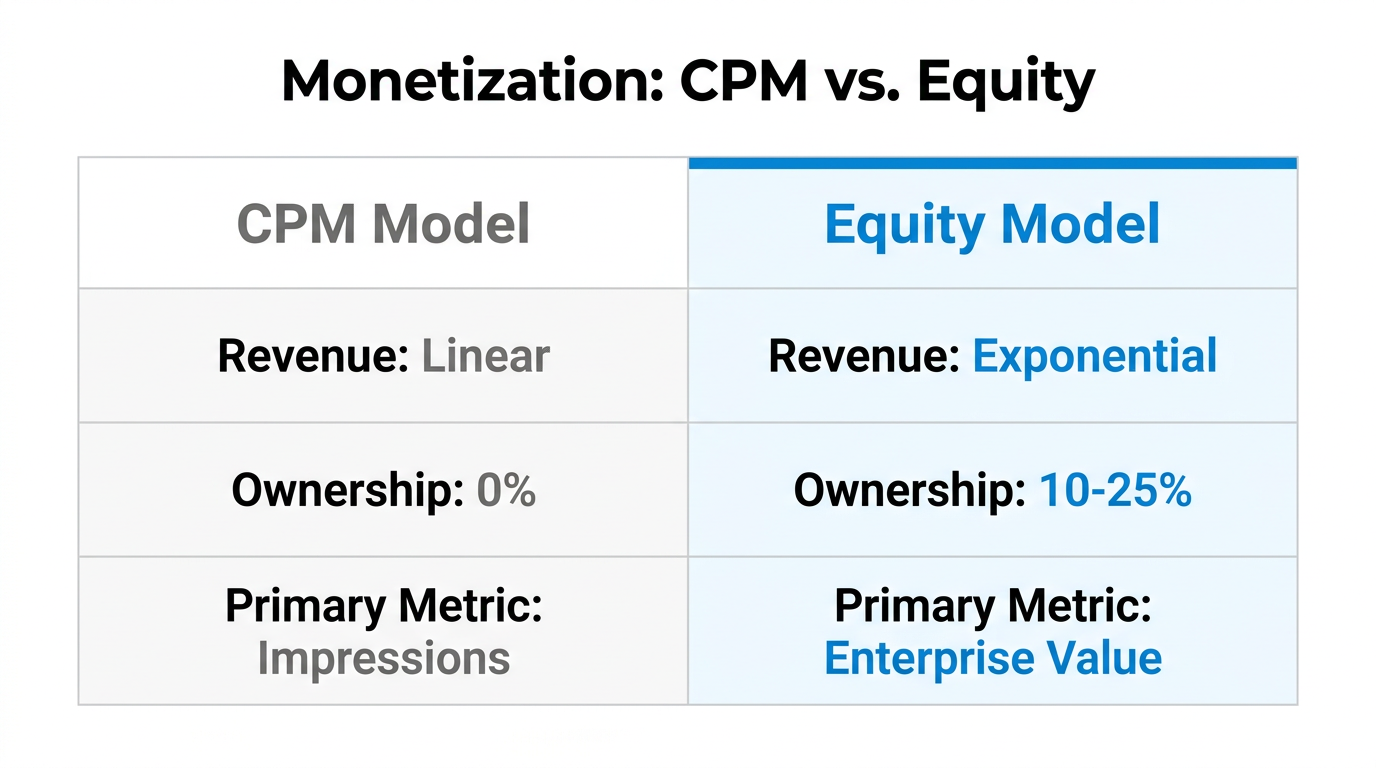
For years, podcasters relied on the standard CPM (cost per mille) model: getting paid a fixed fee for every thousand listeners. In 2026, the elite tier of podcasters has realized that CPM is a trap. It caps your upside and tethers your income to your most recent download numbers. The real wealth is built through high-equity business models and ownership.
Consider the Joe Rogan blueprint. While his Spotify podcast strategy made headlines for its nine-figure valuation, his 50% stake in Onnit — a supplement company that eventually sold for $300 million — proved that the real money is in the products you own, not the ads you read. In 2026, creators are using their shows to incubate their own brands or secure significant equity in the startups they promote.
| Monetization Tier | Primary Revenue Source | Upside Potential | Effort Level |
|---|---|---|---|
| Tier 1: Basic | Standard CPM Ads | Low (Linear) | Low |
| Tier 2: Intermediate | Newsletters & Courses | Medium (Scalable) | High |
| Tier 3: Advanced | Consulting & Masterminds | High (High-ticket) | Medium |
| Tier 4: Elite | Equity & Ownership | Infinite (Exit-based) | High |
Danny Miranda exemplifies this by leveraging his network. By connecting his high-profile guests with other founders and helping them build their own shows from the ground up, he creates a consulting and networking flywheel. This is a creator economy revenue model that turns every interview into a potential business partnership.
The 2026 Funnel: Newsletters, Courses, and High-Ticket Consulting
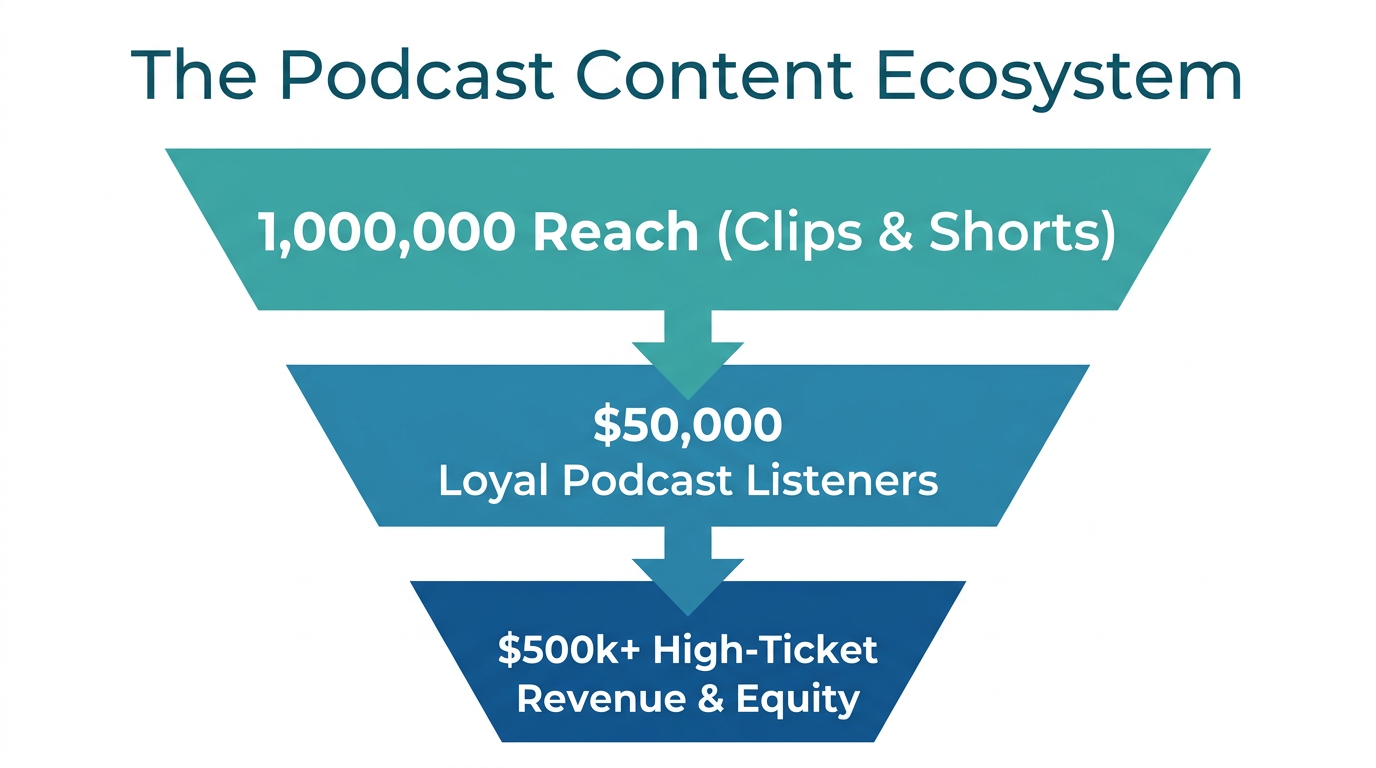
A podcast should never be a destination; it should be the top of a sophisticated sales funnel. In 2026, the most successful creators use their audio content to drive traffic to owned platforms where they have 100% control over the customer relationship.
- Newsletters: Use platforms like Beehiiv or ConvertKit to capture the email addresses of your listeners. This allows you to sell to them directly without worrying about algorithm shifts.
- High-Ticket Courses: Danny Miranda notes that moving people from a free podcast to a paid course or subscription is one of the most effective ways to monetize specialized knowledge.
- Consulting: When you spend 300+ episodes interviewing the world's best, you become an expert by proxy. Use that authority to charge premium rates for consulting brands on their own content strategies.
By treating your podcast as a lead generation tool for your CRM (Customer Relationship Management), you transform a volatile hobby into a stable enterprise. Brands often use platforms like Stormy AI to discover creators who already have these established funnels, as they provide much higher conversion rates than "shout-out" style influencers.
"The business of podcasting is a lot bigger than you think. You can funnel people from a podcast to a newsletter, a course, or high-ticket consulting to build a sustainable empire."
The 2026 Summit Strategy: Turning Guests into Speakers
One of the most overlooked podcast monetization strategies 2026 offers is the "Owned-and-Operated Summit." The concept is simple: after spending years building relationships with world-class guests, you bring them together for a live or virtual conference.
Because you have already provided value to these guests by featuring them on your show, they are often willing to speak at your event for a reduced fee — or even for free — because they trust you. This allows you to sell high-priced tickets to your audience, who are eager to see their favorite podcast guests in person. This maximizes the Lifetime Value (LTV) of your listeners by offering them an immersive, premium experience that a 60-minute audio file simply cannot provide.
Step-by-Step: Starting with Zero Dollars and Scaling to Premium
Many aspiring creators overcomplicate the technical side. In 2026, the barriers to entry are lower than ever, yet the standard for quality is higher. Danny Miranda started with zero dollars and a simple Zoom connection. Here is the playbook for scaling your production:
- Phase 1 (The Launch): Start with Spotify for Podcasters (formerly Anchor). It’s free and handles distribution across all major platforms. Use a basic USB microphone like the Shure MV7.
- Phase 2 (The Consistency Phase): Commit to a schedule. Danny recommends three episodes a week. This isn't just for the audience; it's to help you become a better communicator. Think of every episode as a trip to the gym.
- Phase 3 (The Scale): Once you have traction, hire an editor. In 2026, your time is best spent on the research and the conversation, not the post-production.
How to Hack Attention and Land 'Impossible' Guests
Discover how simple outreach on platforms like Twitter can land major podcast guests.Landing guests like Gary Vaynerchuk or Andy Frisella doesn't happen by accident. It requires a strategic approach to attention hacking. In 2026, the most effective tool for this remains Twitter/X.
The strategy is simple: be public about your goals. When Danny wanted Gary Vee, he didn't just send a cold email. He tweeted a screenshot of a blog post he wrote about Gary in 2009. He provided context and value first. When Gary followed back, Danny’s audience rallied in the replies, creating social proof that made a "yes" inevitable. To manage these high-stakes relationships and discover new talent, tools like Stormy AI can help you track potential guests and analyze their audience quality before you even reach out.
"You need to care more than the next person. That means spending 5 to 20 hours researching a guest until you can practically live in their shoes."
Marketing in 2026: The 'Quantity is Quality' Clip Strategy
Learn how to maximize your reach by sharing multiple clips across social media.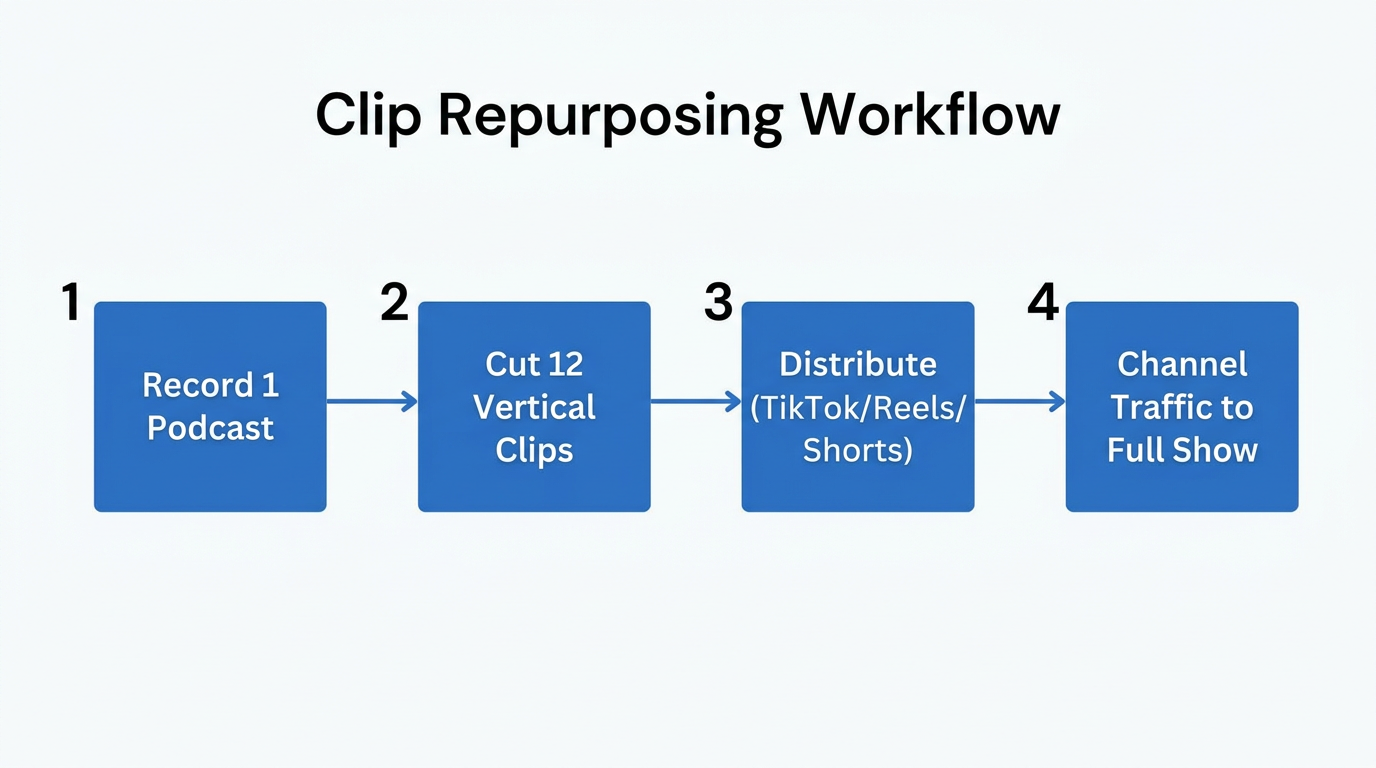
Having an amazing guest isn't enough to grow a show anymore. You must atomize your content. The 2026 growth playbook requires a relentless distribution schedule across short-form platforms.
| Platform | Daily Frequency | Content Type |
|---|---|---|
| YouTube | 1 Full Video + 2 Shorts | Long-form & Highlights |
| 3 Reels | Emotional or "Aha" moments | |
| Twitter/X | 5 Clips/Threads | Insightful quotes and takeaways | TikTok | 2-3 Videos | Taboo or high-engagement hooks |
By tapping into bigger conversations (like entrepreneurship, fitness, or mental health) rather than just focusing on your name, you attract listeners who are interested in the topic first and you second. This is how you build a podcast business that survives beyond the initial hype of a single guest.
The Interviewer's Edge: Presence and Deep Research
Explore the secrets to asking better questions and becoming a world-class interviewer.In a world saturated with AI-generated content, human presence is the ultimate premium. Danny Miranda attributes his success to a rigorous routine of meditation and fitness. If you haven't sat with yourself, you cannot truly sit with a guest. Deep research — spending 20 hours listening to every past interview your guest has done — allows you to ask the questions they’ve never been asked before. This provides the "aha" moments that turn casual listeners into lifelong fans.
Conclusion: Building Your $100M Legacy
Building a $100M podcast empire in 2026 isn't about the microphone you use or the flashy intro music. It’s about brick-laying consistency. Danny Miranda’s journey from a basement to interviewing his heroes was paved with 359+ episodes and a refusal to miss a day. By shifting from low-level advertising to high-equity ownership, building a robust funnel ecosystem, and mastering the art of the multi-platform clip strategy, you can turn a simple conversation into a generational asset.
Start today with what you have. Use TikTok Ads to test your best clips, manage your network with a creator-focused CRM, and remember that in the world of 2026 podcasting, the person who cares the most wins. The radio boom of the 21st century is here — make sure you own your piece of the airwaves.