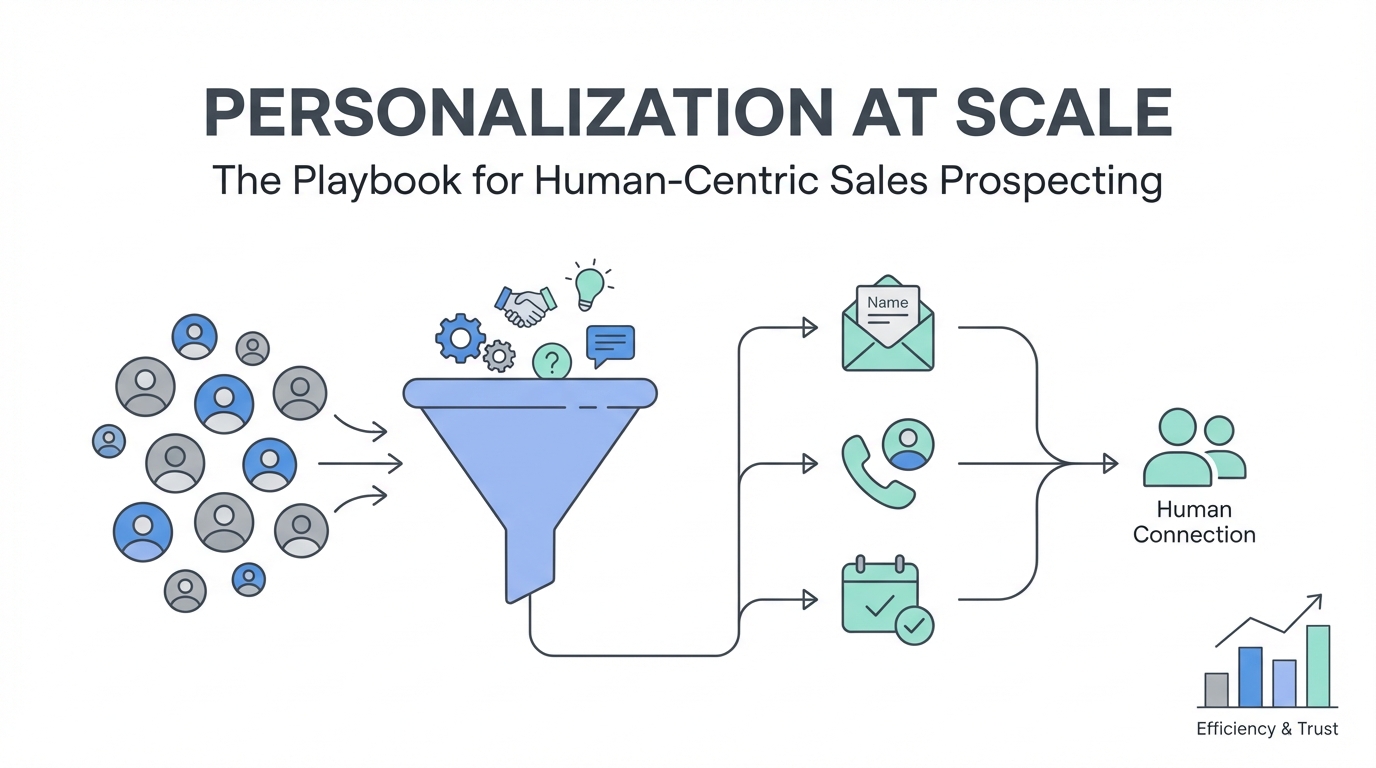
The Red Ocean Strategy: Why Competition is Your Best Signal

Many entrepreneurs and sales leaders spend months searching for a 'Blue Ocean'—a market with no competition where they can reign supreme. While the idea of a 100% unique niche is romantic, it often leads to a 'massive fail,' much like the initial t-shirt business attempted by Guillaume Moubeche. When you enter a market with zero competitors, you are often burdened with the task of creating demand where none exists. Conversely, a Red Ocean strategy involves entering a crowded market where demand is already proven. If companies are already spending millions on Meta Ads Manager or LinkedIn lead-gen, it means there is a product-market fit waiting to be captured by anyone who can do it better.
The secret to winning in a Red Ocean isn't about having a hundred more features than the incumbent; it’s about a key differentiator that solves a specific pain point. For many B2B organizations, that pain point is the lack of humanity in automated systems. While legacy platforms focus on the 'plumbing' of email delivery, a human-centric strategy focuses on the 'poetry' of the interaction. By using Stormy AI for influencer vetting and fake follower detection, for example, brands can vet the quality of the voices they are reaching out to, ensuring that every touchpoint is high-quality and free from the 'spam' feel of traditional outreach. This approach turns a commoditized service into a premium solution associated with success and revenue.
Adding Extra Layers of Personalization at Scale
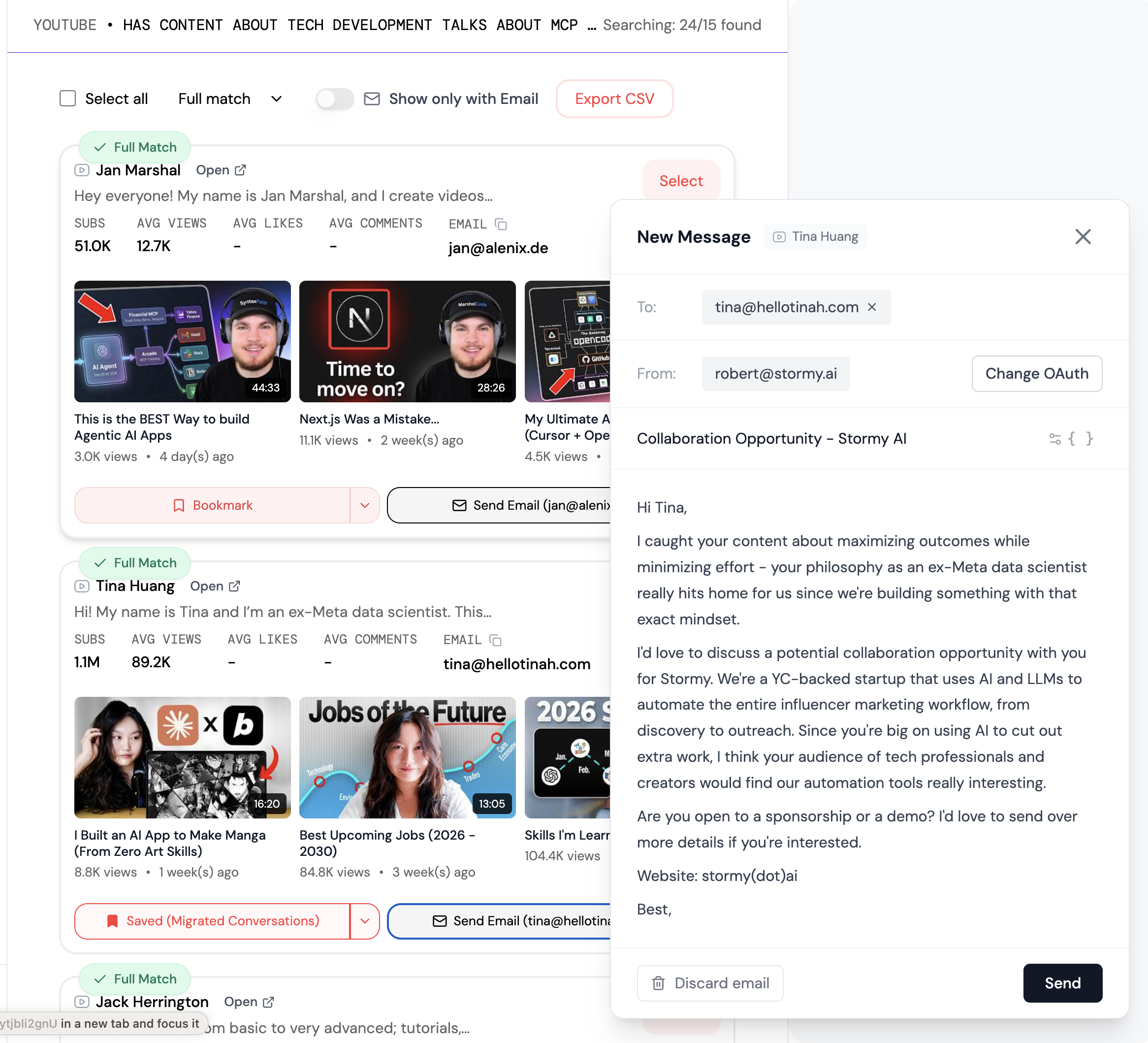
The standard 'Hi [First Name]' tag is no longer considered personalization; it is the bare minimum. To achieve activation rates that hover around 35%, sales teams must implement extra layers of personalization that automation tools usually miss. This involves deep research into the prospect’s recent activities, their company’s growth trajectory, or even their specific content on platforms like LinkedIn. Instead of sending a generic pitch, your B2B sales strategy should focus on 'personalized the internet' for that specific individual. This might mean referencing a specific podcast they appeared on or a post they shared, creating a hook that is impossible to ignore.
Scaling this manual effort is where many teams struggle. This is where Stormy AI's personalized email outreach becomes an unfair advantage. By leveraging AI to generate hyper-personalized email hooks based on real-time data from social profiles and managing automatic follow-ups, you can maintain the 'human touch' across hundreds of prospects daily. This isn't just about efficiency; it's about creative sales prospecting. When your outreach feels like it was written by a friend who truly understands the prospect's business, the barrier to entry drops significantly. This 'mad scientist' approach to testing hooks and creative angles allows you to find what resonates before you commit to a full-scale campaign.
The Mad Scientist Approach to Testing and ROI
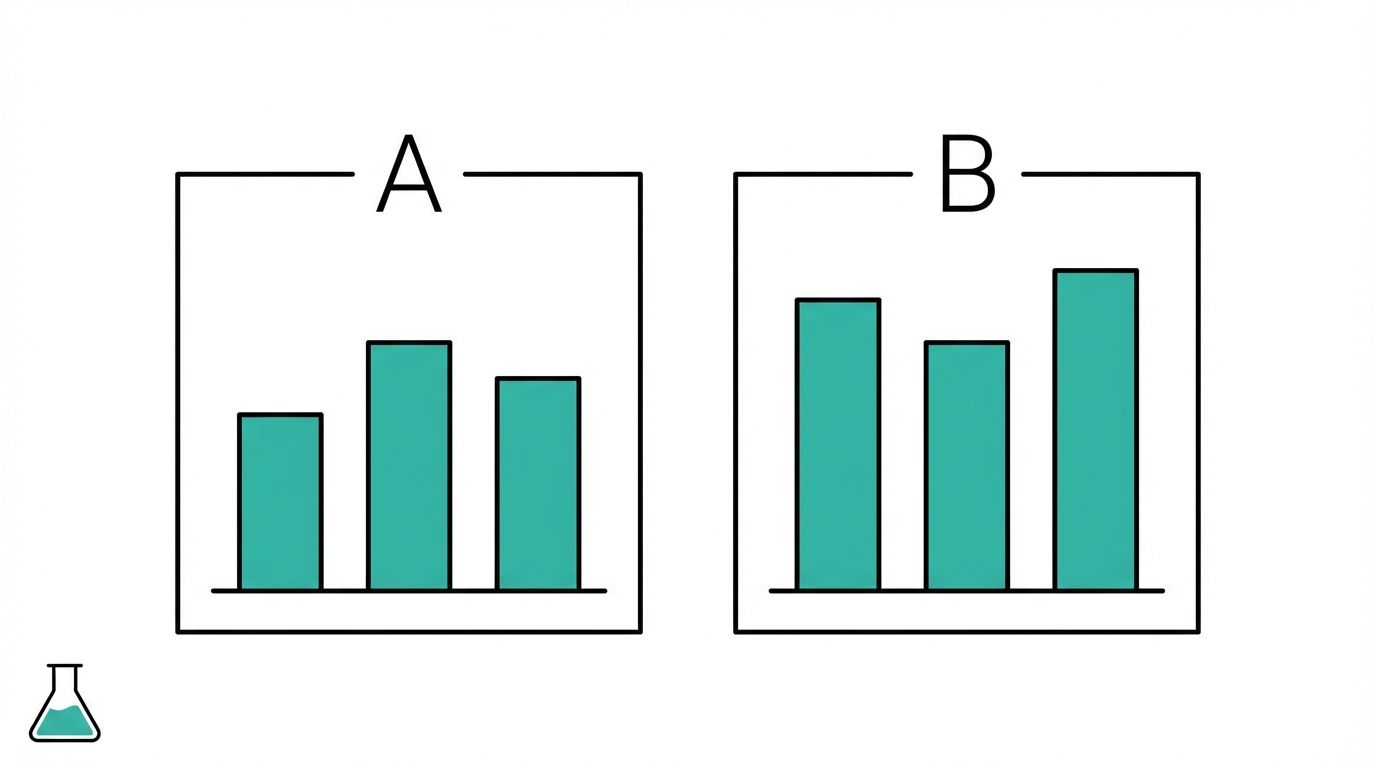
High-performing sales teams don't guess; they experiment. Treating your outreach like a laboratory is essential for optimizing cold email personalization. This involves testing everything from subject lines and opening hooks to the call-to-action and the timing of follow-ups. A 'mad scientist' approach means running split tests on every variable and tracking the results with the same rigor you would use for Google Analytics data. If one template is getting a 10% reply rate and another is getting 2%, you need to know exactly why.
Tracking ROI in sales prospecting goes beyond just 'opens' and 'clicks.' You need to monitor the entire funnel, from the initial discovery to the final payment processed through Stripe. Many teams fail because they optimize for vanity metrics rather than activation rates—the point where a prospect takes a meaningful action, like booking a demo or launching a trial. By using Stormy AI's post tracking and analytics dashboard, you can monitor how your outreach translates into real-time views and engagement, giving you a holistic view of your campaign's performance. This data-driven mindset ensures that you are investing your time and money into the strategies that actually drive the bottom line.
Positioning: Moving from an Expense to a Success Tool
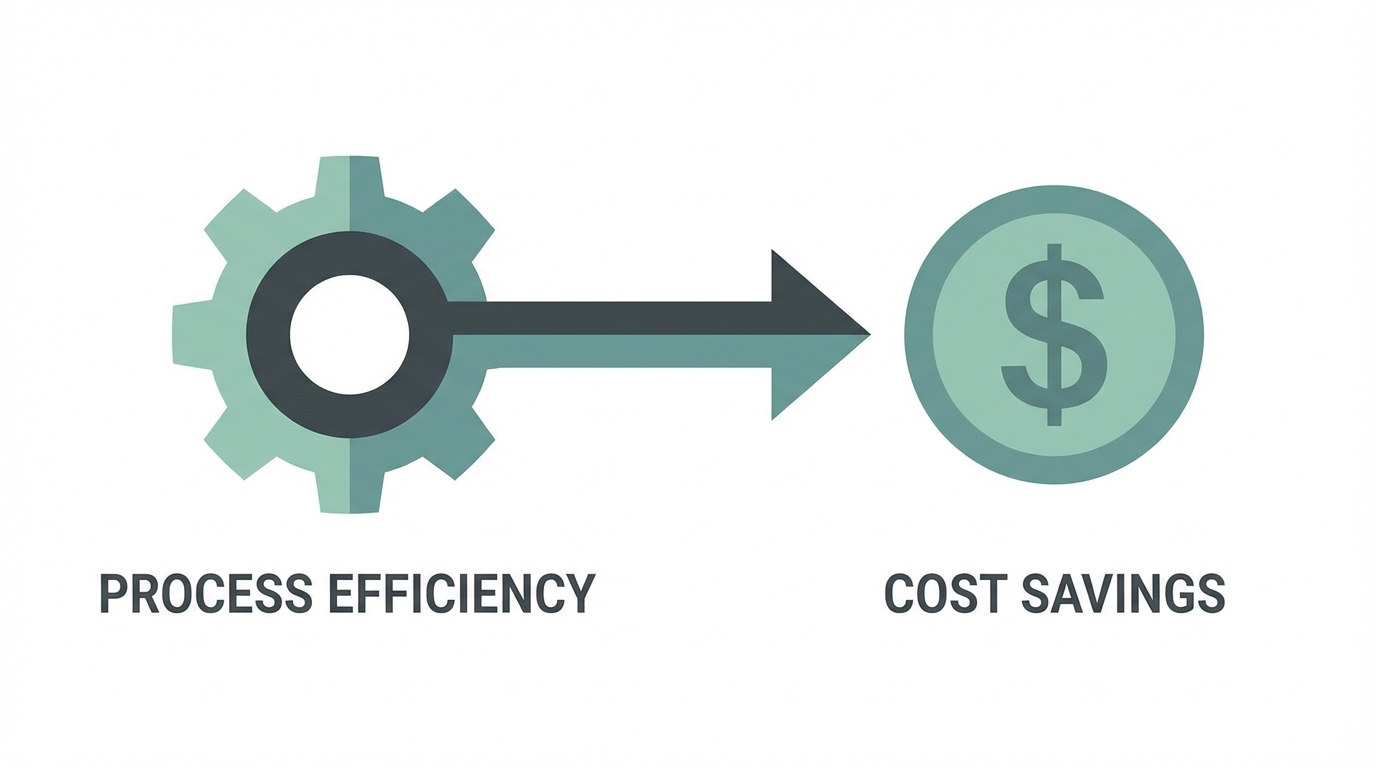
One of the biggest hurdles in lead generation is the prospect's perception of your price. If they view your service as an 'expense,' they will always look for the cheapest option. If they view it as a revenue-generating asset, price becomes secondary to ROI. To make this shift, your sales prospecting must focus on the outcomes rather than the features. Don't talk about 'automated emails'; talk about 'booked meetings with dream customers.' Don't talk about 'analytics'; talk about 'identifying $100k in lost opportunities.'
This positioning requires a deep understanding of your Ideal Customer Profile (ICP). You are looking for what Guillaume calls the 'Magnet Persona'—the specific type of customer who not only stays with your product but attracts others to it. For a sales tool, that persona is the high-performing sales rep who is under pressure to hit their numbers. By aligning your messaging with their personal success, you become an ally rather than a vendor. Managing these relationships at scale requires a robust system like Stormy AI's creator CRM, which allows you to track every negotiation, deal stage, and interaction, ensuring no high-value lead falls through the cracks. When you manage your sales pipeline as a series of successful partnerships, your retention rates will naturally skyrocket.
The Playbook: Step-by-Step to a 35% Activation Rate
Converting a cold prospect into an active user is a journey that requires precision. Following a structured playbook ensures that you aren't just 'spraying and praying,' but executing a deliberate B2B sales strategy. Here is how to structure a campaign that converts:
Step 1: Identify Your Magnet Persona
Stop trying to sell to everyone. Use Stormy's AI search across TikTok, YouTube, and Instagram to find the exact creators or businesses that fit your most successful user profile. Filter by niche, audience quality, and engagement to ensure you are targeting 'winners' who will see immediate value from your offer. This initial sales prospecting phase is the most critical for long-term ROI.
Step 2: Craft the Extra Layer Hook
Don't just mention their company name. Find a specific piece of user-generated content or a recent milestone they've achieved. Your opening line should prove that you've done your homework. If you can't spend 10 minutes on each prospect, use AI-powered tools to synthesize their recent activity into a compelling 'why you, why now' statement. This is the foundation of effective outreach automation.
Step 3: Tie the Offer to Revenue
In the body of your email, clearly articulate how your solution helps them make more money or save significant time. Use social proof from similar clients to anchor your claims. If they are an e-commerce brand, show them how you can improve their Shopify conversion rates. If they are a SaaS, show them how you reduce churn.
Step 4: The Frictionless Call to Action
Make it incredibly easy for them to say yes. Instead of asking for a '45-minute discovery call,' ask for '2 minutes to send over a custom video.' Lower the barrier to entry for the first interaction. You want to reach that activation point as quickly as possible. Once they see the 'magic' of your product, the larger deal becomes a much easier sell.
Step 5: Automated, Humanized Follow-Ups
Most deals are closed in the 5th to 12th touchpoint, yet most sales reps stop after two. Set up an autonomous system that handles follow-ups while you sleep. However, each follow-up should add new value—a relevant article, a new insight, or a creative idea—rather than just 'bumping this to the top of your inbox.' This persistence, combined with value, is what builds the 'superhero' status of your brand in the prospect's eyes.
Scaling the Human Element: From $0 to $10M ARR
Scaling a business is rarely a smooth, exponential line; it is a series of S-curves. You reach a plateau, you rebuild, and you launch the next phase of growth. For Guillaume and the Lemlist team, breaking through the $10 million ARR plateau required a complete architectural rebuild and a renewed focus on the human element of their brand. As you grow, the temptation to fully automate and 'set it and forget it' is high. However, the companies that win are those that use technology to amplify humanity, not replace it.
Investing in yourself and your team's ability to communicate effectively is the highest ROI activity you can undertake. Whether it's attending a conference or joining a program like the Starter Story Academy, the goal is to constantly refine your 'mad scientist' skills. By documenting your journey and sharing your successes and failures, you build a community around your brand that becomes its own growth loop. This human-centric sales prospecting model isn't just a tactic for today; it is the blueprint for building a resilient, $100M+ company in an AI-driven world.
Conclusion: Take Action Today
The transition from a struggling entrepreneur with $1,000 in the bank to a leader of a multi-million dollar enterprise is a marathon of sales prospecting, constant testing, and relentless focus on the customer. By choosing to compete in a Red Ocean with a better, more human differentiator, you position yourself for product-market fit from day one. Remember that your outreach is an extension of your brand; if it's cold and robotic, that is how your product will be perceived. If it's warm, personalized, and value-driven, you become a partner in your prospect's success. Start by identifying your Magnet Persona and crafting your first 'extra layer' hook today. The road to a 35% activation rate starts with a single, human-centric email. If you're looking for more inspiration, explore these 52 micro-SaaS business ideas to see how other founders are carving out their own space in the market. The time to start is now; your dream customers are waiting for a message that actually feels like it was meant for them.