After selling Morning Brew for a reported $75 million, Alex Lieberman found himself in a position most entrepreneurs dream of—yet he felt completely lost. He spent a year engaging in the typical post-exit cliches, from reading stoic philosophy to taking long walks, searching for a way to replicate the thrill of the early days without the soul-crushing weight of managing a 200-person organization. What he discovered wasn't just another startup idea; it was a fundamental shift in how modern entrepreneurs build wealth. Lieberman transitioned from a single-business CEO to the chairman of a personal holding company, a model that allows him to launch, own, and oversee a diversified portfolio of bootstrap-friendly businesses while delegating the day-to-day operations to world-class CEOs.
What is a Personal Holding Company?
A personal holding company (or HoldCo) is an umbrella entity—often a simple LLC—that owns multiple independent businesses. In this model, the founder acts as the CEO of the holding company but the CEO of none of the underlying subsidiaries. Instead, they take on the role of Co-founder and Chairman. This strategy, often referred to by Lieberman’s peer Greg Eisenberg as being a multipreneur, is designed to maximize the founder's strengths while mitigating the risks of putting all eggs in one basket.
The goal for Lieberman is to build a portfolio of a dozen-plus companies over the next decade. By focusing on bootstrap models rather than venture-backed moonshots, a multipreneur can build a $10 million asset portfolio that generates high-margin cash flow without the constant pressure of a multi-billion dollar exit. As documented in his interview with Starter Story, this model leverages the "Golden Age of Entrepreneurship," where the cost of failure is lower than ever thanks to tools like Shopify and Beehiiv.
The Shift from "City and State" to "Town and Village"
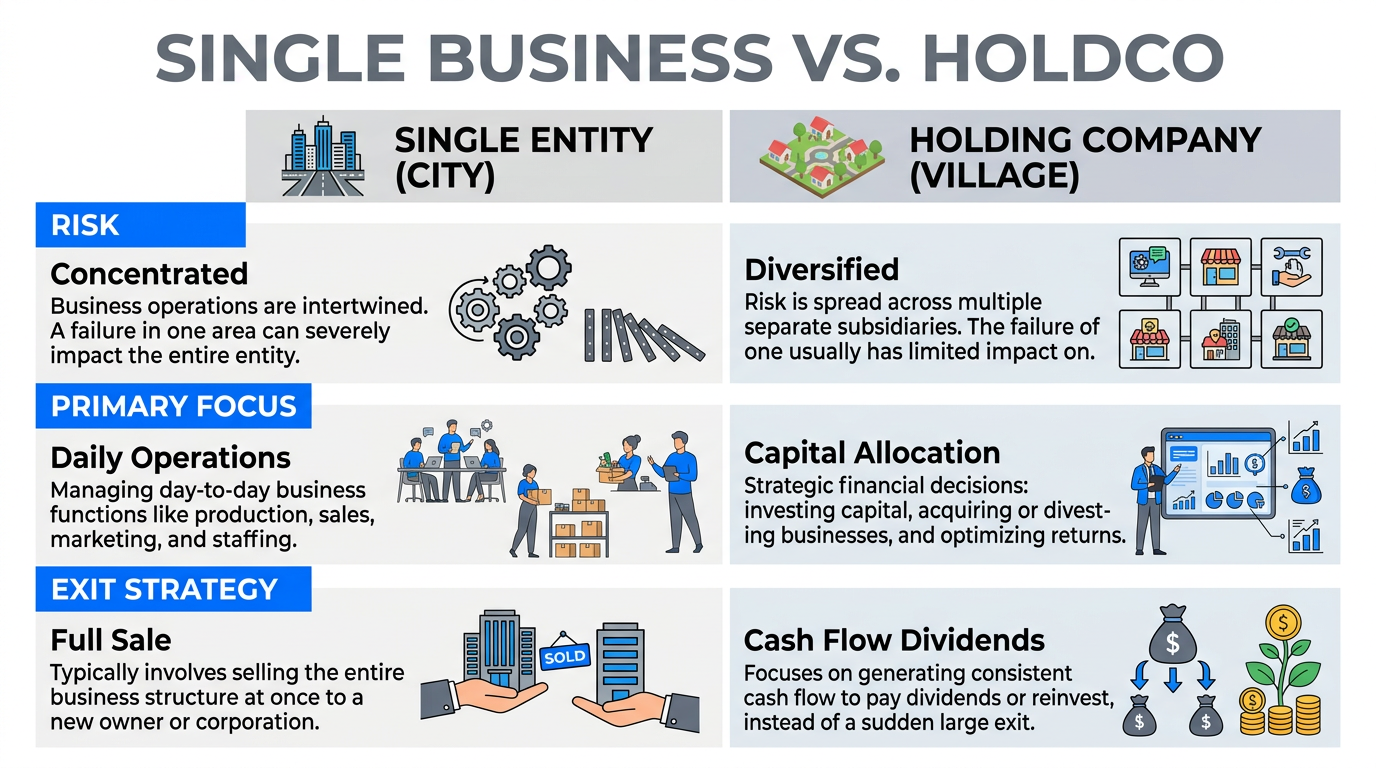
One of the most profound insights Lieberman shared is the distinction between different stages of business growth, a concept originally popularized by Reid Hoffman. Lieberman realized that he loves the "Town and Village" stages—the gritty, early days of ideation, storytelling, and finding initial product-market fit. He found the "City and State" stages—the administrative burden of managing hundreds of employees and complex operations—to be draining.
"I just asked myself: How can I spend the rest of my career just in the town and village, and not in the city and state?"
By building a personal holding company, Lieberman can stay perpetually in the early stage. Once a business moves past the village phase and begins to require the infrastructure of a city, he steps back as chairman and lets a dedicated CEO take the reins. This allows the business portfolio strategy to remain agile, focusing on innovation rather than bureaucracy.
The Economics of the Bootstrap Portfolio
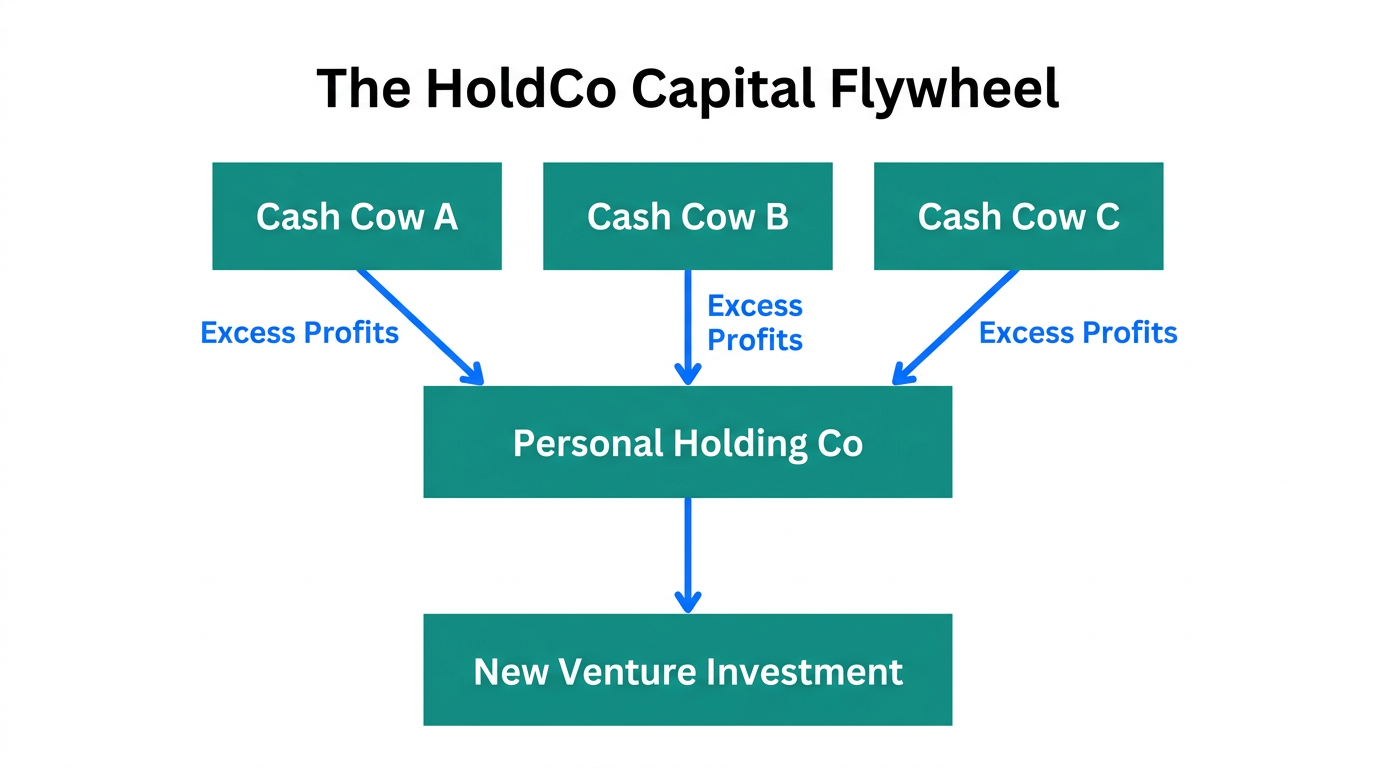
The holding company for small business focuses on high-margin, cash-flowing assets. Unlike the venture capital model, which requires massive scale and often results in 0.1% success rates, the HoldCo model prioritizes profitability from day one. Lieberman’s first major subsidiary, Story ARB, is a prime example. It is a ghostwriting agency for B2B executives that helps them build brands on Twitter and LinkedIn.
| Metric | Venture-Backed Startup | Bootstrap HoldCo (Story ARB) |
|---|---|---|
| Initial Investment | Millions (Dilutive) | $0 (Sweat Equity) |
| Revenue Model | Growth at all costs | $7k/mo Retainers |
| Profit Margin | Often Negative | 30% - 35% |
| Success Criteria | Billion-dollar exit | $3M+ Annual Cash Flow |
With just 12 clients, Story ARB reached $1 million in annualized revenue. The ultimate goal for this single entity is to hit $10 million in revenue with $3.5 million in annual profit. When you multiply this by a dozen similar businesses, the wealth creation potential is staggering, all while maintaining a balanced lifestyle.
The CEO Playbook: Finding and Incentivizing Leaders
The linchpin of the personal holding company strategy is the ability to hire top-tier CEOs. You cannot be a multipreneur if you are bogged down in the daily operations of every business you start. Lieberman looks for what he calls "the unteachables": an obsessive brain, critical thinking, high integrity, and an unstoppable work ethic.
To attract this level of talent to a small business, the incentive structure must be aggressive. Lieberman follows a specific equity and distribution roadmap:
- Base Salary: Typically ranges between $100,000 and $200,000 per year.
- Equity Stake: The CEO is granted 10% to 50% ownership in the subsidiary.
- Profit Distributions: Once product-market fit is achieved, all profits are distributed quarterly to equity holders.
This structure ensures the CEO is incentivized to grow the bottom line, not just hit vanity metrics. It transforms the employee into a true partner. For founders looking to source talent or manage these complex relationships, platforms like Stormy AI are becoming essential for identifying the right creators and executives to lead these new ventures in a social-first economy.
The "Pebble to Pebble" Validation Strategy
Lieberman warns against sitting on a couch trying to brainstorm the next big thing. Instead, he advocates for being a "magnet for problems." His method for launching a holding company for small business involves a low-risk, step-by-step approach he calls "stepping pebble to pebble across the river."
"My favorite way to build a business: the product doesn't exist yet, you get a sense of demand, then you build the product after. Build the plane as you're flying it."
Take the launch of Story ARB as a roadmap. Lieberman didn't build a website or hire a team first. He sent a single tweet. If a tweet gets interest, turn it into a thread. If the thread performs, start a newsletter on a platform like Beehiiv. Only when there is clear, paying demand do you hire the supply. This multitiered validation ensures that you never waste time on an idea that the market doesn't actually want.
Managing the Risks of the HoldCo Model
While the personal holding company model is "sexy" in the current creator economy, it is not without significant risks. Lieberman identifies two primary pitfalls that can sink a multipreneur:
- Dilution of Focus: Trying to launch too many things at once. Lieberman refuses to launch a second business until the first has achieved true product-market fit. For him, this means a 50% referral rate and a 10-month average customer retention.
- Becoming the Product: If the business relies solely on the founder's personal brand, it becomes difficult to command high equity or attract talent. The founder must provide tangible value to the CEOs beyond just their name—whether that's through capital, shared services, or proprietary systems.
For those managing multiple service-based businesses or agencies within a HoldCo, maintaining a high standard of content is vital. Modern platforms like Stormy AI can streamline the process of sourcing and vetting the creators who will eventually power the content engines of these portfolio companies, ensuring that quality remains high even as the founder steps back.
Your 5-Step Roadmap to a $10M Personal Holding Company
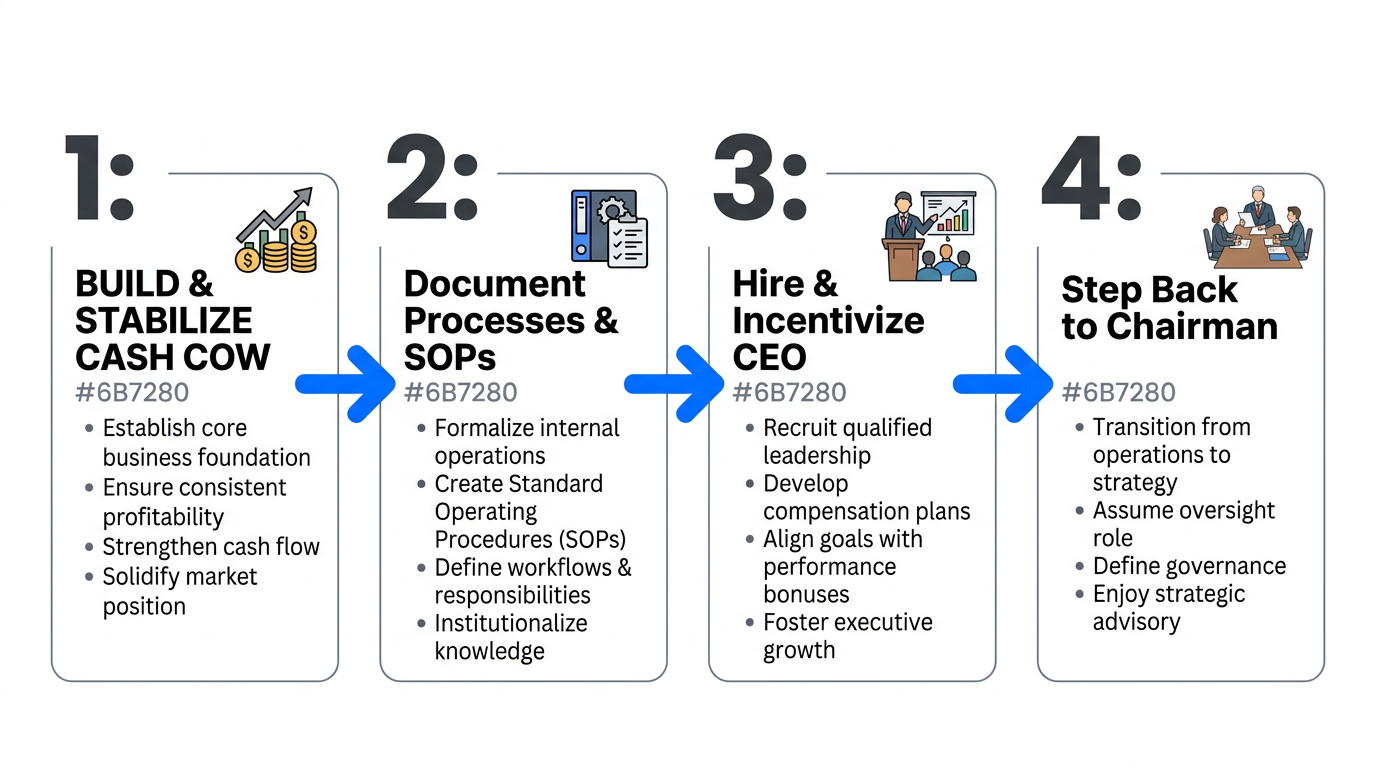
Ready to transition from a single-track entrepreneur to a multipreneur chairman? Follow this sequential playbook inspired by the Lieberman strategy:
Step 1: Identify Your "Unfair Advantage"
Don't just pick a random niche. Build around what you are already exceptional at. For Alex, it was storytelling and media. For Greg Eisenberg, it's community. Your first HoldCo business should be a direct reflection of your existing expertise.
Step 2: Solve a "Manual" Problem
Look for businesses that can be built using automation and offshore talent. Lieberman suggests workflow automation agencies as a massive opportunity. Use tools like Zapier, Make, Notion, and Airtable to replace manual tasks with scalable systems.
Step 3: Validate with "The Tweet"
Before building anything, put out a call to action on social media or platforms like Product Hunt. If you can't get 20 people to DM you or sign up for a waitlist for a hypothetical product, don't build the real one.
Step 4: Hire Your "Obsessive" CEO
Once you have revenue and a proven process, hire a leader. Give them 10-50% of the company. Their job is to take the business from "Village" to "City" while you move on to the next problem.
Step 5: Reinvest Profits into the Next Subsidiary
Take the 30% margins from your first business and use them to fund the validation of your second. Repeat this until you have a diversified portfolio of cash-flowing assets.
The Future of the Personal Holding Company
The Alex Lieberman morning brew exit was the end of one chapter, but his personal holding company is the beginning of a much more sustainable one. By focusing on high-margin, bootstrap-friendly businesses and empowering talented CEOs with significant equity, the multipreneur model offers a path to wealth that doesn't require sacrificing mental health or lifestyle. Entrepreneurship is no longer about the one-in-a-million leap of faith; it's about the intentional, pebble-by-pebble construction of a diversified business empire.