The era of "spray and pray" cold outreach is officially dead. In a world where every decision-maker's inbox is flooded with generic, AI-generated fluff, the only way to break through the noise is via hyper-personalization. However, manual research takes hours. The solution? Transitioning from a manual workflow to an agentic one. Using Perplexity Computer, founders and sales teams can now deploy autonomous AI sales agents that research, draft, and send warm outbound emails while they sleep.
This isn't just another GPT wrapper. We are talking about a virtual computer environment that can run 16 different models, browse the live web, and execute tasks across multiple platforms in parallel. Whether you are selling SaaS, podcast sponsorships, or high-ticket consulting, this playbook will show you how to build a 24/7 sales machine using the latest in outbound sales automation, according to recent Gartner research on sales technology.
The Shift to Agentic Sales Lead Generation
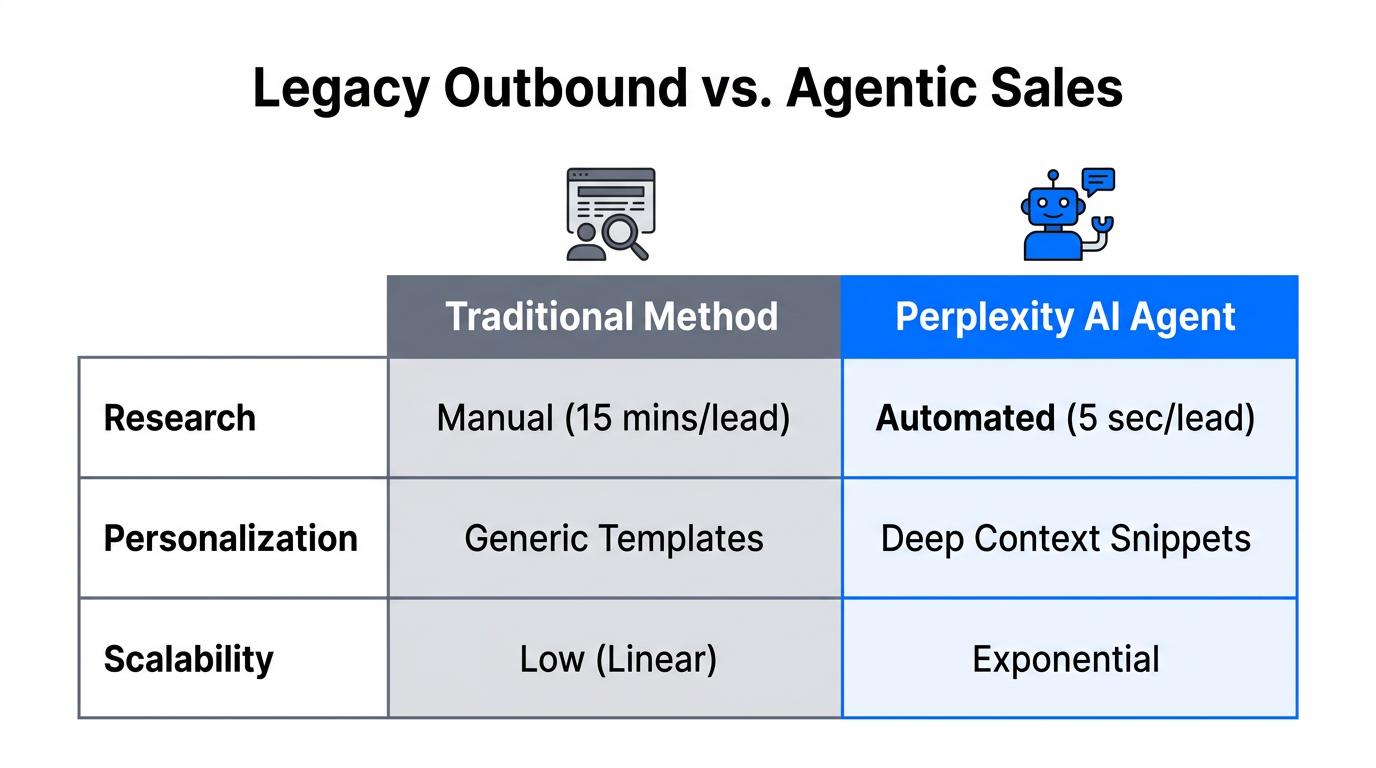
Traditional sales lead generation involves a human rep spending 20 minutes per prospect to find a recent news article or a LinkedIn post to reference. With Perplexity Computer, that process is compressed into seconds. The "Computer" functionality allows you to spin up parallel tasks—essentially hiring five researchers at once to dig into different data points for your target list.
"This turns a computer into a persistent intelligence agent that runs every day without you touching it."By connecting tools like Gmail and LinkedIn directly to the agent, you remove the friction of copy-pasting. The agent isn't just looking for data; it is reasoning through it to find the "why" behind your outreach. It looks for funding rounds, specific pain points mentioned in interviews, and even niche technical projects the founder might have shared on X (formerly Twitter).
Step 1: Connecting the Stack for Automated Outreach
Before you can start sending, you need to provide the agent with its "hands." Perplexity Computer works best when it has access to your communication and research tools. Start by navigating to the Connectors section in your Max plan (currently $200/month).
- Gmail Connection: This allows the agent to draft and send emails directly from your account. Pro tip: Start with a low volume to protect your sender reputation.
- LinkedIn & Social Scraping: Ensure the agent can access LinkedIn profiles to find the most up-to-date career history and recent activity.
- CRM Integration: Connect Salesforce or a specialized creator CRM so the leads found by Perplexity can be automatically synced to your deal pipeline.
Step 2: Leveraging Parallel Research for Deep Personalization
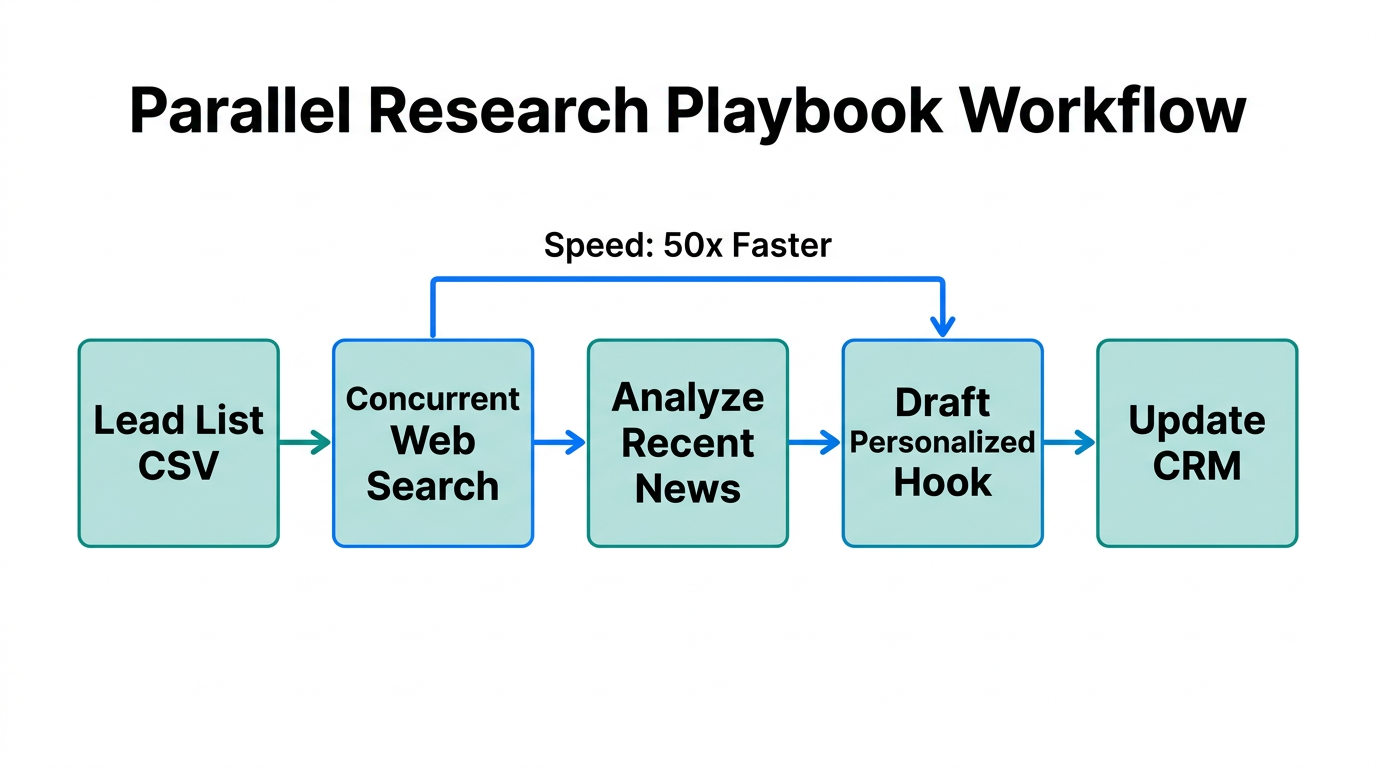
Once your tools are connected, the first task is batch research. Instead of researching one company at a time, you can feed Perplexity a list of 30-50 companies. The agent will then spin up sub-tasks for each one simultaneously.
For each prospect, the agent should be tasked with finding:1. Recent News: Did they just raise a Series A? Did they launch a new feature?2. Specific Interests: What is the founder posting about? For example, if Toby Lütke (CEO of Shopify) recently built an AI tool to analyze MRI results, the agent can find that and reference it as a "wild" project in the intro.3. Funding & Growth: Use data from sources like Crunchbase to mention specific revenue growth or market expansion.
The "Friend-to-Friend" Email Framework
When drafting the personalized cold email, the tone is everything. Avoid the stiff, corporate "I am writing to you today" opener. Instead, instruct the agent to use a "clear, calm, and friend-to-friend" tone. The goal is to make the email look like it was sent by a peer, not a bot. For influencers or creators, using platforms like Stormy AI to discover specific audience metrics can further enhance this personalization by mentioning real-time engagement data that generic scrapers miss.
Step 3: Finding the Real Decision Makers
A common mistake in outbound sales automation is targeting the CEO for every pitch. While the CEO has the ultimate power, they rarely have the time. If you are selling podcast sponsorships, for instance, Toby at Shopify or Dylan Field at Figma is not your target. You need the Head of Partnerships or the VP of Brand Marketing.
"Realistically, CEOs are too busy. The person who actually signs the check is often the Head of Growth or Brand Partnerships."Perplexity Computer can be instructed to specifically find these roles. It cross-references company directories and LinkedIn to identify the individual who actually manages the budget you are after. This increases your response rate significantly because your pitch lands in the right inbox with the right context.
| Prospect Type | Target Role | Personalization Angle |
|---|---|---|
| Early Stage Startup | Founder/CEO | Recent funding / Product launch |
| Mid-Market SaaS | VP of Sales/Growth | Competitor gaps / Scale pain points |
| Enterprise | Head of Partnerships | Strategic alignment / Industry news |
Step 4: Setting Up the Day 3 and Day 7 Follow-Up Sequences
Persistence is the cornerstone of sales lead generation. Most deals are closed in the follow-up, not the initial touch. Perplexity Computer allows you to schedule automated follow-ups if a reply isn't detected in your Gmail inbox.
- Day 3 Follow-Up: A short "bump" that adds a new piece of value. For example: "Saw your competitor just launched [X], thought this might be relevant to our last chat."
- Day 7 Follow-Up: A final check-in with a low-friction Call to Action (CTA), such as "Should I check back in next quarter instead?"
By automating this sequence, you ensure that no lead falls through the cracks while you focus on the hot prospects who have already replied. This level of consistent execution is what separates high-growth startups from the rest.
Step 5: Monitoring Competitors on Autopilot
Beyond direct outreach, AI sales agents can act as your "Eyes and Ears" in the market. You can set up a recurring task in Perplexity to monitor your competitors' activity every morning at 8:00 AM.
The agent can check:
- Pricing changes on their website.
- New feature announcements or blog posts.
- Recent mentions on X or Reddit.
- New podcast sponsors appearing on competitor shows (e.g., monitoring who advertises on My First Million or All-In).
If a brand starts sponsoring a competitor, that is a buy signal. They have the budget and the interest—they just need to hear from you. Having an agent notify you the moment a new sponsor appears allows you to strike while their "podcast budget is hot." For those scaling these efforts in the creator economy, tools like Stormy AI are essential for tracking which influencers are currently driving the most ROI for your competitors.
"Reaching out the moment a brand starts advertising with a competitor means you're hitting them while their budget is active and their interest is high."Step 6: Streamlining Leads into Your CRM
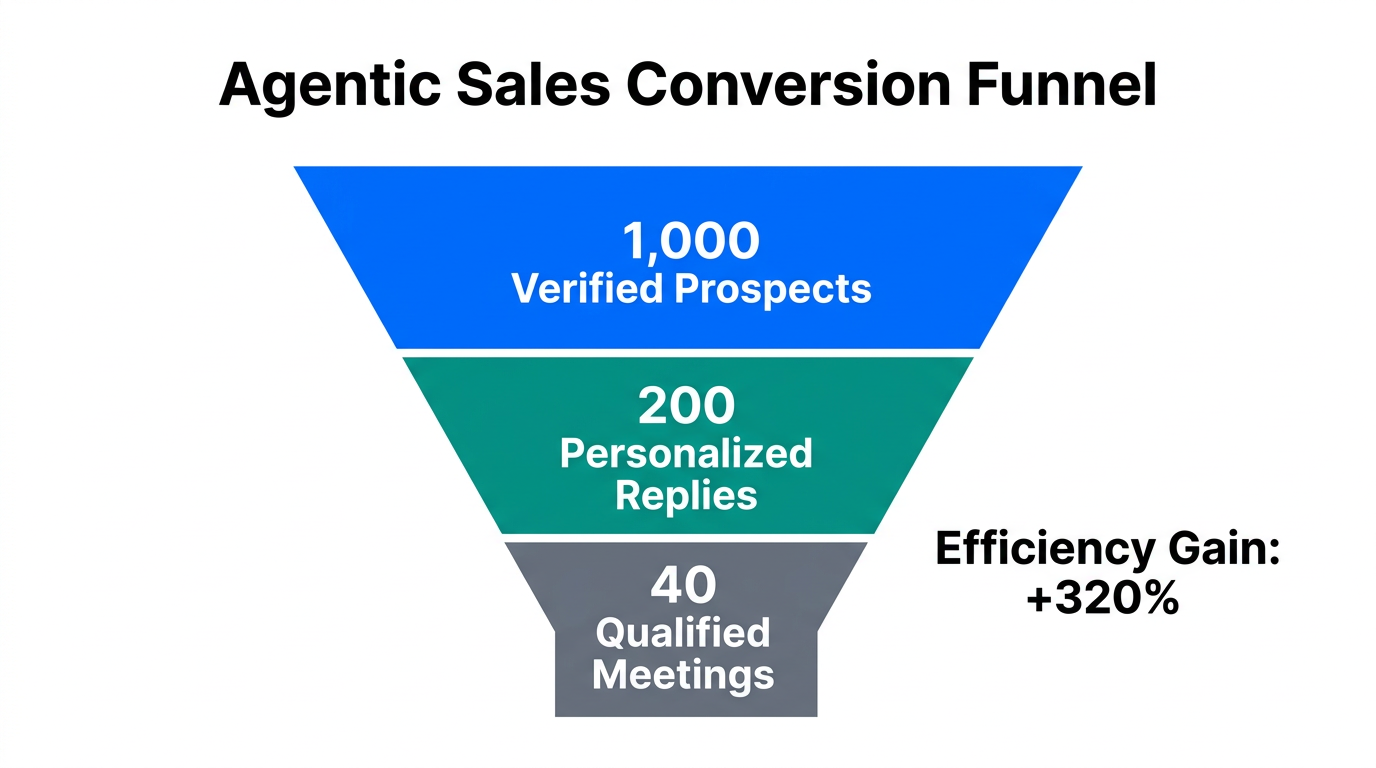
The final step is ensuring all this data lives in a place where your sales team can act on it. Using connectors for Salesforce or Stormy AI, you can have Perplexity automatically create a new Contact and Deal every time it sends a personalized cold email.
This creates a seamless transition from the "agent-led" discovery phase to the "human-led" closing phase. You get the efficiency of AI with the high-touch closing power of your best sales reps.
The Bottom Line on AI Sales Agents
The barrier to entry for high-quality, warm outbound sales has never been lower. By spending $200 a month on a tool like Perplexity Computer, a single founder can do the work of a five-person SDR team. The keys to success are parallel research, hyper-personalization, and autonomous follow-ups.
As you build your sales stack, remember that AI is a multiplier, not a replacement. Use it to handle the drudgery of research and initial contact, and save your human energy for the conversations that matter. Whether you are using Perplexity for general sales or Stormy AI for creator-specific outreach, the goal remains the same: building genuine relationships through better information.