Permissionless Distribution: Scaling a $5M E-commerce Brand via Reselling Gaps in 2026
Learn the permissionless distribution strategy to scale a $5M brand in 2026 by identifying retail gaps, leveraging the First Sale Doctrine, and viral PR stunts.
In the hyper-competitive landscape of ecommerce growth strategy 2026, most entrepreneurs are fighting for the same saturated niches, competing on razor-thin margins against giants. However, a massive opportunity remains hidden in plain sight: physical brands with cult-like followings that stubbornly refuse to sell online. This is the realm of permissionless distribution—a strategy where you identify a multi-billion dollar brand ignoring the internet, build the digital infrastructure they lack, and capture the secondary market moat before they even realize what’s happening.
We are currently seeing a resurgence of 'retail arbitrage at scale,' but with a sophisticated 2026 twist. It’s no longer about scanning barcodes in a clearance aisle; it’s about becoming the unofficial digital arm of a regional powerhouse. By leveraging legal frameworks and viral PR, entrepreneurs are generating millions in free cash flow by simply bridging the gap between physical scarcity and digital demand. According to recent retail industry reports, the secondary market for regional goods is expected to grow significantly as consumer demand for authenticity increases.
The Buc-ee's Case Study: Spotting the $3 Billion Gap
Learn how a simple road trip led to a massive Buc-ee's reselling empire.
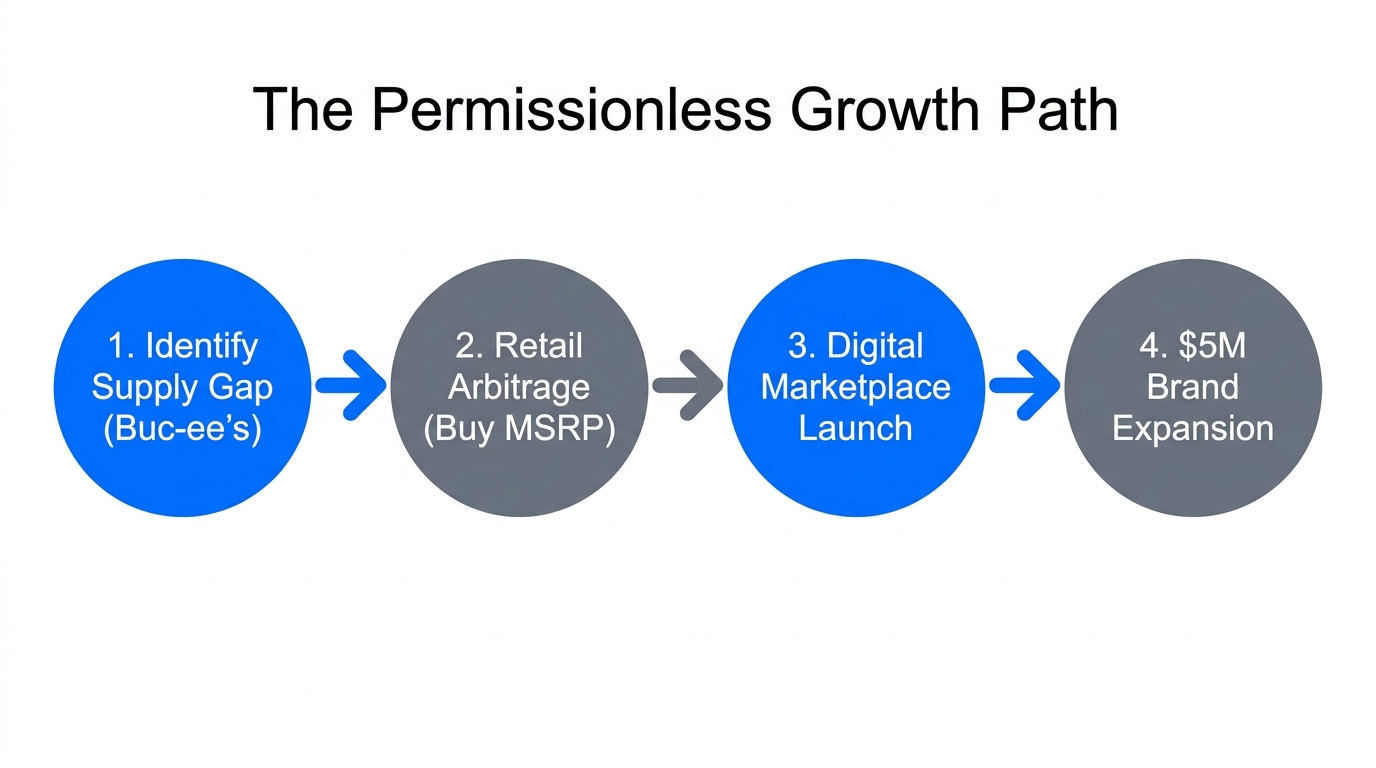
To understand how permissionless entrepreneurship works, one must look at the phenomenon of Buc-ee’s. In 2026, Buc-ee's remains a juggernaut, operating approximately 51 locations with an estimated annual revenue of $3 billion. These aren't just gas stations; they are 'Redneck Disneys'—massive retail hubs the size of a Costco with over 100 pumps and a mascot that people treat like royalty. Despite this massive footprint, the brand's leadership famously ignored e-commerce for years, leaving a gaping void for their most loyal fans.
When entrepreneur Chris Kerner realized that Buc-ee's didn't have a 'Shop' button on their website, he saw more than just a missing feature; he saw a $5 million revenue opportunity. He didn't wait for a partnership or a licensing deal. Instead, he took $3,000, filled a truck with branded snacks and merchandise, and launched Beaver Snacks—a third-party storefront built on Shopify. By the end of his first 30 days, he had generated $200,000 in revenue without spending a single dollar on paid ads.
"I sat there in silence. I felt like capitalism was being murdered. There was no good reason for a $3 billion brand to have zero online presence."
The success of this brand distribution strategy relies on identifying these specific outliers. You are looking for businesses that have 'product-market fit' so strong that they don't feel they need the internet. In 2026, these are often regional grocery chains, specialized hardware stores, or high-end tourist traps. Your job is to provide the digital logistics they are too comfortable to build themselves.
The Legal Framework: Navigating the First Sale Doctrine
Discover the legal hurdles and conversations with general counsel during the scaling phase.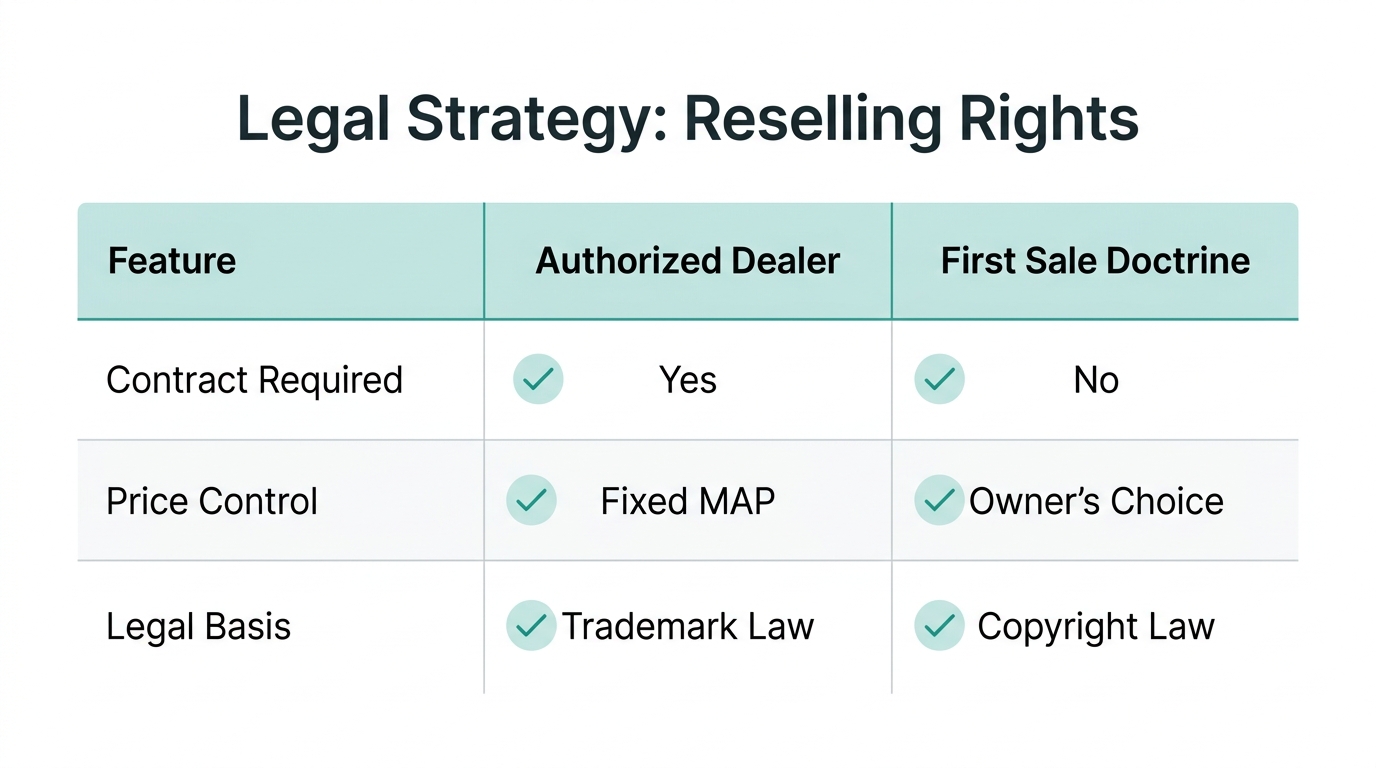
A common fear in retail arbitrage at scale is the threat of litigation. How can you sell another brand's products without their permission? The answer lies in the First Sale Doctrine. This legal principle dictates that once a brand owner sells a trademarked product, their control over that specific physical item ends. The buyer has the right to resell that item to anyone else.
However, there is a fine line between reselling and trademark infringement. To succeed in permissionless distribution, you must follow three strict rules:
- No Imitation: Your website must never claim to be the official brand. Use clear disclaimers on every page stating you are a 'third-party reseller.'
- No Logo Manipulation: You can sell products featuring the logo, but you cannot use the brand's logo as your own company's primary identity.
- Transparency: Be upfront about the markup. Customers are paying for the convenience of distribution, not just the product itself.
| Strategy Component | Official Partnership | Permissionless Distribution |
|---|---|---|
| Setup Speed | Slow (Months of negotiation) | Instant (Days to launch) |
| Legal Basis | Contractual Agreement | First Sale Doctrine |
| Margins | Wholesale (30-50%) | Retail Markup (100%+) |
| Control | High (Brand dictated) | Total (Entrepreneur dictated) |
Failed attempts, like the infamous Pirate Joe's (which resold Trader Joe's products), often fell because they imitated the store's aesthetic too closely. To scale a $5M brand in 2026, you must position yourself as a specialized logistics service rather than a clone of the original retailer.
PR as an SEO Lever: Winning with Viral Marketing Stunts
See how thinking like a journalist can unlock massive PR and organic growth.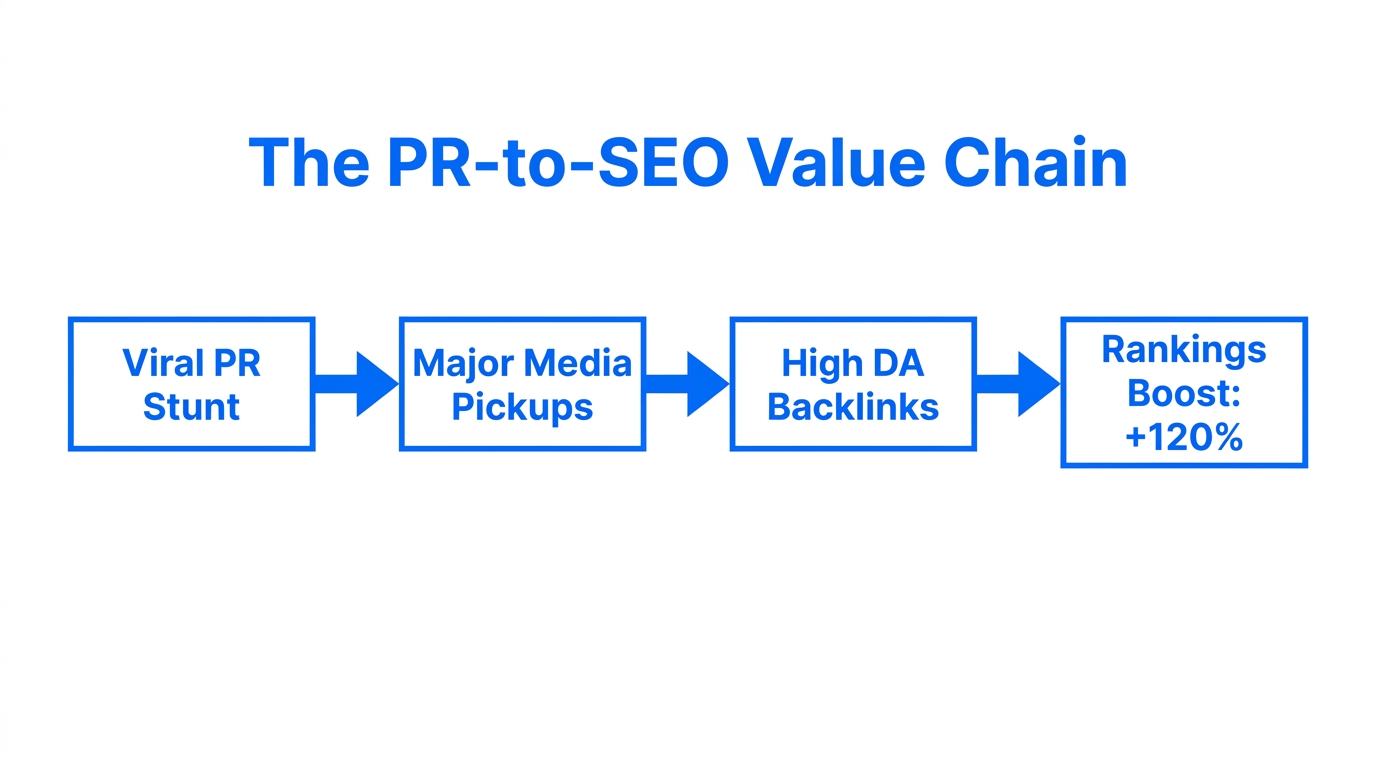
In 2026, viral PR for ecommerce is the most efficient way to build an SEO moat. Rather than slowly building backlinks through guest posts, permissionless entrepreneurs use the brand's own popularity to trigger a media cycle. When Chris launched Beaver Snacks, he didn't hide; he actively emailed every Texas-based reporter he could find at publications like Texas Monthly and Eater.
The pitch was simple: 'Local man brings Buc-ee's online.' Reporters love stories about local heroes solving 'problems' created by giant corporations. This media blitz did two things: it drove immediate traffic and it created high-authority backlinks. In an incredible twist, Buc-ee’s legal counsel eventually reached out—not to sue, but to give their blessing, provided a few disclaimers were added. They even linked to the reseller in their own website’s FAQ. This is the holy grail of SEO: a backlink from the very brand you are reselling.
"Do what makes the best story. When you are at a fork in the road, choose the path that yields the most interesting narrative."
By framing the business as a 'viral marketing stunt' to get the brand’s attention, you lower the perceived threat to the corporation. If you're looking to replicate this, platforms like Stormy AI can help you identify micro-influencers and local journalists who already have an affinity for the target brand, allowing you to seed the story precisely where it will gain the most traction.
Operational Scaling: Managing 100% Markups and 3PL
Explore the consistent year-over-year growth strategies that keep this e-commerce business expanding.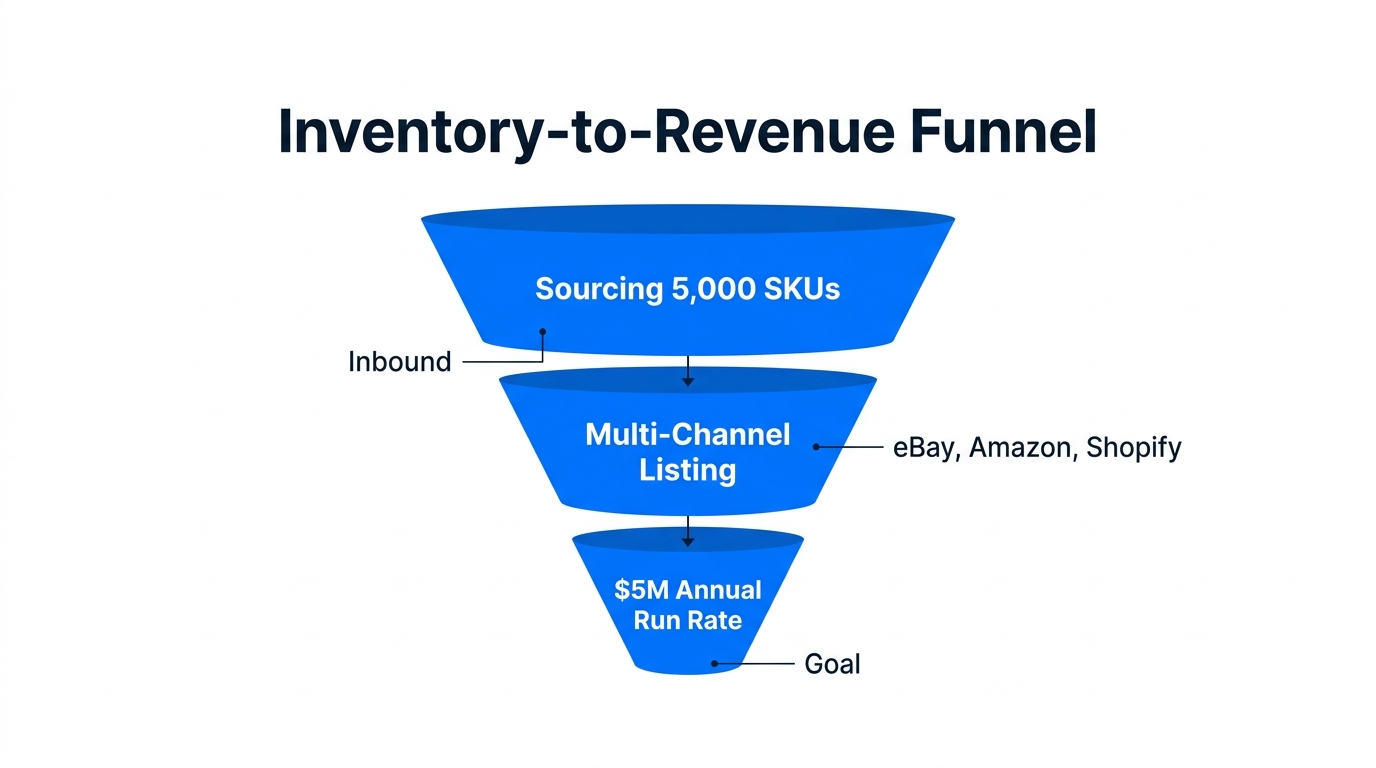
The unit economics of permissionless distribution are unique. Because you are buying at retail prices, your markup must be significant to cover ecommerce growth strategy 2026 costs. Most successful resellers in this space aim for a 100% markup. This covers the retail cost, the labor of procurement, and the overhead of a third-party logistics (3PL) provider like ShipBob.
Scaling requires moving from 'garage-based' operations to a professionalized 3PL machine. In the Buc-ee's example, the team eventually managed $300,000 to $500,000 in monthly revenue. The operational flow looks like this:
- Procurement: Sending teams to retail locations to clear shelves of high-demand, non-perishable items.
- Ingestion: Using tools like Thumbtack to hire local photographers to create high-quality assets for the Shopify store.
- Fulfillment: Leveraging a 3PL to handle the 'pick and pack' of thousands of snacks and t-shirts.
- Tracking: Utilizing analytics platforms to monitor which SKUs have the highest velocity.
The 'Text-Path' Audience: Identifying Your High-LTV Segment
Who is paying a 100% markup for a bag of Beaver Nuggets? The answer is the 'Tex-pat' (Texas Expat)—loyalists who have been displaced from their home state but still crave the brand's identity. This is the 'displaced loyalist' segment. Every regional brand has one. Whether it's a specific coffee from the Pacific Northwest or a snack from the Southeast, there is a demographic that views these products as essential pieces of their personal identity.
In 2026, identifying these audiences is easier than ever. You can use AI-powered creator discovery on Stormy AI to find influencers who have recently moved from your target brand's region to a new one. By sending them 'care packages' of their favorite home-state goods, you trigger intense nostalgia-driven content that converts at a much higher rate than standard ads. These customers don't just buy once; they have a high Lifetime Value (LTV) because your store is their only lifeline to a brand they love.
"You aren't selling snacks; you are selling a cure for homesickness. That is a market with zero price sensitivity."
Using Meta Ads Manager, you can target people who 'Recently Moved' and have interests in specific regional keywords. This laser-focused targeting, combined with permissionless distribution, allows you to build a profitable moat that a massive corporation simply cannot compete with due to their own internal bureaucracies.
The 2026 Permissionless Playbook
Scaling a $5M brand via reselling gaps is not about inventing the next big thing; it is about shameless cloning and identifying where the world’s biggest companies have left money on the table. In 2026, the barrier to entry for ecommerce is low, but the barrier to identifying scarcity is high. If you can find a brand that people love—but can't buy—you have the foundation for a multi-million dollar business.
Step 1: Identify the Scarcity
Look for regional brands with over $500M in revenue that have no 'Add to Cart' button. Use the 'Buc-ee’s Test': Is the product a part of the customer’s identity?
Step 2: Validate with a 'Viral Stunt'
Don't spend $50k on inventory. Spend $3k, build a quick Shopify site, and email 50 local reporters. If the media picks it up, you have a winner.
Step 3: Build the Logistics Moat
Move your operations to a 3PL as soon as you hit $50k/month. Your job is to manage the brand perception and the SEO, not to pack boxes. Utilize advanced tools to find influencers in the 'expat' community to keep the momentum going without relying on expensive PPC campaigns.
By following this permissionless entrepreneurship model, you aren't just a reseller—you are a market maker. You are providing a service that the brand is too large to see and the customers are too desperate to ignore. In the economy of 2026, speed and distribution beat innovation every single time.