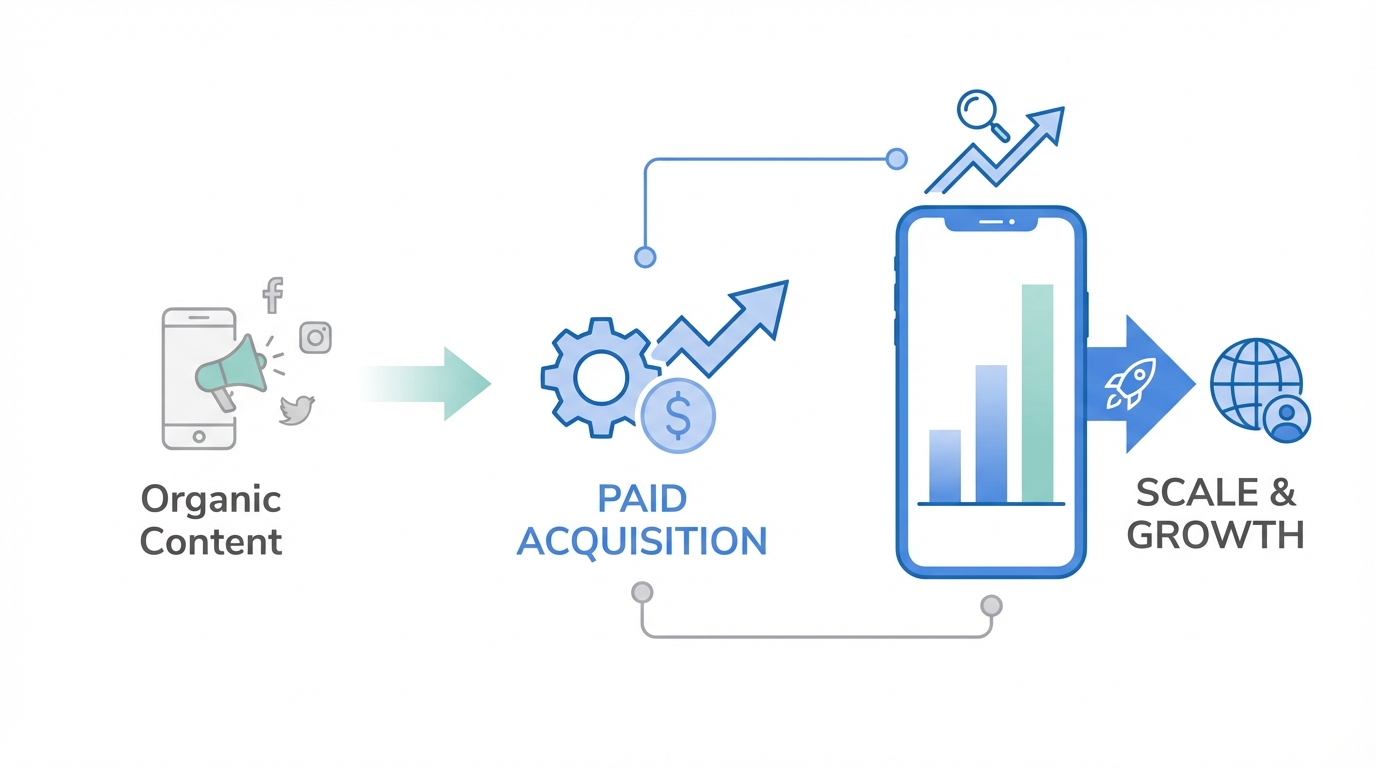
The dream of every app founder is the viral hit—the single TikTok video that reaches millions of people and sends the App Store ranking into the stratosphere overnight. But the reality is often much bleaker. There are founders who have racked up 10 million views on a single video only to realize they made a mere $1,000 in revenue. Organic content is an uphill battle characterized by luck, inconsistent algorithms, and a lack of predictable intent. If you want to move from a hobby to a high-growth business, you need a robust paid acquisition for mobile apps strategy that treats growth as a science, not a gamble.
The 'Virgin vs. Chad' Marketing Shift: Predictability Over Luck

In the world of Facebook Ads for apps and TikTok marketing, there is a common meme known as the "Virgin Organic Poster vs. the Chad Paid Marketer." The organic poster has PTSD from waking up to zero views on launch day, despite hours of content creation. The Chad paid marketer, however, has zero followers but still makes money because they understand the unit economics of every install.
Relying on organic reach is like waiting for lightning to strike. Scaling mobile app revenue requires building a flywheel where you can predictably spend one dollar to make two. Companies like Clear 30, which tripled their app revenue in just 8 weeks, did so by moving away from the unpredictability of Reddit and SEO and leaning into app install campaigns. When you pay for traffic, you aren't just buying views; you are buying data. Stormy AI is an AI-powered platform for creator discovery, especially for mobile app marketing and UGC campaigns, helping founders transition into this phase by identifying the right creators who can produce the high-performing assets needed for paid success.
Creative Strategy: The Power of Hyper-Specificity and Comedy

The biggest mistake in a mobile app marketing strategy is trying to appeal to everyone. In a crowded social feed, a generic "quitting weed app" or "fitness app" ad will be scrolled past. The high-converting strategy is hyper-specific callouts. Asher and Thatcher, the founders of the Clear 30 app, found success by calling out incredibly niche scenarios. An ad might start with: "Are you someone that hangs out in your basement after school and hits your pen until 3:00 a.m. while watching skateboarding videos?"
While that specific callout narrows the audience, it creates an immediate psychological hook for the person it describes. They feel seen by the brand. Even if the situation doesn't apply perfectly to everyone, the sheer specificity—often combined with comedy—grabs attention. Using relatable, unpolished-looking content is far more effective for building trust than highly produced studio commercials. To find the right faces for these ads, savvy marketers use the Stormy AI search engine to find creators across TikTok and Instagram using natural-language prompts like "fitness creators in LA with high engagement."
Demographic Data Mining: Beyond the Surface Metrics
One of the most profound realizations for mobile app founders is the massive gap in conversion rates between age groups. It is easy to get distracted by "vanity metrics" like likes or comments from a younger audience. However, industry data often shows that 18 to 20-year-olds might convert at a dismal 0.19%, while users aged 26 to 30 convert at double that rate.
When scaling mobile app revenue, you must be willing to alienate the audience that likes your content but doesn't pay. Before partnering with influencers, you should use Stormy AI to vet creators and get a quality report that detects fake followers and provides deep audience demographics to ensure you aren't wasting budget on the wrong age groups. Shifting spend away from low-converting segments like 18-25 year olds on Apple Search Ads or Meta can instantly improve your ROAS.
Attribution and Analytics: Tracking the Unit Economics


You cannot scale what you cannot measure. Successful apps use a sophisticated stack to understand where every dollar goes. Tools like Amplitude allow you to build funnels that show exactly where users drop off, while Superwall helps manage paywall experimentation without needing constant code updates.
A key tactic for attribution is the post-install survey. While mobile measurement platforms (MMPs) are essential for algorithms to learn which users convert, asking the user "How did you hear about us?" directly in the onboarding provides a layer of ground-truth data. You can further analyze campaign performance and track individual videos/posts across all platforms in the Stormy AI Post Tracking section. Knowing that a user who wants "mental clarity" converts at a higher rate than one who wants to "save money" allows you to refine your ad copy and onboarding questions to lead with the highest-value pain points.
The Onboarding Playbook: Tripling Revenue in 5 Minutes
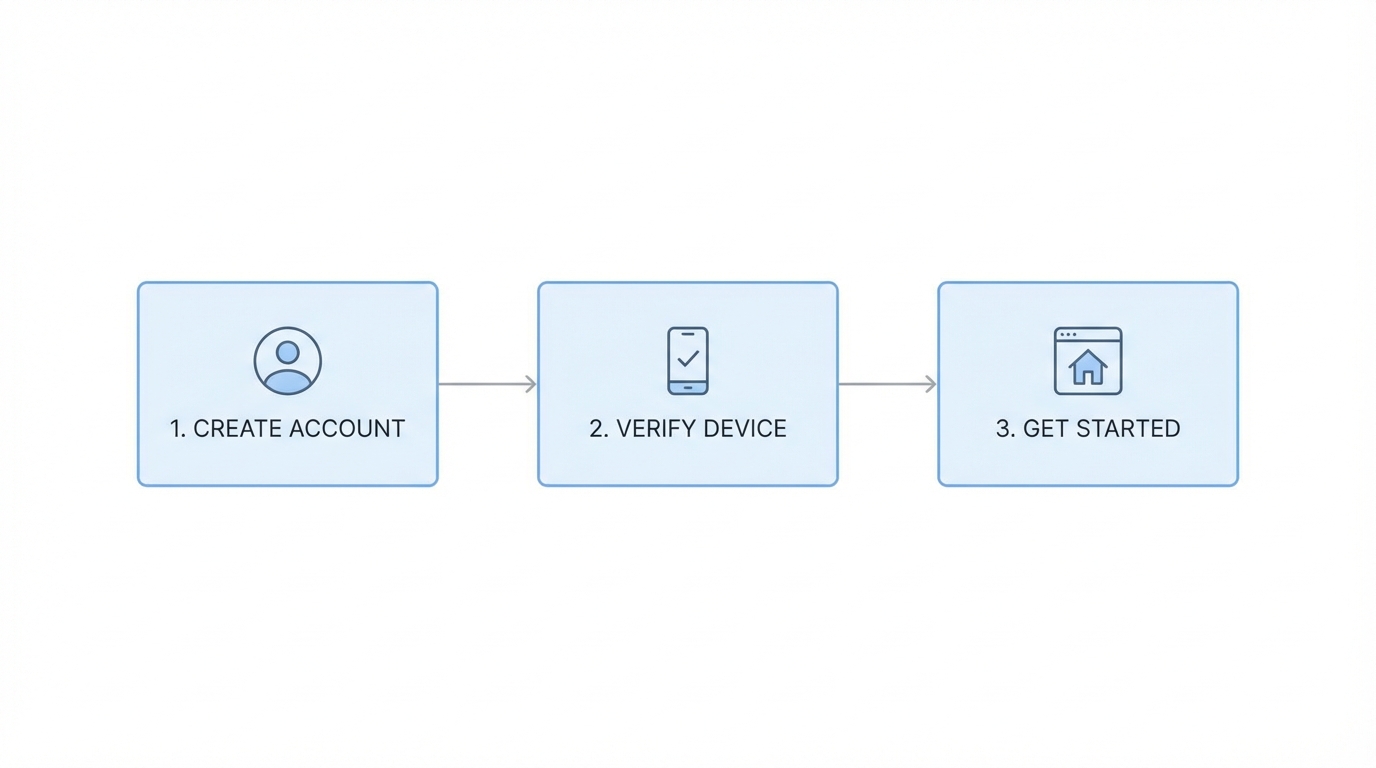
The Clear 30 team found that 85% of users decide if they are going to pay for an app in the first 5 minutes. If your onboarding doesn't convey value immediately, you are burning your ad spend. Here is the playbook for a high-converting onboarding flow:
Step 1: Collect Data Early
Start tracking before the user even signs in. If you wait until a phone number or email is provided, you have no visibility into how many people are dropping off on the very first screen. Collecting the user's name early on creates a conversational feel rather than a clinical survey.
Step 2: The Value Equation
Convey the Dream Outcome multiplied by the Percentage Likelihood of Achievement, divided by the Time Delay and Effort. Your onboarding should show users exactly where they will be in 30 days. This framework, popularized by the Value Equation, means showing users they will have more money, less anxiety, and better mental clarity.
Step 3: Strategic Friction
Friction isn't always bad. Questions like "What are your triggers?" or "What are your long-term goals?" require the user to sit and reflect for 20-30 seconds. This is psychological commitment. Once a user invests time into answering deep questions, they are significantly more likely to convert at the paywall.
Step 4: The Fair Trial and Trust
Instead of being "scummy" and hiding the price, use a "Fair Trial" screen. Explicitly state: "This costs money. We will remind you two days before your trial ends so you aren't charged if you don't like it." This builds immense trust and can increase conversion by 3-5% because users don't feel like they are being tricked.
Step 5: Utilize SMS for Retention
During onboarding, collecting a phone number and using tools like Twilio to send personal, human-sounding texts is a game-changer. 95% of texts are read within 5 minutes, making it the most salient channel for keeping a user engaged with the program.
Paywall Optimization: Moving from Features to Programs
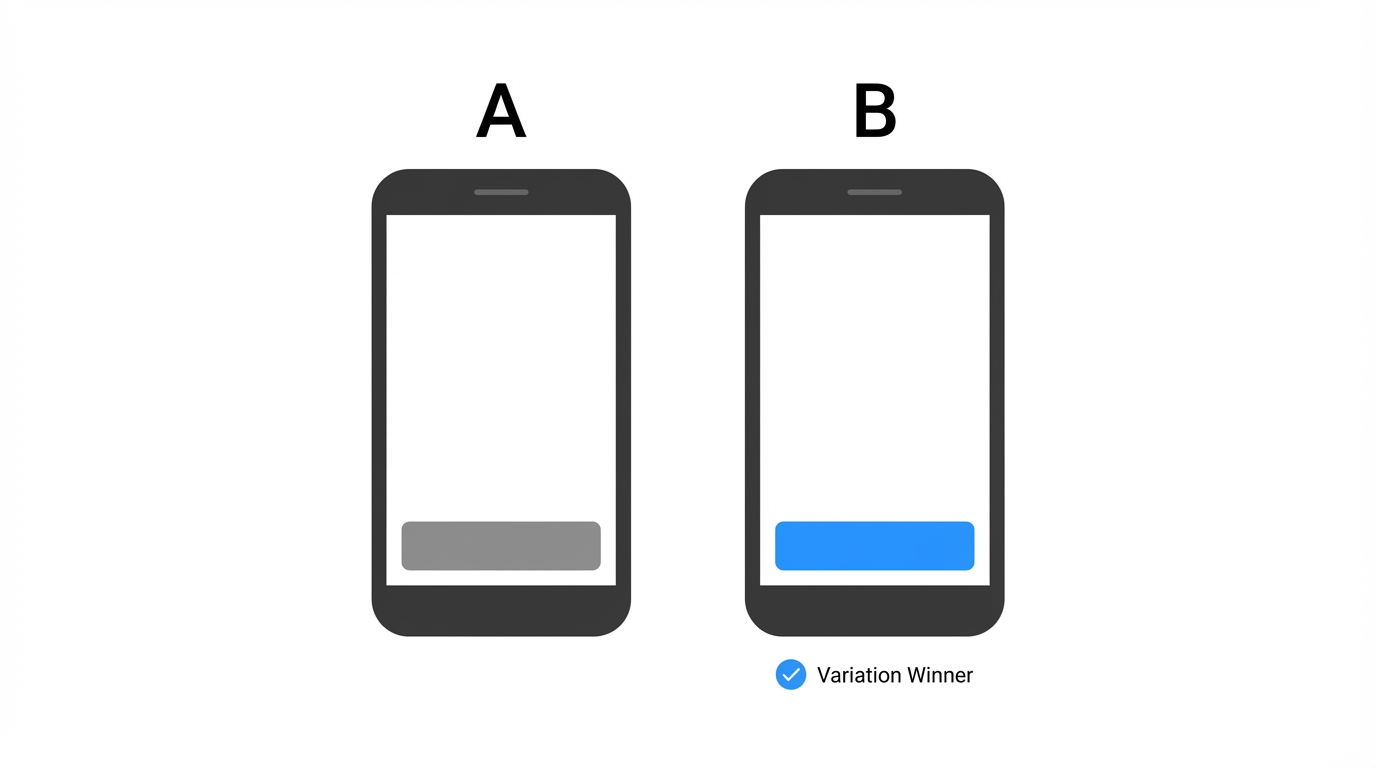
The shift from a 20% to a 30% paywall conversion often comes down to how the offer is framed. A generic list of features (e.g., "Accountability texts," "Peer support") is often less effective than outlining a day-by-day program.
By showing a timeline—Day 0 to Day 7—and highlighting specific wins, you address the user's time delay concerns. For example, telling a user that their "brain begins healing within 48 hours" provides a quick win that makes the subscription feel worth it immediately. Using Superwall to A/B test a feature-based paywall against a program-based paywall is one of the highest-leverage activities a founder can perform.
Social Proof and the 'Review Glitch'
High ratings on the App Store are critical for conversion. A "review glitch" (a common tactic among top-tier apps) involves asking for a rating inside the onboarding, right after the user has received free value or insights about themselves. Since they haven't encountered any bugs or paywalls yet, they are much more likely to click five stars. Clear 30 saw their reviews skyrocket from 50 to nearly 1,000 using this exact method, which in turn boosts organic discovery and trust for paid users as seen on Sensor Tower data.
Conclusion: Building a Scalable Future
Scaling a mobile app is no longer about chasing the elusive viral video. It is about a disciplined approach to paid acquisition for mobile apps, hyper-specific creative assets, and an onboarding flow that serves as a high-performance sales funnel. By moving from organic luck to paid predictability, you can stop worrying about zero-view days and start focusing on scaling your unit economics. Whether you are automating your influencer outreach with an AI agent on Stormy AI or testing paywalls with Superwall, the goal remains the same: treat your app like a science, and the revenue will follow.