On March 12, 2026, the landscape of local commerce shifted forever. With the official launch of Ask Maps, Google integrated the Gemini AI engine directly into its navigation interface, moving us from a world of static lists to one of conversational local discovery. For small business owners and marketers, the old goal of ranking for "Plumber NYC" has been replaced by a much more complex challenge: appearing in a natural conversation when a user asks, "Who can fix my leaking sink before my dinner party tonight?" In this new era, your functional visibility depends on intent alignment and entity trust rather than just keyword density.
The New Reality: Local Search in 2026
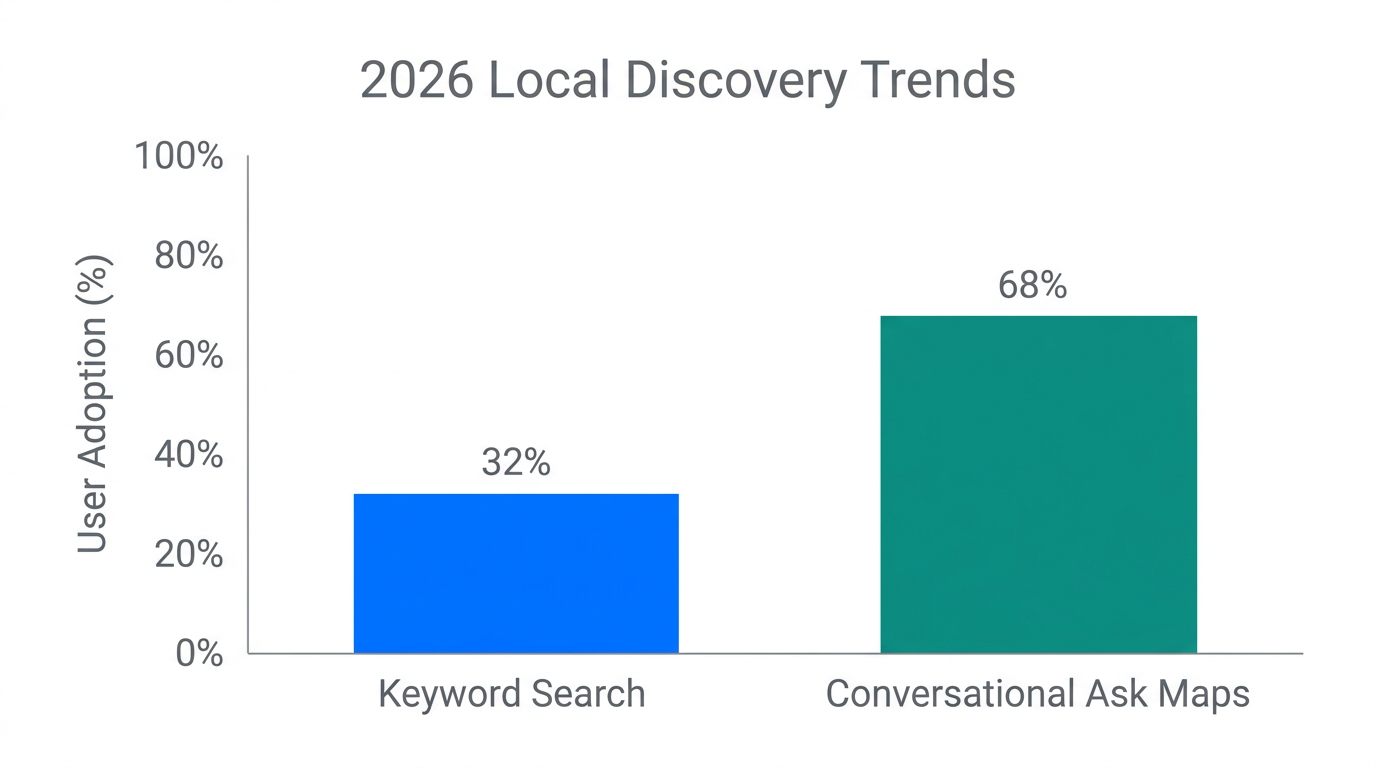
As we navigate 2026, the numbers tell a clear story. The global AI in marketing sector has surged to nearly $217.33 billion, and local intent drives over 50% of all Google searches. However, the way users find businesses has changed. Search Engine Land reports that AI Overviews (AIO) now appear for 68% of local queries, often answering the user's question before they ever click a link. This has led to a rise in zero-click searches, which now account for roughly 60% of traditional engine activity.
To succeed with an Own Any Local Market strategy, businesses must pivot from "citation volume" to "semantic proof." This involves feeding the AI exactly what it needs to verify your expertise, authoritativeness, and trustworthiness at a hyperlocal level.
"AI local discovery is 30x more challenging than traditional ranking. It evaluates 7 trust factors including entity verification and structured content quality." — Naveed Ganatra, AI Search Specialist
The 8-Step Blueprint for Functional Visibility
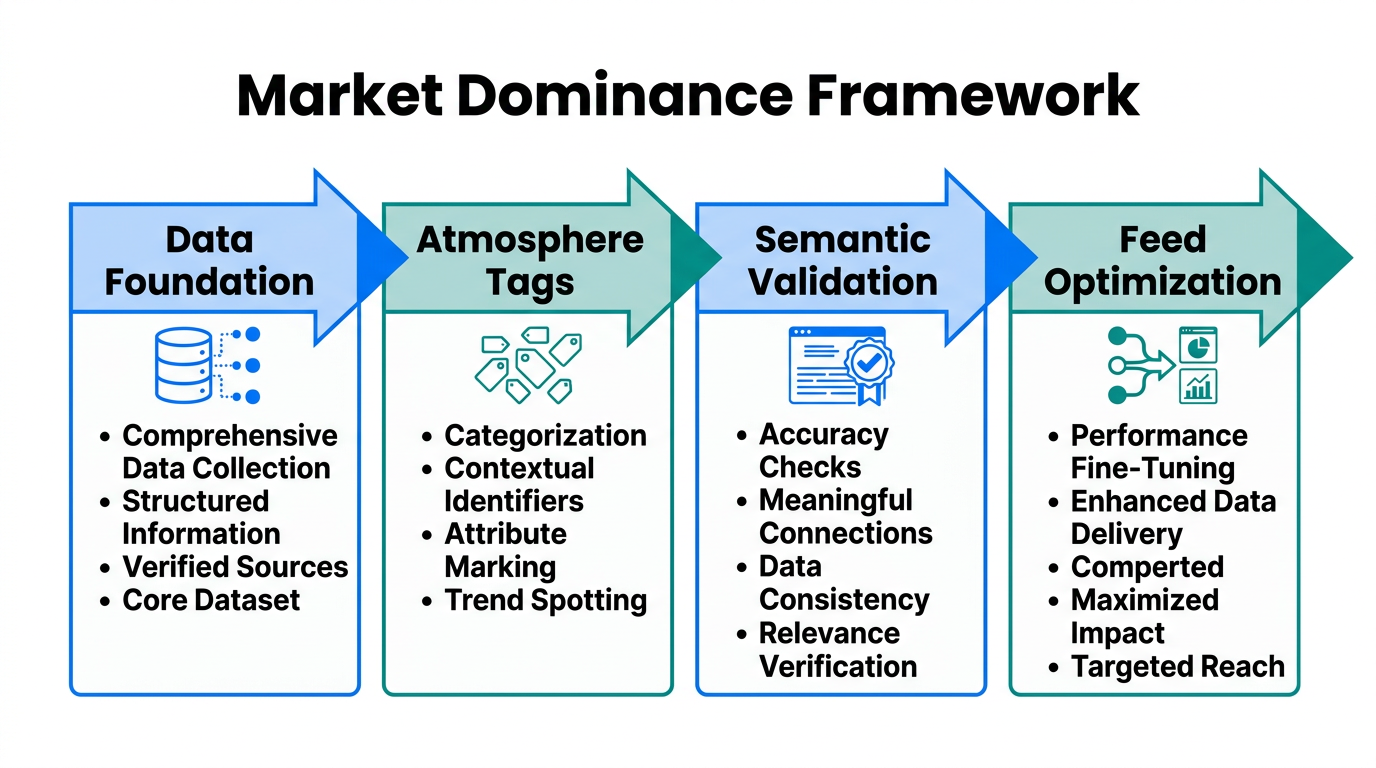
To achieve Ask Maps local SEO dominance, agencies are now utilizing a standardized 8-step blueprint to ensure their clients remain visible in the Gemini-powered search ecosystem.
- Profile Integrity: You must fill 100% of your Google Business Profile (GBP) fields. To the Gemini engine, a thin profile is "functionally invisible."
- Signals of Activity: Post 1–2 updates per week to your GBP. This serves as "Proof of Life," telling the AI that your business is operational and engaged.
- Visual Proof: Upload weekly "Before & After" photos or videos edited via CapCut or similar tools. In 2026, AI algorithms "read" these images to confirm the services you claim to offer.
- Keyword-Rich Reviews: Instead of generic praise, ask customers to mention the specific service and suburb. For example: "The best HVAC repair in Nashville."
- Response Speed: Aim to respond to all reviews within 24 hours. Rapid engagement is a high-weight metric for the 2026 algorithm.
- Hyperlocal Location Pages: Create suburb-specific pages (400–700 words) on your site to pass geographic relevance back to your GBP.
- Local Business Schema: Use advanced structured data to let your website "talk" directly to the Google Maps API.
- Conversational Audit: Regularly run natural language queries (e.g., "Where is a quiet coffee shop with fast Wi-Fi?") to see if your business appears in the Ask Maps response.
For brands looking to scale this visual proof across multiple locations, platforms like Stormy AI can help source local UGC creators who generate the authentic video content that Google’s AI now prioritizes for "Atmosphere" verification.
Mastering Atmosphere SKUs and Enterprise Search Calls
One of the most significant shifts in local search trends 2026 is the technical way Google categorizes business data. The Google Places API (New) now uses a tiered system that dictates which businesses get recommended in conversational search.
| Tier | Data Included | Importance for Ask Maps | Basic info (Address, ID, Location) | Low (Baseline requirement) | Dynamic Street View & Star Ratings | Medium (Helps with visual search) | Atmosphere Data (Price level, amenities, status) | High (Critical for conversational AI) |
|---|
According to Nicola Lazzari, Ask Maps relies heavily on Atmosphere SKUs. If your GBP is missing attributes like "dog friendly," "wheelchair accessible," or "outdoor seating," you are automatically excluded from the Enterprise-level search calls Gemini makes. This means even if you have a 5-star rating, you won't appear when a user asks for a "dog-friendly patio with quiet vibes."
"Atmosphere is the new SEO. If the AI can't verify your amenities, you don't exist in the conversation."
Transitioning to Semantic Review Proof and Hyperlocal E-E-A-T
In 2026, Review Sentiment has completely overtaken Review Volume. AI now scans the content of your reviews to build a semantic map of your business. A single review saying "The Wi-Fi was 200mbps and the atmosphere was silent" is infinitely more valuable than fifty "Great place!" ratings with no text.
This is part of what experts call Hyperlocal E-E-A-T (Experience, Expertise, Authoritativeness, and Trustworthiness). Following Google’s E-E-A-T guidelines, which prioritize verifiable local authority, the search engine now delivers vastly different results for users just blocks apart. To "own" your market, you need to prove you are the best option for that specific neighborhood.
Becoming a Landmark with Immersive Navigation
Google’s 2026 update also introduced Immersive Navigation, a 3D visual upgrade to Maps. This feature prioritizes businesses with rich visual data—such as interior Street View and 3D photos—as landmarks. Imagine a voice-guided navigation system saying, "Turn left after the blue-fronted bookstore." If your business is that bookstore, you have achieved landmark status, which significantly boosts brand recall and foot traffic.
Businesses using tools like Leverage Local or Localo are already automating the creation of AI-driven local sites that feed these 3D visual requirements. By integrating these visuals into your Google Maps Gemini marketing, you move beyond being a dot on a map to becoming a physical anchor in the user's journey.
Step-by-Step Audit: Testing Your Ask Maps Readiness
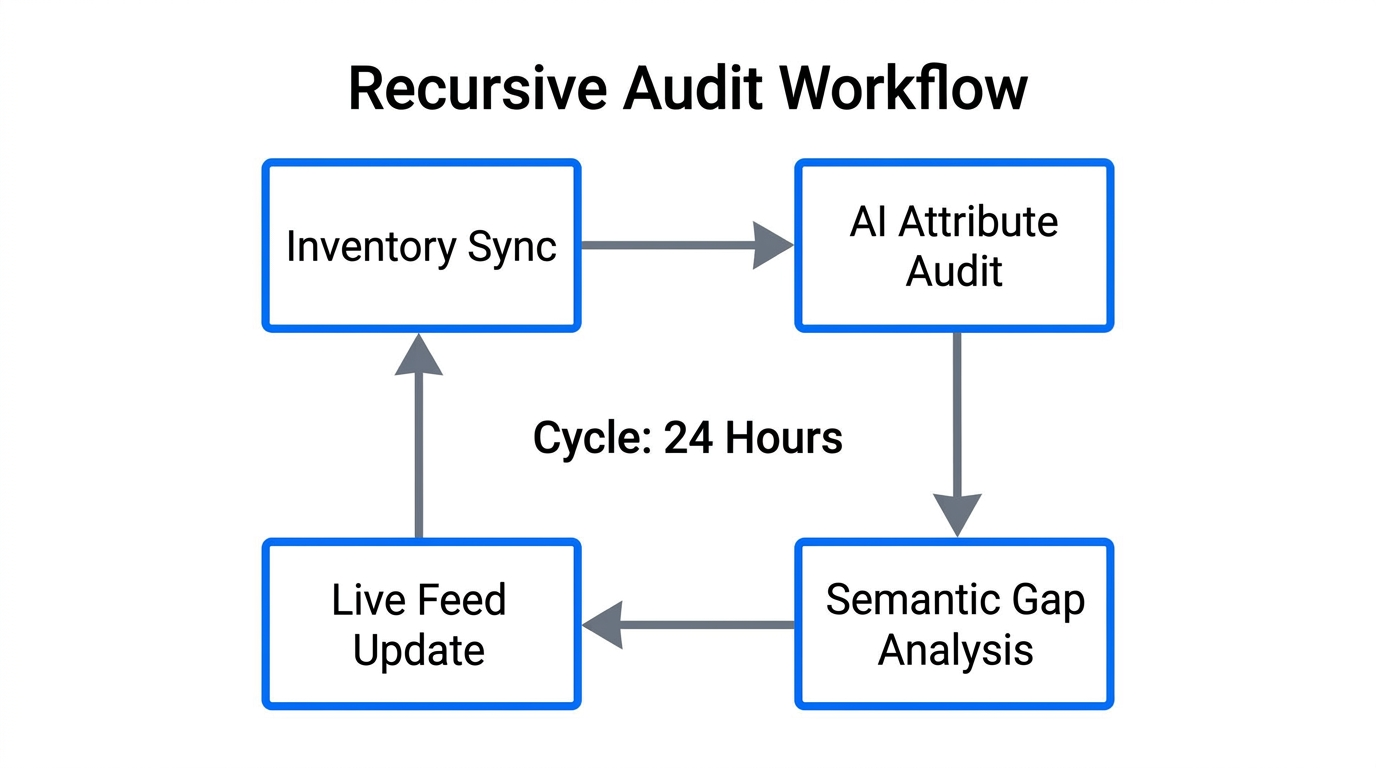
To determine if your Own Any Local Market strategy is working, you must perform regular natural language audits. Stop searching for keywords; start asking questions.
Step 1: The Contextual Query
Open Google Maps and use the "Ask Maps" button. Use a multi-condition query like: "Find a quiet coffee shop with fast Wi-Fi and a latte that isn't too sweet." If you don't appear, examine your reviews and website copy—do they mention "quiet," "Wi-Fi speed," or "latte variety"? If not, the AI has no way to match you to the query.
Step 2: The Urgency Test
Test queries like "My phone is dying—where can I charge it nearby without a long wait?" This tests if your Atmosphere SKUs (like "outlets available") are correctly indexed in the Google Places API.
Step 3: The Safety and Timing Check
Queries such as "Are there public tennis courts with lights on nearby?" test your business's ability to provide real-time utility data. For businesses, this means ensuring your "Opening Hours" and "Live Busy-ness" data are 100% accurate.
"AI marketing tools aren’t replacing marketers—they’re giving them superpowers to understand exactly what the customer needs in the moment." — Bob Sabra, Hovi Digital Lab
Conclusion: The Future of Local Ownership
Dominating a local market in 2026 requires a monthly investment of anywhere from $2,000 to $4,500 for AI-integrated strategies, but the ROI is clear. Businesses adapting to conversational local discovery are seeing a 14.6% conversion rate, nearly ten times that of traditional SEO. By mastering the 8-step blueprint, optimizing for Atmosphere SKUs, and leveraging high-quality UGC through platforms like Stormy AI, you can ensure your business isn't just found—it's recommended.
The transition from "Keywords" to "Conversations" is complete. Those who speak the language of the Gemini-powered Maps will own their market; those who don't will remain functionally invisible.