Imagine working just 20 hours a week from anywhere in the world while a business you built prints money in your sleep. For Dimitri, the founder of YourMove AI, this wasn't just a fantasy—it was his reality for five consecutive months. While the dream of passive income is often sold as an overnight miracle, the truth behind scaling a side project to $30,000 per month is a disciplined, multi-year grind. It requires a fundamental shift in perspective: moving from being a solo 'builder' to becoming a 'manager-founder' who leverages specialized talent to buy back their time.
The Manager-Founder Framework: Funding Growth with a W-2
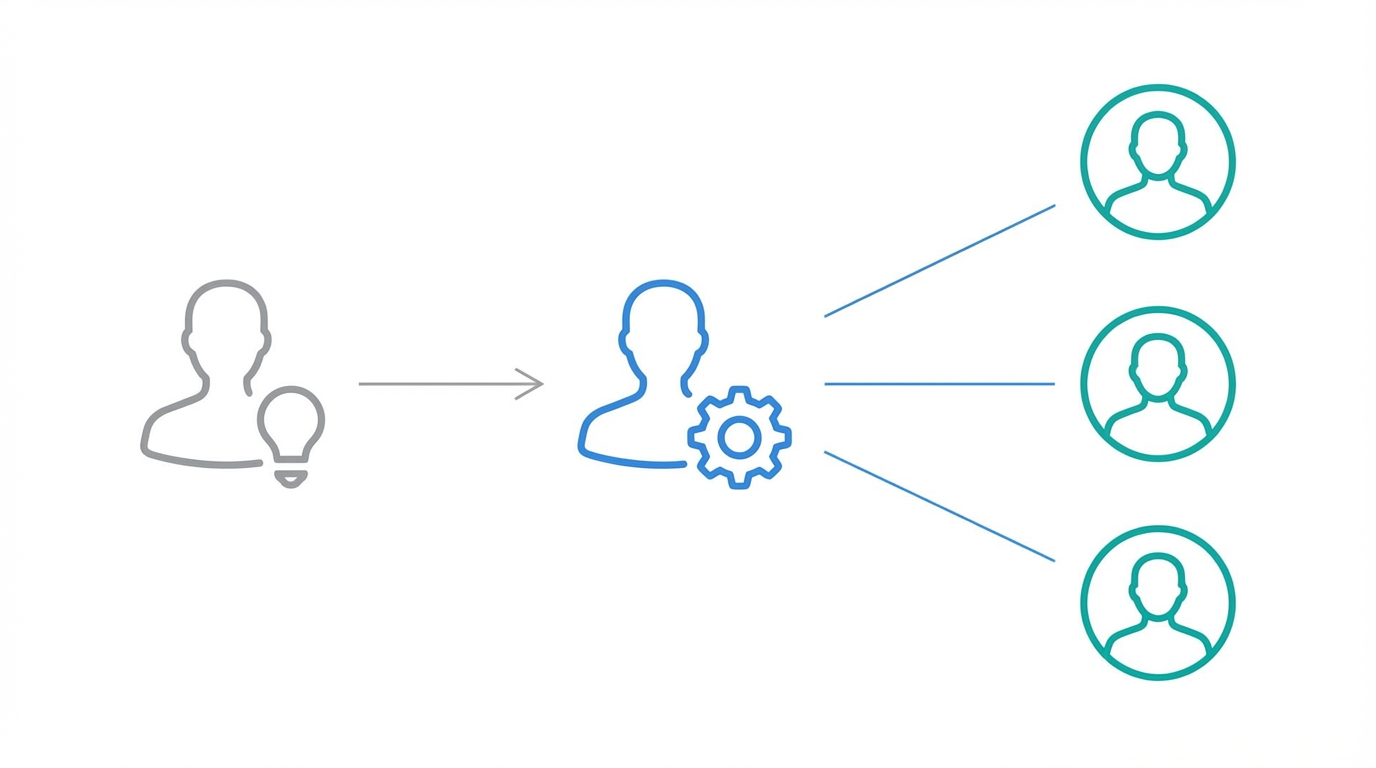
The traditional narrative of the "scrappy founder" involves quitting your job and eating ramen until your app takes off. However, there is a more sustainable, less risky path: using your high-salary tech job as your own private venture capital fund. By acting as a manager-founder, you can afford to be unprofitable in the short term, reinvesting 100% of your revenue—and even a portion of your paycheck—into a distributed team. This approach is particularly effective when you want to scale a business with contractors without sacrificing the security of your primary income.
Dimitri worked as a data science manager at OpenDoor while building his AI dating assistant. Instead of trying to learn every skill from scratch, he viewed his salary as a tool to bypass the learning curve. If your hourly rate at a tech giant is $150, it makes no sense to spend five hours struggling with a CSS bug that an expert on Upwork can fix for $50. This mindset allows you to maintain a high-status career while building a high-leverage asset in the background.
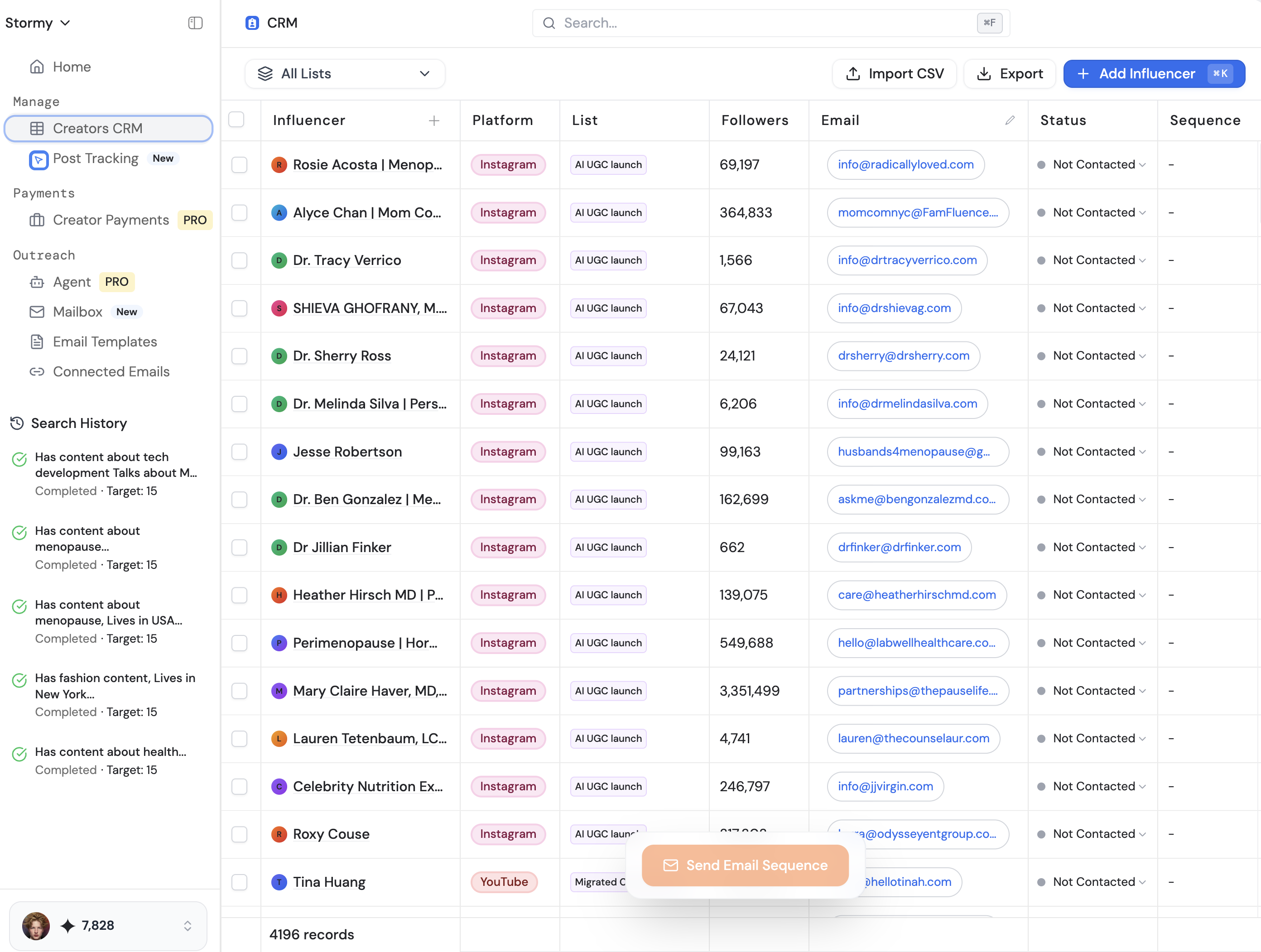
By the time YourMove AI reached its peak, it was generating $30k a month at an 80% margin. However, getting there took two and a half years of consistent reinvestment. For the first year, the project made almost nothing. It took six months just to start monetizing and another year to hit the first $1,000 in monthly revenue. The key was not quitting when the numbers were small, but rather using Stormy AI for influencer marketing and automated outreach, or Upwork to find help that kept the momentum moving even when the founder was busy with his 9-to-5 responsibilities.
Step 1: Identifying Painkiller Problems over Vitamins
Before hiring freelancers for startups, you must ensure you are solving a problem people are desperate to fix. In marketing, we distinguish between "vitamins" (things that make life 10% better) and "painkillers" (things that solve an acute, immediate struggle). High-intent problems are significantly easier to monetize. For instance, while a new to-do list app is a vitamin, a tool that helps a single person navigate the exhausting world of online dating is a painkiller.
Dimitri’s product, YourMove AI, focused on capturing latent demand. People were already searching for solutions to their dating struggles on platforms like Reddit. By creating a tool that actually provided flirty responses and profile reviews, he tapped into a core human need. When you target these "seven deadly sins" or core human instincts, the sales process becomes much shorter. You don't have to convince people they have a problem; you only have to prove that your tool is the solution.
Step 2: Hiring and Vetting a Distributed Team on Upwork

To successfully outsource app development and marketing, you need a strategy for vetting talent that minimizes risk. Many founders fail because they hire the first person who gives a low quote, only to realize the code is broken or the content is AI-generated fluff. Upwork management for founders requires a systematic approach to interviewing and testing.
Breaking Down the Functions
Don't hire a "generalist" to build your entire app. Instead, break the project into three to five distinct parts and put a fixed price on each. This prevents "cost bloat" where developers claim a task is taking longer than expected. Use tools like ChatGPT to estimate the complexity of features if you are non-technical. If the AI says a feature should take 10 hours and a freelancer asks for 50, you have a baseline for negotiation.
The Trial Phase
When you begin hiring freelancers for startups, always start with a small, paid test project. Dimitri noted that his first developer hire was a failure, but he learned what "good" looked like through that experience. By his second hire, he was better at spotting red flags. At one point, he managed 10 to 12 different contractors simultaneously, most of them working only a few hours per week on highly specialized tasks like:
- SEO Content Writing: Creating articles that target low-competition keywords.
- Customer Support: Handling user queries for as little as $5/hour to keep the founder focused on strategy.
- Email Sequences: Setting up automated nurturing flows using Klaviyo or similar tools.
- App Marketing: Using Stormy AI's natural-language search engine to find and vet creators for authentic video ads on TikTok and Instagram.
Step 3: Turning PR into a Defensible SEO Moat

One of the most brilliant aspects of the YourMove AI startup outsourcing playbook was how it handled growth. While Dimitri was featured on major outlets like The Wall Street Journal, Fox Business, and Wired, these PR hits didn't actually drive the majority of his users. Instead, they provided something much more valuable: Domain Authority (DA).
High-authority backlinks from reputable news sites told Google that his website was a trusted source. He then hired SEO contractors to leverage this authority by targeting keywords with high search volume and low competition, such as "good morning text messages" or "best pickup lines." This SEO machine eventually drove 50% of his traffic. Because he had the budget from his day job, he could wait the 3-6 months required for SEO to kick in—a luxury that many cash-strapped bootstrappers don't have.
Step 4: SOPs for Managing 10+ Contractors
You cannot manage 12 people while working a full-time job without Standard Operating Procedures (SOPs). To scale a business with contractors, you must move away from manual oversight and toward automated systems. Every recurring task—from how a blog post is formatted to how a bug is reported in GitHub—should be documented.
Dimitri acted as a coach as much as a manager. When he didn't know how to run Google Ads, he hired a contractor who would not only manage the account but also train him on the process. This "hire to learn" strategy ensures that even if a contractor leaves, the founder retains the institutional knowledge. As your revenue grows, you can eventually hire a project manager to oversee the individual contractors, further removing yourself from the day-to-day execution.
Step 5: Budgeting for Unprofitability and the Exit

A common mistake for side-hustlers is taking profits too early. If your app makes $2,000 a month, don't spend it on a vacation. Use that $2,000 to hire more freelancers. Dimitri remained unprofitable for a long period because he was funneling every cent back into growth experiments. He treated his business like a laboratory, testing different products and marketing channels to see what stuck.
He set a clear "line in the sand" for when he would quit his job: $20,000 per month in revenue. This milestone ensured he had an "infinite runway" and wouldn't have to cut back on his lifestyle in an expensive city like New York. Interestingly, just as he was preparing to leave, his employer conducted mass layoffs. Because he had already built a successful machine, he walked away with a severance package and a profitable company—the ultimate founder exit.
For app developers looking to replicate this success, utilizing AI-driven tools can speed up the process. For example, using Stormy AI to get an AI-powered quality report on any creator profile allows founders to quickly vet and manage UGC creators for mobile app ads. This is essential for scaling on platforms like TikTok where content fatigue happens quickly. Combining an aggressive outsourcing strategy with modern AI tools is the fastest way to bridge the gap between a side project and a 7-figure business.
Conclusion: From Technical Execution to Strategic Oversight
Scaling to $30k/month isn't about working harder; it’s about managing better. By adopting the manager-founder mindset, you can use your current income to build a team that operates independently of your time. Start by identifying a painkiller problem, use Google Ads and Stormy AI for automated creator outreach and relationship management, and ruthlessly outsource app development and support tasks on Upwork. The goal is to reach a point where you aren't the one building the product—you are the one steering the ship. When you finally hit that revenue milestone, you won't just be quitting a job; you'll be stepping into a life of genuine financial freedom.