In 2026, the traditional SaaS landscape is unrecognizable. The "per-seat" license, once the bedrock of the software industry, has officially entered its death spiral. For founders and sales leaders, the 2026 go-to-market strategy is no longer about selling tools for humans to use; it is about selling the replacement of labor through results-oriented revenue models. As companies shift from buying software to buying outcomes, the outcome-based pricing model has emerged as the most powerful lever for achieving 90% gross margins and venture-scale growth.
Why the Traditional Per-Seat License is Dying in 2026
Discover why the traditional per-seat licensing model is evolving in the AI era.
The era of charging $50 per user per month is over. This shift was triggered by two seismic forces: the rise of vibe coding and the commoditization of execution. In the old timeline, building a company took twelve months to reach revenue. Today, thanks to the one-hour company stack, a founder can grab a validated idea at 9:00 AM, build a comprehensive product using Claude Code by 9:45 AM, and secure their first customer by lunch.
When software can be "vibed" into existence so rapidly, the perceived value of a static "seat" evaporates. Investors have already noticed; legacy SaaS companies that once traded at 12x revenue are now struggling at 4x, largely because the market realizes that AI agents are doing the work that humans used to do. If an agent replaces ten employees, a seat-based model would see a 90% revenue drop. To survive, you must price the result, not the human.
"The arrow of progress is moving us toward ambient businesses where the seat count is irrelevant, but the value delivered is infinite."
Tapping into the Labor P&L: Pricing for Headcount Replacement
The most significant shift in AI business models is where the money comes from. Traditional SaaS captures IT spend—a relatively small bucket of corporate budget. Vertical AI, however, taps directly into the Labor P&L. Instead of selling a tool to a lawyer, you are selling the output of a junior associate. This expands your Total Addressable Market (TAM) by 10x because you are competing with payroll, not other software vendors.
According to Y Combinator, we are entering a decade that will produce over 300 unicorns in vertical AI. These companies won't be generic CRMs; they will be "boring gold mines" in niches like insurance actuary tables, logistics coordination, and elder care management. These sectors still rely on faxes and phone calls, making them prime targets for autonomous agents that deliver outcomes.
SaaS vs. Vertical AI: The Pricing Evolution
Explore the shift from general SaaS to specialized vertical AI agent constellations.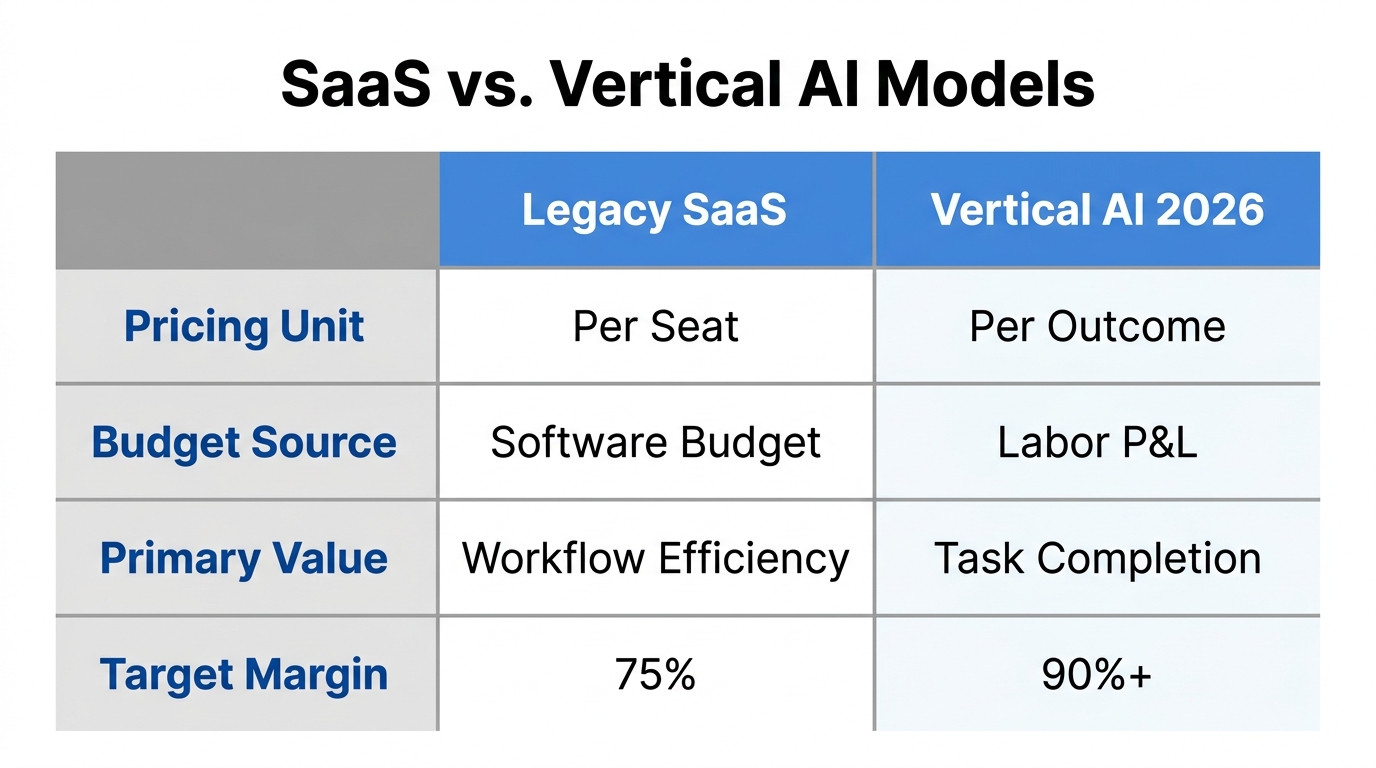
Understanding the difference between the old guard and the new agent economy is critical for your 2026 go-to-market strategy. Use the table below to evaluate where your current product sits on the evolution scale.
| Feature | Legacy Vertical SaaS | 2026 Vertical AI |
|---|---|---|
| Budget Source | IT/Software Budget | Labor/Payroll P&L | Pricing Metric | Per-Seat / Monthly License | Per-Outcome / Per-Result | Primary Operator | Human Employee | Autonomous AI Agent | Value Prop | Efficiency & Organization | Work Completed & Revenue Generated | Outcome Potential | $10M - $100M Exit | $1B+ Unicorn Potential |
Step-by-Step Transition: From Usage to Outcome Delivery
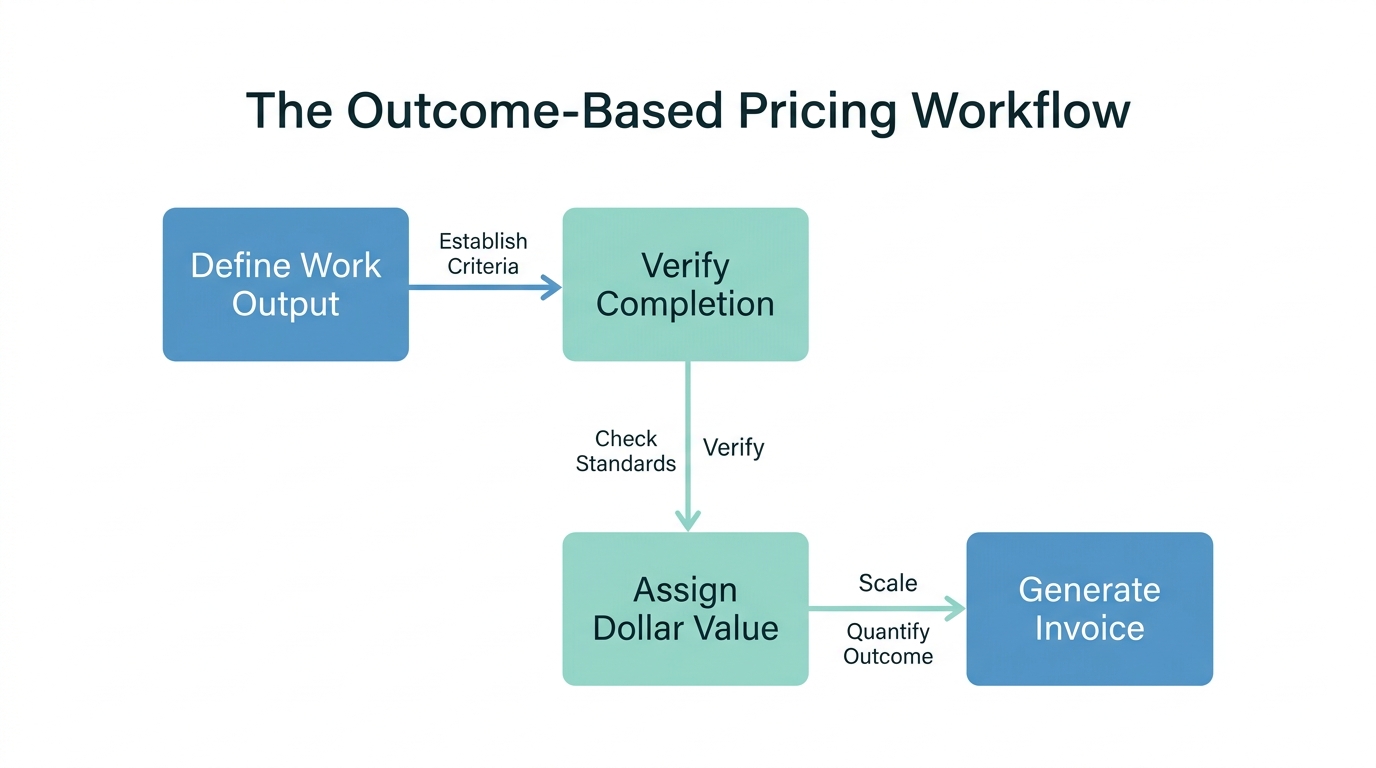
Transitioning to an outcome-based pricing model requires a fundamental rethink of your telemetry. You cannot just charge for "logins"; you must track the specific unit of value your AI creates. Gartner predicts that 40% of enterprise SaaS will shift to outcome-based billing by 2030, but the winners are doing it today.
Step 1: Define the "Atomic Unit of Value"
Identify the one thing your customer would pay a human to do. If you are in customer support, it’s a resolved ticket. If you are in sales, it’s a qualified meeting booked. If you are in influencer marketing, it might be the completed creator collaboration. For example, Stormy AI allows brands to move beyond simple discovery by using AI agents to autonomously handle the outreach and follow-up—tasks that traditionally required hours of manual human labor.
Step 2: Move from Seat-Based to Usage-Based
Before jumping to full outcome-based, bridge the gap with usage. Charge per API call or per task started. This acclimates the customer to a fluctuating bill based on activity rather than a flat fee. 83% of AI-native SaaS has already made this switch, moving away from the "pay whether you use it or not" model through usage-based billing.
Step 3: Implement the Success-Only Fee
The final stage is the success-only model. This is the ultimate "no-brainer" for sales. Tell a prospect: "You don't pay us a monthly fee; you pay us $1.50 for every ticket our AI resolves successfully." This removes all friction from the sales cycle. Companies like Zendesk have already begun implementing these results-based tiers to combat the decline in seat-based revenue.
"In 2026, the best sales pitch is no longer about features; it's about a 'ghost team' that works for you and only gets paid when the job is done."
Case Studies: Achieving 90% Margins through Agentic Workflows
Analyze how agent-first architectures enable companies to reach unprecedented software-like profit margins.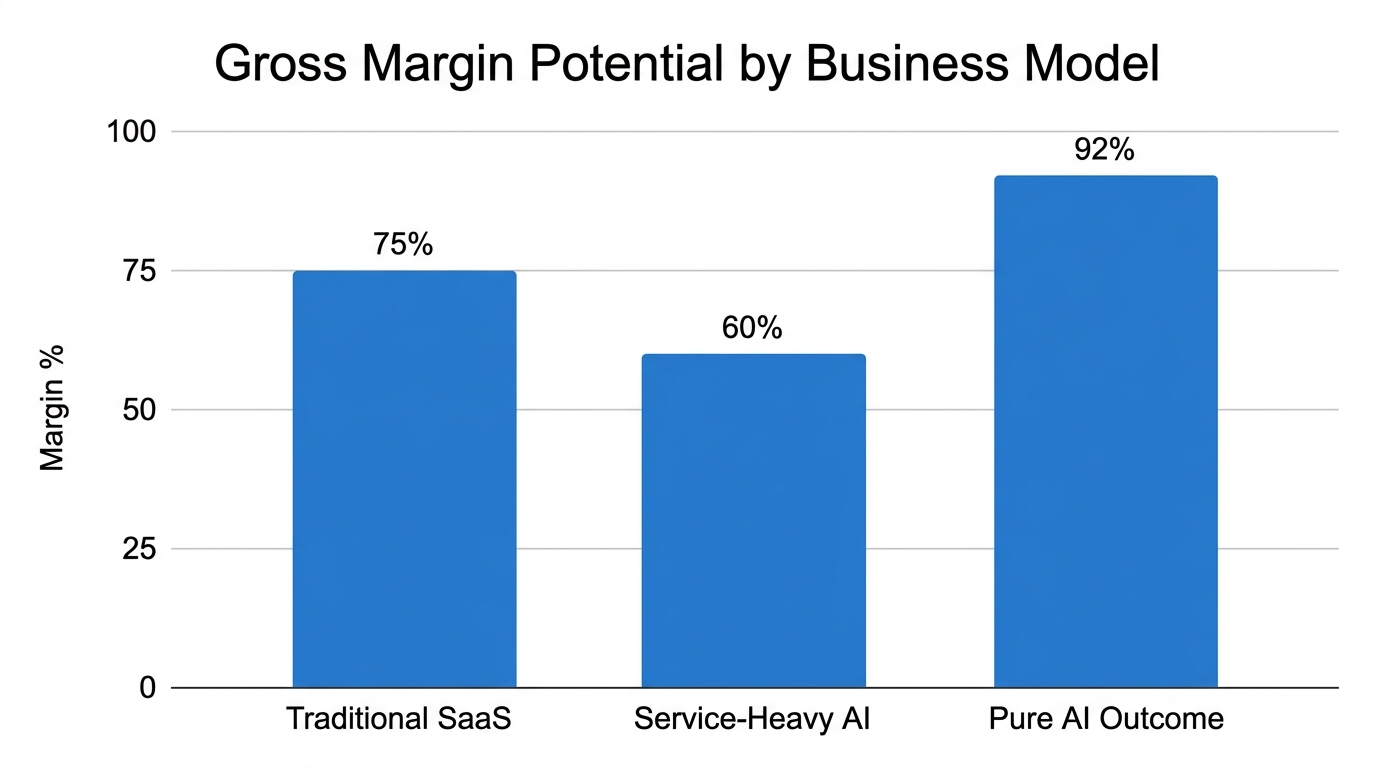
The beauty of the agent economy is the asymmetry of costs. When you build with an agentic architecture—using frameworks like Paperclip—you can spin up sub-tasks as serverless functions and shut them down the moment the work is finished. This creates a "Ghost Team" org chart that scales infinitely without increasing your rent or healthcare costs.
Consider the "Micro-Monopoly" model. By targeting a niche audience of 5,000 people and using agents to run the business, a single founder can generate $60,000 in monthly profit with zero employees. This is possible because AI agents are cutting operational costs by 80-90%. When your only overhead is a ChatGPT or Claude API key, your margin becomes your moat.
The Scarcity Flip: What Stays Human?
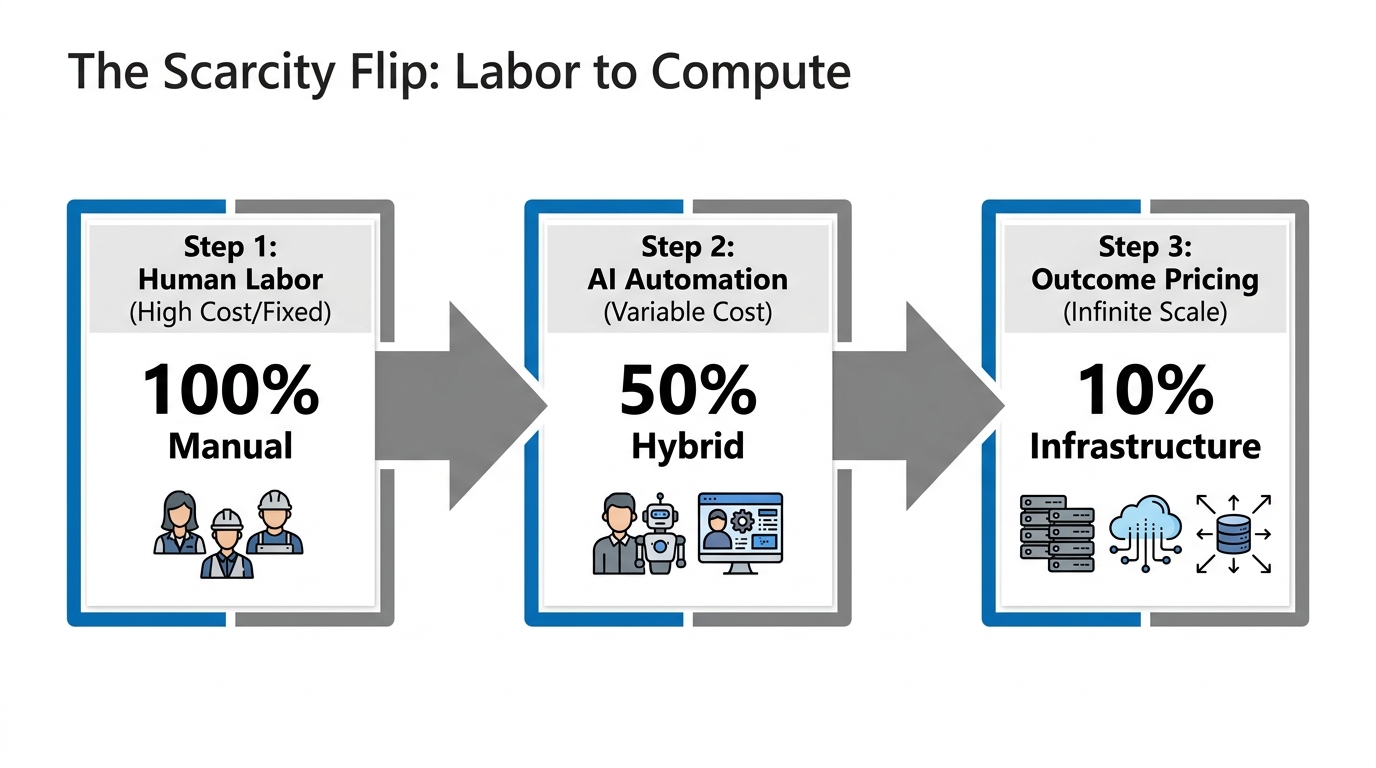
As execution becomes a commodity, the SaaS pricing trends of 2026 show a premium shift toward human judgment and "weirdness." LLMs are excellent at routine analysis but struggle with original, contrarian thinking. This is where Founder-Agent Fit becomes critical. The modern founder acts like a film director—not holding the camera or acting, but orchestrating a fleet of agents to achieve a vision based on unique creative taste.
Scarcity has shifted from doing to deciding. We are seeing a rise in "AI-free" luxury brands and "human-led" services that charge a premium for human taste. However, for the vast majority of B2B workflows, the winner will be the platform that provides the most reliable outcome for the lowest friction. Modern stacks like Stormy AI are winning because they combine high-quality data moats with autonomous execution, allowing users to focus on strategy while the agents handle the grind of creator CRM management and tracking.
Conclusion: Your 2026 GTM Action Plan
Wrapping up the strategic framework for building and scaling AI-first companies today.The window for the 2026 go-to-market strategy is narrow. Over the next 12 to 24 months, the best niches will be claimed, and competition will catch up to the "vibe coding" speed of light. To win, you must stop selling software and start selling completed work.
- Audit your pricing: If you are still charging per seat, you are a target for a more agile, outcome-based competitor.
- Build a Ghost Team: Use tools like Google AI Studio to prototype agents that handle your customer support, sales, and dev tasks.
- Focus on Proprietary Data: In a world of infinite AI content, your unique data and niche audience are your only long-term moats.
The shift to outcome-based revenue is not just a trend; it is the inevitable conclusion of the agent economy. By pricing for results, you align your success perfectly with your customer's success, creating a micro-monopoly that is nearly impossible to disrupt. The era of the human-operated tool is ending. The era of the results-driven agent has begun.