In the rapidly shifting landscape of digital marketing, the era of relying solely on bottomless performance marketing budgets is coming to an abrupt end. For years, brands could brute-force their way to growth through aggressive bidding, but the math no longer adds up for many. As we move through 2025, the most resilient companies are shifting their focus toward a comprehensive organic user acquisition strategy. This isn't just about "ranking for keywords" anymore; it is about building a multi-platform discovery engine that captures users wherever they happen to be—whether that is a Google search bar, a TikTok feed, or a conversation with an AI assistant.
The primary driver for this shift is economic. According to research, the Customer Acquisition Cost (CAC) for paid search has surged by 60% over the last five years. This inflation is forcing marketers to look toward the 7.3x conversion efficiency of organic channels to maintain healthy margins. In this guide, we will break down the 2025 playbook for sustainable, organic growth, moving beyond legacy SEO into the age of "Search Everywhere Optimization."
The Economics of Organic Growth: Why 2025 is Different
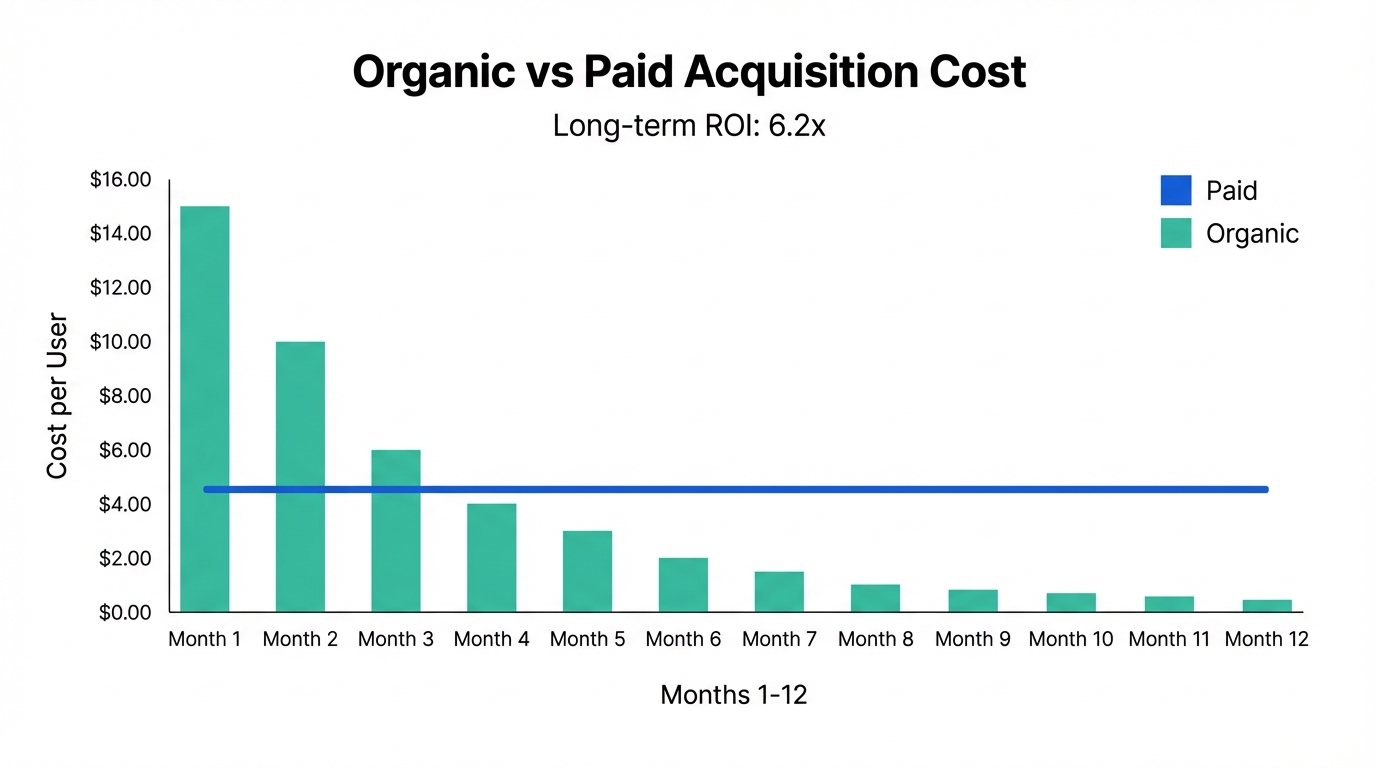
To understand why an organic growth strategy is no longer optional, we have to look at the widening gap between paid and organic performance. Traditional PPC is becoming a game of diminishing returns, whereas organic content continues to build compounding interest. Data from RevenueZen indicates that content marketing generates an average of $3 for every $1 invested, significantly outperforming the $1.80 return typically seen with paid ads.
The conversion efficiency is even more startling when you look at specific industries. According to First Page Sage, organic SEO converts at 7.3x the rate of PPC in the Financial Services sector and 3.5x in Real Estate. This discrepancy exists because organic results carry an inherent third-party trust signal that a sponsored banner simply cannot replicate.
| Metric | Organic Search (SEO) | Paid Search (PPC) |
|---|---|---|
| Average Close Rate | 14.6% | 1.7% |
| ROI per $1 Spent | $3.00 | $1.80 |
| Longevity | Long-term (Compounding) | Immediate (Stops when budget ends) |
| Trust Factor | High (Editorial) | Moderate (Commercial) |
"The future of growth isn't about buying attention; it's about being the most helpful answer on the platform the user chooses."
The "Search Everywhere" Framework
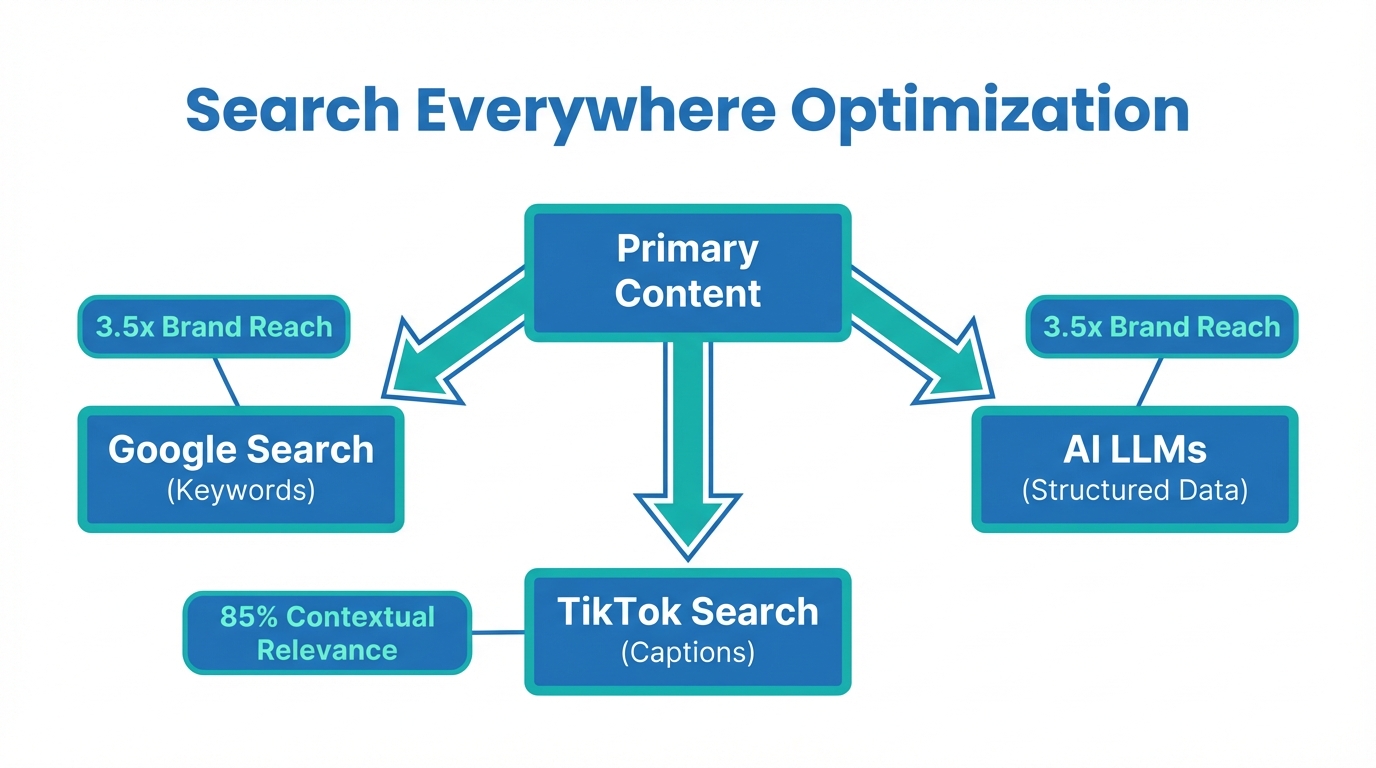
The biggest mistake a modern marketer can make is assuming that "search" only happens on Google. For Gen Z, social platforms have become the primary discovery engines. Statistics show that roughly 40% of younger users prefer using TikTok or Instagram for search over traditional search engines. This shift has birthed the concept of search everywhere optimization.
1. TikTok and Instagram Discovery
On TikTok, search is driven by keywords in captions, on-screen text, and audio transcripts. To win here, your content must be optimized for the platform's internal algorithm while maintaining high engagement. Users aren't looking for a corporate landing page; they want to see the product in action through the eyes of a real person. This is where authentic UGC (User-Generated Content) becomes your most powerful SEO tool.
2. Generative Engine Optimization (GEO)
The rise of AI assistants like ChatGPT and Perplexity has introduced a new layer of discovery. Gartner predicts a 50% reduction in traditional organic traffic by 2028, but there is a silver lining. Traffic originating from AI assistants currently converts at 4.4x the rate of traditional search because these users are often further down the funnel and asking highly specific, intent-driven questions.
3. Reddit and Community-Led Trust
In 2025, Reddit threads are frequently outranking brand websites for "best [category]" queries. Users trust the collective hive-mind more than marketing copy. A successful organic growth strategy now requires a presence in "dark social" and niche forums where you contribute value rather than just dropping links.
The Role of Human Authenticity and E-E-A-T
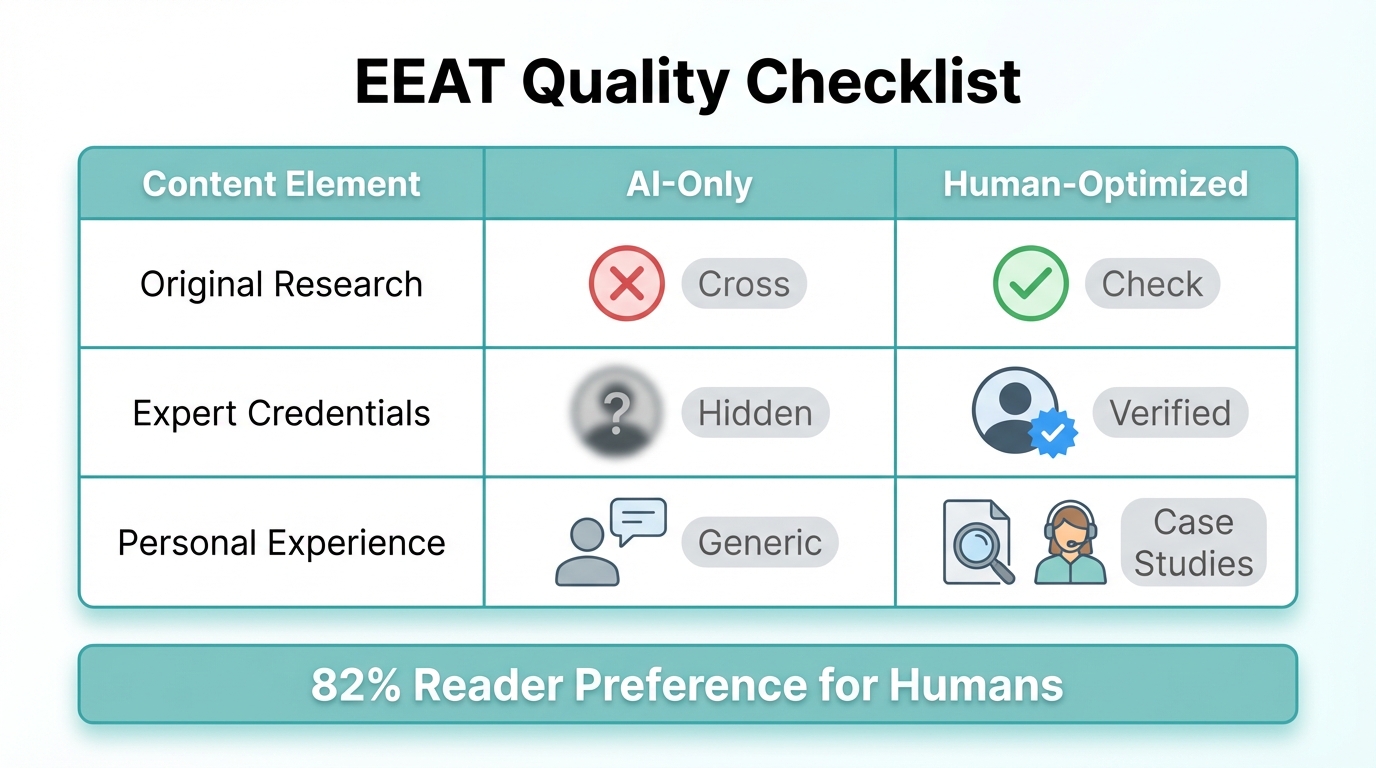
As the internet becomes saturated with AI-generated text, both users and search algorithms are desperate for Expertise, Experience, Authoritativeness, and Trust (E-E-A-T). Content that lacks a human perspective is increasingly relegated to the second page of search results. According to marketing experts, "Lived Experience" is the new premium. This means incorporating personal anecdotes, original data studies, and unique human insights that an AI cannot hallucinate or replicate.
One way to scale this authenticity is through influencer partnerships. By working with creators who already have established trust with your target audience, you can bypass the "trust barrier" that many new brands face. Platforms like Stormy AI streamline this process by allowing you to discover creators based on niche and audience quality, ensuring that your organic reach is built on a foundation of genuine human connection rather than bot-driven metrics.
"AI can summarize information, but it cannot share an experience. In an AI-saturated market, your unique human perspective is your strongest competitive advantage."
The Mobile App Growth Playbook: OEM and Preloads
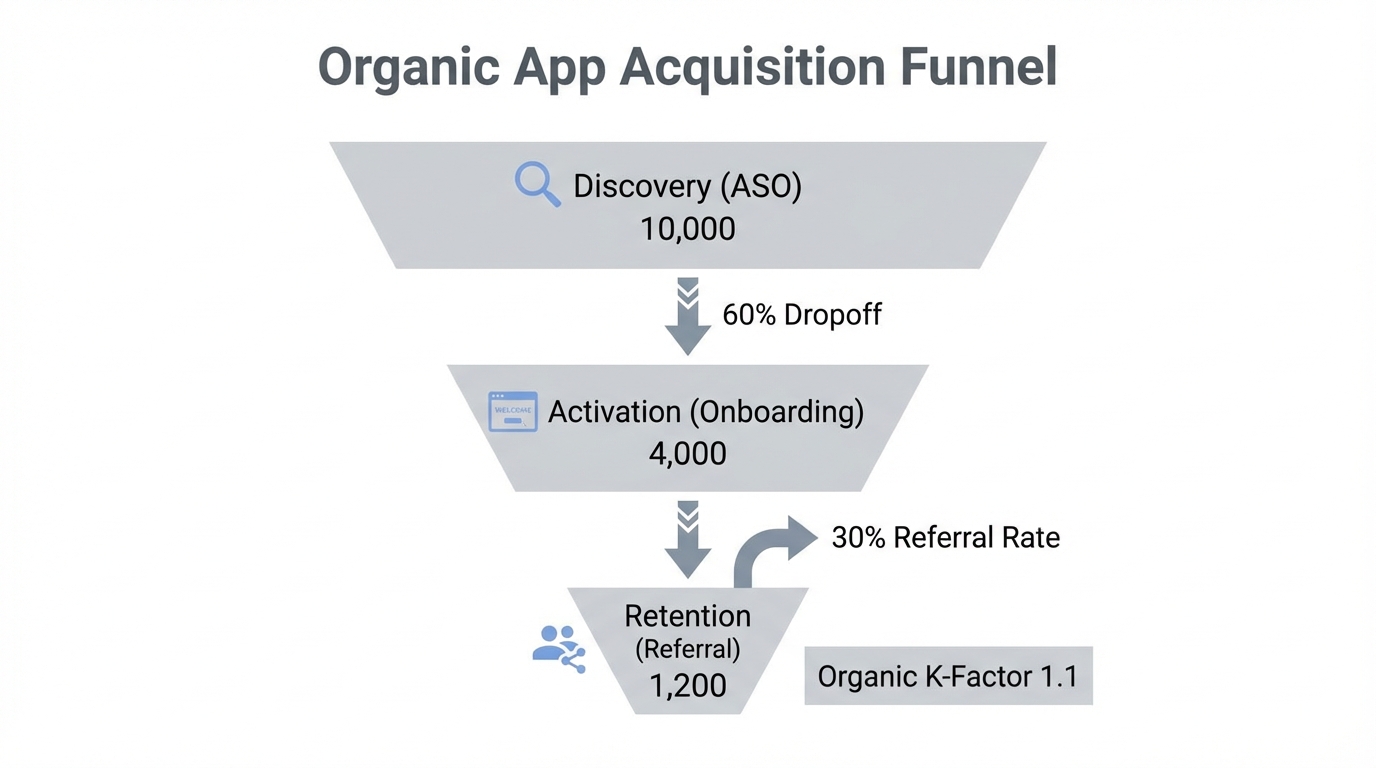
For mobile app developers, organic growth in 2025 extends beyond the App Store. While ASO (App Store Optimization) is vital, the most sophisticated players are looking at OEM (Original Equipment Manufacturer) partnerships. This involves getting your app pre-installed or suggested during the setup process of new devices from manufacturers like Samsung or Xiaomi.
- Dynamic Preloads: These allow apps to be installed when a user first unboxes their phone. According to AVOW, these placements can yield conversion rates of 10% to 40%.
- AI-Driven UA: Apps using AI-driven organic strategies—such as personalized onboarding flows and predictive content—see 143% higher growth than those relying on traditional manual methods, as noted by Zoomd.
Managing these relationships and tracking the subsequent organic lift requires a robust technical infrastructure. Integrating with a modern MMP (Mobile Measurement Partner) is essential to distinguish between a truly organic install and one driven by these strategic ecosystem partnerships.
Maintaining Rank: The Quarterly Content Audit Cycle
Organic growth is not a "set it and forget it" endeavor. The marketing growth benchmarks of tomorrow are set by the maintenance you do today. A major error many brands make is treating content as a one-time project. In reality, content decays. Links break, statistics become outdated, and search intent shifts.
According to InstaServ, strategic refreshing can prevent ranking drops and often results in a secondary traffic surge that exceeds the initial launch peak. During these audits, you should also evaluate your technical health. Broken mobile experiences and slow page speeds remain the silent killers of organic traffic, a point emphasized by Ellington Digital.
Common Mistakes in Organic User Acquisition
Even with a solid framework, many brands stumble by falling into legacy traps. To succeed in 2025, you must avoid the following:
- Talking About the Brand, Not the User: AI engines and human users alike prioritize content that solves a specific problem. Self-promotional fluff is often ignored by modern algorithms. As noted by Delante, your content should be a utility, not just a brochure.
- Treating AI as a Strategy: Relying on unedited, mass-produced AI text leads to "generic content fatigue." Without human oversight to provide E-E-A-T signals, your rankings will eventually crater. AdLiveTech warns that AI is a tool for efficiency, not a replacement for expertise.
- Intent Mismatch: Creating a long-form blog post (informational) for a keyword where users clearly want to buy a product (transactional) will lead to high bounce rates and ranking drops.
By leveraging tools like Stormy AI to manage creator-led organic campaigns, brands can ensure their content remains user-centric and authentic, hitting the exact notes that modern discovery engines reward.
The Path Forward
The transition to an organic user acquisition model is the only way to escape the rising costs of the paid media treadmill. By implementing a "Search Everywhere" framework, prioritizing human authenticity, and maintaining a rigorous content audit cycle, you can build a growth engine that is both sustainable and highly efficient.
Success in 2025 doesn't belong to the brand with the largest budget, but to the brand that is most discoverable, most trusted, and most helpful across the entire digital ecosystem. Start by auditing your current assets, diversifying your discovery channels beyond Google, and leaning into the power of human-led content. The compounding returns of organic growth are waiting for those bold enough to make the shift today.