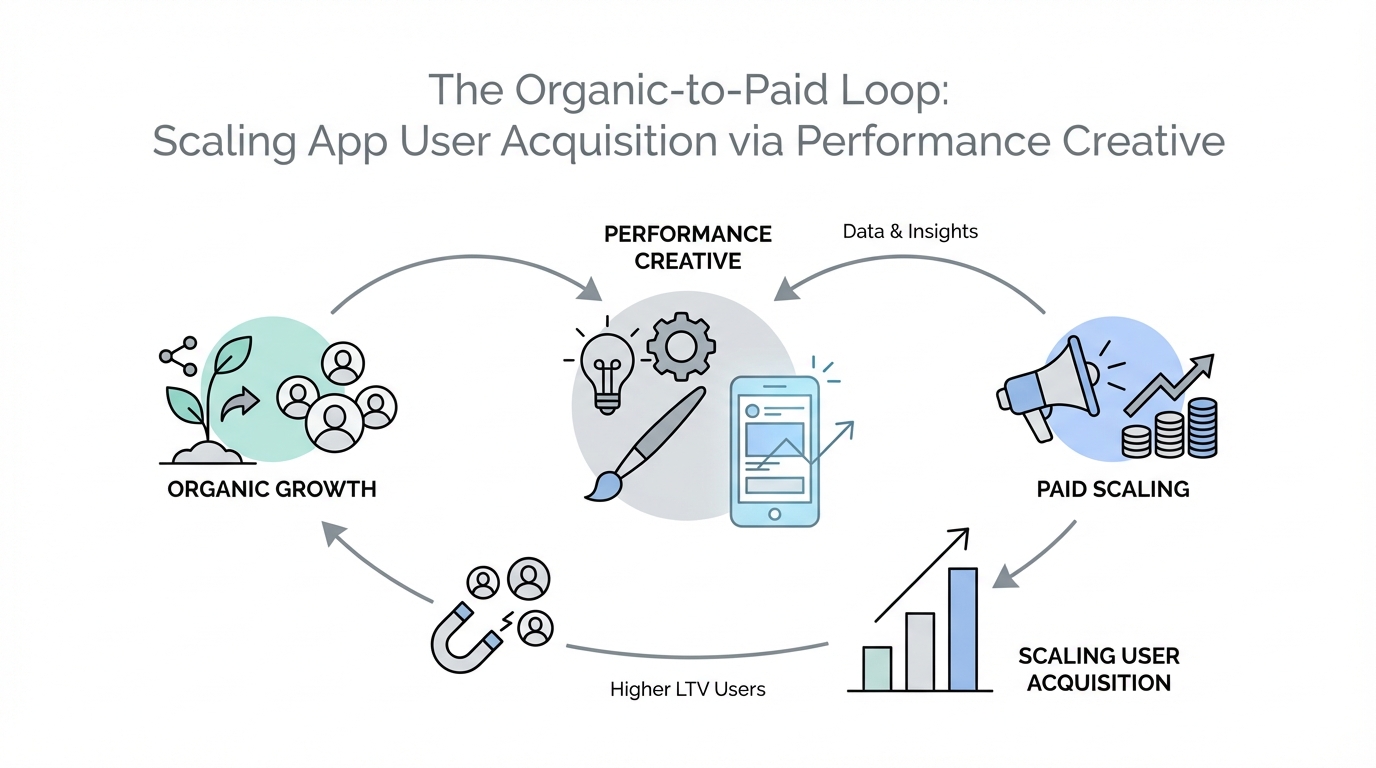
In the current mobile landscape, the traditional marketing playbook is broken. For years, developers relied on high-production commercials and rigid frameworks to drive growth. But in 2024, the script has flipped. The most successful apps aren't just buying traffic; they are building organic engines that feed their paid campaigns. This strategy, known as the Organic-to-Paid Loop, is how top-tier apps like Bloom have scaled to millions of active users while maintaining a sustainable lower CAC social media profile. By using organic TikTok accounts as a testing ground, brands can identify performance creative that already has proven engagement before putting a single dollar of ad spend behind it.
The Feedback Loop: Organic as a Testing Ground
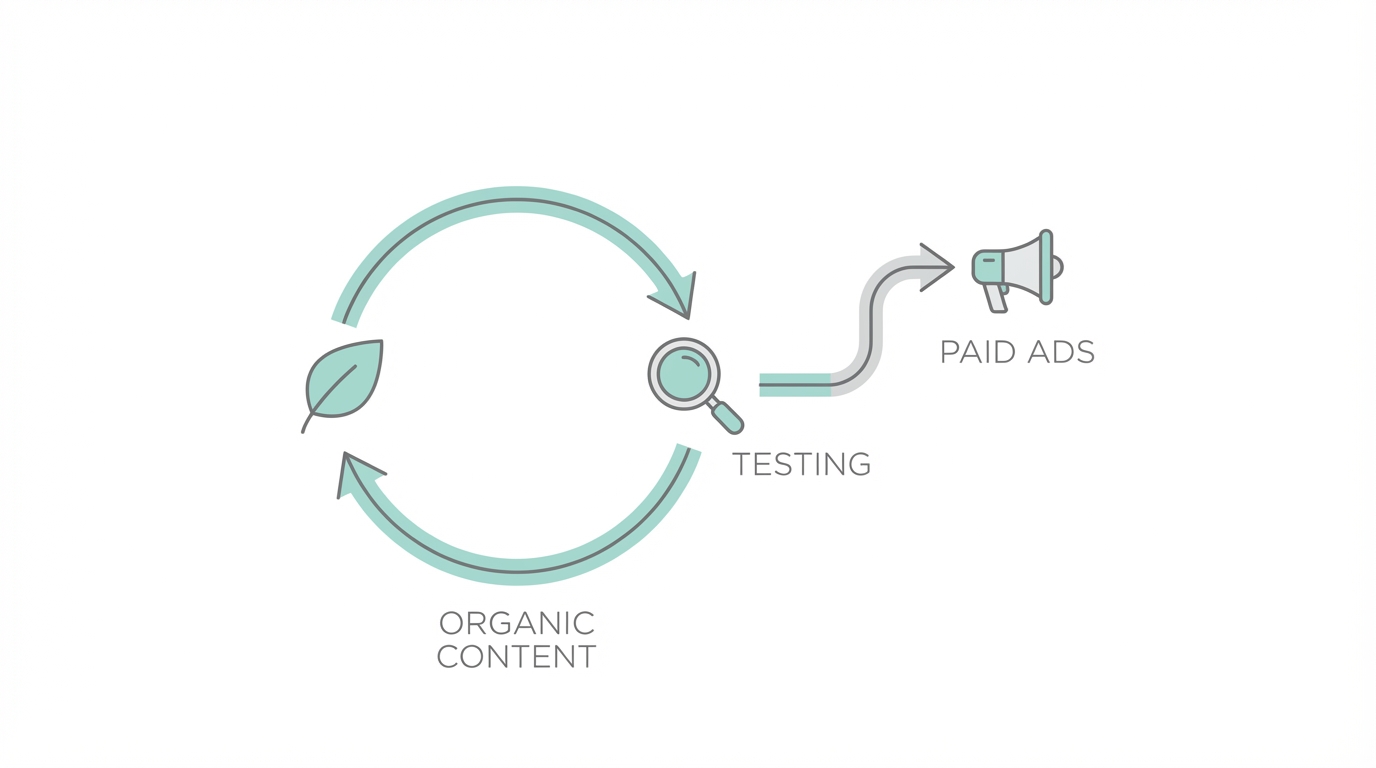

The core of a modern TikTok ads strategy is the realization that the algorithm is a more honest judge of content than any creative director. Instead of guessing which ad will resonate, growth-focused teams launch dozens of niche, organic accounts. These accounts serve as a sandbox. When a specific video goes viral organically, it signals Product-Market Fit (PMF) at the content level. This feedback loop allows founders to de-risk their ad spend by only promoting assets that have already survived the "wild" of the TikTok For You Page.
Scaling this engine requires a shift from quality to strategic quantity. For instance, Bloom utilizes internal teams and specialized agencies to manage upwards of 20 different organic accounts, posting twice daily per account. This high-volume approach ensures that they are constantly gathering data on what hooks, narratives, and visual styles are currently capturing the cultural zeitgeist. By the time a video is moved into the mobile app user acquisition funnel as a paid asset, its success is almost guaranteed because the audience has already "voted" for it with their views and comments.
The Power of Micro-Influencers
A critical component of this testing loop is working with micro-influencers rather than mega-stars. The goal isn't to buy an audience; it's to buy a content style. Targeting college students or niche communities like "StudyTok" allows brands to create content that feels like a recommendation from a friend rather than a corporate pitch. These creators often operate on a retainer plus CPM bonus model, which aligns their incentives with the brand's growth goals. This structure keeps costs manageable while providing the creator with a massive upside if they hit the 100K view threshold, which is where the true economy of scale begins.
Native-Feeling Ads vs. Traditional Frameworks
Why do these organic-style ads outperform traditional marketing frameworks like Pain-Agitate-Solution? The answer lies in the psychological state of the user. When someone is scrolling through social media, their "marketing guard" is up. They are trained to skip anything that looks like an ad. However, content that looks like a Reddit story, a "brain rot" style game, or a relatable vlog bypasses this filter. This is the essence of performance creative: it disguises the sale within the entertainment.
Apps are finding massive success with unconventional formats, such as AI-generated stories using HeyGen. These videos might feature a billionaire nanny explaining how her employers raise their kids or a "StudyTok" creator sharing the most underrated apps for productivity. The narrative hooks the viewer with curiosity or aspiration, and only then does it introduce the product. This soft-sell approach builds trust and lowers the barrier to entry, which is vital for high-friction verticals like fintech or health and fitness.
The 'Last 15 Seconds' CTA Strategy
The magic happens when you transition an organic winner into a paid ad. An organic video might have a very soft Call to Action (CTA), perhaps just a mention of the app name in the comments. To maximize mobile app user acquisition, the paid version needs a modification. The industry secret is the 'Last 15 Seconds' CTA. You take the high-performing organic hook and middle section, but swap out the ending for a direct, high-intent demonstration of the app.
For example, a video that starts as a "Reddit story" about making money might end with a screen recording of the app's interface, showing how easy it is to start investing. This transition must feel seamless. Instead of a hard "Download Now," the CTA should mirror the organic tone. A phrase like "Download now to flex on your friends" often converts better than a corporate "Join our community." This subtle shift ensures you are paying for a CTA that actually drives installs while retaining the high engagement rates of the original organic asset.
Optimizing the Onboarding Flow
Once a user clicks that performance creative, the conversion journey isn't over. The ad must be backed by a high-converting onboarding experience. Leading apps use tools like Superwall to A/B test their paywalls and onboarding screens. A key insight from top growth hackers is that more screens can actually lead to higher conversion if they follow a "story" format similar to Instagram. Breaking down a single, text-heavy screen into five interactive, visual-heavy slides keeps users engaged and builds the urgency needed to complete the sign-up process.
Scaling the Engine: AI and Creator Management
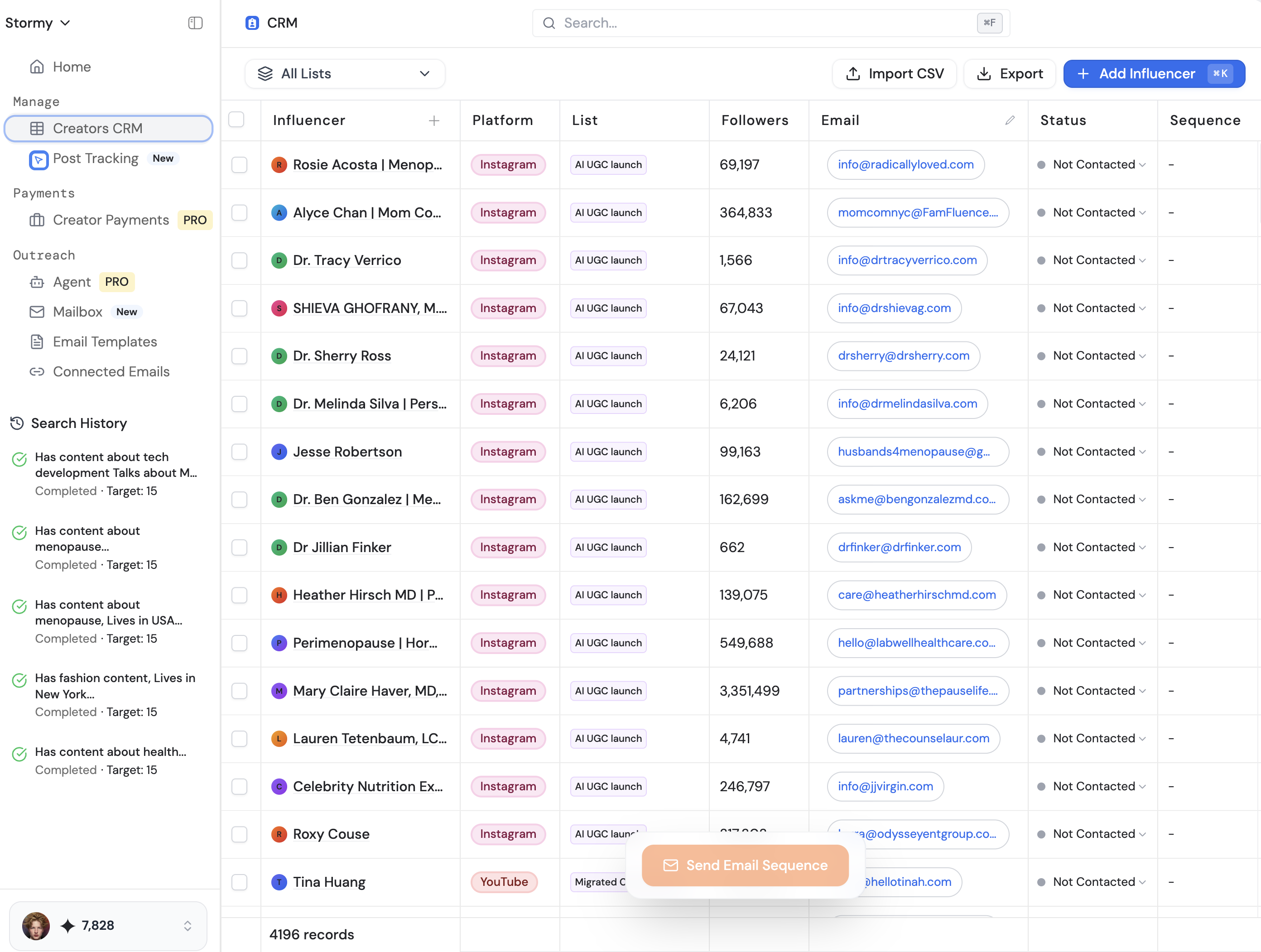
Maintaining a 20-account organic presence is a massive logistical challenge. Founders can no longer rely on manual outreach and spreadsheet management. This is where AI-powered discovery and management tools become essential. To find the right talent at scale, savvy marketers are using tools like Stormy AI to discover creators in specific niches, vet their engagement quality, and handle hyper-personalized outreach. By automating the discovery phase, you can spend more time on creative strategy and less on administrative tasks.
Hiring through marketplaces like SideShift or Handshake allows you to recruit Gen Z creators who live and breathe these platforms. When you combine this human creativity with AI-driven scale, you create a lower CAC social media machine that runs 24/7. Managing these relationships within a dedicated creator CRM ensures that no partnership falls through the cracks and that you can track which creators are delivering the highest ROI over time.
Managing the Valley and Peak of Growth
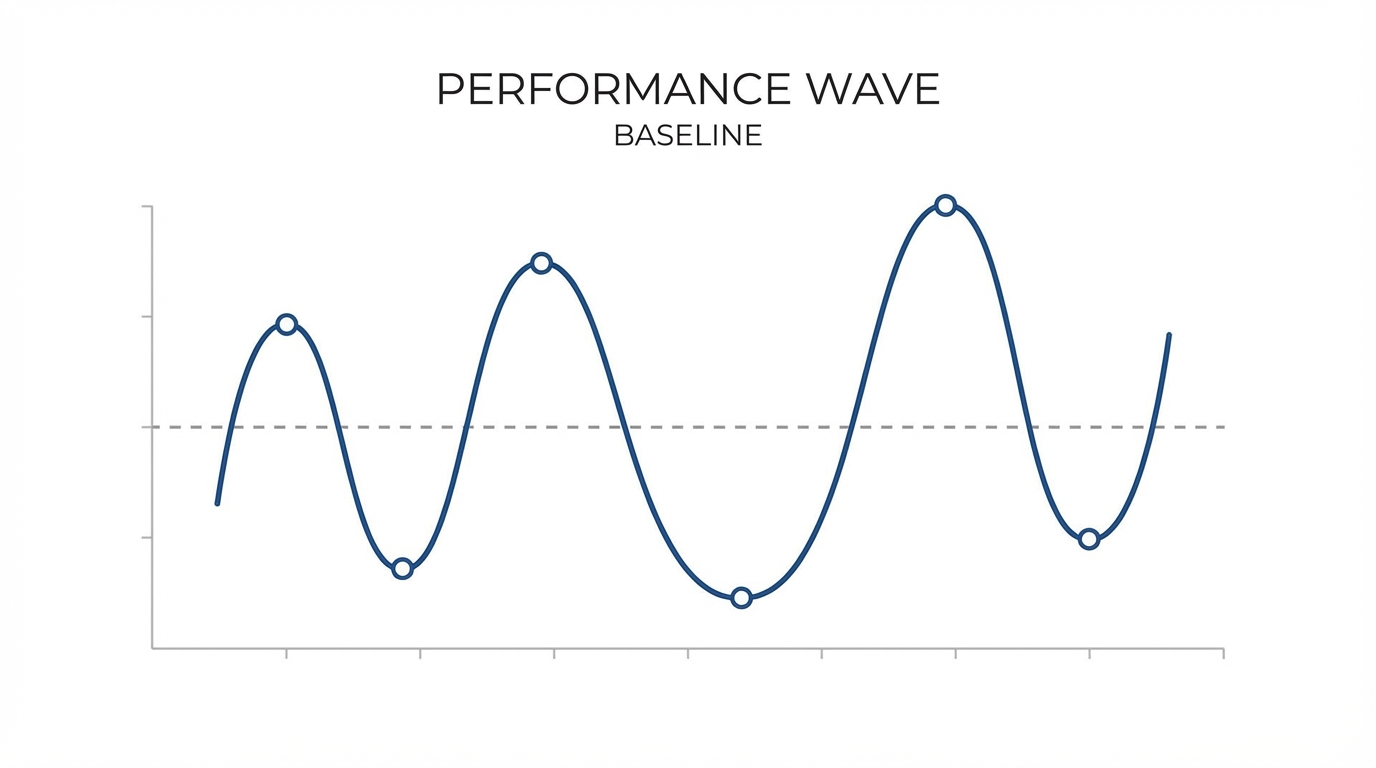
One of the biggest frustrations in mobile app user acquisition is the volatility of organic growth. A video goes viral, downloads spike, and then they inevitably crash back to zero. The Organic-to-Paid Loop solves this by flattening the valleys. When you identify an organic peak, you immediately lock it in by turning that video into a paid ad. This ensures a consistent baseline of daily downloads even when the organic algorithm isn't in your favor.
This strategy also allows you to arbitrage cultural trends. For instance, if you notice a trend toward "self-care" or "Bible-based productivity" picking up steam, you can quickly test those narratives organically. If they hit, you scale them with paid spend. To stay ahead of these shifts, growth hackers use competitive intelligence tools like SpyTalk to monitor what their competitors are doing and identify new viral formats before they become saturated.
Conclusion: Building Your Growth Loop
Scaling a mobile app in 2024 requires a radical embrace of performance creative and a commitment to high-volume testing. The Organic-to-Paid Loop isn't just a tactic; it is a sustainable growth philosophy. By using organic content as your R&D department, you can feed your paid ad strategy with assets that are guaranteed to resonate. Start by recruiting a small army of micro-influencers, leverage AI tools for content generation and management, and always be ready to turn your next viral hit into a permanent acquisition asset. If you stay consistent and focus on native-feeling narratives, you can lower your CAC and build a growth engine that scales as fast as the culture itself.