In 2026, the traditional search bar is no longer the primary gateway to your online store. While we spent the last decade obsessing over Google’s keyword rankings, the landscape has shifted toward Agentic Commerce. Today, shoppers don’t just browse; they ask their AI assistants—like Amazon’s Rufus, Shopify Magic’s Sidekick, or Perplexity—to find the best product for their specific needs. If your product descriptions aren't optimized for these machines, you aren't just losing SEO rankings; you are becoming invisible to the primary buyer of 2026: the AI shopping agent.
Understanding Agentic Commerce: How AI Agents Shop in 2026
Agentic commerce refers to a world where autonomous AI agents perform the heavy lifting of product discovery, comparison, and even purchasing on behalf of human users. As of 2026, the global AI-enabled e-commerce market has surged to $10.5 billion, according to latest data from Elogic. This growth is driven by the fact that 89% of retailers have now adopted AI to some degree to handle the sheer volume of data required to stay competitive.
When an agent like Shopify Sidekick "shops" for a user, it doesn't just look for keywords. It parses thousands of product detail pages (PDPs) to find the perfect match for complex prompts like, "Find me a durable coffee maker for a small apartment that is easy to clean and won't wake up a sleeping toddler." To win this click, your description must be machine-readable, contextually rich, and intent-optimized.
"The future lies not in AI versus human, but in AI-human collaboration that combines the best of both worlds to handle complexity at scale."
Generative Engine Optimization (GEO): The New Shopify SEO 2026
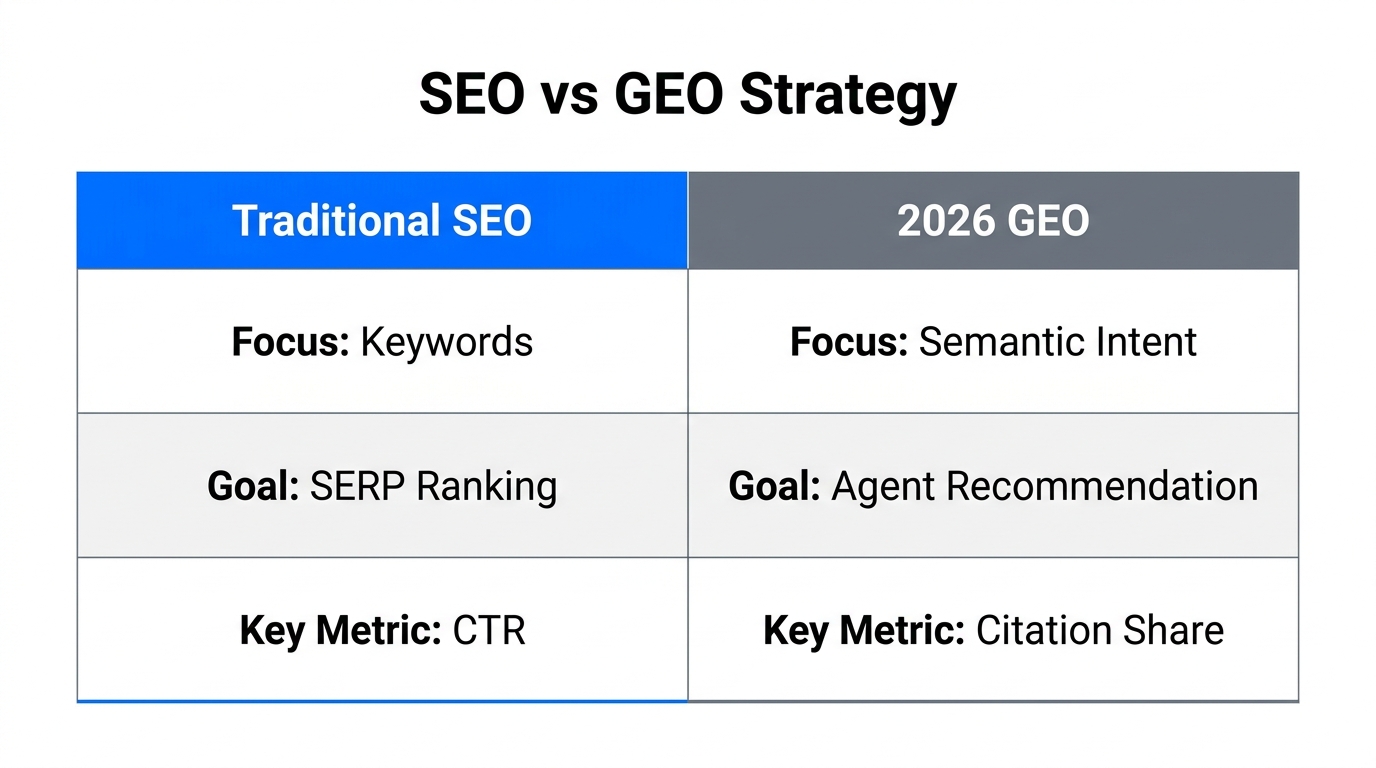
Traditional SEO was about density and backlinks. Generative Engine Optimization (GEO) is about clarity and authority. In 2026, search quality raters at Google and other platforms penalize "low-value, repetitive AI content," as noted by Spinta Digital. The goal is no longer to trick an algorithm but to provide the "AI Overview" with the most accurate and expert-backed summary of your product.
To succeed in GEO, merchants must move away from generic descriptions. This is where an AI ecommerce employee like Stormy AI becomes essential. While you focus on brand strategy, Stormy AI can monitor your inventory levels, track listing health (like missing images or broken variants), and ensure your technical specs are consistently updated across Shopify and Amazon so that agents always have the latest data.
Scenario-Based Headings: Structuring for Conversational Intent
AI agents are programmed to solve problems, not just find objects. One of the most effective ways to optimize for Shopify SEO 2026 is to include scenario-based headings within your product descriptions. Instead of just listing features, you should categorize your content based on shoppers' real-world usage cases.
According to research by Product Uploads, AI agents prioritize content that matches "conversational scenarios." Use headings such as:
- Best for small apartment living: Detail the compact dimensions and storage capabilities.
- Work-from-home efficiency: Explain how the product integrates into a home office setup.
- Eco-conscious durability: Highlight the sustainable materials and long-term lifespan.
By using these headings, you make it incredibly easy for an AI agent to extract a relevant snippet and say, "This product is highly recommended for small apartments because..." This is the essence of winning the conversational commerce game.
Using Structured Data and Meta-fields for GPT-5 and Perplexity
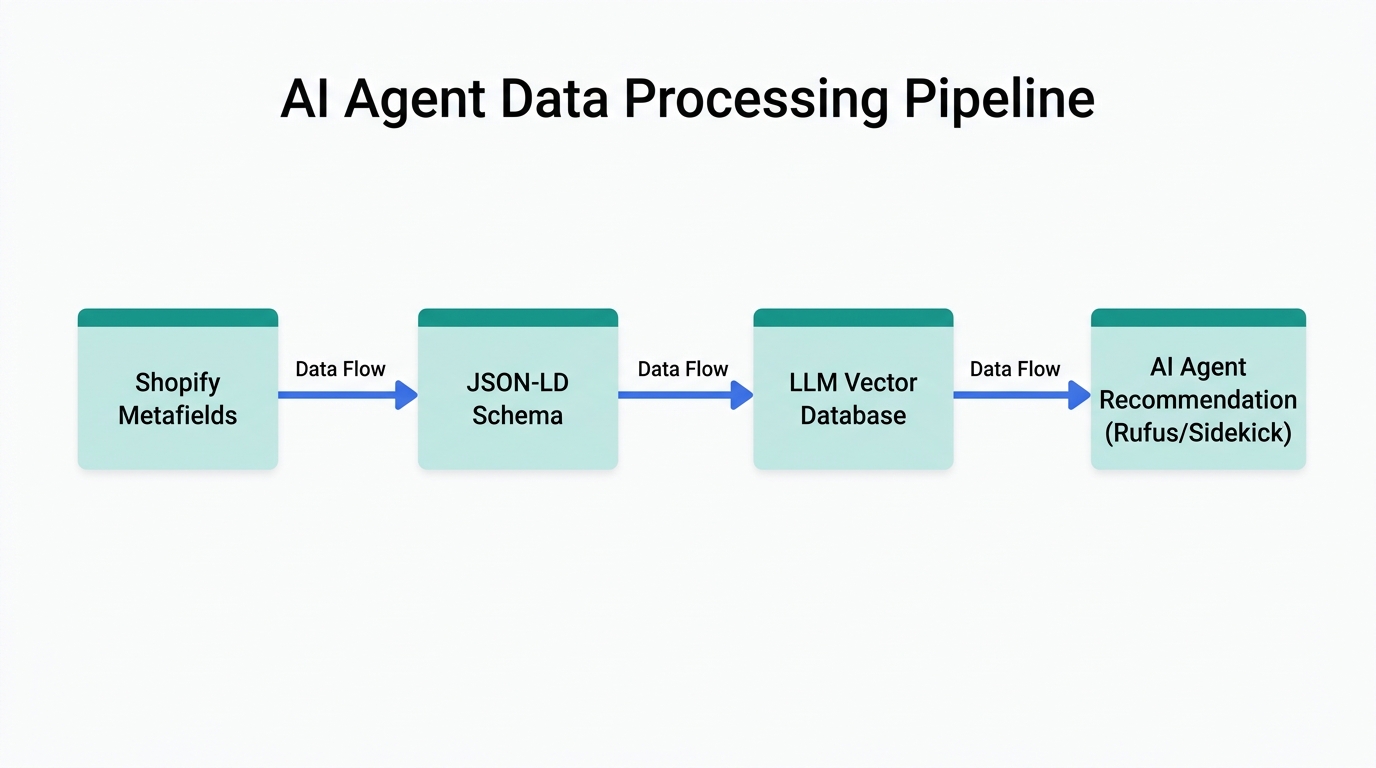
Machine-readability is the bedrock of 2026 ecommerce. AI models like GPT-5 and Perplexity do not just read the text you see on the screen; they ingest the underlying data structure. To ensure your products are correctly indexed, you must leverage Shopify Metafields and Metaobjects to provide granular technical details.
| Data Type | 2024 Strategy | 2026 GEO Strategy |
|---|---|---|
| Product Specs | Hidden in an image or bullet list. | Mapped to unique Metafields (e.g., fabric_weight, noise_decibels). |
| Compatibility | Mentioned in the last paragraph. | Structured as a Searchable Metaobject for AI agents to verify. |
| Materials | Generic "Cotton blend" text. | Certifications and origin data included in machine-readable JSON-LD. |
For merchants with thousands of SKUs, manually updating these fields is impossible. Stormy AI can act as your technical back-office teammate, importing arbitrary CSVs from suppliers and automatically mapping attributes to the correct Shopify Metafields. This ensures that when a customer asks an agent if a part is compatible with their existing hardware, the agent finds a definitive "Yes" in your store's data.
Winning the 'AI Overview' Snippet with E-E-A-T
To appear in the coveted AI Overview (the summary at the top of search results), your content must demonstrate E-E-A-T (Experience, Expertise, Authoritativeness, and Trustworthiness). In 2026, purely automated, generic AI descriptions often fail this test. Leading brands like Target Australia have seen massive search revenue increases (over $13 million AUD) by personalizing results and automating metadata with a focus on accuracy.
To win the snippet, include:
- Expert Quotes: Add a brief "Founder's Note" or an expert review within the description.
- Unique Product Specs: Don't rely on manufacturer data. Mention the specific texture, the weight, or the "hand-feel" of the product.
- Verified Performance: Cite specific test results (e.g., "Battery lasts 14 hours at 50% brightness") rather than vague claims like "long-lasting battery."
"AI is making some founders significantly more profitable, but others just busier. The difference is applying AI to a clearly defined problem—like structured data accuracy."
How to Use the 2026 Agentic Storefronts Feature
Launched in late 2025, Shopify’s Agentic Storefronts is a game-changing feature that allows you to control exactly how your brand is presented to bots. Think of it as a "robots.txt" but for brand voice. It allows you to provide a hidden, highly-structured version of your PDP that only AI agents can see.
This feature ensures that even if your front-end description is highly creative and emotional (designed for humans), the agent gets a raw, factual, and spec-heavy version that it can summarize without making mistakes (hallucinations). Hallucinations remain a major risk in 2026, where AI might invent technical specs like "waterproof" for a cotton shirt if the input data is thin, according to Jotform.
The 2026 Playbook: A Step-by-Step Guide to GEO Optimization
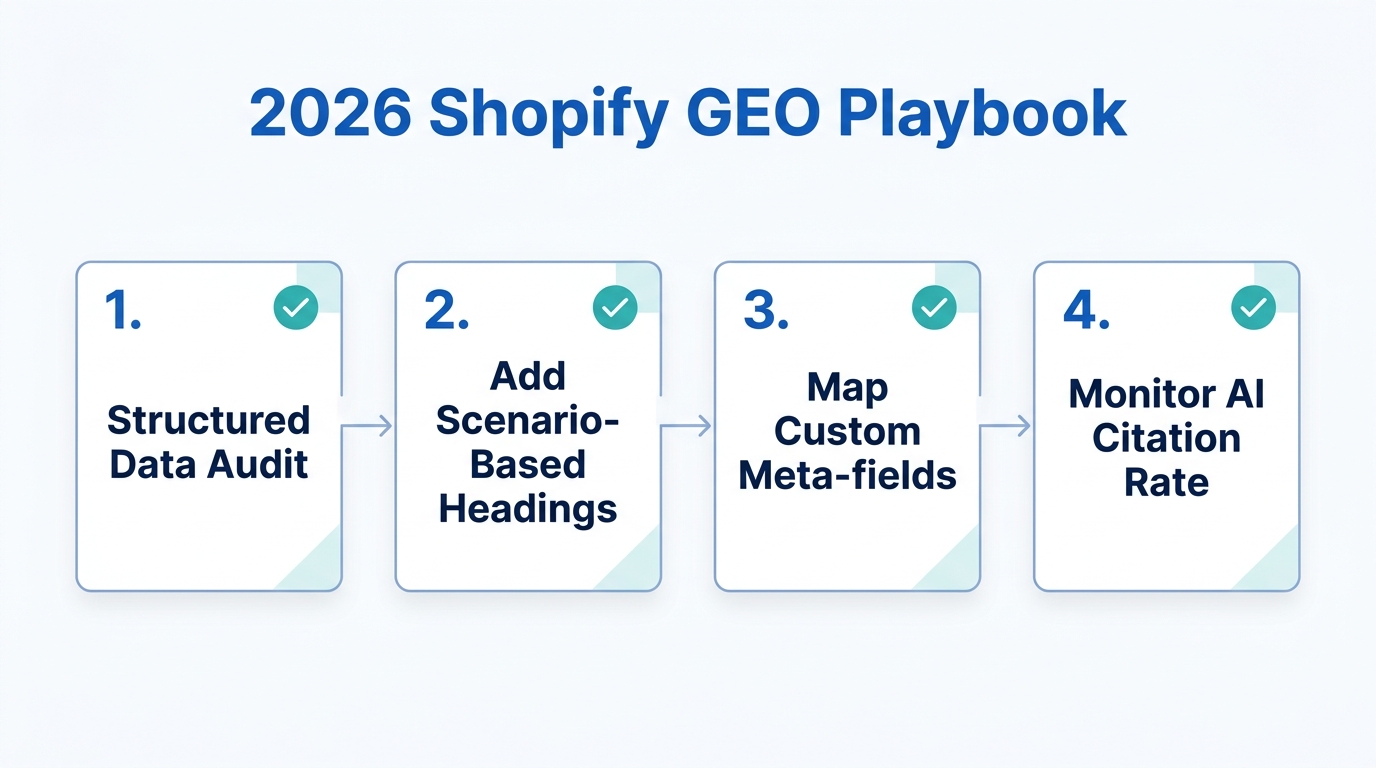
Step 1: The Rich Input Phase
Never start with a blank prompt. Provide your AI—or your AI employee Stormy AI—with a "Bullet String." This should include material, weight, target audience, 3 main benefits, and 1 unique brand story point. This prevents the generic "robotic" tone that leads to brand erosion.
Step 2: Implement the P-A-S-B Framework
Structure your product descriptions using the Problem-Agitation-Solution-Benefit (P-A-S-B) framework. AI agents love this structure because it clearly defines the "use case" for the user. Identify the customer’s pain, explain why it matters, introduce the product as the solution, and stack 3-5 benefits focusing on outcomes, not just features.
Step 3: Connect Your AI Employee for Monitoring
Once your products are live, Stormy AI can monitor your Shopify or Amazon Seller Central listings for stockout risks or suppressed listings. If a listing is flagged, Stormy can wake up and alert you, ensuring you never lose your "recommended" status with shopping agents due to availability issues.
Conclusion: Preparing for a Bot-First World
Optimizing for AI shopping agents isn't just about changing a few words; it's about rebuilding your product data foundation. By embracing Generative Engine Optimization (GEO), structuring your content for scenarios, and leveraging technical features like Metafields and Agentic Storefronts, you ensure that your brand stays at the top of the conversation.
As the ecommerce back office becomes increasingly messy with multiple platforms like TikTok Shop, Amazon, and Shopify, having an AI teammate like Stormy AI handles the heavy lifting of inventory tracking, supplier follow-ups, and data management. The brands that win in 2026 will be those that speak the language of both humans and machines.