In the hyper-competitive mobile landscape of 2026, the difference between a struggling utility and a seven-figure powerhouse often comes down to a few pixels on a checkout screen. Kobe Conrad, founder of the addiction-recovery app Sunflower, proved this by scaling from zero to $1 million in Annual Recurring Revenue (ARR) in just 10 months. While his mission-driven AI companion, Sam, handled over 4 million messages last year, the financial engine was fueled by rigorous app revenue optimization. By leveraging Superwall to run sophisticated A/B testing for mobile apps, Conrad identified a single paywall adjustment that triggered a staggering 48% increase in total revenue. This guide breaks down the technical playbooks and psychological levers used by the top 1% of profitable apps to master mobile app monetization 2026.
Solving 'Trial Anxiety' with Strategic Reminders
 47:10
47:10One of the most significant barriers to entry for modern app users is 'trial anxiety'—the nagging fear that they will be charged for a subscription they forgot to cancel. In the 2026 market, users are more protective of their digital wallets than ever. Sunflower addressed this head-on by implementing a transparent trial reminder system via Superwall. Instead of hiding the cancellation process, they surfaced it, promising to alert the user before the trial period ended.
"We saw a 48% increase in our revenue simply by adding trial reminders. It sounds counterintuitive, but transparency builds the trust required for a user to hit 'Subscribe'."
The results were conclusive: trial conversions increased by 46%, and trial starts rose by 30%. By reducing the perceived risk, Sunflower encouraged more users to enter the funnel, ultimately leading to a higher volume of paying subscribers. This experiment is a prime example of how Superwall paywall experiments can turn a psychological friction point into a massive growth lever. Growth teams looking to replicate this should visit paywallexperiments.com to see AI-analyzed data from 422 profitable paywall tests.
The 'Annual-First' Default: Capturing High-Intent Users
45:07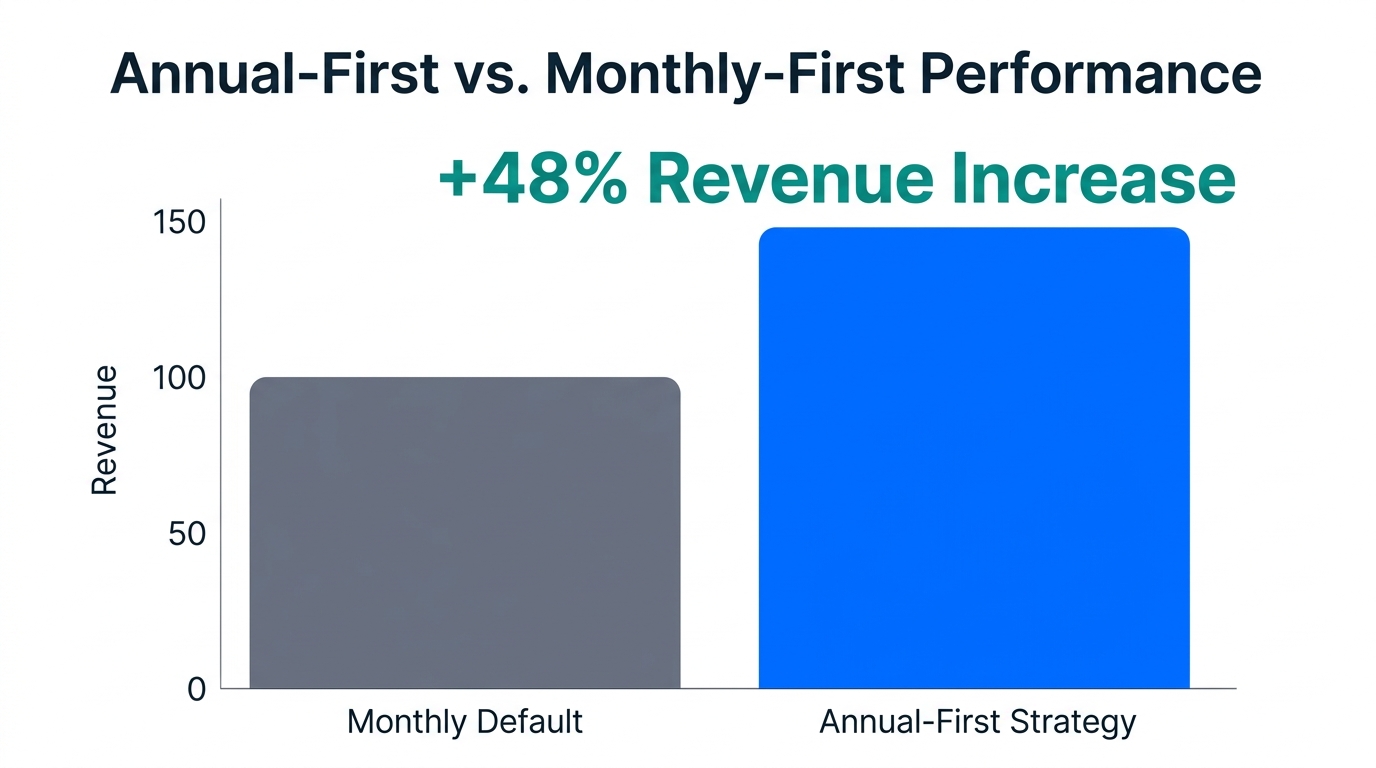
A common mistake in subscription conversion rate optimization is presenting monthly and annual tiers as equal choices. Sunflower found that high-intent users—those genuinely committed to their sobriety journey—actually prefer yearly commitments because it signals a long-term promise to themselves. By making the annual subscription the default selection on the paywall, they significantly shifted their revenue mix.
Using Superwall to test default states, the team noticed a 70% increase in annual revenue. When a user sees the annual option pre-selected, it anchors the value proposition. In 2026, monthly subscriptions are often viewed as 'churn-traps,' whereas annual plans offer better perceived value and higher LTV for the developer. This strategy works particularly well when combined with a 'toggle' UI that allows users to opt-out, but keeps the high-value option as the path of least resistance.
| Monetization Strategy | Primary Metric Impact | Expected Revenue Lift |
|---|---|---|
| Trial Reminders | Trial-to-Paid Conversion | +48% |
| Annual-First Default | Annual Revenue Mix | +70% |
| Dopamine UI Graphics | User Engagement | +15% |
| Price Sensitivity Drops | Total Volume / LTV | Variable |
UI Psychology: Dopamine-Triggering Graphics and Commitment Labels
52:21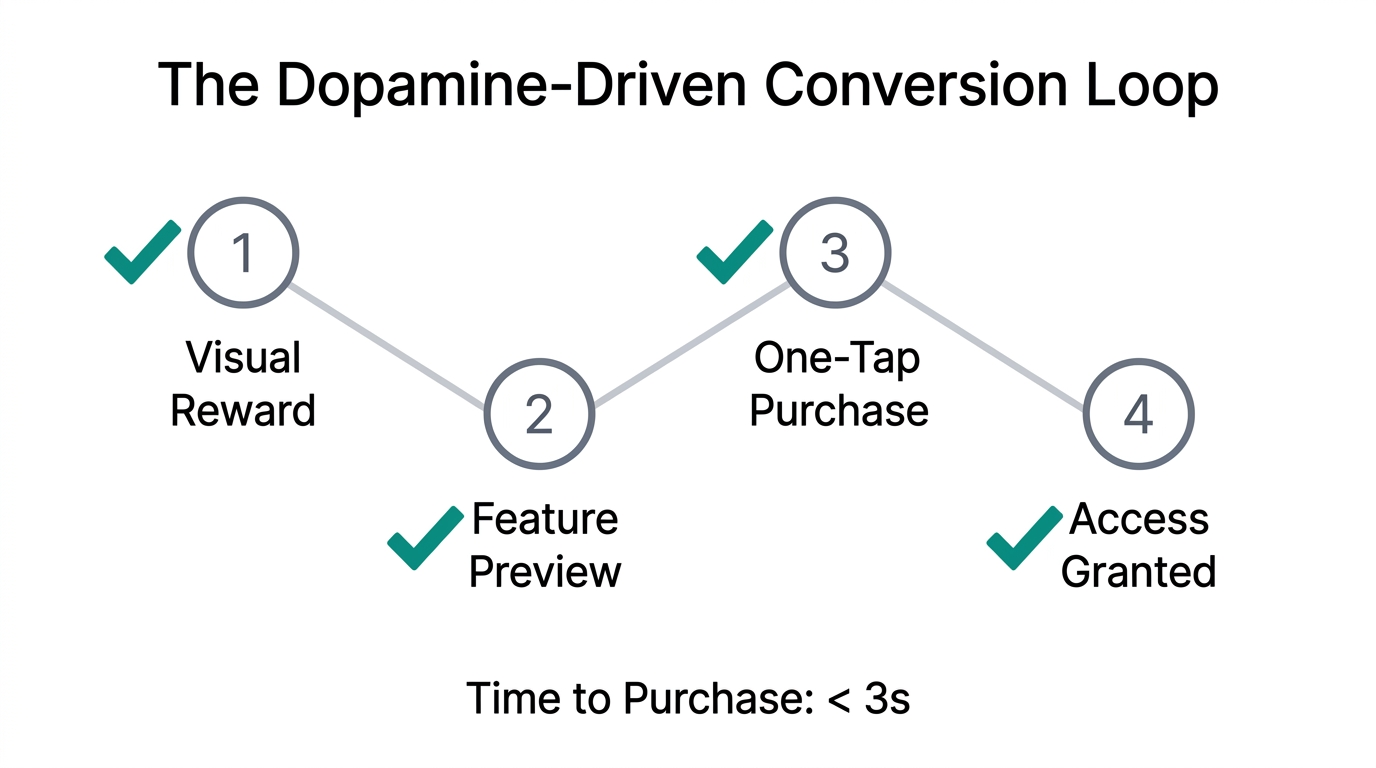
Technical A/B testing for mobile apps often focuses on copy, but Sunflower proved that visual aesthetics are equally powerful. Their paywall features a 'cute little bee' with cartoon eyes and bright, sunflower-themed graphics. This isn't just for show; it is designed to trigger dopamine rewards at the moment of purchase. By associating the financial commitment with a delightful, rewarding visual, the app reduces the 'pain of paying.'
Furthermore, labels like 'No commitment, cancel anytime' and 'Offer applied' with a green checkmark serve as powerful behavioral triggers. These elements validate the user's decision in real-time. For developers running mobile app monetization 2026 campaigns, especially via TikTok Ads Manager, these small UI trust signals can be the difference between an install-and-delete and a long-term customer.
"Our whole app is designed to trigger dopamine in the user to start associating sobriety with reward—and that extends to the design of the paywall itself."
Segmenting Price Sensitivity: Why Lowering Prices Can Increase LTV
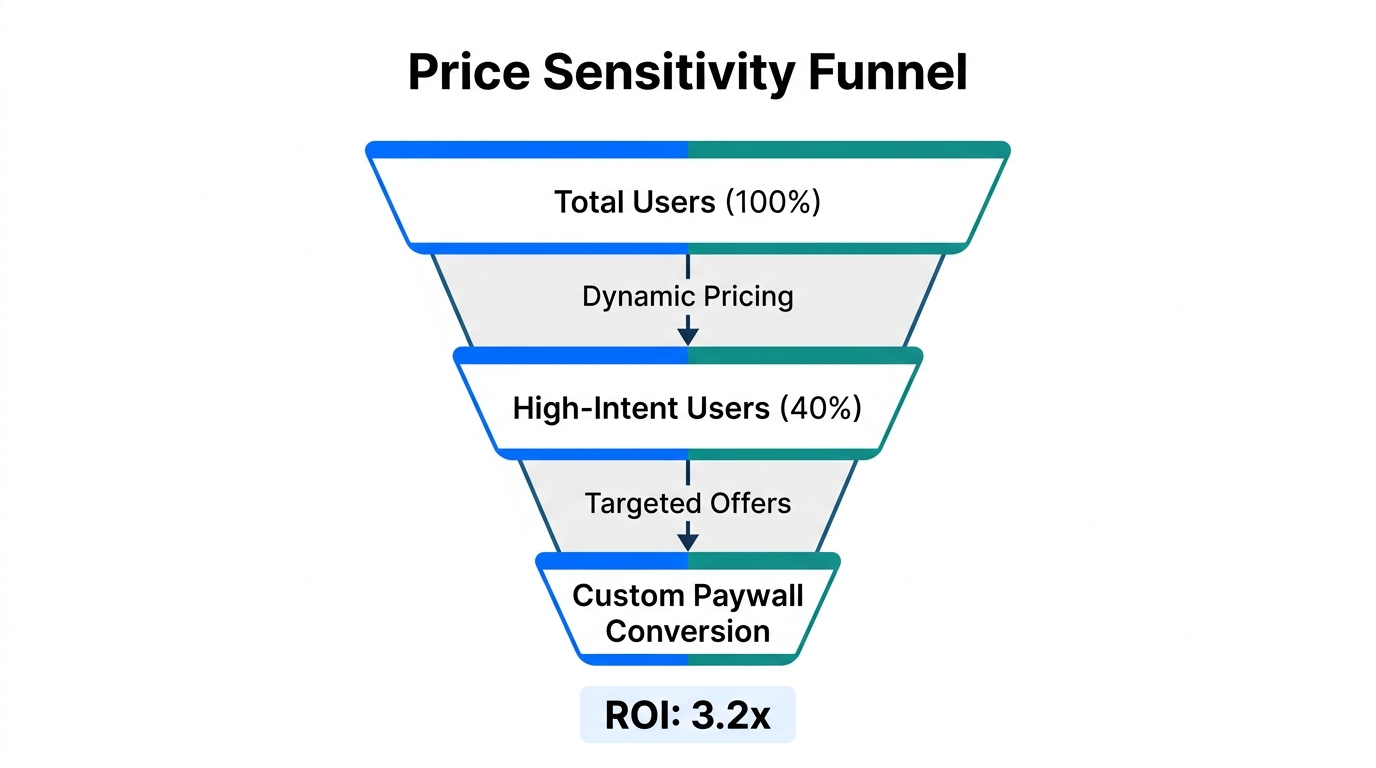
In a saturated market, many founders default to raising prices to increase ARR. However, Kobe Conrad's experience with Sunflower suggests a more nuanced approach. Because their target audience often faces financial strain due to addiction, the team experimented with lowering prices to increase total volume. They found that a more accessible entry point significantly increased the number of paying users, which in turn boosted total revenue and long-term value (LTV).
Implementing price sensitivity testing requires a robust infrastructure. Using a Superwall experiment, you can segment users by geography or behavior to find the 'Goldilocks zone' of pricing. In 2026, the 'one-size-fits-all' pricing model is dead; dynamic pricing based on user segment sensitivity is the new standard for app revenue optimization.
The UGC Playbook: Hiring Influencers as Employees
19:39While the paywall is the 'bottom of the funnel,' the 'top of the funnel' for Sunflower was built on a revolutionary UGC strategy. Instead of paying for one-off posts, Conrad hired the #1 influencer in the sobriety space, Eric (Mr. Impulsive), as the company's VP of Sobriety. This move drives 50,000 to 100,000 link clicks per month from platforms like Facebook Reels and TikTok.
Managing these relationships at scale can be complex for smaller teams. Modern growth stacks often pair Superwall for conversion with platforms like Stormy AI for influencer discovery and outreach. By using AI to identify creators who genuinely align with a mission, brands can move away from 'pay-per-post' arbitrage and toward long-term partnerships that build authentic brand equity. This 'employee-creator' model ensures that influencers are deeply embedded in the product roadmap, making their content 10x more effective than traditional white-labeled ads.
"Don't buy one post. Hire the person who matters to your industry as an employee. It's wholesale purchasing of attention vs. retail."
The Future of App Monetization: AI Agents and Beyond
Kobe Conrad's most provocative take is that standard subscription apps are going away. As the cost of software production drops to near-zero thanks to AI, the 'app' becomes a lead magnet for deeper services. Sunflower is already transitioning by launching a teletherapy clinic and physical merchandise like 'sobriety pins' that celebrate milestones. In this ecosystem, the AI agent (Sam) acts as the bridge between the free utility and the high-ticket human service.
For developers, this means the Superwall paywall is just the first step. You might use Beehiiv to manage a newsletter that nurtures these leads or Stripe to handle payments for physical goods. The goal is to build an ecosystem where the software provides 200 IQ value for free or low cost, while the real revenue comes from the 'human' or 'physical' layer on top. By 2026, the most successful apps will look more like media companies with a software arm than pure SaaS plays.
Conclusion: Building a Mission-Driven Revenue Machine
Optimizing an app for $1M ARR in 2026 requires more than just a good idea; it requires a scientific approach to conversion and a radical approach to growth. By using Superwall to solve trial anxiety and prioritize annual commitments, and by leveraging high-impact creators through tools like Stormy AI, you can build a sustainable, mission-driven business. Whether you are building an AI companion or a niche utility, the playbook remains the same: test relentlessly, prioritize trust, and always look for the arbitrage in human attention. Start your journey by analyzing your current checkout flow at paywallexperiments.com and see what one change could do for your bottom line.