In 2026, the era of clicking through endless dashboards to manage PPC campaigns is officially over. Growth marketers have shifted from being manual operators to what many call "vibe coders"—technical strategists who use natural language to orchestrate complex data pipelines. At the heart of this revolution is Claude Code, a command-line interface (CLI) agent that doesn't just suggest copy, but actually executes Action AI to manage your ad spend in real-time. By connecting Claude to live ad platforms via the Model Context Protocol (MCP), teams are now automating budget reallocation and flagging "bleeding" campaigns before they drain the quarterly budget.
MCP: The 'USB-C Port' for Connecting Claude Code to Ad Data
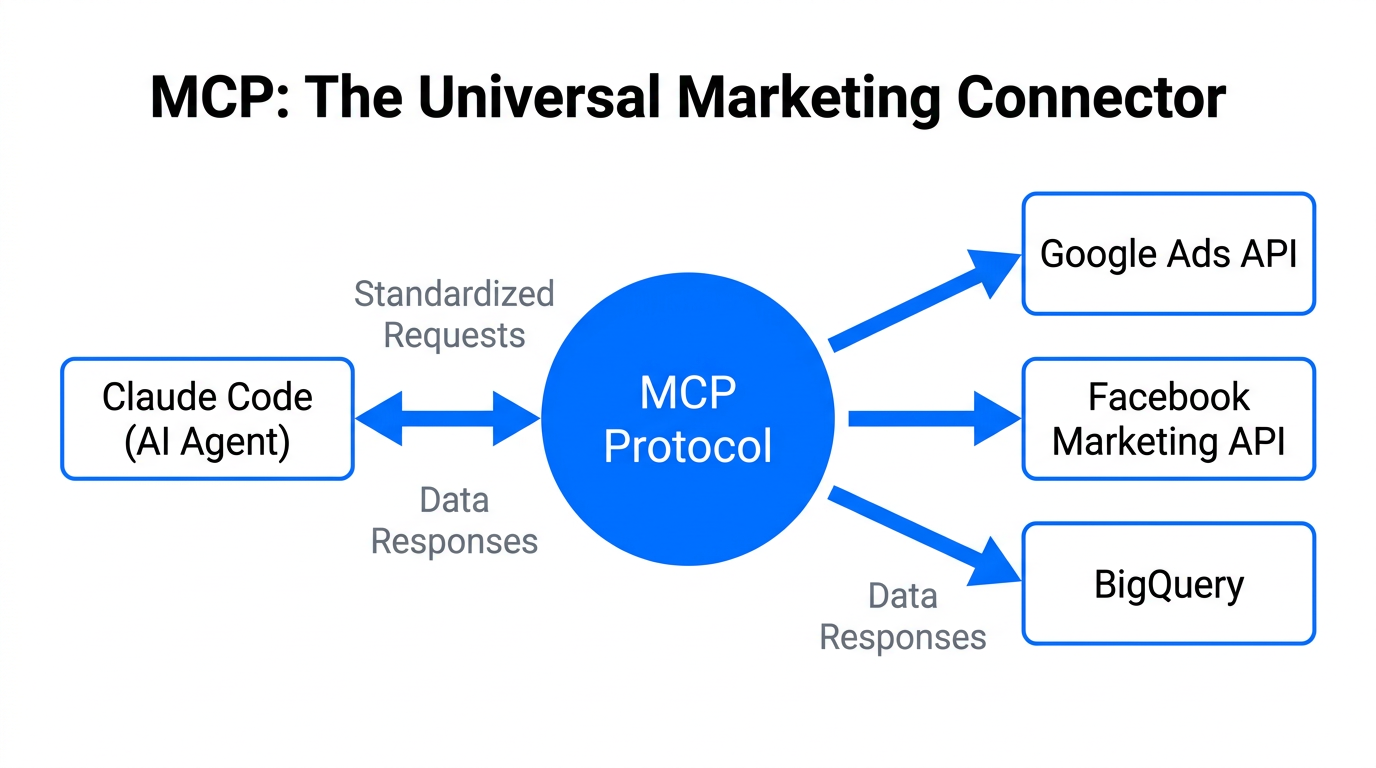
For years, the biggest hurdle in AI marketing was the "data silo." Your AI knew how to write an ad, but it didn't know how that ad was actually performing in Meta Ads Manager or Google Ads. Enter the Model Context Protocol (MCP). Think of MCP as the universal USB-C port for artificial intelligence. It allows Claude Code to "plug into" external data sources without the need for custom, brittle API integrations for every single tool.
With MCP, Claude Code becomes an agentic orchestrator. Instead of you exporting a CSV from Google Ads and uploading it to a chat window, Claude reaches out, pulls the latest performance metrics, and compares them against your target KPIs. This shift has led to a 75% reduction in time spent on repetitive strategic analysis for marketing teams worldwide, according to latest data from Digital Applied. The protocol ensures that the "context"—your campaign names, spend, and conversion rates—is always live and accurate.
"MCP isn't just a technical update; it's the bridge that turns Claude from a writer into a media buyer who never sleeps."
Playbook: Writing Scripts with Claude Code to Alert Slack About Underperforming Ads
One of the most immediate use cases for Claude Code ad optimization is the automated "Bleed Detector." This is a script that monitors your campaigns and sends an instant alert to your team if a campaign is spending money without generating results. In 2026, growth teams are using tools like Composio or the Ryze AI Ads MCP to facilitate this connection.
Step 1: Initialize the MCP Connection
Start by opening your terminal and launching Claude Code. Instruct the agent to connect to your ad platform MCP server. You might use a command like claude connect google-ads-mcp. This gives the agent permission to read-only campaign data.
Step 2: Define the "Bleed" Logic
Rather than writing Python yourself, you tell Claude: "Write a script that checks my Meta Ads spend every hour. If any campaign has spent over $100 in the last 24 hours with 0 conversions, send a message to the #growth-alerts Slack channel with the campaign ID and the exact spend." Claude Code then generates the Python script, creates the necessary webhooks via the Zapier MCP Server, and schedules the task.
Step 3: Deploy and Monitor
Because Claude Code can edit your local file system, it can save this script directly into your growth-ops repository and set up a GitHub Action to run it. This level of AI paid media management 2026 allows a single marketer to monitor hundreds of campaigns across multiple platforms with zero manual checking.
| Workflow Metric | Manual Optimization (Pre-AI) | Claude Code + MCP (2026) |
|---|---|---|
| Data Collection Time | 45-60 minutes | < 2 minutes |
| Alert Latency | Daily or Weekly | Real-time (Hourly) |
| Reporting Accuracy | Prone to human error | Programmatic Precision |
| Execution Speed | Hours to adjust budgets | Seconds via Agent |
Automating Responsive Search Ad (RSA) Creation Using the /rsa Command
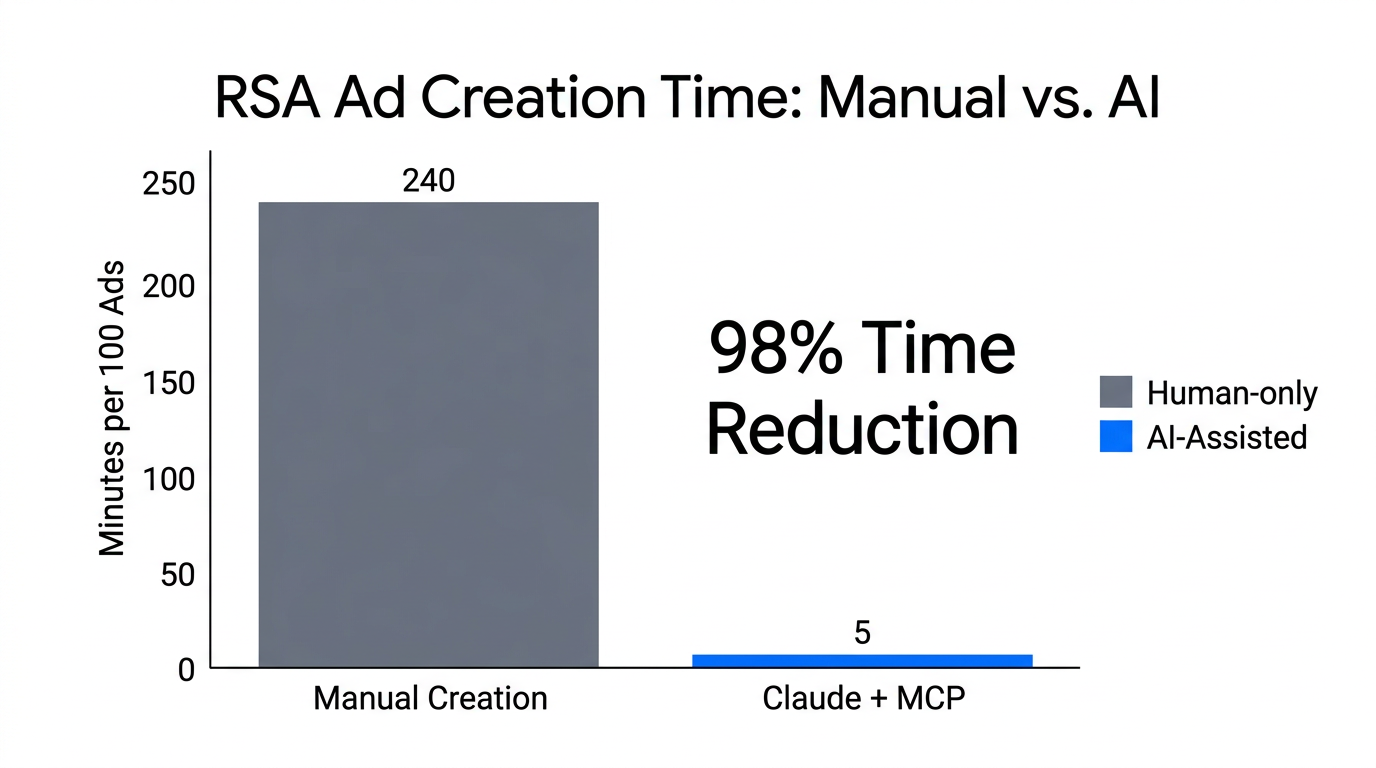
Creating high-quality Responsive Search Ads (RSAs) used to be a grueling process of brainstorming 15 headlines and 4 descriptions that all made sense together. Anthropic's own growth team revolutionized this by implementing a custom /rsa slash command within Claude Code. This command doesn't just generate text; it cross-references your current brand guidelines stored in your repository with live performance data from your best-performing historic ads.
By using the /rsa command, marketers can prompt: "/rsa generate for our new 'AI Search' feature using the tone in branding.pdf and focusing on the high-CTR keywords from last month's campaigns." The agent then outputs a formatted JSON ready to be uploaded directly into Google Ads Editor. This workflow has famously cut ad creation time from 30 minutes to just 30 seconds for enterprise-level teams, as highlighted in the Anthropic Case Study.
"The /rsa command effectively turns your brand documentation into an active participant in your creative process, ensuring 100% alignment at 100x speed."
To keep this context persistent, smart growth teams use a CLAUDE.md file in their project root. This file serves as a "long-term memory" for Claude, containing your target personas, experiment logs, and "anti-patterns" (what not to say). You can find templates for these memory files in libraries like Corey Haines' Marketing Skills or the 180+ Production Skills repository.
Privacy and Security: Sandboxing PII When Using Claude Code
As we integrate AI deeper into our marketing stacks, data privacy becomes the top priority. Never feed raw customer PII (Personally Identifiable Information) directly into an AI model without a security layer. When using Claude Code for customer data analysis or lookalike audience modeling, it is critical to use sandboxing techniques.
Experts at 4Thought Marketing suggest using Claude Enterprise or self-hosted MCP servers to ensure that data is processed within your VPC (Virtual Private Cloud) and never used to train the underlying model. Another common mistake is "context bloat," where connecting too many data sources at once can lead to the AI hallucinating metrics. It is best practice to use Plan Mode in Claude Code to map out the data flow before execution, ensuring the agent only accesses the specific fields required for the analysis.
The Impact on the Modern Growth Stack
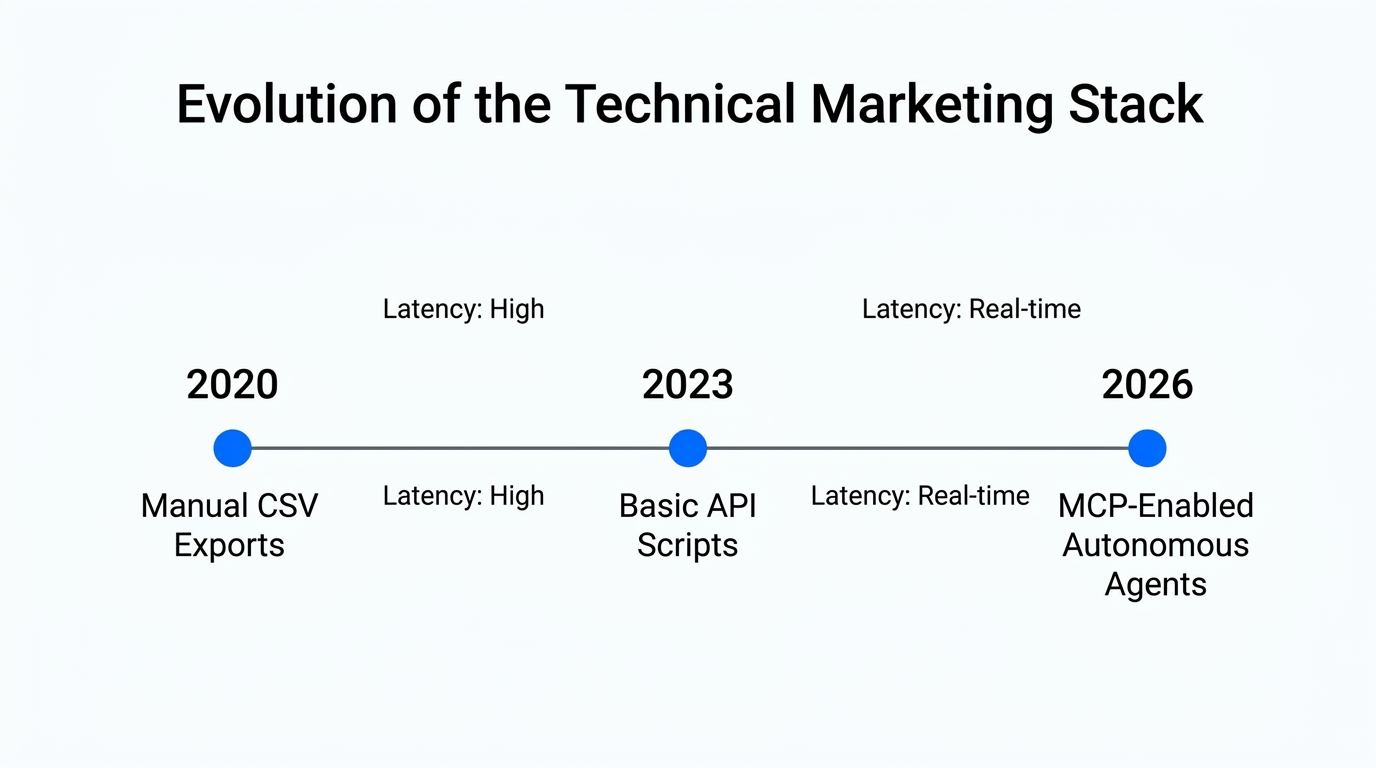
The adoption of AI coding assistants is no longer a trend—it's the industry standard. In 2026, 78% of global development teams adopted these tools, resulting in a 40% increase in speed, according to Bayelsa Watch. By 2026, the market for these tools is projected to hit nearly $15 billion as more non-technical departments like marketing adopt agentic workflows (SNS Insider).
For marketers, this means the "growth stack" is evolving. You might use Stormy AI for AI-powered creator discovery and managing influencer relationships, while Claude Code handles the back-end automation of your paid social ads. This combination of influencer-generated content and AI-driven distribution is the winning formula for app developers and e-commerce brands looking to scale efficiently.
"The technical marketer of 2026 doesn't just run ads; they build systems that run ads for them."
Conclusion: The Future of Technical Marketing
Scaling paid media spend in 2026 requires more than just a high budget; it requires algorithmic agility. By leveraging Claude Code and the Model Context Protocol, growth teams can move from reactive reporting to proactive optimization. Whether it's slashing ad creation time from 30 minutes to 30 seconds or building a real-time "Bleed Detector" for Slack, the tools are now available for any marketer to become a "vibe coder."
To stay ahead, start small: connect a single MCP server to your ad data, experiment with the CLAUDE.md persistent memory, and always keep a human in the loop to verify the agent's actions. When you're ready to scale your influencer and UGC efforts alongside your paid media, platforms like Stormy AI provide the discovery and tracking tools needed to fuel your AI-driven growth engine.