The era of "Chat AI"—where marketers simply ask a chatbot to write a few headlines—is rapidly coming to a close. In its place, a more sophisticated paradigm is emerging: Action AI. This shift represents the transition from using AI as a digital typewriter to employing it as an autonomous agent capable of executing complex marketing tasks directly within your terminal or via API. For performance marketers managing google ads responsive search ads, this evolution is the difference between generic, low-conversion copy and "Vibe Marketing"—a strategy that uses emotional resonance and real-time data to dominate the SERPs.
Currently, over 80% of Google Ads advertisers leverage some form of automated bidding. However, while the bidding is automated, the creative often remains stagnant. The secret to scaling in 2025 lies in creative automation: using tools like Claude Code and n8n.io to bridge the gap between deterministic performance data and probabilistic creative strategy.
The Evolution of RSA and Why Generic AI Copy Fails
Responsive Search Ads (RSAs) were designed to give Google’s machine learning the flexibility to test thousands of permutations of headlines and descriptions. But there is a glaring flaw in how most teams use them. When you feed an RSA generic, AI-generated copy from a standard prompt, you often end up with "safe" but boring messaging that blends into the background. These ads lack the emotional hook—the "vibe"—that actually stops a user's scroll.
According to research from Marketing LTB, advertisers who successfully implement AI-driven optimization see an average 25% increase in conversions. The failure point isn't the AI itself; it's the lack of context. Generic AI doesn't know your historical top-performers, it doesn't know your current seasonal inventory, and it certainly doesn't understand the specific emotional nuances of your audience's search intent.
"The industry is shifting toward 'Funnel-as-Code,' where marketers treat their ad accounts like software repositories, managing campaigns via the command line for maximum precision."
| Feature | Legacy RSA Workflow | Agentic 'Vibe' Workflow |
|---|---|---|
| Copy Generation | Manual brainstorming or basic GPT prompts | Claude Code analyzing 90 days of winning hooks |
| Data Integration | Stale CSV exports and pivot tables | Real-time n8n workflows via Google Ads API |
| Optimization | Reactive (based on last month's data) | Proactive (predictive seasonal variations) |
| Resonance | Generic "Best Quality/Low Price" | High-resonance "Vibe Marketing" tailored to intent |
Deterministic Data vs. Probabilistic Creative
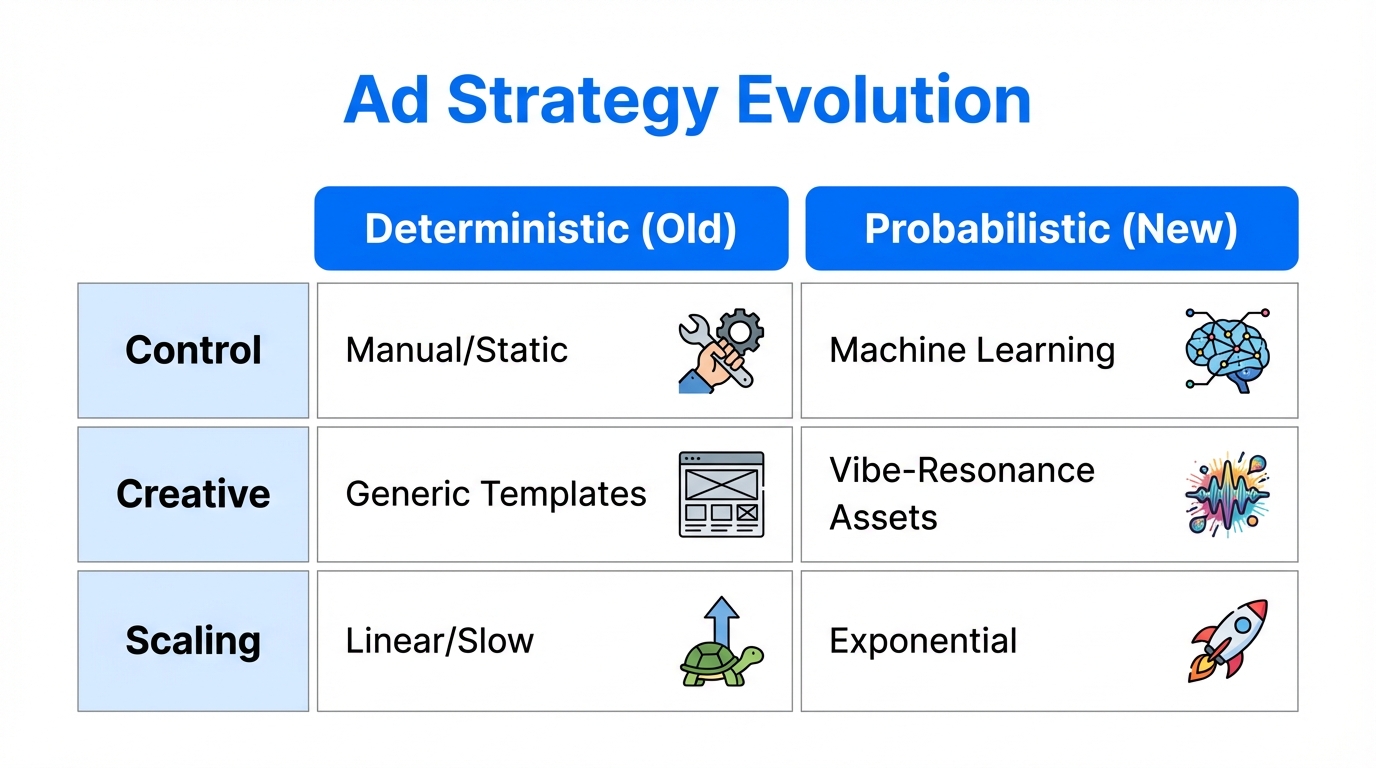
To master google ads rsa optimization, you must understand the two types of tasks involved in growth marketing. Experts at Marketing Fello suggest that the most successful stacks use n8n for deterministic tasks (where the same input always equals the same output, such as reporting or data syncing) and Claude Code for probabilistic tasks (where nuanced decision-making and creative strategy are required).
By using Model Context Protocol (MCP), you can create a "universal adapter" that allows Claude to talk directly to your data sources. This allows the AI to act as an architect rather than just a writer. It sees which headlines are actually driving ROAS, not just CTR, and uses that deterministic data to fuel its probabilistic creative engine.
Step 1: Building the Agentic Infrastructure
Before you can automate your ai copywriting for ads, you need to build the technical bridge between your terminal and the Google Ads platform. This is the foundation of the "Action AI" playbook.
- MCP Setup: Install an MCP server like google-ads-mcp. This gives Claude read and write access to your specific campaign data.
- n8n Connection: Configure the Google Ads Node in n8n using OAuth2 credentials and a Developer Token. Refer to the n8n Google Ads Documentation for exact credential mapping.
- Authentication: Use tools like GAQL.app to generate Google Ads Query Language tokens safely.
Step 2: Creative Analysis with Claude Code Slash Commands
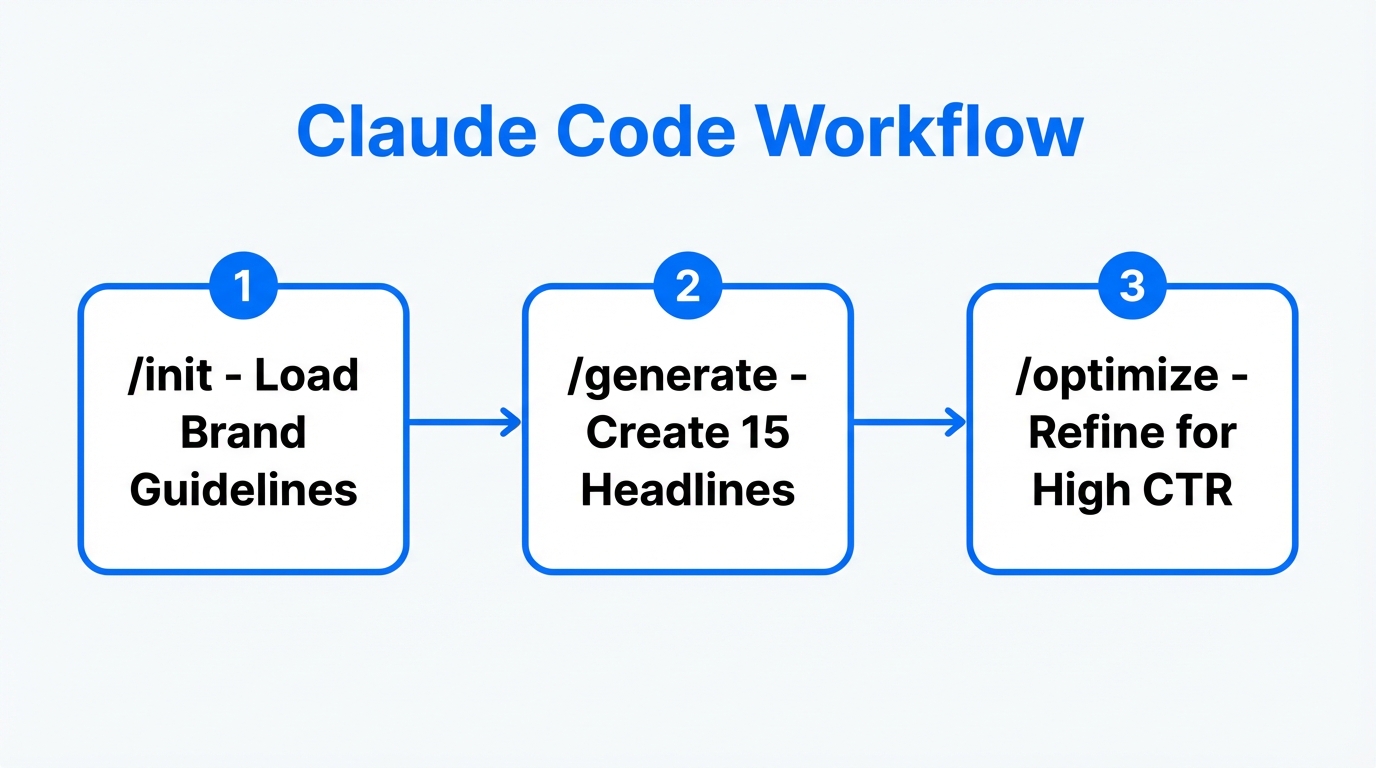
The real power of Claude Code lies in its ability to run custom scripts via the terminal. Instead of manually digging through the "Asset Details" report in Google Ads, you can create a custom /rsa slash command. This command instructs Claude to query your account for any campaigns with a CTR below 1% and a spend over $500 in the last 30 days.
By pulling historical performance data, Claude identifies which specific headlines are "Top Rated" by Google’s internal learning and which are "Low." It doesn't just look at the text; it analyzes the vibe of the winning copy—is it urgent, educational, or cheeky? It then uses this analysis to prepare for the next step: automated variation generation.
Step 3: Building the n8n Workflow for 'Vibe' Variations
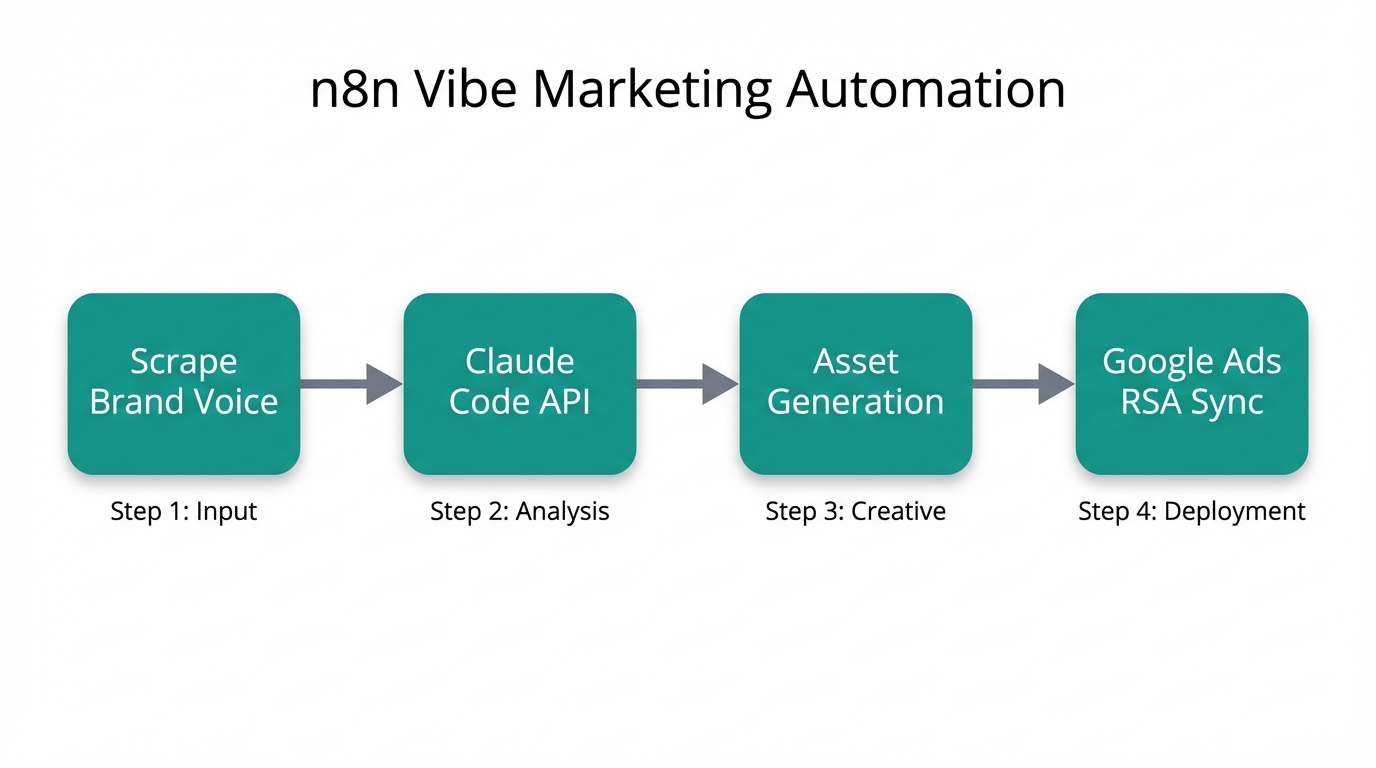
Now that you have your winning patterns, you can use creative automation to generate high-volume variations. An n8n workflow can be scheduled to trigger every time a seasonal shift occurs or inventory levels change. For example, if you are a fashion brand, your n8n workflow could pull current weather data and generate 15 specific RSA variations based on "rainy day" vibes versus "summer heatwave" vibes.
The Workflow Architecture:
- Trigger: A scheduled cron job (e.g., every Monday at 8 AM) or a webhook from your inventory system.
- Data Fetch: The Google Ads Node fetches your current top-performing 5 headlines.
- AI Transformation: A Claude 3.5 Sonnet node takes those 5 headlines and generates 15 new variations, focusing on "emotional resonance" and current seasonal trends.
- Validation: The workflow sends a summary to Slack for approval.
- Upload: Once approved, n8n pushes the new assets directly into the RSA via the Google Ads API.
For brands that need to source the raw creative inspiration for these "vibes," platforms like Stormy AI can be invaluable for discovering UGC creators whose organic content is already resonating with your target demographic. By analyzing what real creators are saying, your AI copywriter can mimic the language and tone that actually converts.
"Efficiency isn't just about doing things faster; it's about using agentic workflows to reduce repetitive task time by 75% so you can focus on big-picture strategy."
Case Study: 8-Figure DTC Brand and the 'Atlas' Agent
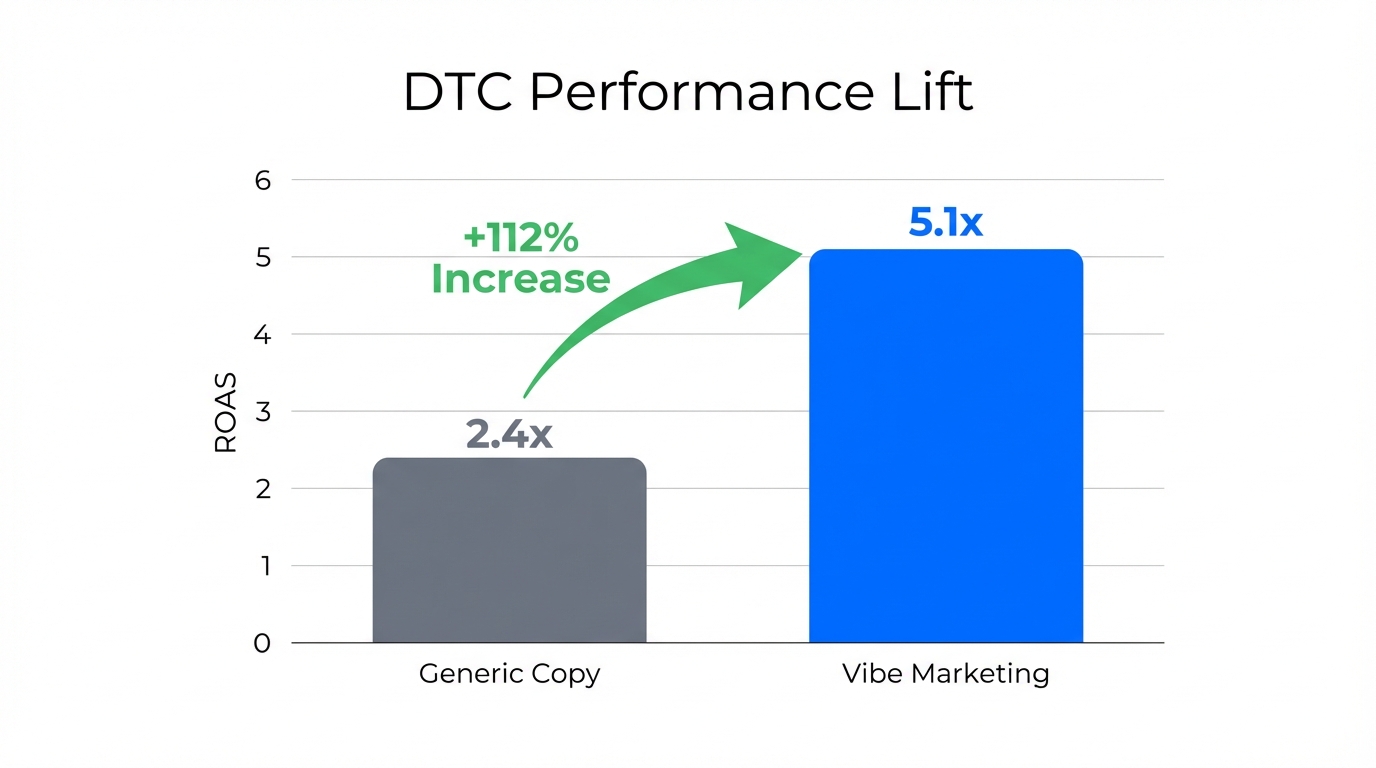
Consider the case of an 8-figure e-commerce brand that was struggling with fluctuating ROAS across a massive catalog. They built an autonomous agent nicknamed "Atlas" using a combination of Claude and n8n.
Atlas was programmed to monitor daily ROAS at the SKU level. If a specific product's ROAS dipped below a certain threshold, the agent would automatically query Google Ads to see if the RSA copy for that product was outdated. If it was, Atlas would generate new variations, check inventory levels via Shopify, and adjust the ad spend. This level of granular google ads rsa optimization allowed the brand to shift budget dynamically to products with the highest inventory margins, resulting in a significantly more profitable bottom line.
Common Mistakes to Avoid in Creative Automation
While n8n for marketers offers incredible power, it is easy to "automate chaos." Here are the pitfalls to avoid:
- Automating a Failing Strategy: If your offer doesn't convert manually, AI will only help you fail faster. Fix the offer first, then automate the creative.
- API Quota Neglect: Large accounts can easily hit Google Ads API rate limits if you run hourly checks on thousands of campaigns. Use n8n’s Batch nodes to throttle your requests.
- Insufficient Data: Using AI to make bid adjustments or copy changes on campaigns with fewer than 30 conversions per month leads to erratic performance. Machine learning requires a baseline of data to be effective.
- Ignoring Privacy: In a post-cookie world, focus your automation on First-Party Data. Use n8n to sync conversions directly from your CRM into Google Ads Enhanced Conversions to keep your AI's "brain" fed with accurate data.
The Future of Growth: Funnel-as-Code
Optimizing google ads responsive search ads is no longer just about keywords and bids; it's about speed of iteration. By adopting an agentic workflow with Claude Code and n8n, you move away from being a manual campaign manager and toward being a "growth architect."
As you build out these systems, remember that the "vibe" of your creative is the most important variable you can control. Whether you are using Stormy AI to source UGC insights for your copy or using n8n to monitor website uptime via the PageSpeed Insights API, the goal is the same: creating a seamless, high-resonance experience for the end user. Start small, build one workflow at a time, and watch as your creative automation transforms your ad performance from generic to extraordinary.