In the high-velocity landscape of 2026, where every brand has access to the same TikTok Ads Manager features and automated bidding strategies, the only remaining moat is how a brand makes its customers feel. We’ve reached a point in marketing management where efficiency has been commoditized. To differentiate, leaders must look toward an unlikely source: the world of ultra-fine dining. Specifically, the philosophy of Unreasonable Hospitality pioneered by Will Guidara at 11 Madison Park. For Growth Leads and CMOs, this isn't just about being "nice"; it’s about systematizing excellence so that hospitality becomes a mandatory operational function rather than a random act of kindness.
The UPS Store Case Study: Why 'Mandatory' Hospitality is a Meta-Signal
The UPS Store example shows how unreasonable hospitality applies to even the most everyday business interactions.
One of the most profound examples of operationalizing hospitality doesn't come from a Michelin-star kitchen, but from a UPS Store in Sarasota. The owner recognized that customers don't enter a shipping center expecting magic. They expect a transaction. By mandating that every employee comp a customer up to $40 once per shift, he created what Guidara calls a meta-signal. This wasn't a suggestion; it was a rule. Employees had to record who they comped and why before clocking out.
In a startup context, this translates to empowering your customer success or community management teams to spend a "One Size Fits One" budget without seeking management approval. When you make these gestures mandatory, the team’s focus shifts from if they should help someone to who deserves it most. This forces a deeper level of engagement with your customer data in platforms like HubSpot, as employees actively search for signs of a customer having a hard day or celebrating a win.
"Sometimes magic is just being willing to invest more energy into an idea than anyone else would deem reasonable."
Implementing the 11 Madison Park Rules for Criticism
Will Guidara explains the essential rules for delivering criticism effectively within a high-performing team.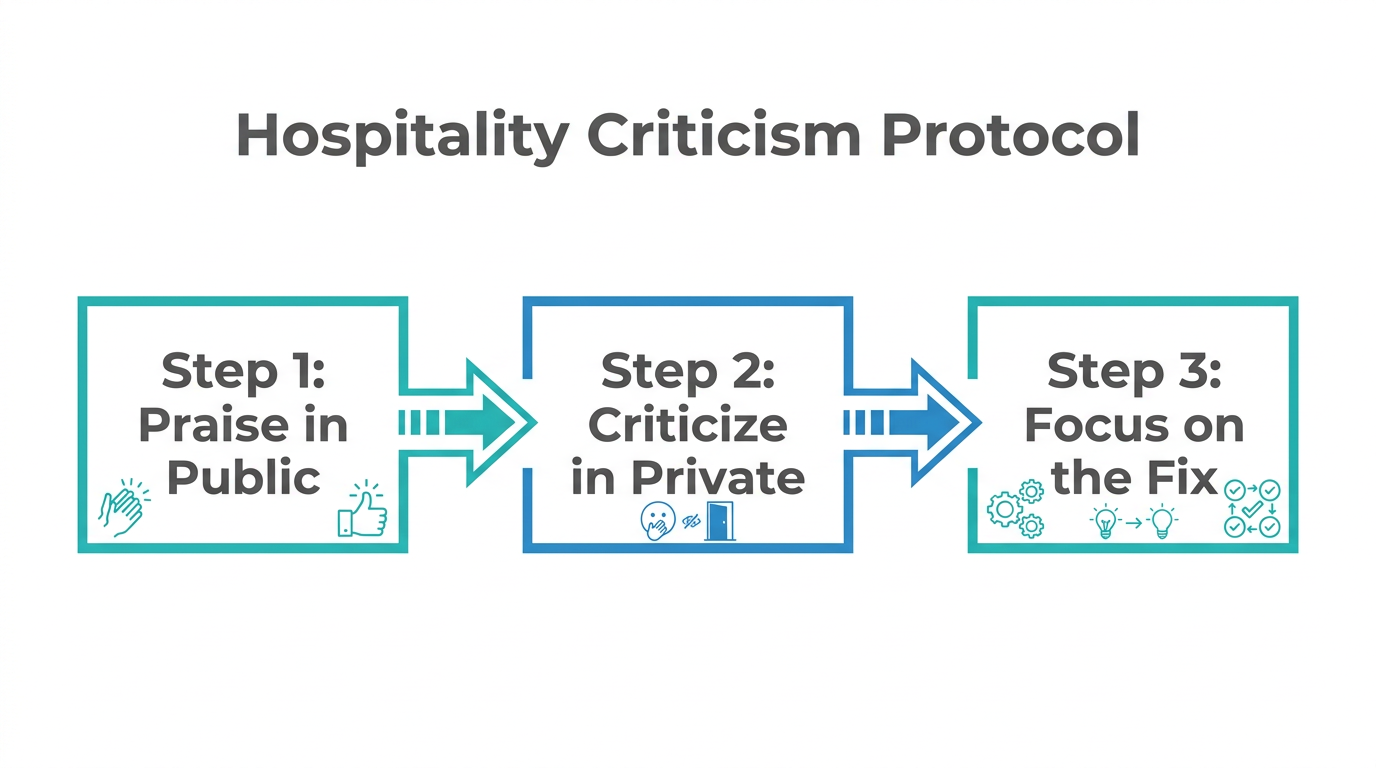
High-growth teams are often high-pressure environments. To maintain a culture of excellence without burning out your talent, you need a systematized feedback loop. Guidara’s retention at 11 Madison Park was dramatically better than industry standards because he normalized criticism as an investment, not a punishment. For growth team leadership in 2026, these rules are non-negotiable:
- Criticize in Private: Praise in public, but never humiliate a team member in front of their peers. This prevents the "wall of shame" from blocking the actual information you're trying to deliver.
- Criticize the Behavior, Not the Person: Focus on the specific marketing campaign error or the missed deadline, rather than making it a character judgment.
- Criticize Consistently: If you only call out mistakes when you're in a bad mood, the team associates feedback with your temper, not their growth. Consistency builds trust.
- No Emotion or Sarcasm: Sarcasm is a tool for the insecure. Effective leadership requires unemotional, direct feedback that allows the recipient to process the data without a defensive emotional response.
| Feedback Type | Traditional Growth Culture | Unreasonable Hospitality Culture |
|---|---|---|
| Praise | Quarterly reviews only | Daily, specific, and public |
| Criticism | Public Slack call-outs | Private, behavior-focused sessions |
| Tone | Sarcastic or "Hustle" focused | Unemotional and investigative |
Bridging the Gap Between Authority and Information
A recurring failure in startup culture is that the people at the top have all the authority but none of the information, while the front-line reps have all the information but zero authority. To solve this, 11 Madison Park created the 'Dreamweaver' role—a staff member whose entire job was to execute the creative ideas of the front-line servers.
Imagine a customer service rep overhearing a client mention they’ve never tried a specific New York delicacy. In the restaurant, the Dreamweaver would literally run to a street cart to buy a hot dog and present it on fine china. In your growth team, this means giving your social media managers the budget to surprise and delight a loyal user with a custom gift that reflects a niche interest mentioned in their bio. Sourcing these specific influencers and creators who resonate with your brand's hospitality can be done efficiently using tools like Stormy AI, which allows you to discover creators who truly align with your "One Size Fits One" philosophy.
"The gestures that are specific to an individual will always have the greatest impact. One size fits one."
Conducting Quarterly 'Strategic Hospitality Planning'
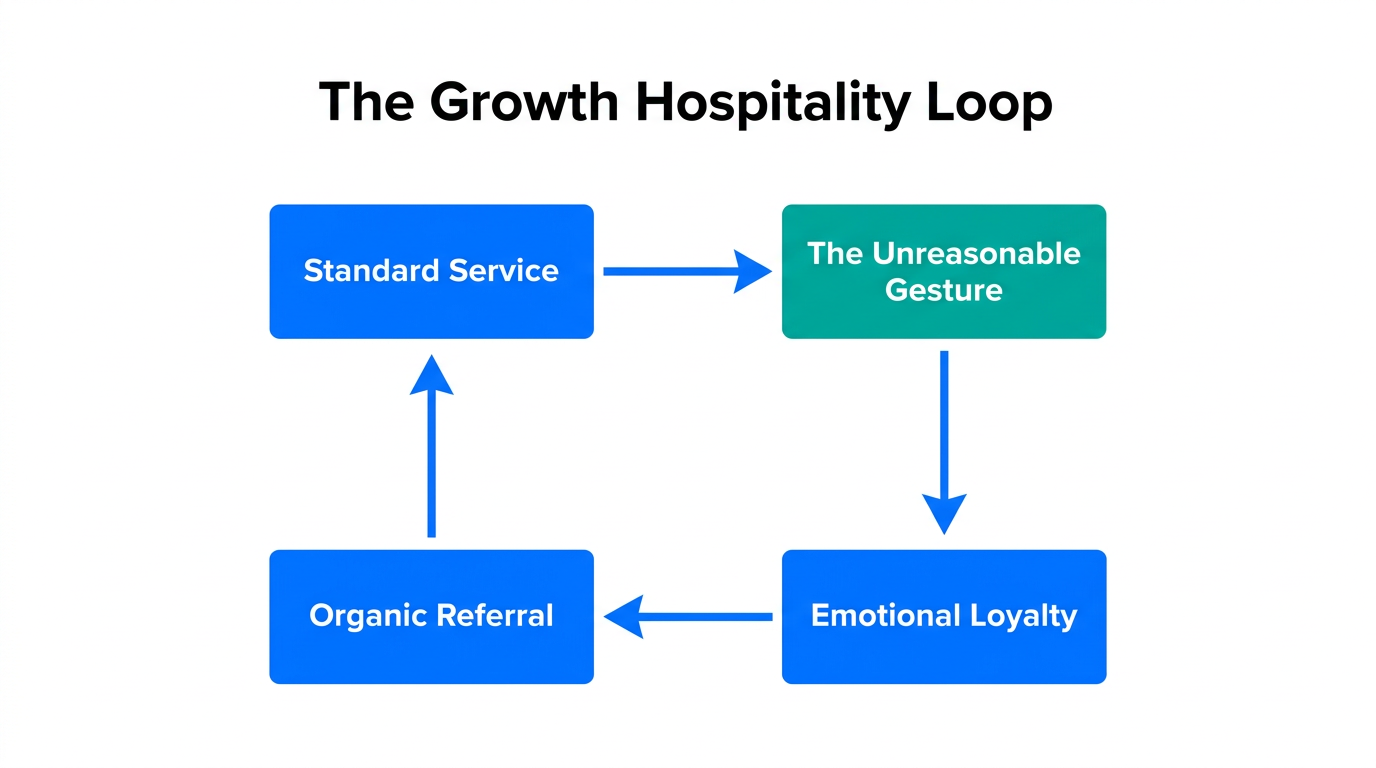
How do you ensure hospitality doesn't fall by the wayside during scaling? You must treat it like a product roadmap. Every quarter, your growth team should conduct a Strategic Hospitality Planning session to identify recurring customer friction points. This is where you apply pattern recognition.
Think about the Chewy model. They recognized a recurring pattern: dogs eventually pass away, and receiving a recurring food shipment during mourning is painful. By identifying this friction point, they created a system to credit the account and send flowers. This is One Size Fits Some—hospitality designed for a specific segment of the user journey. Your growth team should map out your entire customer lifecycle in a tool like Figma and look for the "forgotten touchpoints"—the check-out confirmation, the unsubscribe page, or the 404 error screen—and inject humanity into them.
The Praise-to-Criticism Ratio for High-Pressure Scaling
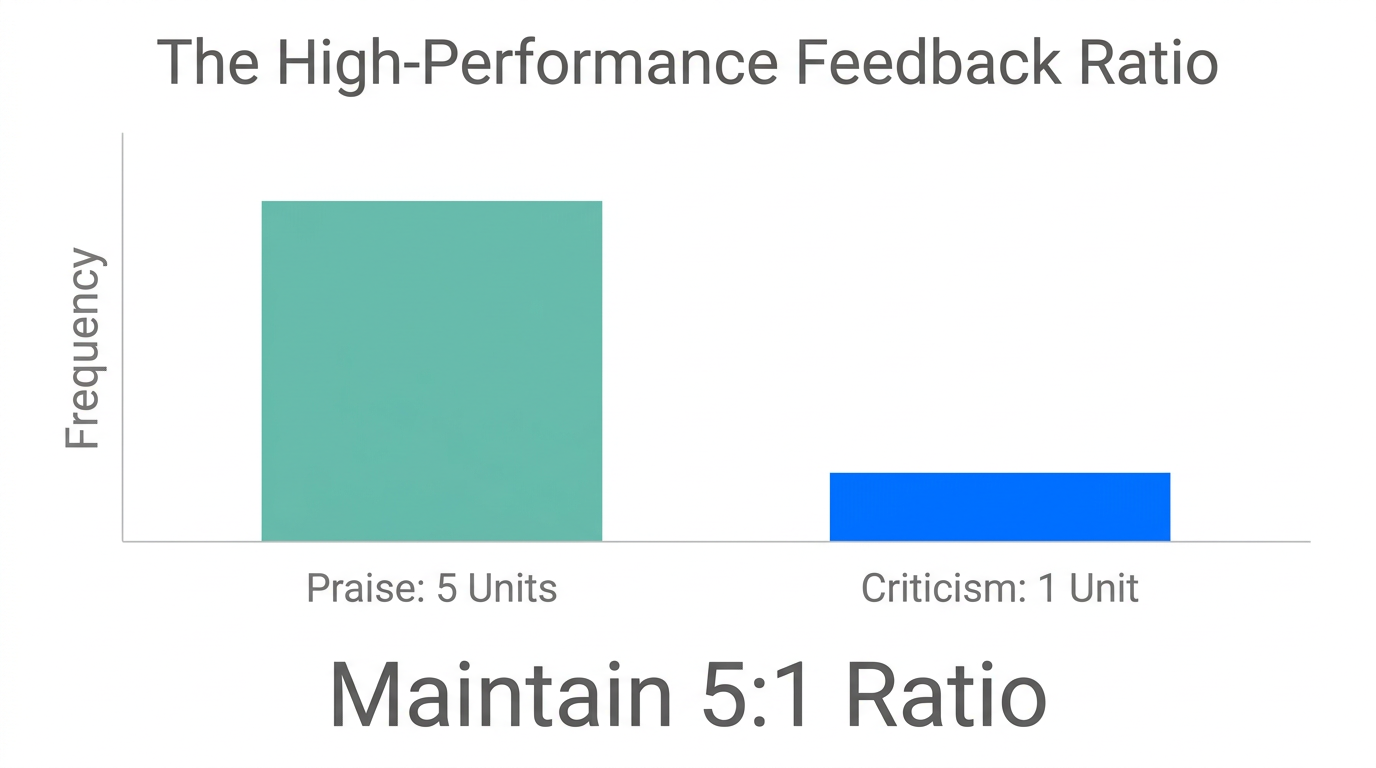
In 2026, the psychological safety of your team is a competitive advantage. If your team only hears from you when something goes wrong with the Meta Ads budget, they will stop taking risks. You must maintain a high praise-to-criticism ratio. Praise is addictive; it reinforces the behaviors you want to see repeated.
Use your internal communications—whether it's Slack or a specialized 2026 project management tool like Linear—to document the "magic moments" your team creates. This documentation serves as the training manual for new hires, showing them exactly what excellence looks like in practice.
"Praise is affirmation; criticism is investment. You cannot have a world-class team without both delivered in the right proportions."
The ROI of the 'Forgotten Text'
Why mastering the 'forgotten text' of customer interactions creates an unforgettable and unique brand experience.Every digital interface is covered in "forgotten text"—the generic copy that most brands ignore. A growth team that obsesses over people will treat every transactional email as a chance for hospitality. This could be a hilarious welcome email that makes the user feel like a hero for signing up, or a Starbucks gift card tucked into the glove box of a newly sold car. These small, overlooked touchpoints have a disproportionate ROI because they prove the brand cares about the things no one else paused to consider.
As you build your growth stack this year, remember that while AI can handle your influencer discovery and outreach, only a human-centric culture can deliver the kind of hospitality that turns a customer into a lifelong advocate. In 2026, marketing management is no longer just about the top of the funnel; it’s about the depth of the connection.
Final Thoughts: Becoming Unreasonable
Operationalizing hospitality isn't easy—it's a marathon. It requires you to work harder on the things that don't scale so that your brand can eventually scale on the back of unshakeable customer loyalty. Start by mandating one act of hospitality per day for your front-line team. Bridging the gap between authority and information is the first step in building a growth team that doesn't just acquire users, but obsesses over people.