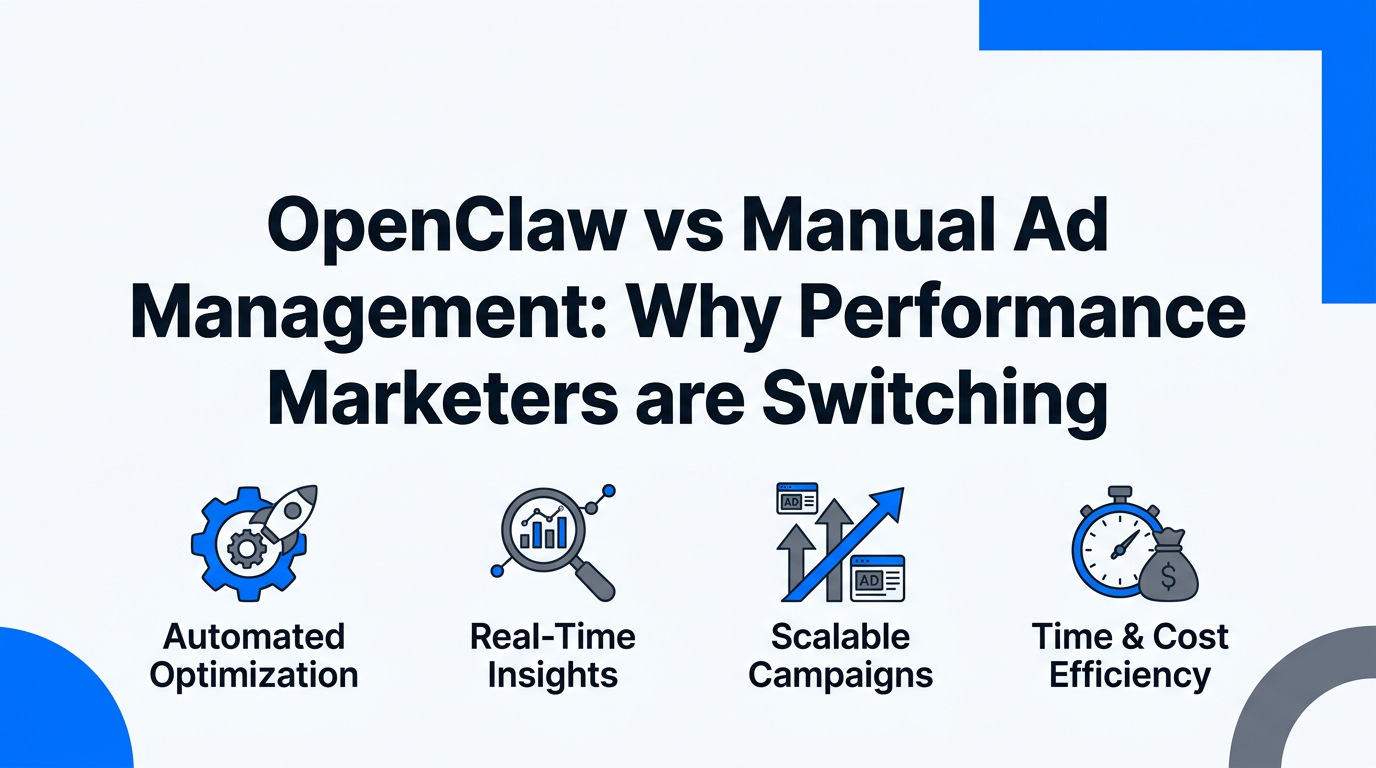
For decades, the life of a performance marketer was defined by the "daily grind" of manual adjustments—tweaking bids, refreshing keyword lists, and staring at spreadsheets until the numbers blurred. However, the landscape has shifted fundamentally. In 2025 and 2026, the industry moved from simple automation to agentic orchestration. Leading this charge is OpenClaw, an open-source AI agent platform that has effectively declared the end of manual ad management. With early adopters reporting a 73% reduction in management time and significant lifts in lead quality, the question is no longer if you should switch, but how fast you can deploy.
The Efficiency Gap: A 73% Reduction in Management Labor
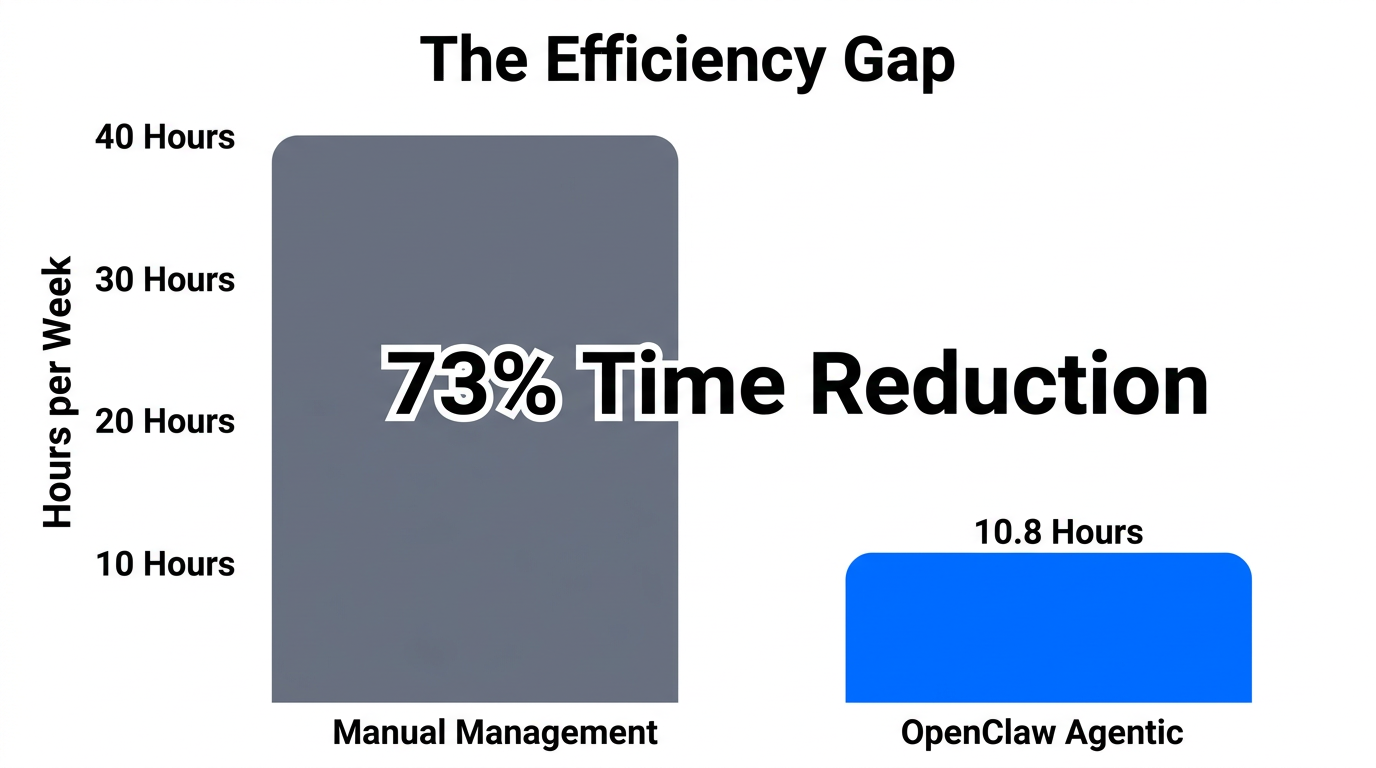
The primary driver behind the mass migration to OpenClaw is sheer efficiency. According to data from Groas AI, AI-driven optimization reduces the time spent on routine campaign adjustments by 73% compared to traditional manual methods. This isn't just about speed; it's about the ability to execute tasks that are humanly impossible at scale.
While a human media buyer might check a campaign twice a day, an agent powered by OpenClaw can monitor performance every minute. This allows for a shift from static daily budgets to demand-led bidding scale. Instead of waiting for a Monday morning report to see that a specific ad set was overperforming on Sunday afternoon, the agent scales the spend in real-time based on immediate market intent signals. This transition saves early adopters an average of 10+ hours per week on routine reporting and manual audits.
| Feature | Manual Ad Management | OpenClaw Agentic Ops |
|---|---|---|
| Monitoring Frequency | 2-4 times per day | Real-time / Per minute |
| Bid Adjustments | Reactive (based on past data) | Predictive (demand-led) |
| Keyword Coverage | Limited by manual research | Dynamic expansion (AdCP) |
| Lead Conversion Lift | Baseline | +23% (Average) |
"AI is the single biggest disruptor and enabler of marketing, unlocking precision at scale." — Raja Rajamannar, CMO at MastercardThe Ad Context Protocol (AdCP) and Real-Time Optimization
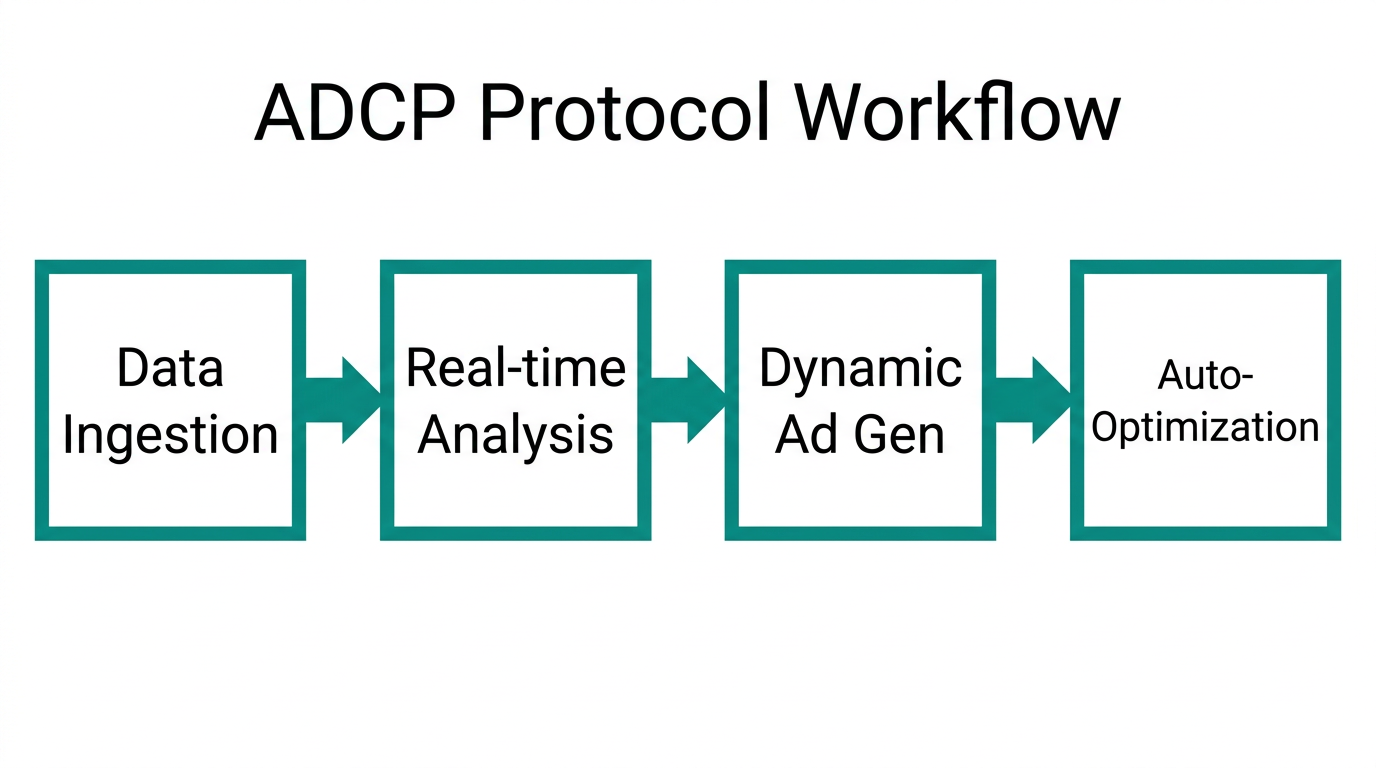
What makes OpenClaw different from the "smart bidding" features native to Meta Ads Manager or Google? The answer lies in the Ad Context Protocol (AdCP). This protocol allows agents to understand the broader context of an ad account—historical performance, creative hooks, and brand voice—rather than just looking at isolated data points.
By utilizing AdCP, OpenClaw agents can interact directly with ad platforms to perform hyper-granular bid optimization. This tech stack ensures that every dollar spent is backed by real-time intent. For marketers, this means keyword coverage can expand by up to 340% without the need for manual list building, as the agent identifies and tests new search terms dynamically. This is a far cry from the old way of doing things, where Hashmeta reports that businesses relying on manual processes waste an average of 26% of their budget on ineffective targeting.
Case Studies: Reducing Cost-Per-Conversion by 31%
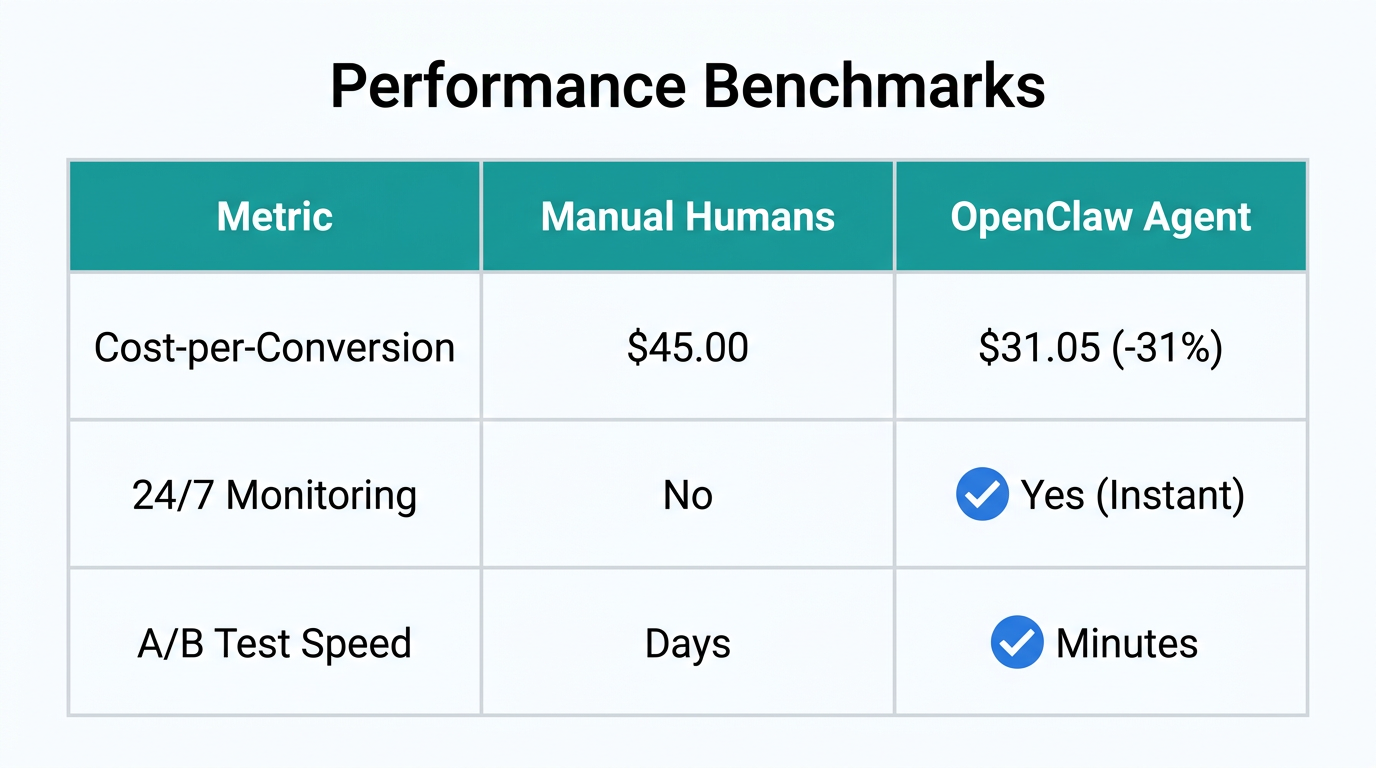
The performance benchmarks for AI ad optimization aren't just theoretical. Major global brands have already integrated these agents into their core workflows. For instance, L’Oréal achieved a 31% reduction in cost-per-conversion by replacing manual lists with AI-optimized targeting. This was paired with a massive expansion in their keyword footprint, allowing them to capture long-tail demand that manual managers simply didn't have the bandwidth to find.
Similarly, the streaming service Showmax utilized AI agents to automate ad creation and testing. By deploying these agents, they reduced their creative production time by 70%. This speed allows for rapid-fire A/B testing, ensuring that only the highest-performing creative assets receive significant budget allocation. When you combine this with the findings from Harvard Business Review that organizations integrating AI agents see a 23% bump in lead conversion rates, the ROI becomes undeniable.
"The claw is the law. My mission is to build an agent that even my mum can use." — Peter Steinberger, Creator of OpenClawAgentic-Led vs. Human-Led Lead Conversion
A major point of contention in performance marketing is whether an AI can truly understand the "why" behind a conversion. While humans excel at strategy and brand voice, agents excel at the mechanics of conversion. Modern workflows now favor a hybrid model: humans handle the high-level strategy and creative hooks, while agents manage the "busywork" like CSV cleaning, 4-hour audits, and bid changes.
For example, performance marketers are increasingly using Stormy AI to discover high-quality UGC creators and influencers to fuel their ad creative. Once the human identifies the right talent, the OpenClaw agent takes over to manage the distribution, testing 100+ variations of that creator's content across different audience segments in minutes. This synergy between human-led discovery and agentic-led execution is why 93% of CMOs now report a clear ROI from Generative AI applications, according to the SAS Report.
The Performance Marketer’s Playbook: Transitioning to AI Ops
Switching from manual to agentic management requires a change in mindset from "doing" to "governing." Follow these steps to begin the transition:
Step 1: Set Your ROAS Triggers
Don't let the agent run wild. Use an "Auditor" skill to set hard boundaries. For example, instruct your agent to pause any ad set if the ROAS falls below 2.5 over a rolling 72-hour window. This ensures that the AI stays within your profitability requirements.
Step 2: Deploy Creative Fatigue Monitoring
Manual managers often miss the slow decay of CTR. Deploy agents to track click-through rate trends over 7, 14, and 30-day windows. This allows you to spot creative fatigue before it kills your performance, giving you time to source new content via platforms like Stormy AI.
Step 3: Implement a Local-First Setup
Privacy is a growing concern, with 41% of marketers citing data accuracy and privacy as top challenges. For maximum security, host your OpenClaw instance on a local Mac Mini or a secure VPS through DigitalOcean rather than a shared cloud environment.
Pitfalls to Avoid in AI Ad Optimization
While the benefits are significant, the road to automation is paved with potential errors. The most common mistake is ignoring data quality. If you feed an agent poor data or incorrect conversion signals, you are simply facilitating "automated bad decisions at scale." Always verify your tracking pixels and server-side tagging via tools like Google Analytics or PostHog before letting an agent take the wheel.
Another critical risk is security negligence. Handling sensitive ad account tokens with unhardened or free AI tools can lead to disastrous breaches. Gartner has even rated some unconfigured agent setups as "unacceptable cybersecurity risks." Ensure you are using enterprise-grade deployments or managed services like Ryze AI to protect your financial assets.
"The transition from chatbots that suggest to agents that execute marks the true beginning of the AI marketing era." — Digiday ResearchConclusion: The Future of Performance Marketing
The data is clear: manual ad management is becoming a liability. In an era where OpenClaw can expand keyword coverage by 340% and drop conversion costs by 31%, sticking to manual workflows is effectively choosing to burn 26% of your budget. By moving to an agentic orchestration model, performance marketers can finally stop being "button pushers" and start being true growth strategists.
Start by automating the busywork—bid changes, reporting, and fatigue monitoring—and focus your human talent on high-stakes decisions like brand positioning and influencer partnerships. The marketers who embrace the "Claw" today will be the ones dominating the ROAS leaderboards tomorrow.