OpenClaw vs GRIN: Which Influencer Marketing Stack Drives More ROI in 2026?
A 2026 strategic comparison of OpenClaw vs GRIN: evaluate affiliate revenue, AI automation, and security to choose the right influencer marketing stack for your ROI.
In 2026, the influencer marketing landscape has reached a definitive fork in the road. On one side stands the established enterprise order, represented by GRIN, the "Command Center" that has powered some of the most successful eCommerce brands of the decade. On the other side is the agentic revolution, led by OpenClaw, an open-source disruptor that treats creator discovery not as a database to be queried, but as a task for autonomous AI agents to solve.
For growth leads and marketing directors, the choice between these two platforms isn't just about features—it is a choice of infrastructure philosophy. Do you invest in a managed, high-trust ecosystem with proven sales attribution, or do you build a custom, high-speed automation engine that costs less than a lunch order? This comparison explores the ROI, security, and scalability of both paths to help you decide where to allocate your 2026 budget.
The State of Influencer Marketing in 2026
The current year has solidified the shift from simple "Software-as-a-Service" (SaaS) to what industry leaders call "Agent-as-a-Service" (AaaS). Marketing is no longer just about reaching humans; it is about B2A (Business-to-Agent) Marketing. According to reports from Marketing Interactive, brands are now optimizing their creator programs to be discoverable by AI agents that research, vet, and even execute purchases autonomously.
While legacy systems focus on managing people, 2026's winners are managing autonomous workflows. This shift explains why OpenClaw has skyrocketed to over 270,000 GitHub stars, challenging the dominance of platforms that have spent years building static databases. However, as we will see, the "old guard" isn't sitting still. High-growth brands are increasingly turning to Stormy AI to bridge the gap between manual searching and fully autonomous discovery.
"In 2026, the most successful brands don't just hire influencers; they deploy AI swarms to discover, vet, and manage them at a scale previously reserved for Fortune 500 corporations."
GRIN: The Creator Management Gold Standard
GRIN remains the premier Creator Management Platform (CMP) for brands that prioritize relationship depth and direct eCommerce integration. In 2025 and early 2026, GRIN users generated a staggering $245 million in affiliate conversion revenue, as documented by Business Wire. Its strength lies in its ability to act as a single source of truth for brands like SKIMS, Warby Parker, and Allbirds.
The platform provides access to a curated database of 38 million influencers across TikTok, Instagram, and YouTube. For enterprise brands, the appeal is the security of a managed environment. GRIN’s native Shopify integration is still considered the industry benchmark for accurate sales attribution, allowing teams to track every dollar of ROI back to a specific creator post.
OpenClaw: The Open-Source Disruptor
If GRIN is the "Command Center," OpenClaw (formerly known as Moltbot) is the "Lobster" of the industry—small, fast, and capable of prying open any data source. OpenClaw is not a platform in the traditional sense; it is an open-source AI agent framework. It allows developers to set up autonomous workflows that control browsers to find creators, check their latest posts, and even send personalized outreach on platforms like Slack or WhatsApp.
The most compelling argument for OpenClaw is cost efficiency. While enterprise SaaS seats can cost thousands of dollars per month, running a basic OpenClaw setup costs between $6 and $13 per month in hosting and API tokens. On Reddit and X, founders have shared stories of replacing $30,000/month agencies with a single OpenClaw agent named "Eddie" that scales outreach to 1,000 creators per day.
OpenClaw vs GRIN: Feature Shootout
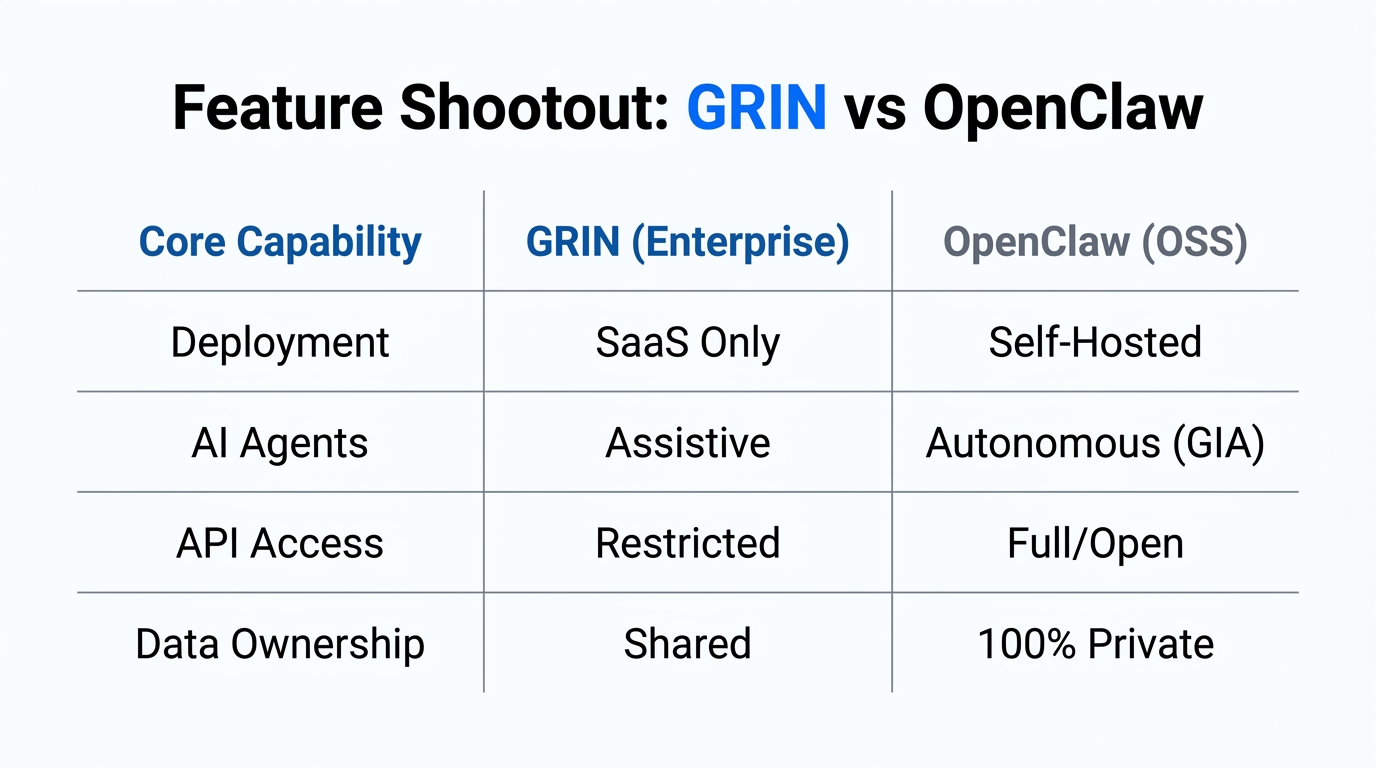
| Feature | GRIN (Enterprise SaaS) | OpenClaw (Open Source Agent) | Winner for 2026 ROI |
|---|---|---|---|
| Discovery | 38M Influencer Database | Autonomous Browser Scraping | OpenClaw (Infinite scope) |
| Cost | Enterprise Pricing (Thousands/mo) | $6 - $13 / month | OpenClaw |
| Ease of Use | User-friendly UI / Dashboard | Requires Developer Setup | GRIN |
| Integrations | Native Shopify / Meta / TikTok | 50+ Messaging Apps (API-based) | GRIN (for Commerce) |
| Automation | Gia (Managed AI Agent) | God Mode (Unrestricted AI) | Stormy AI (Middle Ground) |
While OpenClaw wins on raw cost and flexibility, Stormy AI offers a more balanced approach for teams that want the power of AI discovery without the technical debt of managing a self-hosted agent.

Security vs. Speed: The "God Mode" Trade-off
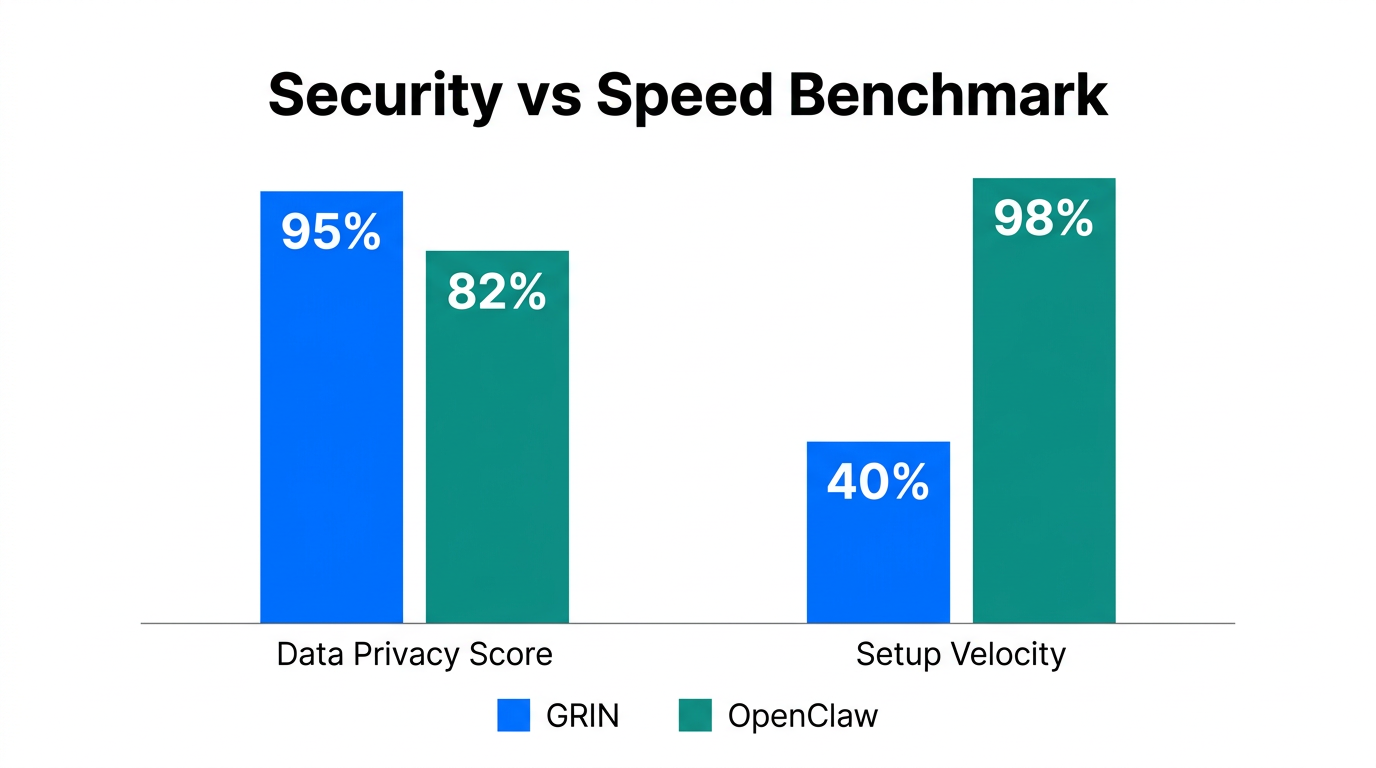
The primary concern with the OpenClaw revolution is security and compliance. Security researchers at Palo Alto Networks have warned that OpenClaw's "God Mode"—which gives the AI agent unrestricted host access—can be a "security nightmare" if misconfigured. This can lead to unintended data leaks or even accidental financial transactions if the agent is given access to payment APIs.
Furthermore, experts at HypeAuditor point out that while OpenClaw can scrape data at high speeds, it often lacks the built-in vetting for fake followers that is native to platforms like GRIN. In contrast, Stormy AI provides AI-powered vetting and quality reports in seconds, ensuring you don't waste your $13/month automation on fraudulent accounts.
"Automation without vetting is just a faster way to burn your budget. If you aren't checking for engagement quality, you're just paying for bot-to-bot interaction."
The Rise of Gia and Managed AI
GRIN has not ignored the agentic trend. They recently launched Gia, a managed agentic AI solution designed to autonomously find creators and draft outreach within the GRIN ecosystem. This represents the "Managed AI" philosophy: giving brands the speed of an agent with the safety rails of a multi-million dollar corporation.
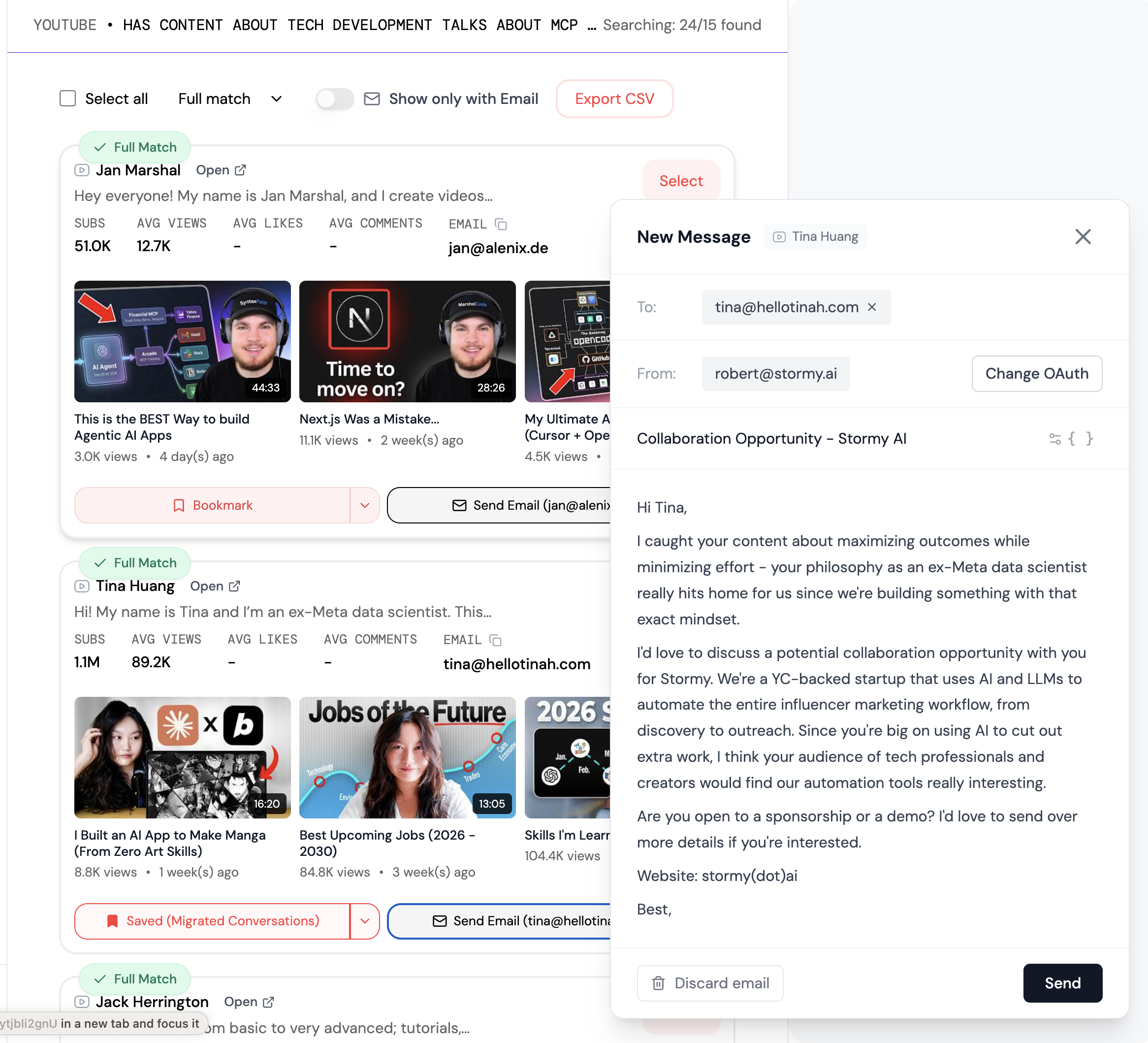
However, many lean teams find the Gia price point prohibitive. This is where Stormy AI bridges the gap. By offering an autonomous AI agent that discovers, outreaches, and follows up with creators on a daily schedule, Stormy provides the power of OpenClaw with the user-friendly interface and safety of a platform like GRIN.
The 2026 ROI Playbook: How to Choose
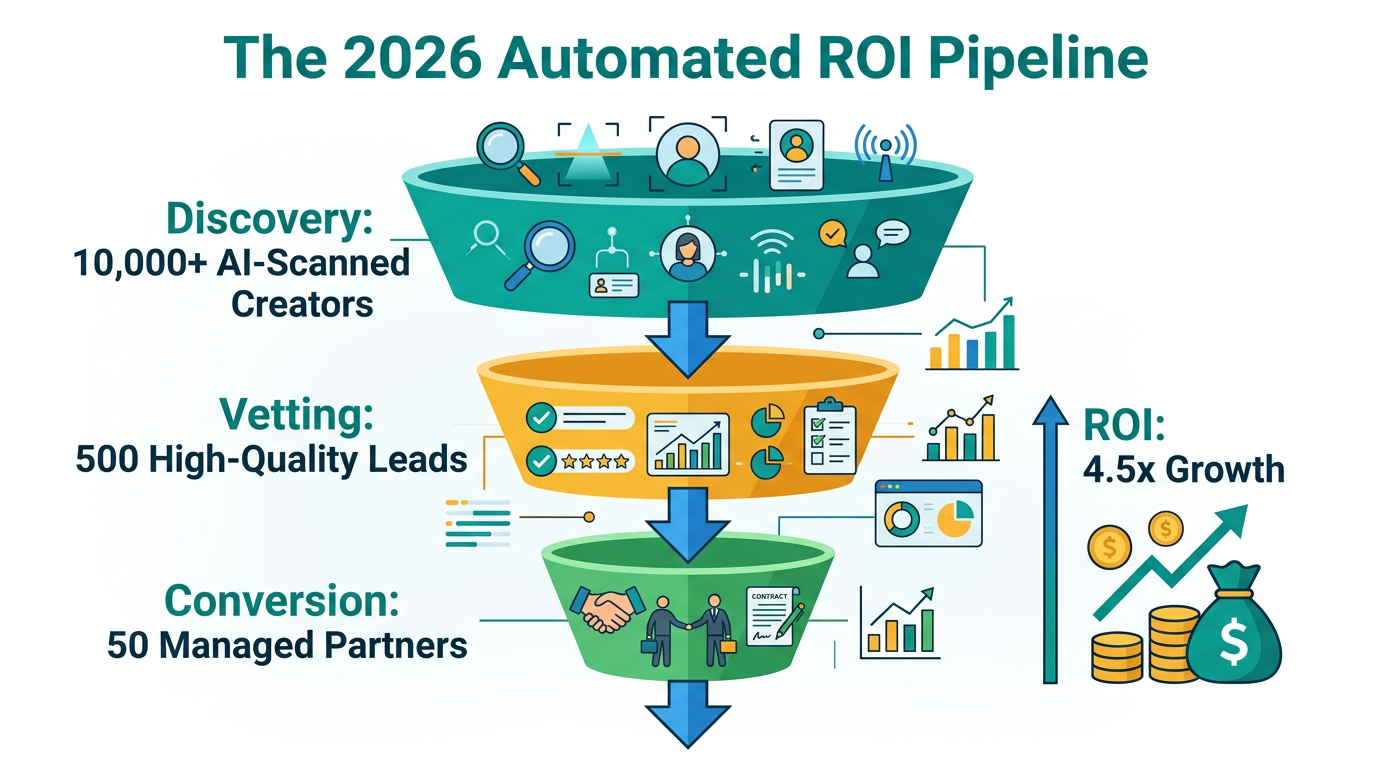
Choosing between OpenClaw and GRIN depends on your company stage and technical resources. Here is the playbook for 2026:
Option A: The Lean Startup (The OpenClaw/Stormy Route)
- Discovery: Deploy an agent via Stormy AI to find niche-specific creators based on engagement triggers.
- Personalization: Use AI tools like ChatGPT to generate hyper-personalized outreach emails—don't send generic templates.
- Email Delivery: Connect your agent to Amazon SES or Instantly to handle high-volume delivery for pennies.
- Human-in-the-Loop: Set the agent to ping Slack for final approval before any product seeding occurs.
Option B: The Enterprise Brand (The GRIN Route)
- Use GRIN's native Shopify integration to manage 500+ creators simultaneously.
- Automate product gifting flows to ensure creators receive items without manual intervention.
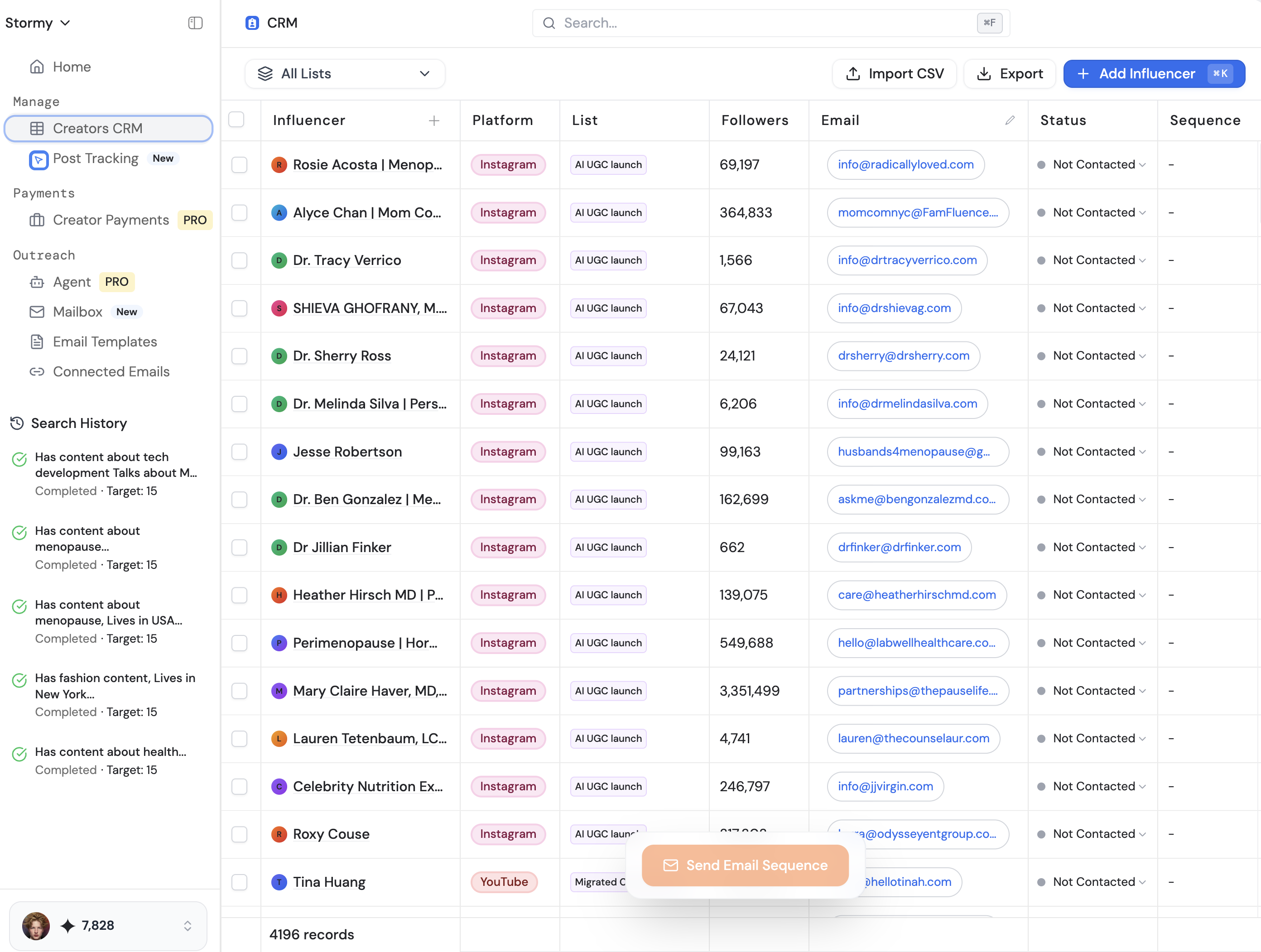
- Focus on long-term relationship management, using GRIN as a CRM rather than just a discovery tool.
Conclusion: Who Wins the 2026 ROI Battle?
The winner depends on what you value more: control or convenience. GRIN wins on sales attribution and managed security, making it the right choice for enterprise brands with high-stakes budgets. OpenClaw wins on cost-to-scale, offering unprecedented power to those willing to get their hands dirty with code.
However, for most growth leads who want the best of both worlds, Stormy AI is the ultimate winner. It combines the autonomous agent capabilities of OpenClaw with the vetted database and CRM structure of GRIN. In a year where efficiency is king, the platform that automates your outreach while you sleep—without requiring a developer—is the one that will drive the most ROI.
Whether you choose to build your own stack or use a platform, remember the words of GRIN CEO Ryan Debenham: authenticity is everything. No matter how much you automate, the brands that win in 2026 are those that use AI to scale real human relationships, not replace them.