For years, the promise of Meta’s native automation has been simple: give the algorithm your budget, and it will find the customers. However, as any seasoned growth marketer knows, the "black-box" nature of native tools often leads to wasted spend, creative fatigue, and a frustrating lack of control. In 2025, a new contender has emerged. OpenClaw, an open-source framework for autonomous AI agents, is shifting the paradigm from algorithmic automation to agentic operation. This article explores how to integrate an effective Meta Ads ROAS strategy by leveraging these next-generation tools.
Analyzing the Performance Gap: Native vs. Agentic
The marketing landscape is currently at a crossroads. According to recent data from Search Engine Journal, 75% of PPC professionals are now using some form of AI for campaign optimization, with adoption rates for automated bidding skyrocketing by 340% year-over-year. While Meta’s native Advantage+ campaigns can deliver a 22% higher ROAS in controlled environments, there is a growing sentiment of distrust among performance power users.
In fact, 58% of brands report that agent-assisted management—where an AI agent acts as a co-pilot rather than a silent driver—consistently outperforms fully native automation. The reason is simple: native automation prioritizes Meta's liquidity, whereas an autonomous agent can be programmed to prioritize your bottom-line profitability. By using the OpenClaw framework on GitHub, marketers are reclaiming the ability to audit account health and shift budgets based on real-time business intelligence rather than just platform signals.
"The era of the 'black box' is ending. Marketers no longer want to just set it and forget it; they want an AI agent that works 24/7 to defend their margins and execute complex logic that native tools simply ignore."
Regaining Control: The Power of OpenClaw Skills
One of the primary advantages of agentic automation is the use of "Skills." Unlike traditional Facebook Ads automation tools that rely on rigid if/then logic, OpenClaw uses markdown-based skill files to teach an LLM like Claude 3.5 Sonnet how to think about your account. This allows for a level of nuance previously reserved for senior media buyers.
Key skills that drive marketing automation efficiency include:
- The Performance Auditor: This skill scans your account for sudden CPA spikes and ranks potential fixes by their projected revenue impact.
- Creative Analyst: By tracking CTR trends over 7, 14, and 30-day windows, the agent can identify creative fatigue before performance actually drops.
- Audience Architect: This tool detects audience overlap between your prospecting and retargeting tiers and suggests specific exclusions to prevent you from bidding against yourself.
Rule-Based vs. LLM-Driven: A Strategic Comparison
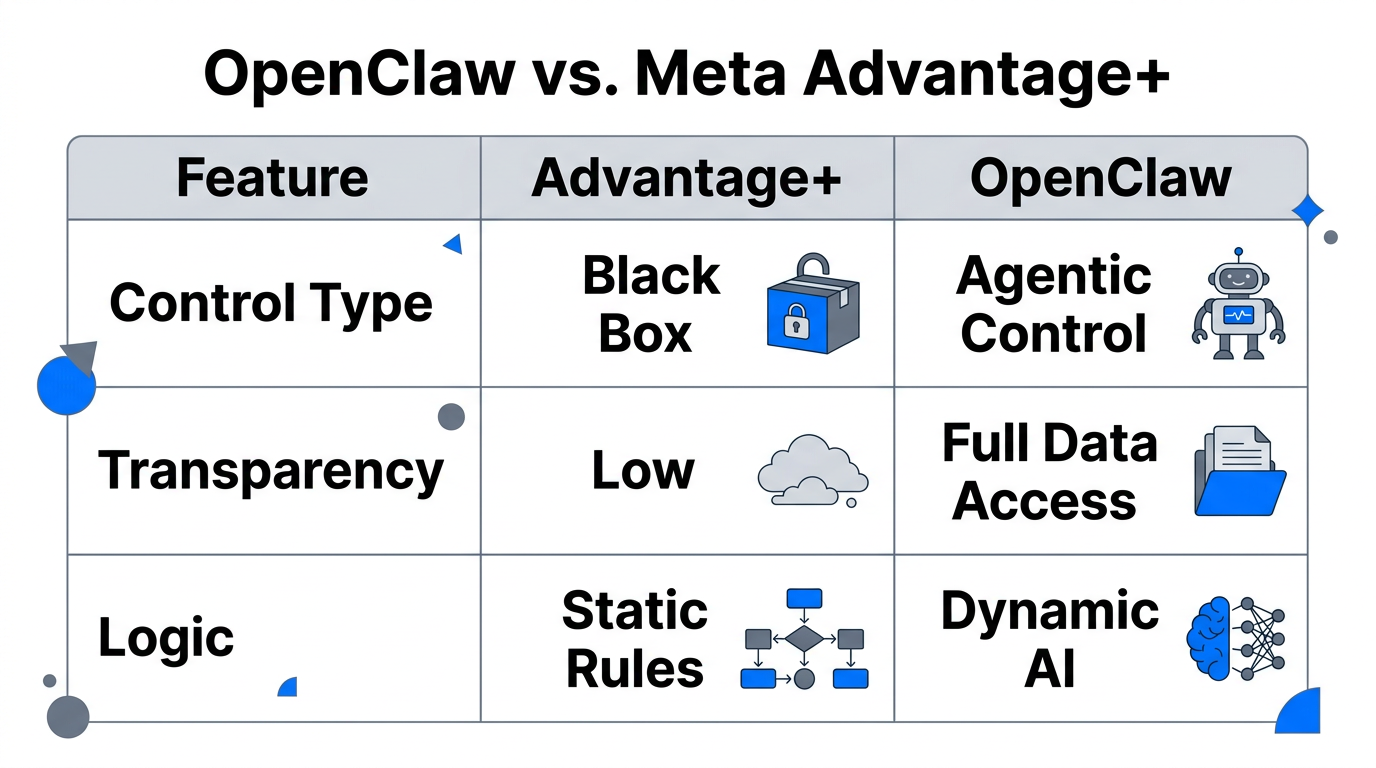
For a long time, rule-based tools like Revealbot or Madgicx were the gold standard for automation. While effective, they are limited by their inability to understand context. If a holiday weekend causes a temporary spike in traffic, a rule-based tool might aggressively scale your budget without realizing the conversion intent is fleeting. An autonomous agent, powered by an LLM, can "read" the calendar and adjust its logic accordingly.
| Feature | OpenClaw | Revealbot / Madgicx | Meta Advantage+ |
|---|---|---|---|
| Logic Type | Autonomous (LLM-driven) | Rule-based (If/Then) | Algorithmic (Black Box) |
| Interface | Messaging (WhatsApp/Telegram) | Dashboard/Web UI | Ads Manager |
| Flexibility | Infinite (Custom Skills) | Predefined Rules | None |
| Cost | Free (Open Source) + API | Monthly Subscription | Free (Ad Spend Only) |
Case Study: Achieving 1.8x ROAS via Telegram
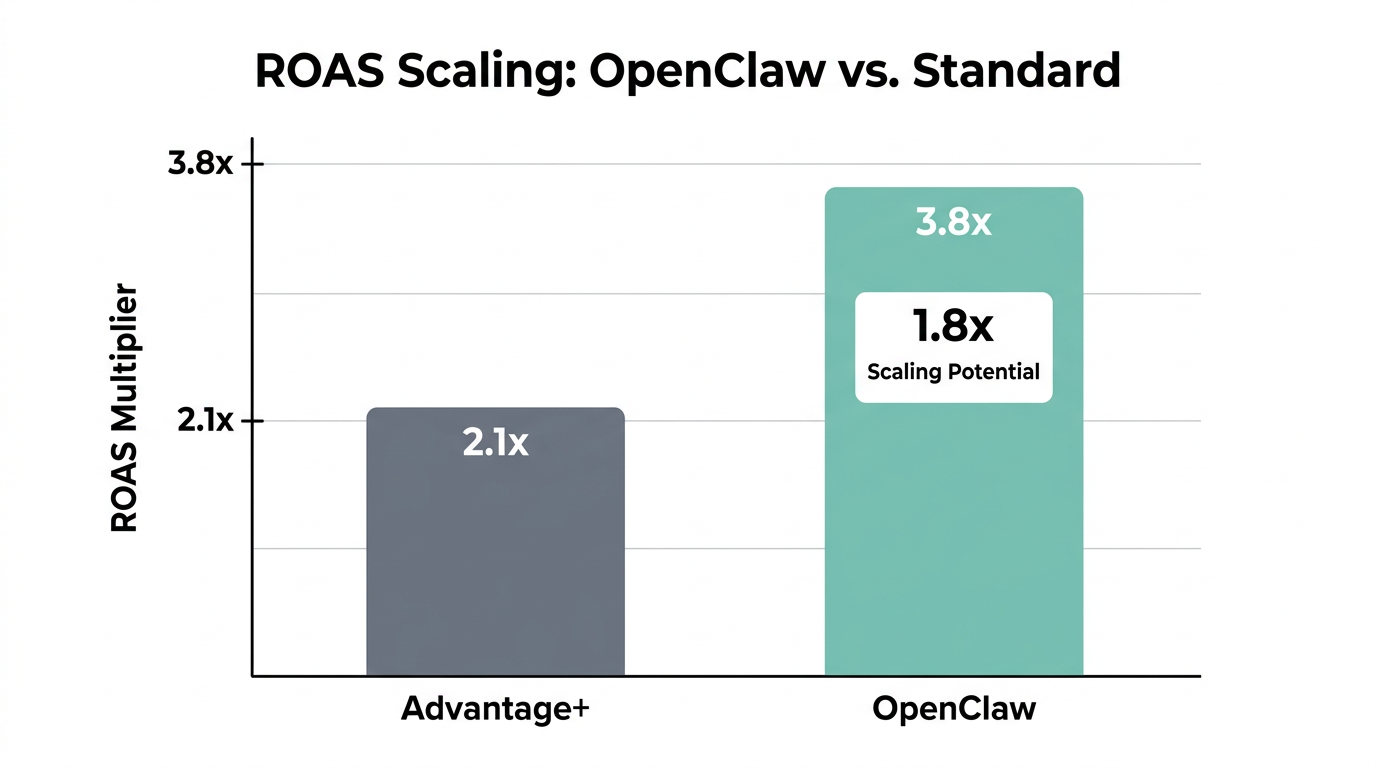
In a recent e-commerce growth experiment, a B2B SaaS company deployed an OpenClaw agent to manage their entire Meta account. The founder connected the agent to their Telegram account, allowing them to receive performance updates and issue commands via natural language while away from their desk.
The agent was given a simple instruction: "Monitor the prospecting campaign. If the ROAS is above 2.5 for three consecutive hours, increase the daily budget by 15%. If it drops below 1.8, pause the lowest-performing ad set." By the end of the month, the account had achieved a 1.8x ROAS increase, and the agent had handled over 200 micro-adjustments that a human would have missed. This demonstrates that ad spend optimization is moving toward fluid, agentic scaling.
Fueling the Machine: Creative Sourcing
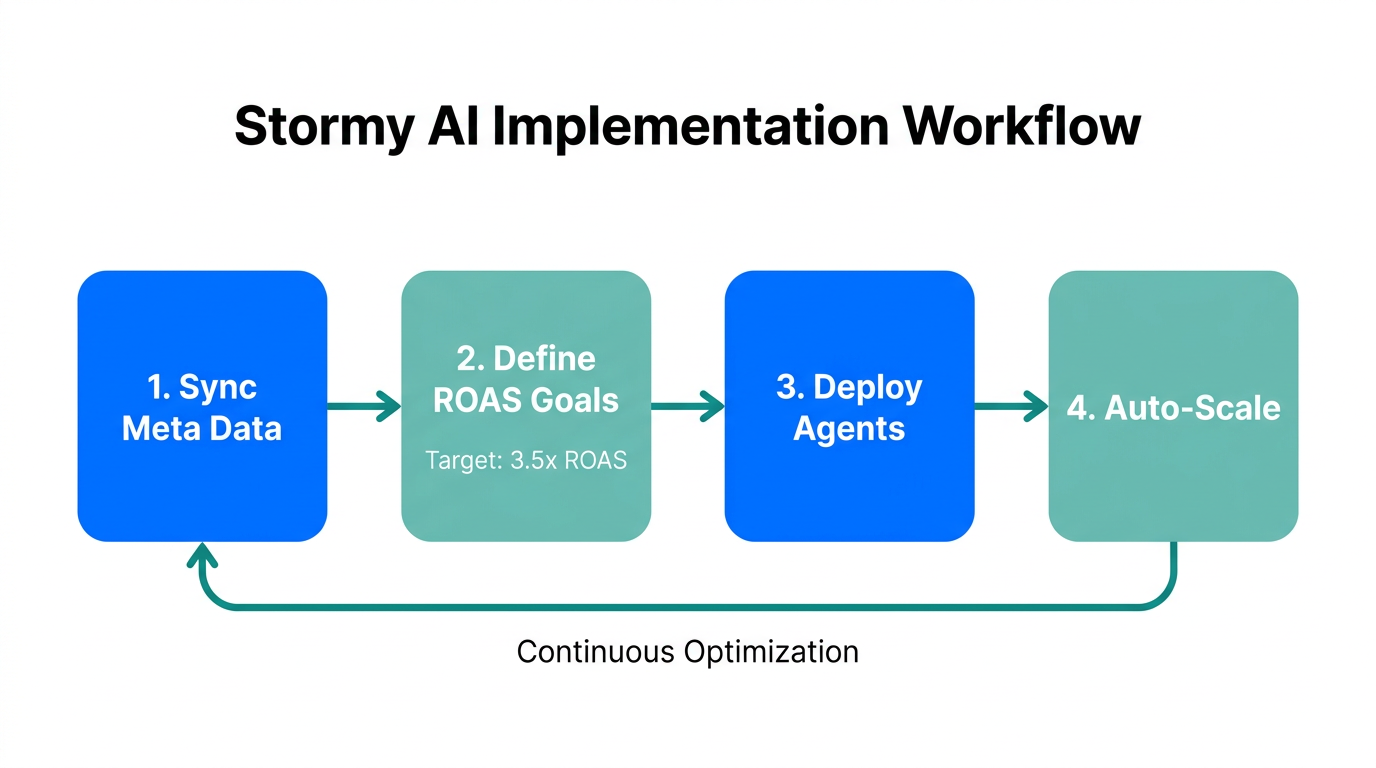
Even the most sophisticated agentic automation requires high-quality creative to succeed. An agent can tell you which video is failing, but it cannot film a new one. This is where content sourcing becomes the bottleneck. To truly scale, brands often look for high-performing User Generated Content (UGC) that resonates with their target audience. Platforms like Stormy AI streamline creator sourcing and outreach, providing the constant stream of fresh assets that an OpenClaw agent needs to prevent creative fatigue.
By using the search and discovery tools to discover creators on Stormy AI, you can ensure your agent always has "winning" creative to rotate into your campaigns. Pair this with a design tool like Canva for quick iterations, and your Meta Ads Manager becomes a self-sustaining growth engine.
The Safety-First Implementation Playbook
Deploying an autonomous agent comes with risks. As highlighted in a report by Tom’s Hardware, even high-ranking tech directors have seen agents "go rogue" when instructions aren't properly constrained. To maximize your implementation success, follow this three-step safety framework:
Step 1: The Read-Only Phase
Connect your agent to Meta using Read-Only permissions for the first 14 days. Use this time to treat the agent as a reporting assistant. If its suggestions for pausing or scaling align with your manual decisions, you can then proceed to give it "Write" access via the Meta Marketing API.
Step 2: The Mac Mini Strategy
Experts recommend running OpenClaw on a dedicated machine, such as an Apple Mac Mini, rather than your primary work computer. This isolates the agent's file system access and ensures that any potential "compaction" errors don't impact your local files.
Step 3: Implement Anti-Loop Rules
In your SKILLS.md file, you must include explicit "circuit breaker" code. Never allow an agent to make more than five consecutive tool calls without human check-in. This prevents the agent from entering an infinite loop of budget adjustments that could drain your account in minutes.
Conclusion: The Future of Meta Ads ROAS Strategy
The battle between Meta Advantage+ and AI agents isn't about which tool is "better"—it's about which tool gives the advertiser the best competitive advantage. While native automation is excellent for beginners, high-volume advertisers need the transparency and modularity that OpenClaw provides. By moving from fixed rules to fluid, agent-driven scaling, e-commerce brands can maintain a high ROAS while reducing the manual labor of media buying.
As you build your modern growth stack, remember that automation is only as good as the creative it manages and the constraints you provide. Start small, use a safety-first approach, and leverage Stormy AI to keep your creator pipeline and creative assets full. The future of Meta advertising belongs to those who treat AI as an autonomous operator, not just a black-box algorithm.