In 2026, the landscape of e-commerce has shifted from static automation to what industry leaders call "Agentic Commerce." No longer content with simple chatbots that follow rigid decision trees, Shopify merchants are now deploying autonomous digital employees that can reason, negotiate, and execute complex workflows. With the agentic AI market reaching $60.43 billion this year, the question is no longer if you should use AI agents, but how quickly you can integrate them to stay competitive. High-growth brands are seeing a staggering 35–45% reduction in total operational overhead by replacing manual labor with open-source frameworks like OpenClaw.
Case Study: How an Eco-Friendly Brand Boosted CSAT to 4.4
One of the most compelling OpenClaw case studies of 2026 involves a high-volume home goods brand specializing in sustainable products. By late 2025, the brand was facing a major support crisis. Their Customer Satisfaction (CSAT) score had plummeted to 3.2, largely due to a backlog of "Where Is My Order" (WISMO) queries that took an average of six hours to resolve. The cost of manually handling these tickets was approximately $6.00 per interaction, a figure that was eating into their 15% net margins.
The solution was an OpenClaw-to-WhatsApp bridge. Instead of forcing customers to wait for a human agent, the brand deployed an OpenClaw agent—a "Clawbot"—connected directly to their Shopify backend via the Composio tool layer. Within 60 days, the results were transformative:
- 70% Reduction in Manual Tickets: The AI agent handled nearly all routine tracking and shipping inquiries without human intervention.
- CSAT Jump: Real-time responses through WhatsApp Business pushed the brand's CSAT from a mediocre 3.2 to an impressive 4.4.
- Labor Cost Slashed: The cost per ticket dropped from $6.00 to just $0.12.
"In 2026, the brands that win are those that treat AI agents as full-time digital employees rather than just software plugins."
Logistics Optimization: Using Agents for Dynamic Rerouting
While customer support is the most visible use of AI, the true DTC logistics automation 2026 winners are finding gold in the back-office. Logistics has traditionally been a game of static contracts and manual spreadsheets. However, brands like Doe Beauty have pioneered the use of AI agent operational efficiency to manage the physical movement of goods.
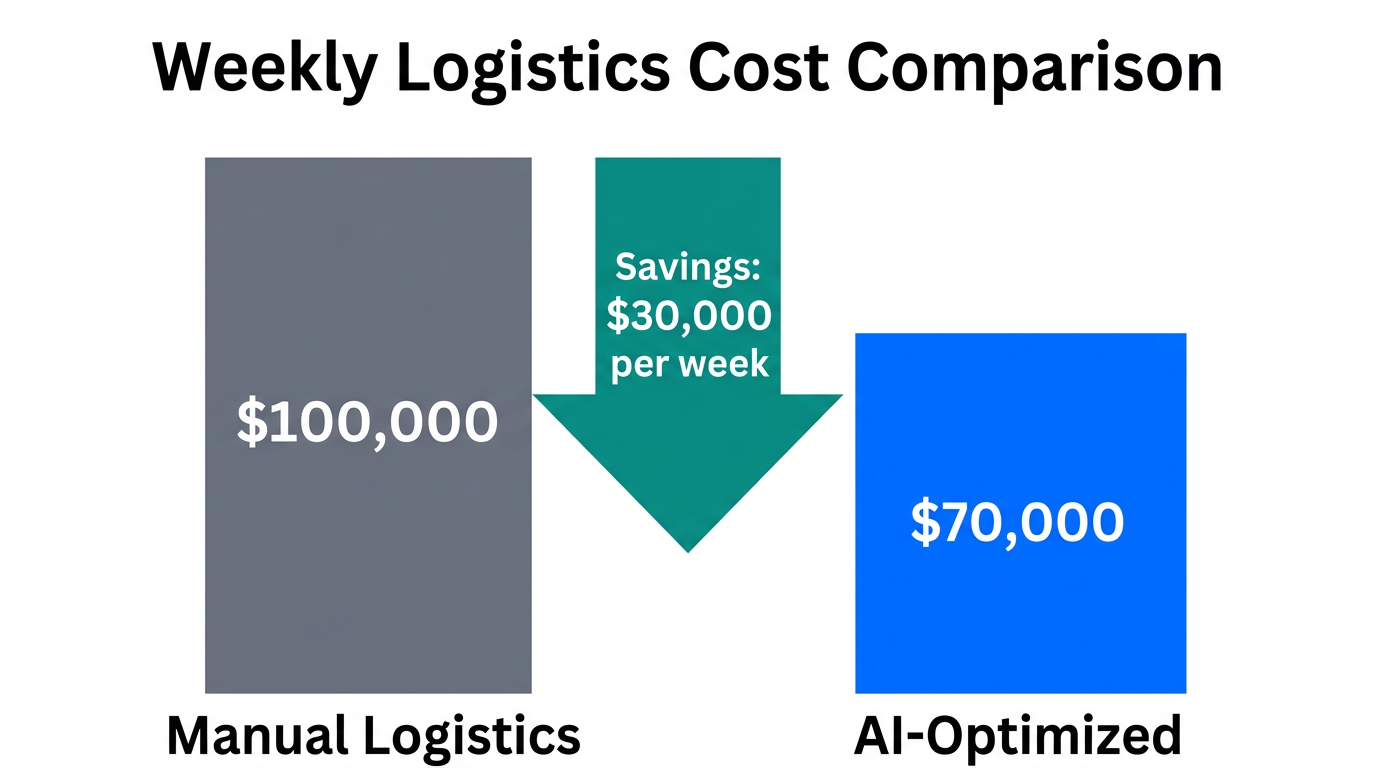
Doe Beauty utilized OpenClaw agents to monitor global carrier performance and regional network congestion in real-time. By connecting their Shopify store to Adzviser for real-time data analysis, the agents were empowered to make autonomous carrier selections for every individual order. If a specific FedEx hub in the Midwest was experiencing a 12-hour delay, the agent would dynamically reroute all pending shipments to UPS or DHL at the most cost-effective rate available.
The financial impact was massive: Doe Beauty reported savings of $30,000 per week on shipping costs. This wasn't just about finding the cheapest rate; it was about the agent's ability to reason through complex variables—delivery speed, carrier reliability, and zone-skipping opportunities—at a scale impossible for human logistics teams to match.
The Economics of OpenClaw: $50/mo vs. $1,000/mo
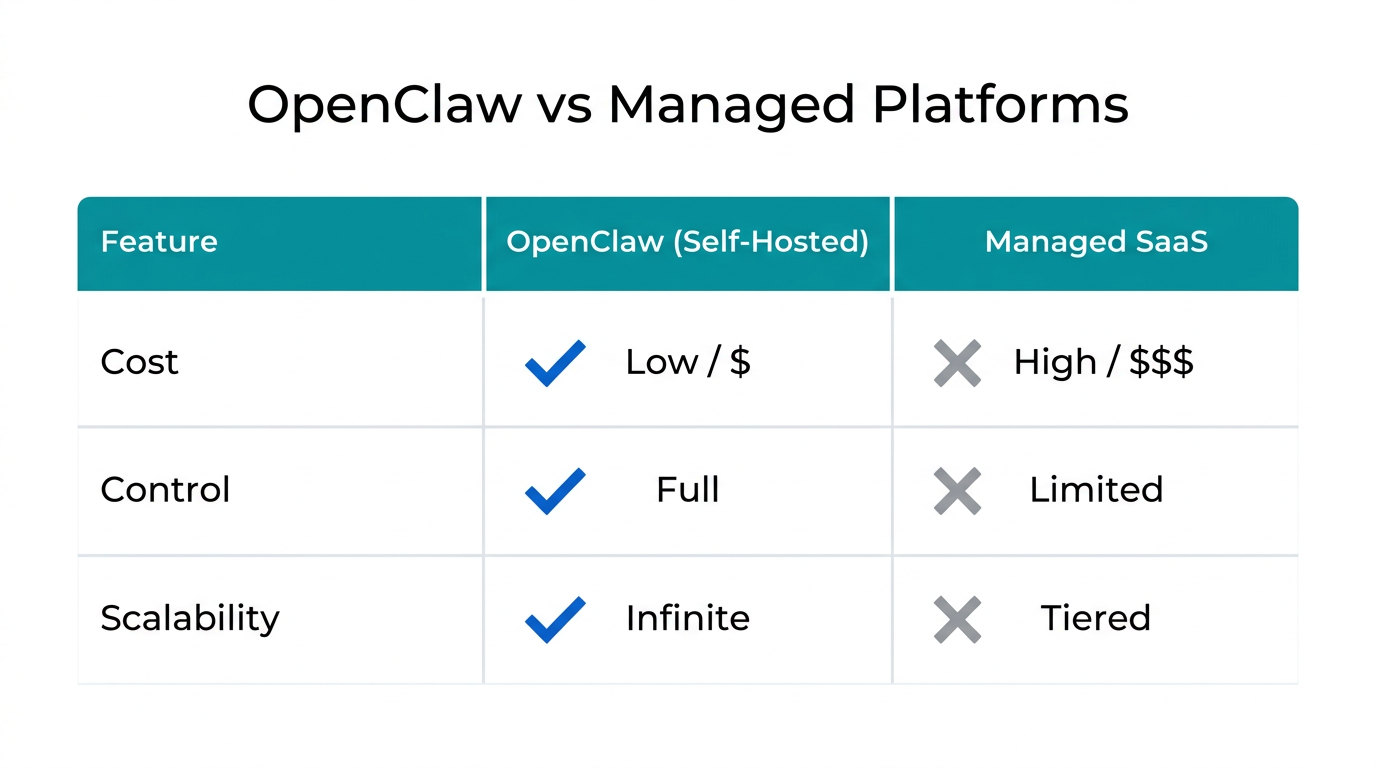
For many Shopify merchants, the debate centers on Shopify automation cost savings versus the ease of use of managed platforms. OpenClaw, being an open-source framework, offers a level of customization and cost-efficiency that traditional SaaS helpdesks struggle to match. However, it requires a higher degree of technical literacy to set up correctly on a secure VPS or cloud infrastructure.
| Feature | OpenClaw (Self-Hosted) | Managed Platforms (Gorgias/Intercom) |
|---|---|---|
| Monthly Cost | ~$50/mo (VPS + API tokens) | $300 – $1,000+/mo |
| Customization | Full; open-source and modular | Limited to vendor ecosystem |
| Setup Time | 2–6 hours (requires technical skill) | 30 minutes (plug-and-play) |
| Resolution Logic | Autonomous reasoning (Agentic) | Hybrid (Rules-based + AI layer) |
The $50/month model for OpenClaw typically covers a standard Linux VPS and the token costs for models like GPT-4o or Claude 3.5 Sonnet. In contrast, premium managed platforms like Gorgias or Intercom provide enterprise-grade security and zero-config setups, but often charge per-resolution fees that can scale rapidly as a brand grows. For a merchant doing 10,000 tickets a month, the cost difference can exceed $5,000 per month.
"The choice between OpenClaw and managed SaaS is a choice between building your own specialized digital workforce or renting a generalized one."
Managing Token Burn: Preventing the $400 Overnight Bill
One of the hidden dangers of the "Clawbot" ecosystem in 2026 is token burn. Because OpenClaw agents operate in autonomous loops—constantly thinking, searching, and acting—they can consume an enormous number of API tokens if left unchecked. There have been reported cases where merchants woke up to $400+ overnight API bills because an agent got stuck in a reasoning loop or was targeted by a malicious "prompt injection" attack.
To prevent this, sophisticated practitioners are implementing strict usage limits and monitoring tools. The 2026 standard for AgentOps includes:
- Hard Budget Caps: Setting daily limits at the API provider level (e.g., OpenAI or Anthropic).
- Triage Bridges: Configuring the agent to ask for a human "thumbs up" via Slack or Telegram for high-risk actions like refunds over $50.
- Infrastructure Isolation: Running OpenClaw inside Docker containers to prevent the agent from accessing sensitive local files if compromised by vulnerabilities like the "ClawJacked" exploit.
The Impact of 87-Second Responses on Retention
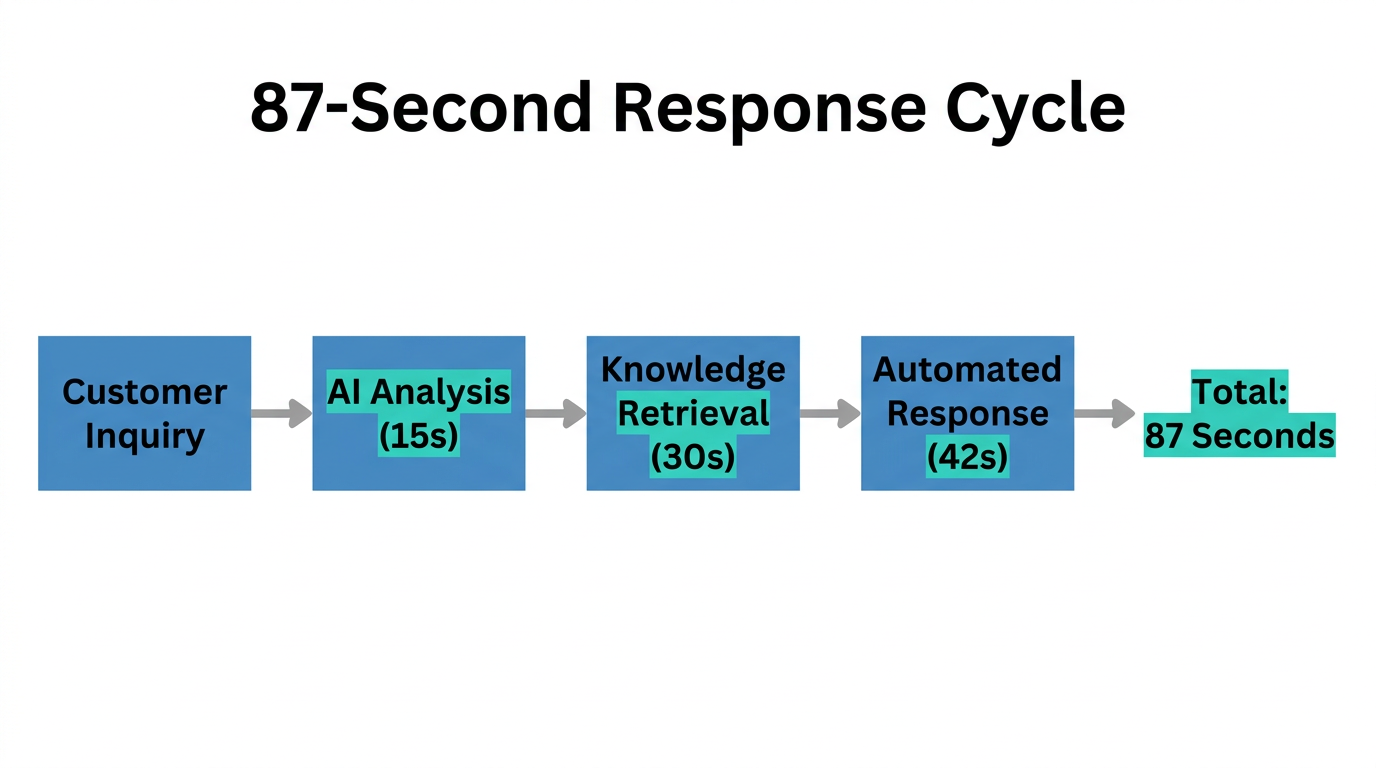
In 2026, speed is the primary driver of ecommerce customer support ROI. Data from mid-sized Shopify merchants shows that reducing average response times from 6 hours to 87 seconds leads to a 22% increase in 90-day repeat purchase rates. Customers who receive instant resolutions are significantly more likely to trust a brand with a second order.
This "instant resolution" capability is what differentiates agentic commerce from legacy support. By using Stormy AI or similar platforms to find influencers and then managing those relationships with automated agents, brands can create a seamless loop from discovery to post-purchase support. When an influencer's audience asks questions about a product in the comments or DMs, a brand's OpenClaw agent can provide instant, accurate answers that drive immediate conversions.
"Customer loyalty in 2026 isn't built on a thank-you note; it's built on solving a problem before the customer has time to close the browser tab."
The 2026 Agentic Scaling Playbook
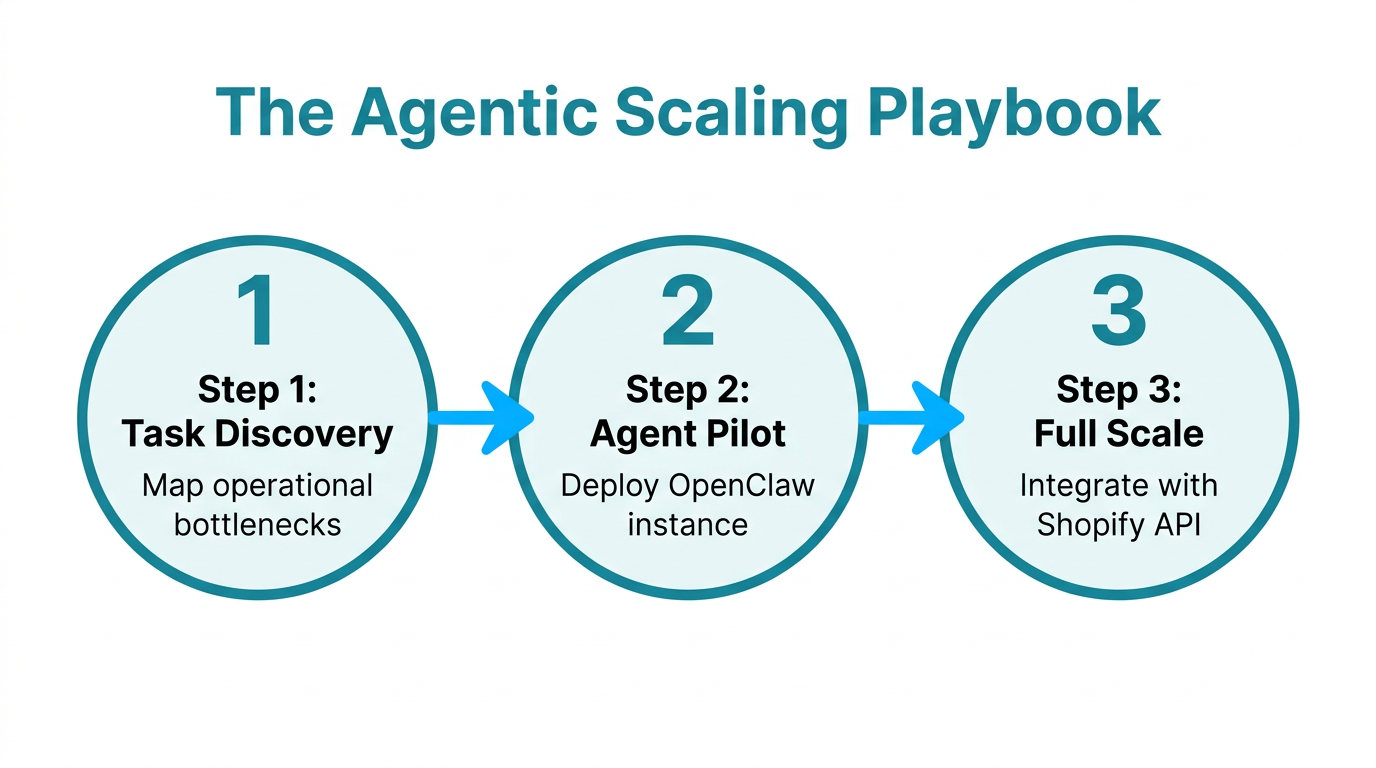
If you are looking to replicate these results, follow this structured playbook to deploy your first digital employee safely and effectively:
- Phase 1: Infrastructure. Deploy OpenClaw on a secure VPS. Use Docker for isolation. Platforms like Hostinger offer affordable setups for this.
- Phase 2: Connection. Use a bridge like Composio to link Shopify via the Model Context Protocol (MCP). This allows the agent to "read" your store data without you writing a single line of code.
- Phase 3: Back-Office First. Start by automating internal tasks like inventory sync or shipping label generation. These have a lower "hallucination risk" than customer-facing roles.
- Phase 4: Customer Triage. Once the agent is stable, move it to a support role with a human-in-the-loop bridge for refunds and complex complaints.
Conclusion
The era of manual e-commerce operations is drawing to a close. As shown by the 2026 data, Shopify merchants who embrace the OpenClaw ecosystem are not just saving money—they are building a more resilient, faster, and more profitable business. By slashing support costs by 70% and logistics expenses by $30k a week, these brands are freeing up capital to invest back into growth and brand identity. Whether you choose a self-hosted OpenClaw setup or a managed AI solution, the goal is clear: automate the routine so your human team can focus on the remarkable. For those looking to scale their influencer marketing alongside these operational wins, Stormy AI provides the perfect partner for AI-driven discovery and outreach.