By the end of 2025, the role of the modern CMO has shifted from overseeing campaigns to orchestrating intelligent systems. With 93% of CMOs reporting a clear ROI from Generative AI applications, according to the latest SAS Report, the question is no longer whether to automate, but how to do so without compromising data integrity or brand soul. As we move into 2026, the breakthrough platform OpenClaw has emerged as the definitive tool for growth-stage companies looking to scale paid media through agentic ad operations while maintaining a strict local-first privacy posture.
The Shift to Agentic Ad Ops: From Assistant to Worker
For years, AI in marketing was limited to "chatbots" that suggested headlines or summarized reports. Today, we have entered the era of the "worker" agent. OpenClaw on GitHub represents a paradigm shift. It doesn't just suggest optimizations; it executes them via natural language platforms like WhatsApp or Discord.
As Peter Steinberger, the creator of OpenClaw, famously noted: "The claw is the law. My mission is to build an agent that even my mum can use." This simplicity belies a sophisticated backend that utilizes the Model Context Protocol (MCP) to bridge the gap between Large Language Models and real-world ad platforms. This allows for a growth marketing strategy in 2026 that is proactive rather than reactive.
"AI is the single biggest disruptor and enabler of marketing, unlocking precision at scale." — Raja Rajamannar, CMO of Mastercard| Metric | Manual Ad Management | Agentic Ad Ops (OpenClaw) |
|---|---|---|
| Weekly Management Time | 15-20 Hours | 4-5 Hours |
| Cost-Per-Conversion | Baseline | 15–31% Improvement |
| Budget Efficiency | 26% Waste | Near-Zero Waste |
| Lead Conversion Rate | Standard | 23% Increase |
The efficiency gains are undeniable. Research from industry analysts indicates that AI-driven optimization reduces management time by 73%. For founders, this means reclaiming dozens of hours previously spent in Meta Ads Manager or Google Ads.
Why 41% of Marketers Prioritize Privacy-First Marketing Automation
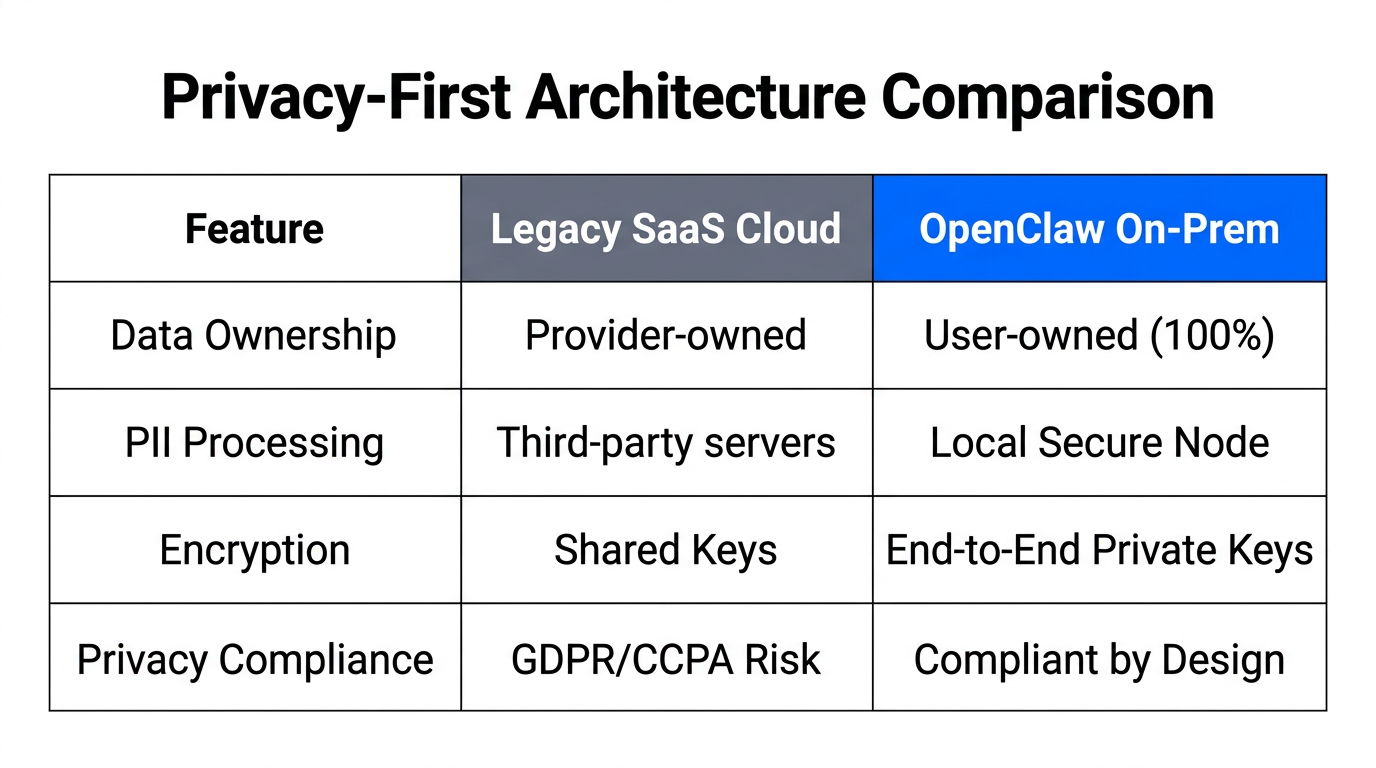
Data privacy has moved from a legal compliance checkbox to a competitive advantage. According to reports from AI Digital, 41% of marketers identify data accuracy and privacy as their top challenges heading into 2026. Traditional cloud-based automation tools often require you to upload sensitive customer lists and API tokens to their servers, creating a massive security footprint.
An OpenClaw implementation solves this through a "local-first" architecture. Instead of processing your data on a third-party server, you can host OpenClaw on a local Mac Mini or a private DigitalOcean VPS. Your ad account tokens and first-party data never leave your controlled environment. This setup aligns with the privacy-first marketing automation standards required by modern enterprises.
By keeping the "brain" of your marketing operation local, you mitigate the risks associated with data breaches. Even Sam Altman recognized the power of this approach when OpenAI began exploring autonomous agents that interact securely with personal data, as reported by Fast Company.
Multi-Agent Orchestration and the Model Context Protocol (MCP)
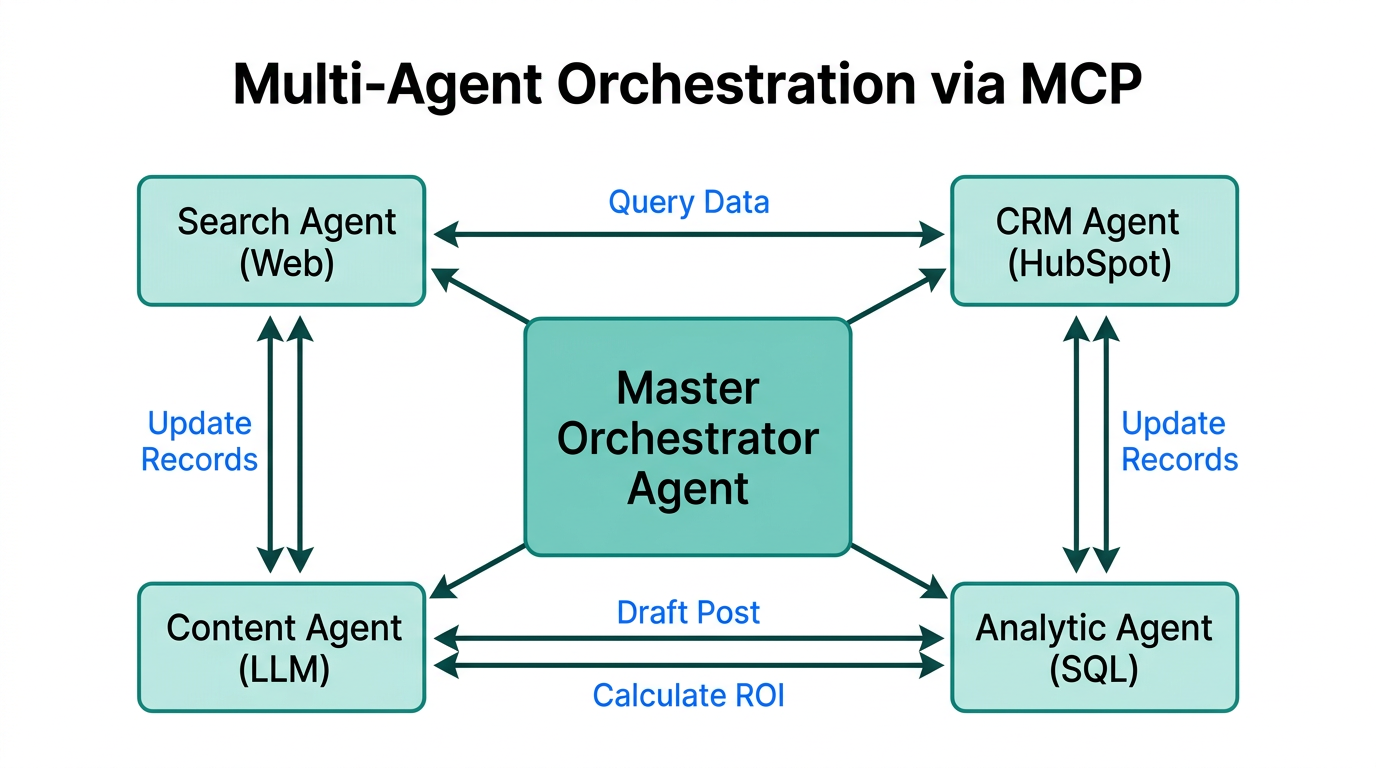
The future of growth is not one giant AI doing everything; it is multi-agent orchestration. Through the Model Context Protocol (MCP), different specialized agents can now communicate to manage a full-funnel strategy.
Imagine this workflow: One agent monitors your influencer discovery and management on Stormy AI, identifying which creators are driving the highest engagement. A second agent, running on OpenClaw, takes those winning UGC assets and automatically builds them into new ad sets in TikTok Ads Manager. A third agent tracks the Apple Search Ads performance to adjust bidding based on real-time LTV data.
- Strategic Bidding: Move from static budgets to demand-led bidding that scales in real-time.
- Skill-Based Deployment: Use markdown-based ".md" files to deploy new SOPs instantly across your stack.
- Negotiation: Agents can now negotiate deals via standardized protocols, moving at the speed of data rather than the speed of email, a trend recently highlighted by Digiday.
"We have moved from chatbots that 'suggest' to agents that 'execute.' This is the era of multi-agent ecosystems."AI Agent Security: Protecting Your Ad Account Tokens
While the benefits are high, AI agent security is a critical concern. Gartner has warned that unconfigured agent setups can present significant cybersecurity risks, according to The Register. When you give an agent the power to spend thousands of dollars, the stakes are literal.
To ensure a secure OpenClaw environment, founders should follow this security checklist:
- Environment Isolation: Host your OpenClaw instance on a dedicated server or container, separate from your main company database.
- Token Rotations: Implement a 30-day rotation for all Meta and Google API tokens used by the agent.
- Spend Caps: Set hard daily spend limits at the platform level (Meta/Google), not just within the agent's logic.
- Auditor Agents: Deploy a secondary agent whose only job is to watch the primary agent for anomalies in spend or targeting changes ([Stormy AI Strategy Guide]).
Avoiding the "Set and Forget" Trap: Maintaining Taste and Brand Voice
The biggest risk in 2026 isn't that AI will fail; it's that it will succeed too well at creating "slop." As Peter Yang noted in his deep dive on creatoreconomy.so, AI lacks "taste." If you feed an agent poor data or a vague brand voice, it will simply make automated bad decisions at scale.
Another technical hurdle is Context Compaction. This occurs when an agent's memory is overloaded in a single session, causing it to lose the "thread" of the campaign's goals or brand constraints. To combat this, marketing teams must move from "doing" the work to "governing" the work. Use structured markdown files that act as clear guardrails for the agent's behavior.
The most successful brands use a Hybrid Model: Agents handle the "Busywork" (CSV cleaning, 4-hour audits, bid adjustments), while humans focus on the "Strategy" (creative hooks, high-stakes budget calls, and defining the brand's 'taste'). Brands like L’Oréal have already proven this model, achieving a 31% reduction in cost-per-conversion by replacing manual lists with AI-optimized targeting.
"The key is to use agents for execution, but keep the 'taste' and narrative direction firmly in human hands."The 2026 Growth Playbook: Implementing OpenClaw
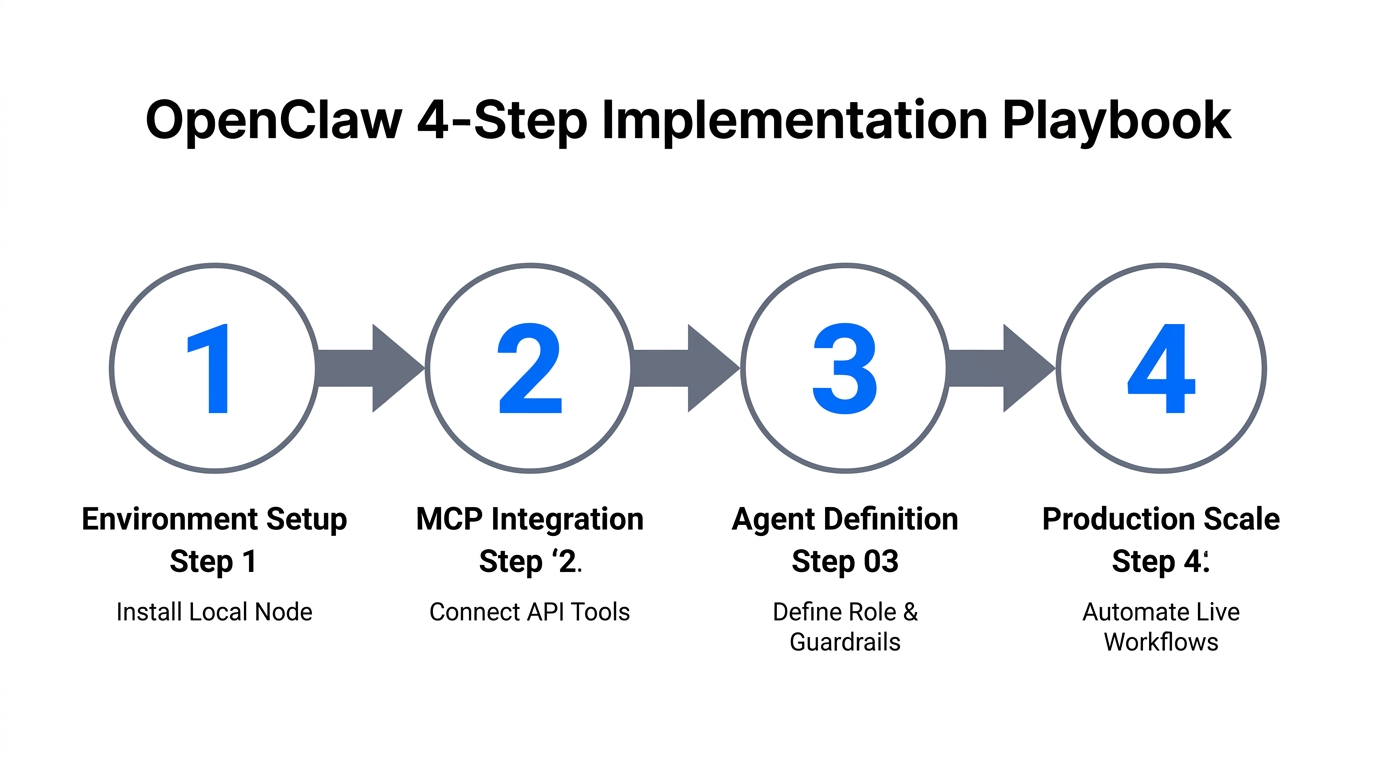
If you are ready to transition your growth marketing strategy, follow this step-by-step OpenClaw implementation guide:
Step 1: Set Up Your Local Environment
Instead of a shared cloud, use a dedicated VPS on DigitalOcean or a local Mac Mini. This ensures your data remains under your control, adhering to privacy-first marketing automation principles.
Step 2: Define Your "Skills"
Don't give the agent vague instructions. Create .md "Skill" files that define specific tasks. For example, a "Creative Fatigue Auditor" skill should track CTR trends over 7/14/30 day windows to spot fatigue before it kills ROI.
Step 3: Establish ROAS Triggers
Set automated triggers to pause ad sets if performance dips. A common benchmark is pausing any ad set where ROAS falls below 2.5 over a 72-hour window. This prevents the agent from chasing "sunk costs."
Step 4: Integrate with Your CRM
Connect your agent to your sales data via Zapier or Make. This allows the agent to optimize for actual revenue and LTV rather than just platform-level clicks or leads. This is how platforms like RTB House have historically improved campaign effectiveness by over 40%.
The Future is Local and Agentic
Navigating the growth landscape of 2026 requires more than just a bigger budget; it requires a smarter infrastructure. By leveraging OpenClaw for privacy-first marketing automation, brands can achieve massive efficiency gains while maintaining AI agent security and data sovereignty.
The era of manual CSV exports and daily bid adjustments is ending. The era of the agentic CMO—one who manages a high-speed, secure, and multi-agent ecosystem—has begun. Start by isolating your most time-consuming task and delegating it to an agent. Your growth, and your sanity, will thank you.