How to Use OpenClaw for LinkedIn Lead Generation: A 2026 Playbook for Intent-Based Prospecting
Learn how to master OpenClaw LinkedIn lead generation in 2026. This playbook covers intent-based prospecting AI strategies to achieve a 25% cold reply rate.
By 2026, the era of "spray and pray" LinkedIn automation has officially collapsed. Buyers have become hyper-aware of generic, AI-generated templates, and LinkedIn’s detection algorithms have become lethal to accounts using outdated browser automation. The winners in the current B2B landscape aren't those sending the most volume; they are the growth marketers leveraging autonomous AI agents to identify high-intent signals before ever hitting 'send.' At the heart of this revolution is OpenClaw, an open-source framework that has transformed LinkedIn from a static database into a dynamic stream of intent-based opportunities.
The 2026 Shift: From Mass Outreach to Agentic Prospecting
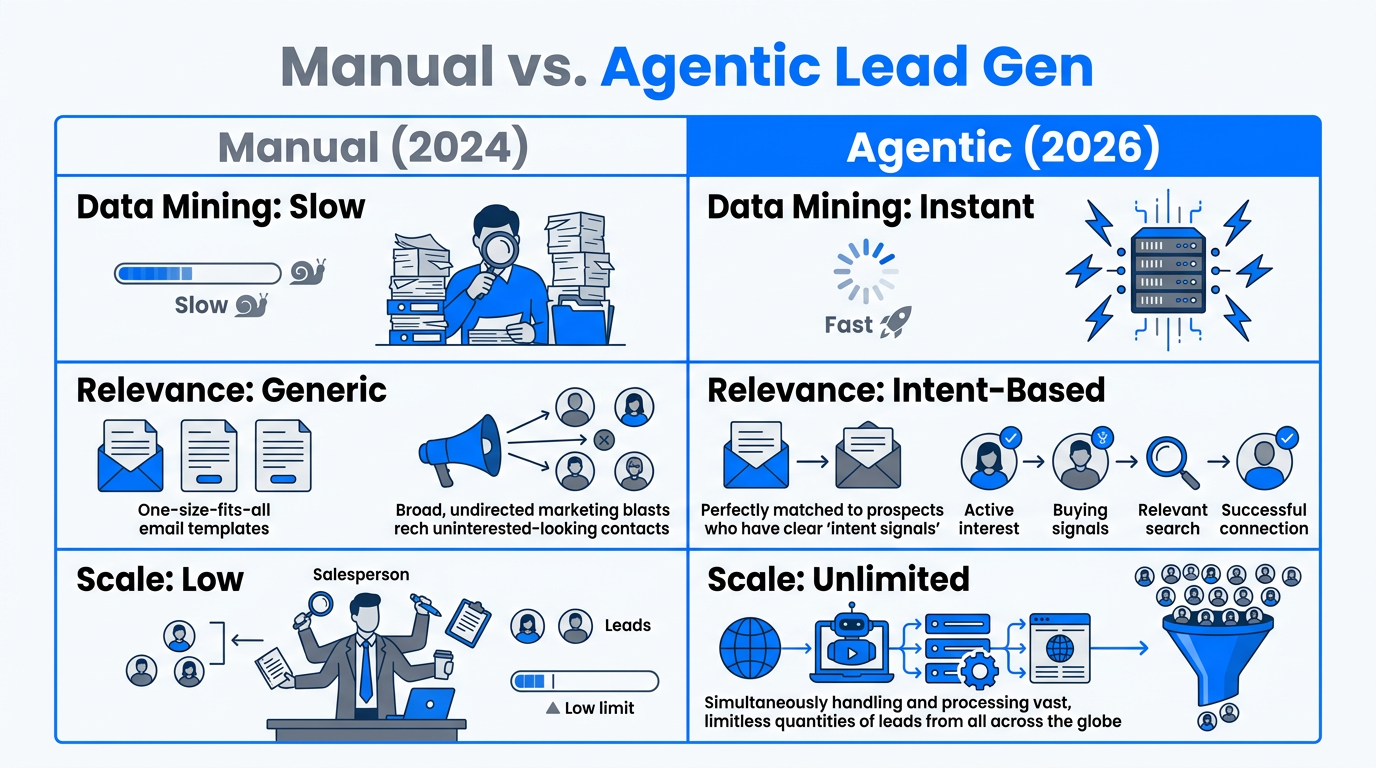
In 2026, the B2B sales cycle has evolved into what experts call B2A (Business-to-Agent) marketing. As Nvidia CEO Jensen Huang noted, OpenClaw is "one of the most important software breakthroughs of the current era" because it allows AI to take proactive action. With over 247,000 GitHub stars as of March 2026, the OpenClaw repository has become the foundational tool for intent-based prospecting AI.
Modern lead generation is no longer about scraping lists of "Head of Marketing" titles. Instead, it's about monitoring real-time signals that indicate a prospect is ready to buy. This includes job changes within the last 90 days, specific technology stack mentions in job postings, and engagement with competitor content. OpenClaw agents, scoring a staggering 96.2% on GSM8K math benchmarks, are now capable of analyzing these complex datasets at scale to determine which prospects deserve a human touch.
"OpenClaw isn't just a model; it's the car. You plug the engine—your LLM of choice—into it, and it does the driving for your entire outreach strategy." — Peter Steinberger, Founder
Step 1: Setting Up Your OpenClaw Infrastructure for Security
Before you begin LinkedIn outreach strategy 2026 execution, you must address the infrastructure. Running automation directly from your local machine is a recipe for an account ban. Professional growth teams have shifted toward self-hosted private AI environments to maintain data ownership and security.
The standard 2026 setup involves deploying OpenClaw on a dedicated Virtual Private Server (VPS). This ensures your agents run 24/7 without interruption and maintain a consistent IP address, which is critical for LinkedIn's trust scoring. Many marketers prefer Hostinger for its reliable VPS configurations optimized for AI workloads. However, security researchers at Cybernews warn that running these powerful agents without proper sandboxing or Docker containers is a significant risk—always isolate your execution environment.
Avoiding 'LinkedIn Jail' with Stable API Layers
The biggest mistake in 2026 is still using brittle browser-based automation that mimics mouse clicks. LinkedIn's session-level detection is now too sophisticated for this. Instead, your AI agent lead gen playbook should utilize a dedicated "Agentic API" layer like BeReach. This provides a stable, authenticated connection for your agents to interact with LinkedIn data without triggering security flags.
| Feature | Legacy Automation | 2026 Agentic Outreach |
|---|---|---|
| Platform Access | Browser simulation (risky) | Agentic APIs (e.g., BeReach) |
| Prospecting | Static list scraping | Real-time intent analysis |
| Personalization | {{first_name}} templates | Context-aware hooks (last 10 posts) |
| Account Safety | High ban rate | Warm-up protocols & Dedicated IPs |
Step 2: Implementing Intent-Driven Scoring
Once your infrastructure is live, the next step in B2B sales automation 2026 is creating a scoring system. You shouldn't reach out to every person who matches your persona. Instead, use a specialized skill like LinkdAPI within the OpenClaw framework to analyze the activity of your target accounts.
Instruct your OpenClaw agent to look for the following high-intent signals:
- Job Changes: A new decision-maker in the first 90 days usually has a budget to spend.
- Content Engagement: Did they comment on a post related to your niche in the last 7 days?
- Hiring Trends: Is the company hiring for a role that your product or service supports?
- Company Milestones: Recent funding rounds or product launches found via LinkedIn News.
By using intent-based prospecting AI, you can assign a score to every lead. Only those with a score of 80/100 or higher should move to the outreach phase. This precision is why enterprise adoption of OpenClaw has reached 65% in 2026, with the Finance sector leading the charge at 25% of total users.
"The future of sales isn't finding people to talk to; it's knowing exactly when they need to be talked to."
Step 3: The Hybrid Human-Agent Loop (The 80/20 Rule)
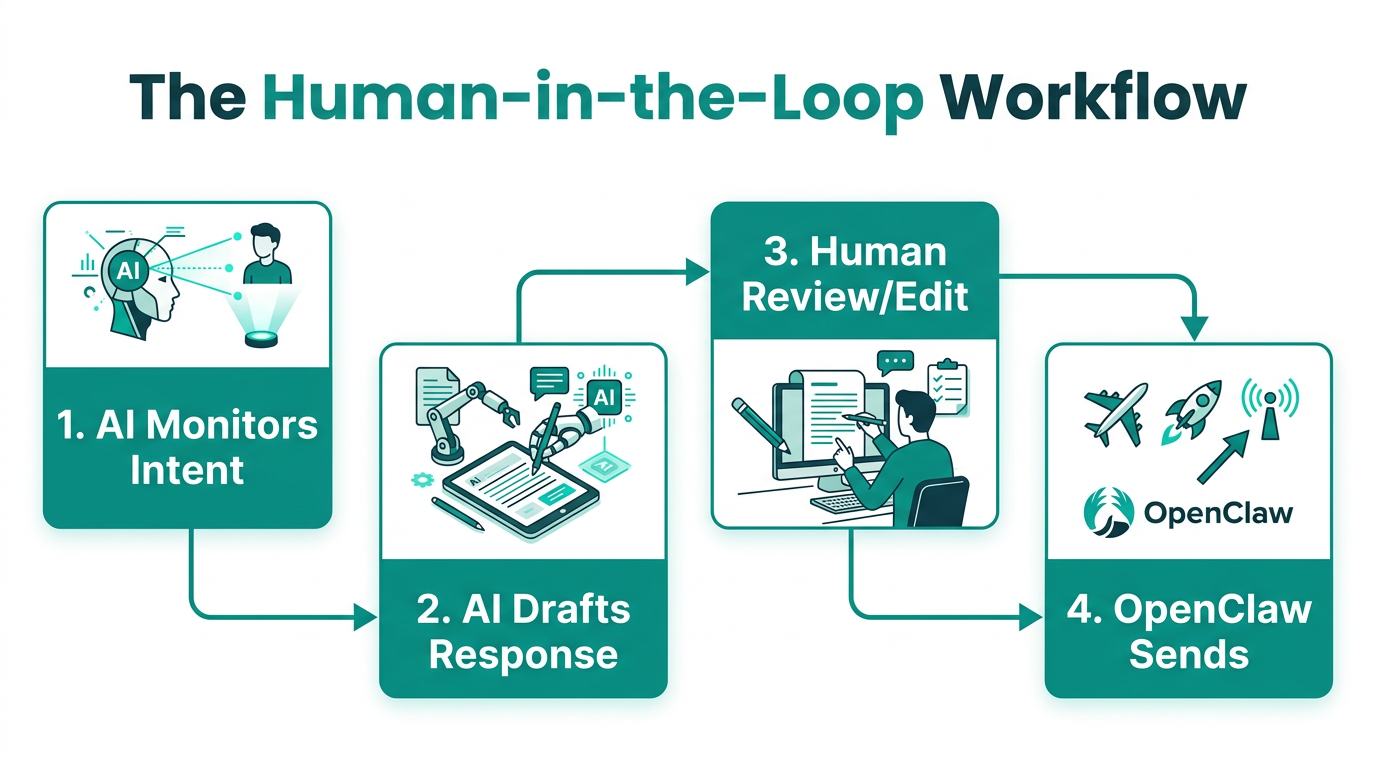
Automation in 2026 is not about removing the human; it's about amplifying the human. The most successful growth teams use the Hybrid Human-Agent Loop. In this framework, OpenClaw handles 80% of the manual labor—researching the prospect, reading their last 10 posts, and drafting a hyper-personalized hook—while the human handles the final 20%: review and hit send.
This approach bypasses automation detection and ensures 100% quality control. For example, if you are targeting influencers or high-level creators to promote your mobile app, platforms like Stormy AI can streamline the discovery of these creators, which you can then feed into your OpenClaw outreach flow for personalized B2B collaboration requests. This synergy between influencer discovery and agentic outreach is the gold standard for modern marketing stacks.
Real-World Success: The 25% Cold Reply Rate
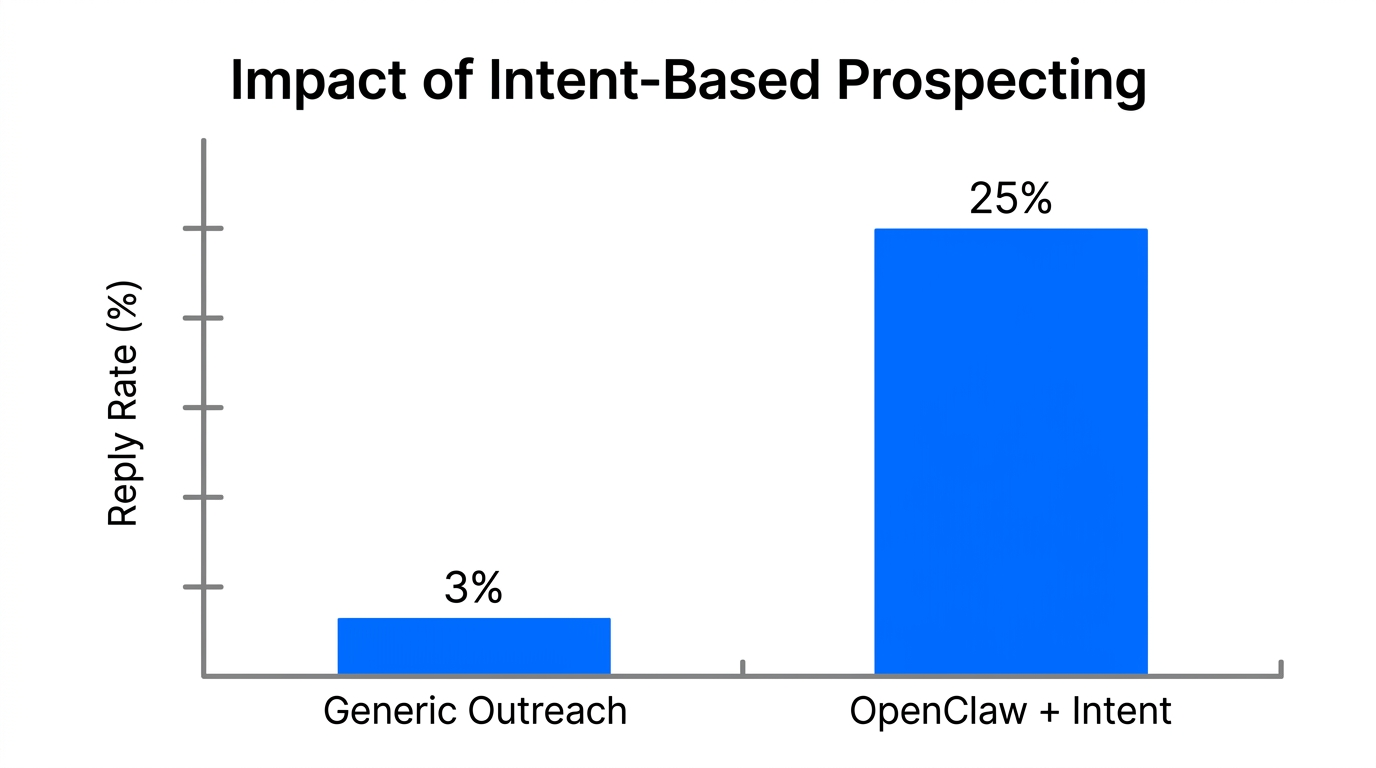
A SaaS founder recently demonstrated the power of this OpenClaw LinkedIn lead generation strategy. By configuring an agent to specifically monitor "hiring signals" for sales leaders, they were able to act instantly when a target company posted a job for a "Head of Sales."
The agent didn't just find the posting; it researched the CEO’s recent LinkedIn posts and identified a common theme regarding their struggle with outbound scaling. The resulting outreach message mentioned the specific hiring need and offered a solution tailored to the CEO's expressed pain points. The result? A 25% cold reply rate—nearly 5x the industry average for 2026.
Other marketers are using these agents for content repurposing. By taking a long-form YouTube video, the agent can automatically generate a high-engagement LinkedIn post and even handle the initial engagement replies once the post is live.
Common Pitfalls: Protecting Your Reputation and Budget
Even with the best LinkedIn outreach strategy 2026, mistakes can be costly. To avoid burning through your API budget or getting your account restricted, follow these guardrails:
- Implement "Anti-Loop" Rules: Explicitly tell your agent: "If a task fails twice, STOP and alert a human." Without this, an agent can enter an infinite loop, draining hundreds of dollars in tokens overnight.
- Audit Public Skills: OpenClaw skills are un-sandboxed code. Never install a skill from a registry like ClawHub without reviewing the
SKILL.mdfile for malicious code. - Respect the Warm-Up: Even with an agent, you must respect LinkedIn’s limits. A 2–3 week warm-up period is mandatory for any new automation, starting with just 5–10 profile visits per day.
- Data Integrity: Use tools like ClawDBot to filter leads effectively so you aren't spamming irrelevant prospects.
"The most dangerous AI agent is one that is left to run without oversight or exit conditions."
Conclusion: The Future of Prospecting is Personal
The AI agent lead gen playbook for 2026 is clear: prioritize intent over volume, infrastructure over ease, and quality over speed. By integrating OpenClaw with specialized data layers like LinkdAPI and secure connections like BeReach, growth marketers can reclaim their time and achieve unprecedented reply rates.
Start small. Set up your VPS, pick a single intent signal (like a job change), and run a hybrid loop for 10 prospects this week. Once you see the power of a 25% reply rate, you’ll never go back to the old way of prospecting. For those looking to bridge the gap between B2B outreach and the growing world of creator marketing, using tools like Stormy AI alongside your OpenClaw agents will give you the ultimate competitive edge in the 2026 digital economy.