In 2026, the LinkedIn advertising landscape has undergone a seismic shift. We have officially moved past the era of manual dashboard management and entered the age of Agent-as-a-Service (AaaS). With LinkedIn CPMs reaching record highs, performance marketers are no longer just competing on creative—they are competing on the sophistication of their autonomous execution agents. Using the OpenClaw framework, growth teams are now deploying specialized AI skills to handle the granular tasks of bidding, budgeting, and scaling that used to consume forty hours a week.
Navigating $44 LinkedIn CPMs: The Rise of Execution Agents
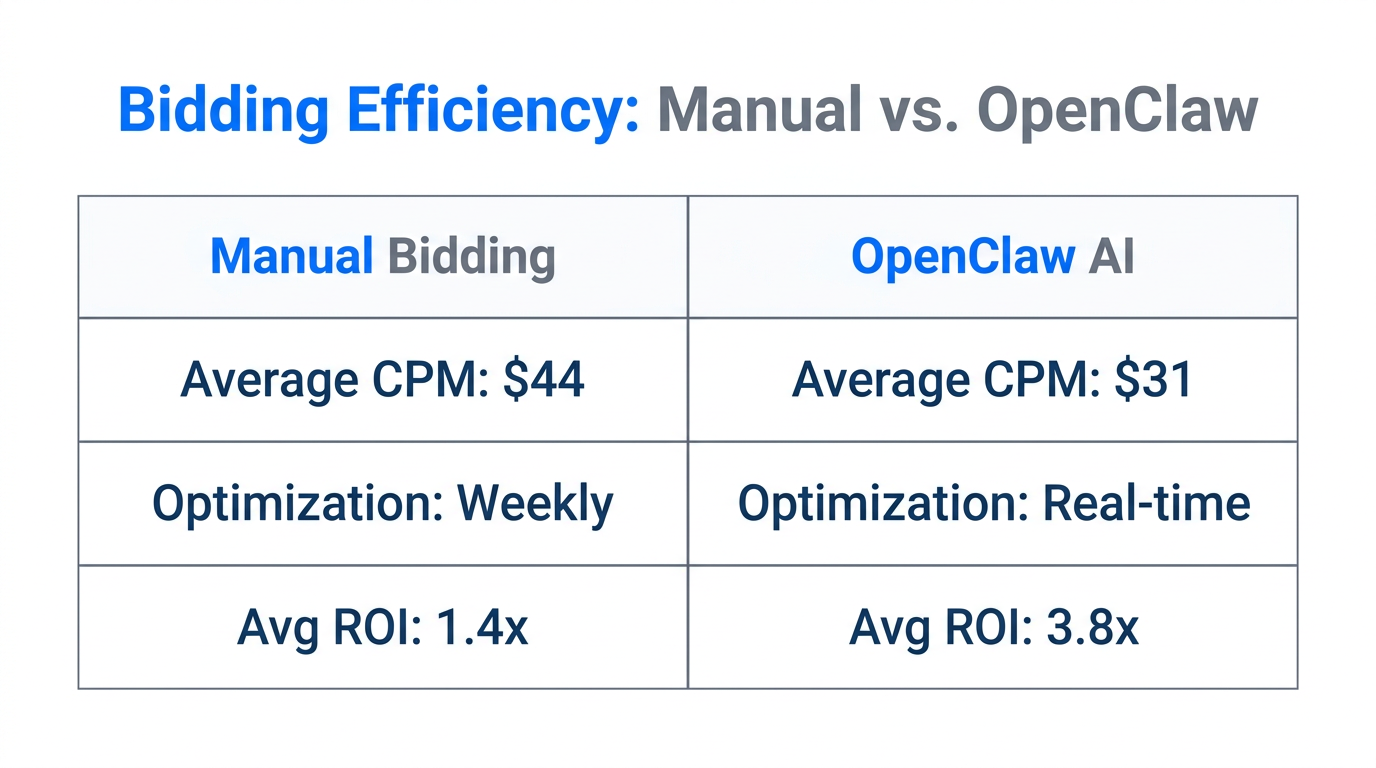
The cost of reaching a professional audience has never been higher. According to recent industry projections from Statista, LinkedIn ad CPMs are hitting $44 in key markets this year. At these prices, a single hour of inefficient delivery can evaporate thousands of dollars in budget. This high-cost environment is the primary driver behind the adoption of OpenClaw bidding automation.
Instead of relying on human eyes to catch anomalies, top-tier agencies now use the Performance Auditor Skill. This agent acts as a 24/7 account sentry. By leveraging the Adspirer MCP Server, these agents scan campaigns in real-time for Cost-Per-Acquisition (CPA) spikes. Unlike traditional rules-based systems, these agents are configured to rank potential fixes by Revenue Impact, ensuring that the most critical leaks are plugged first using data from Google Analytics 4 or PostHog.
"Automated auditing can reduce 'wasted spend' by up to 25% by catching budget-leakage within minutes of a performance spike."
Scaling Winning Ad Sets: The 5-7 Day Stability Rule
One of the most common mistakes in scaling LinkedIn ads ROI is premature adjustment. LinkedIn’s algorithm requires a significant amount of data to move out of its "learning phase". If you increase your budget the moment you see a good day of performance, you risk resetting the delivery logic and causing a CPA blowout.
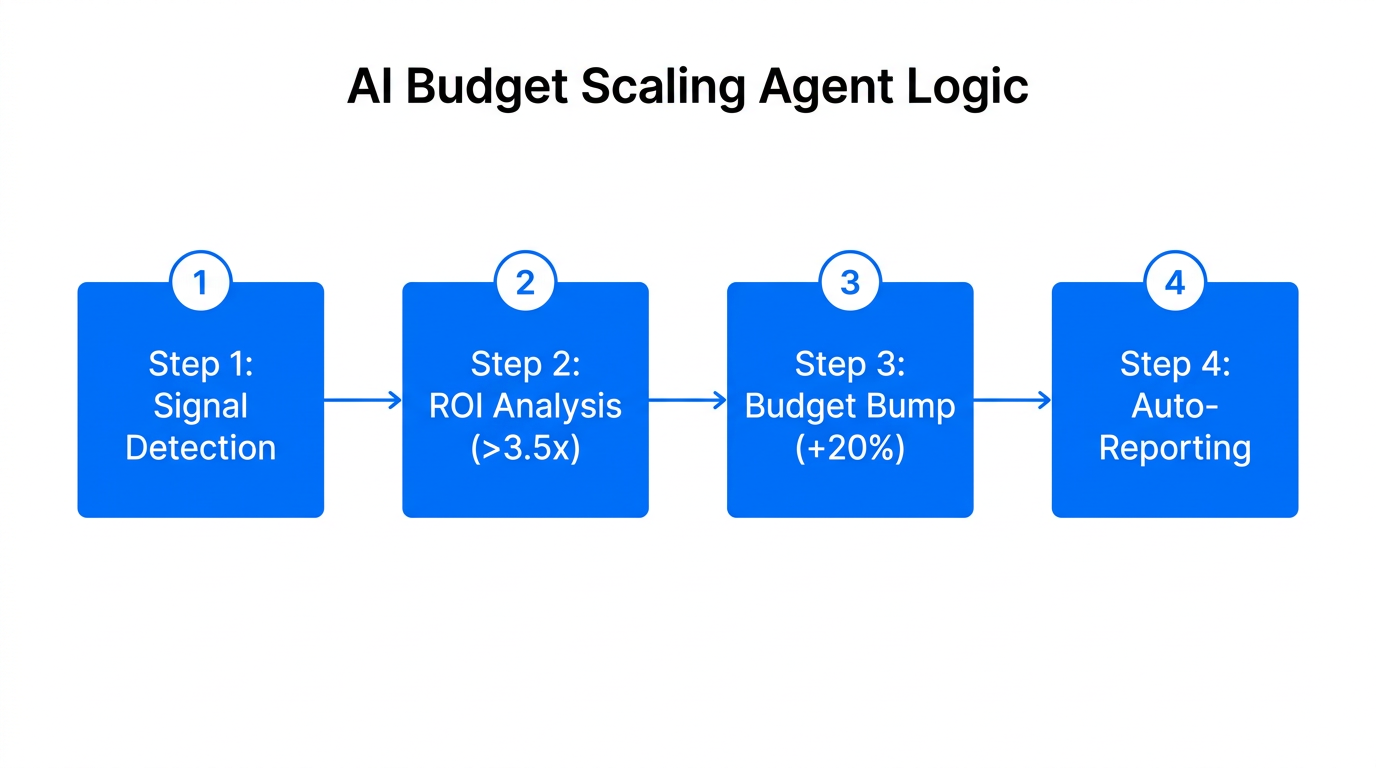
Experts now mandate a 5–7 day stable delivery phase before allowing an OpenClaw agent to touch the dial. This rule ensures that the performance is a trend, not a fluke. Once this stability window is met, the Bid & Budget Scaling Manager skill takes over. This agent follows a precise logic: if the ROAS is greater than 3.0 and the Lead Quality Score (pulled from your CRM) is 8 or higher, the agent increases the daily budget by exactly 20%.
| Metric | Threshold for Scaling | Action Taken by Agent |
|---|---|---|
| ROAS | > 3.0 | Approve for scaling queue |
| Lead Quality Score | 8/10 | Increase budget by 20% |
| Stability Window | 5-7 Days | Execute budget shift |
Combating Creative Fatigue with Vision Models
Creative decay is a "silent killer" on professional networks. Because the LinkedIn audience is high-intent but low-frequency (compared to TikTok), ads can wear out quickly. Interestingly, video uploads on LinkedIn grew by 34% year-over-year, making it the dominant format for 2026 campaigns.
To keep creative fresh, marketers are embedding vision models like Claude 3.5 into their OpenClaw workflows. These agents "view" the ad visuals and correlate them with Click-Through Rate (CTR) trends. If the CTR drops below 0.45%, the Creative Fatigue Analyst suggests iterative shifts—such as swapping a stock background for a professional office setting designed in Canva or changing the first three seconds of a video hook using CapCut. For brands looking to source high-quality creators to fuel these video assets, platforms like Stormy AI provide the discovery tools needed to find professional influencers who resonate with a B2B audience.
"In 2026, trust is the primary KPI. Ads featuring real people and employees outperform stock-photo ads by a staggering 2.5x."
The Audience Architect: Automating Funnel Mapping
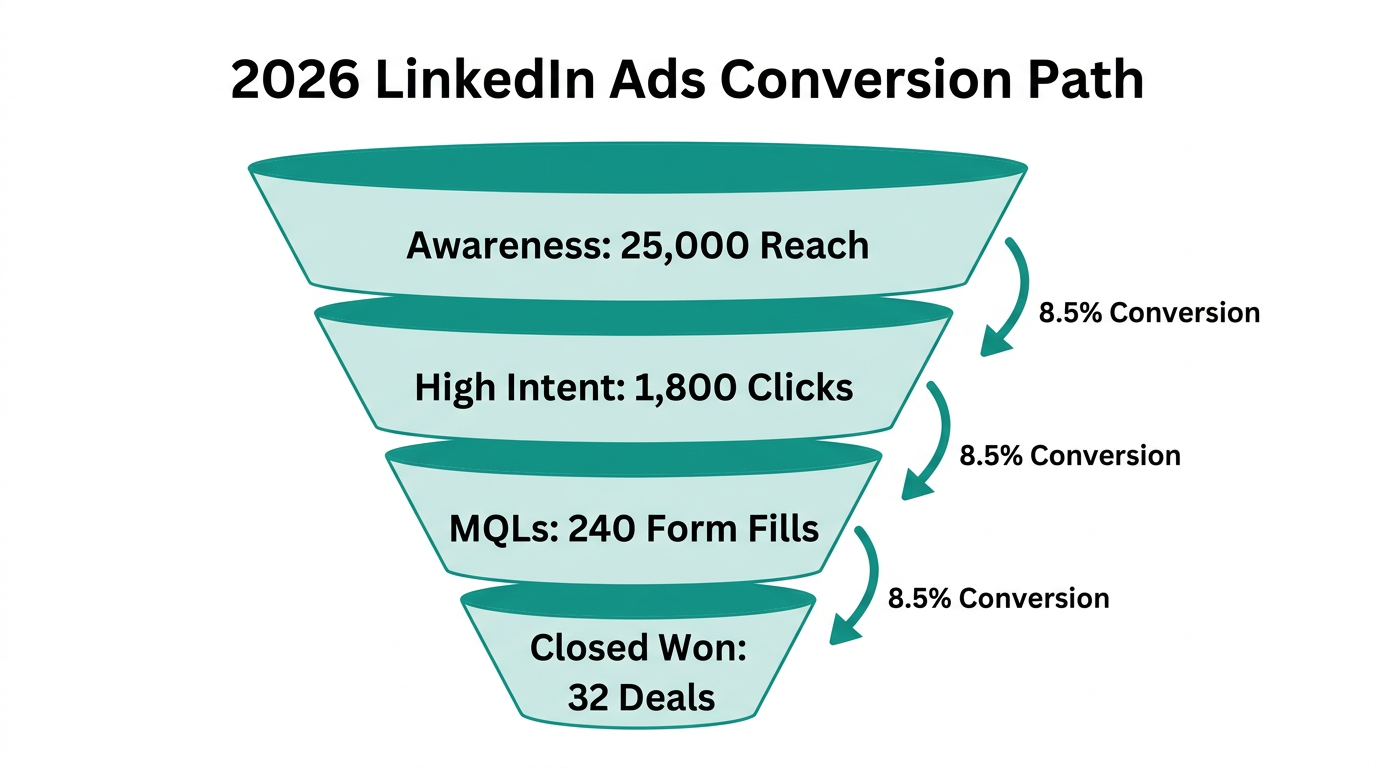
Cost efficiency in 2026 is often won in the exclusions, not just the inclusions. Over-targeting remains a major hurdle; combining too many filters like job title, seniority, and specific groups can shrink your audience so much that CPMs skyrocket unnecessarily. The goal is a "sweet spot" of 30,000 to 100,000 members.
The Audience Architect skill solves this by detecting overlap between prospecting and retargeting funnels. It ensures that a Sales Qualified Lead (SQL) isn't being served Top-of-Funnel brand awareness ads. By using the n8n skill or Zapier, marketers can sync CRM lists from HubSpot or Salesforce daily, automatically excluding current customers from active ad sets. This is vital since retargeting campaigns on LinkedIn can improve conversion rates by 30–40% when managed correctly.
Signal-Based Intent: Beyond Static Targeting
The most advanced use case for automated ad budget management involves signal-based intent scraping. Instead of targeting everyone with a "CMO" title, agents now watch for specific triggers—like a company raising a Series B round or a decision-maker posting about a specific pain point.
B2B companies are utilizing ABM-outbound skills to turn these signals into multi-channel campaigns. This approach has shown a 200% better ROI than broad targeting. However, caution is required; LinkedIn’s anti-bot detection is aggressive. Marketers must avoid scraping without an official API to prevent account restrictions.
Natural Language Reporting for the CMO
Finally, the Natural Language Reporting Agent eliminates the manual slog of executive reporting. In 2026, a CMO can simply ask via Slack: "How did the Enterprise campaign perform yesterday vs. last Monday?" and receive a formatted report instantly. High-performing teams set up "KPI Snapshots" that deliver daily summaries of Lead Gen Form completion rates (which average 10–15% for top performers) directly to their team channels via the OpenClaw Official Directory.
"The era of the 'Dashboard Marketer' is over. The 'Agent Architect' is the one who wins in a $44 CPM world."
Conclusion: Building Your 2026 Playbook
Scaling LinkedIn Ads in 2026 requires a perfect balance of AI autonomy and human strategy. By deploying OpenClaw agents to handle the heavy lifting of budget adjustments and creative auditing, growth teams can focus on high-level strategy and relationship building. Remember the golden rules: wait 5-7 days before scaling, use vision models to fight creative decay, and always keep a human in the loop for final budget approvals. For those looking to integrate creator-led content into this automated workflow, Stormy AI remains the go-to platform for sourcing the B2B influencers that drive today's top-performing ads.