In the high-stakes world of digital growth, the transition from "AI as a tool" to "AI as a workforce" has officially arrived. By early 2026, OpenClaw (formerly known as Clawdbot) shattered records by reaching over 214,000 GitHub stars, outpacing the early growth trajectories of industry titans like Docker and React. For growth marketers, this isn't just another library; it is the foundation of a 24/7 autonomous ad operations team. Unlike the static dashboards of the past, OpenClaw's framework allows agents to actually execute work—controlling browsers, navigating APIs, and adjusting budgets while you sleep.
The Shift to Agentic Marketing: Why Manual Management is a Liability
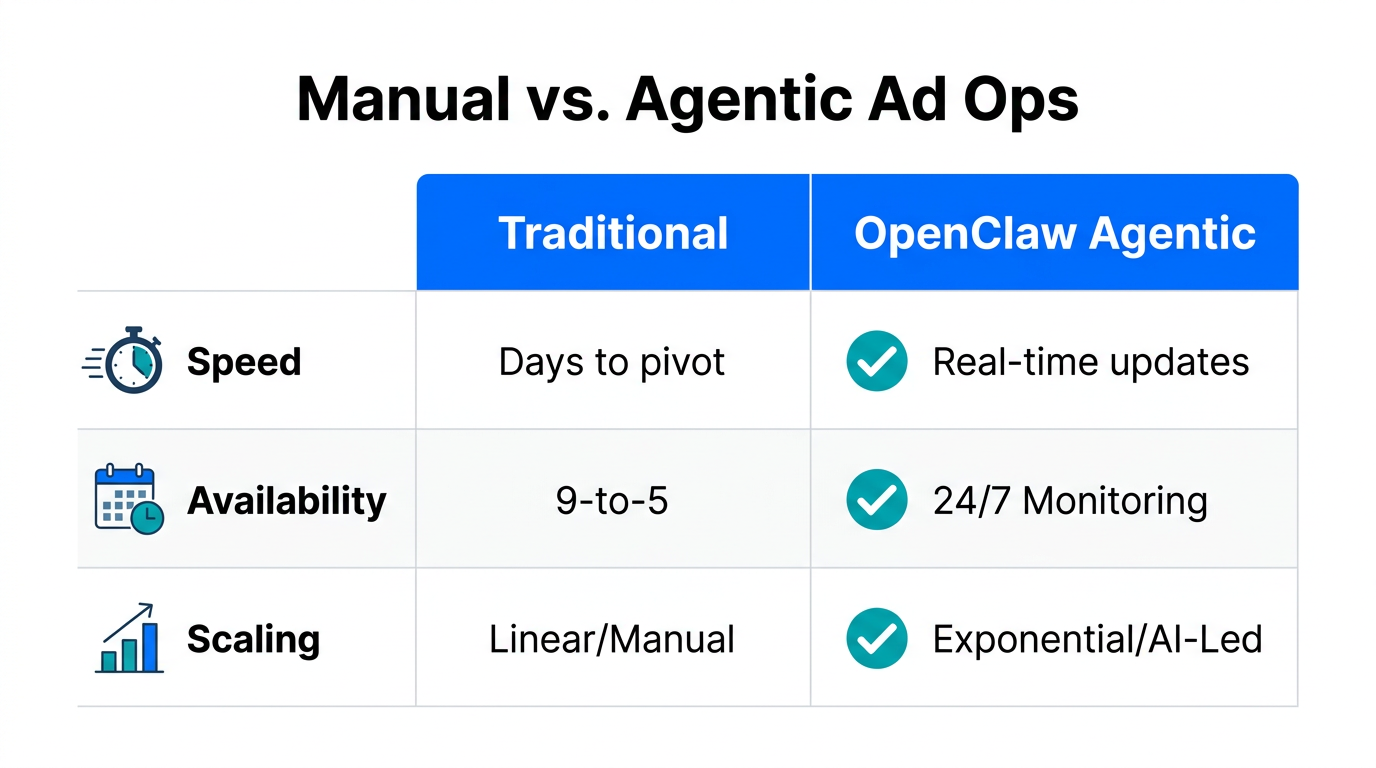
Data from PwC reveals that 79% of enterprises have already adopted AI agents in some capacity, while Deloitte reports that 37% of global companies have replaced or automated significant portions of human workflow with these autonomous entities. The reason is simple: efficiency. Early adopters of agentic Go-To-Market (GTM) platforms report an average of 55% higher operational efficiency and a 35% reduction in total marketing costs, according to Landbase research.
To stay competitive, marketers must evolve from being "creators" of individual ads to "conductors" of agentic teams. This guide provides a technical-but-accessible playbook for deploying your first OpenClaw ad ops squad.
Step 1: Deploying the 'Human-in-the-Loop' (HITL) Protocol via SOUL.md
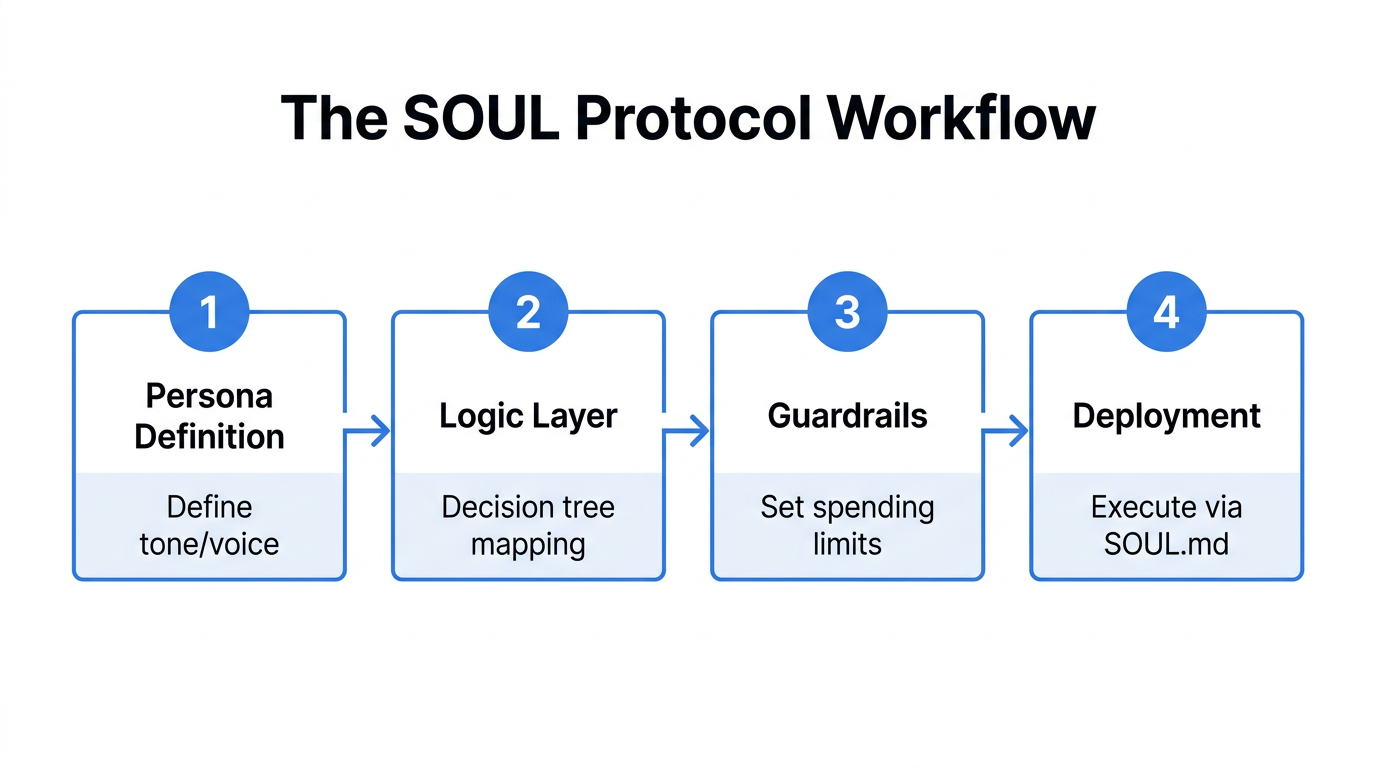
The biggest fear in AI automation is the "runaway agent"—an AI that misinterprets a command and drains your entire monthly budget in three hours. To solve this, OpenClaw utilizes the SOUL.md (Standard Operating Unit Logic) protocol. This protocol establishes the Human-in-the-Loop (HITL) framework, ensuring that while the agent does the heavy lifting, the human maintains ultimate fiscal control.
"The marketer’s role is shifting from a creator to a conductor. You set the tempo; the agents play the instruments." — Jon Hyman, CTO of Braze
When setting up your AI ad operations playbook, you should program your agent to operate in "Draft Mode" by default. In the SOUL.md configuration file, you define specific gates. For example, you can require a "Thumbs Up" emoji in a shared Slack or Discord channel before the agent is permitted to push a budget increase live. This creates a seamless workflow where the agent proactively alerts you: "ROAS for the 'Winter Sale' campaign is 4.5. I recommend increasing the daily spend by 20%. Confirm?"
Step 2: Installing ClawHub Skills for Automated Auditing
You don't need to build an AI from scratch. The OpenClaw ecosystem thrives on ClawHub, a centralized registry of pre-built marketing "skills." Think of these as apps for your agent. For automated Google Ads management, the gold standard is the 'AdWhiz' skill.
Once installed via ClawHub, AdWhiz allows your agent to perform deep performance auditing. It doesn't just look at clicks; it monitors CTR decay to identify "creative fatigue" and cross-references performance data against historical benchmarks. If a creative asset starts to dip in performance, the agent identifies it immediately, rather than waiting for your weekly manual audit.
| Feature | Manual Audit | OpenClaw + AdWhiz |
|---|---|---|
| Frequency | Weekly/Monthly | Real-time (24/7) |
| Budget Pacing | Spreadsheets | Dynamic Auto-adjustment |
| Creative Fatigue | Subjective observation | CTR Decay Monitoring |
| Alert System | Email inbox clutter | Actionable Slack/WhatsApp prompts |
Step 3: Connecting to Meta and TikTok via Adspirer Bridges
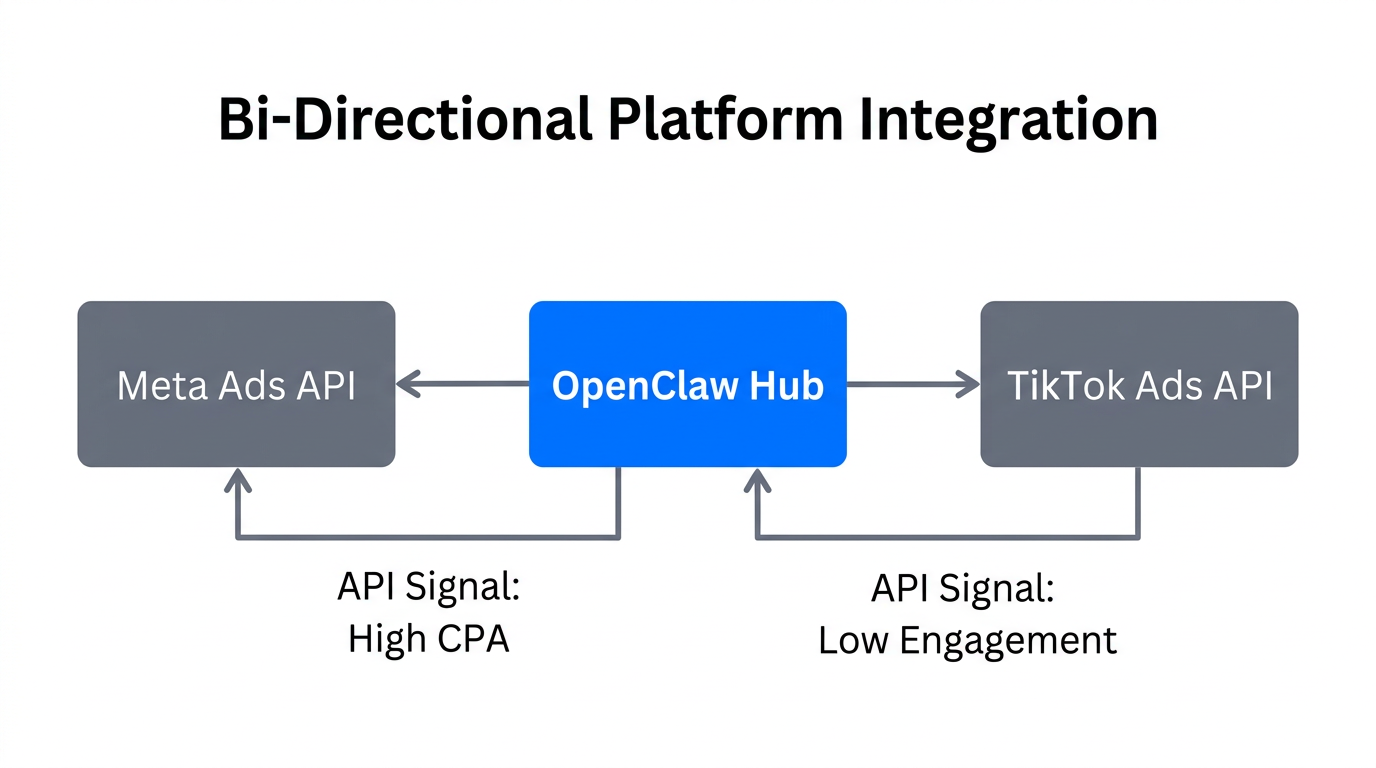
One of the primary hurdles for growth marketers is the complexity of API developer tokens for Meta and TikTok. OpenClaw offers two modes to bypass this friction:
- Browser Automation Mode: Using Playwright, the agent simulates human clicks directly in the Ads Manager dashboard. This is ideal for smaller teams who don't want to manage API keys.
- Adspirer Bridges: For scaling teams, tools like Adspirer act as a middle-tier connection. They allow you to connect OpenClaw to Google, Meta, TikTok, and LinkedIn Ads without writing a single line of custom API code.
By using automated Meta ads management through Adspirer, your agent gains the ability to launch campaigns, adjust targeting parameters, and rotate creatives across multiple platforms simultaneously. This multi-channel orchestration ensures that your brand voice remains consistent across the entire social ecosystem.
Step 4: Developing Specialized Agent Roles
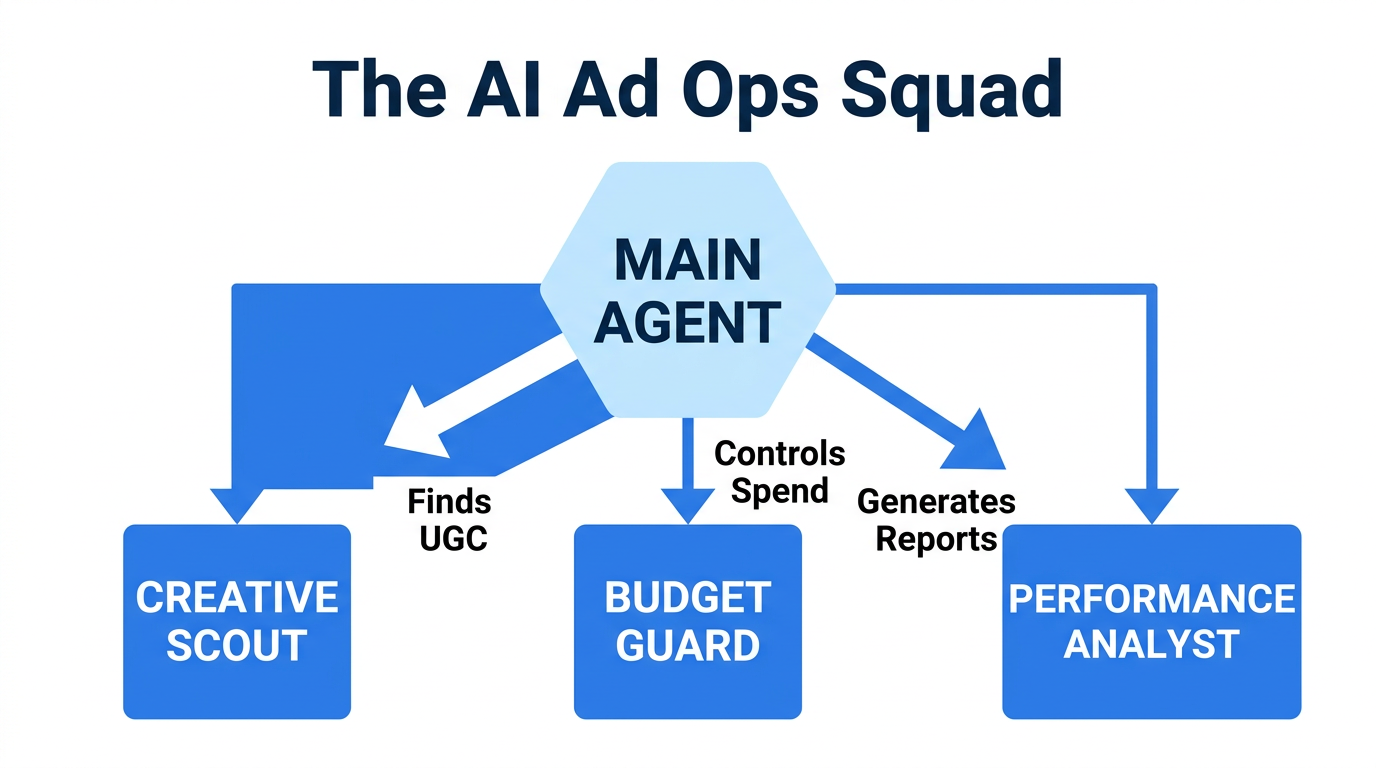
To maximize the utility of your AI ad operations, you shouldn't rely on a single "do-it-all" bot. Instead, follow the lead of specialists like AdStellar AI, which utilizes a modular architecture of specialized agents. Here are the three essential roles for your team:
1. The Director
The Director agent acts as the primary interface. It monitors high-level KPIs and determines which sub-agents need to be activated. If total ROAS drops, the Director triggers the Audit skill to find the leak. Platforms like AdAmigo.ai excel at this "hands-off" management style, allowing users to issue commands via voice or text.
2. The Copywriter
The Copywriter agent focuses exclusively on creative assets. It should be trained on your specific Brand Voice files to avoid the generic "GPT-style" output that consumers have learned to ignore. You can even pair these agents with tools like AdCreative.ai to generate high-converting visual assets at scale.
3. The Budget Allocator
This agent is the "math specialist." Its sole job is dynamic budget pacing—ensuring that your spend is distributed evenly throughout the month and shifted toward high-performing segments in real-time. For agencies managing multiple clients, this role is a game-changer for preventing overspend.
"In 2025, AI moved from the side of the tech stack to the center, taking responsibility for entire workflows like building and routing campaigns." — Saul Marquez, CEO of Outcomes Rocket
Step 5: Avoiding Costly Agentic Mistakes
Deploying AI agents isn't without its risks. Research highlights several "costly blunders" that can derail even the best OpenClaw tutorial for marketers. First is the "Set and Forget" mentality. Agents are augmented staff, not total replacements; they lack strategic foresight and can occasionally "hallucinate" during sudden market shifts or technical glitches in the ad platform's interface.
Second, solve for "Shadow AI" and security. As agents become more popular, unverified "skills" are appearing in public registries. Researchers at ClawHub found over 300 malicious skills in 2026 designed to exfiltrate API keys. Always audit the code of a skill before granting it system-level access to your financial accounts.
Beyond Paid Ads: Integrating UGC and Influencers
While OpenClaw manages your paid media, the modern growth stack requires a steady stream of authentic content. This is where User-Generated Content (UGC) and influencer partnerships become the engine for your AI agents. For example, a growth marketer might use Stormy AI to autonomously discover and outreach to TikTok creators. Once those creators produce content, the OpenClaw "Director" agent can automatically pick up the best-performing videos and launch them as Spark Ads.
By pairing Stormy AI's creator discovery with OpenClaw's execution, you create a fully automated "Content-to-Conversion" loop that requires minimal human intervention. This is how brands like Alchemy London achieved a 4x revenue increase—by letting agents handle micro-decisions while humans focused on high-level brand narrative.
Conclusion: From Manual to Agentic
The era of manual ad management is closing. According to Gartner, by 2026, 40% of enterprise applications will include task-specific AI agents as a default feature. Implementing an AI ad operations playbook with OpenClaw is no longer an "innovative experiment"—it is a baseline requirement for efficiency.
Start small: deploy a single agent for performance auditing using the AdWhiz skill on ClawHub. Establish your SOUL.md HITL protocols to maintain control, and gradually expand your team to include Copywriters and Budget Allocators. The future of marketing isn't about working harder; it's about building a workforce that never sleeps.