In 2026, the digital advertising landscape has undergone a seismic shift. We have moved definitively past the "Chatbot-era" of simple generative assistants and into the age of Execution Agents. For performance marketers, this means the days of manual dashboard diving and Excel-based pivot tables are fading. Growth teams are now deploying autonomous loops that do more than just suggest changes; they reason through real-time data and execute high-stakes account adjustments without human intervention.
This playbook explores how to leverage OpenClaw (the open-source framework formerly known as Moltbot) to build a self-correcting OpenClaw Google Ads strategy. By the end of this guide, you will understand how to transition from a passive observer of your data to a commander of an AI-powered marketing army.
The OpenClaw Advantage: Why Growth Teams are Switching
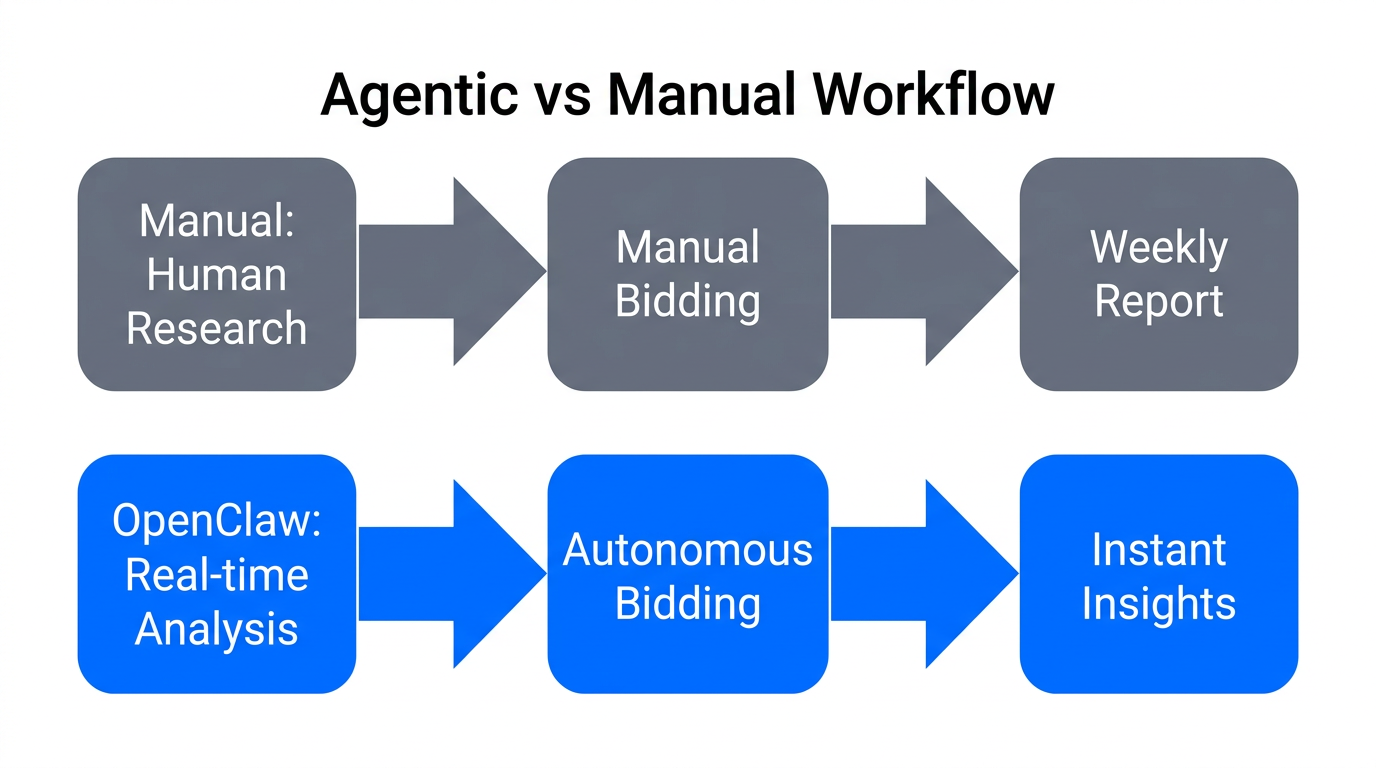
OpenClaw isn't just another SaaS tool; it is a self-hosted AI agent that runs on your own infrastructure, whether that is a local machine or a Hostinger VPS. The core differentiator in 2026 is the Model Context Protocol (MCP). This protocol allows OpenClaw to connect directly to your Google Ads account, your internal files, and even your team's communication channels like Telegram or Slack.
The adoption metrics are equally staggering. As of early 2026, the OpenClaw GitHub project has surpassed 219,000 stars, cementing its place as the fastest-growing open-source marketing infrastructure in history. Agencies utilizing these agentic workflows report saving an average of 12 hours per week per client on manual auditing, according to research shared on Medium.
"The transition from SaaS to Agent-as-a-Service marks the point where software stops being a tool and starts being a teammate." — Peter Steinberger, Creator of OpenClaw.
Core "Skills" for Automated PPC Management
OpenClaw operates through "Skills"—specialized markdown files that define the logic and parameters for specific tasks. For AI agent marketing automation to be effective, you must equip your agent with the right skill set. The 2026 standard for Google Ads involves several primary skills found in the GitHub Skills Directory.
| Skill Name | Function | Business Impact |
|---|---|---|
| Performance Auditor | Flags keywords spending >$500 with 0 conversions. | Immediate cost reduction by cutting waste. |
| AdWhiz (MCP) | Creates and optimizes ad groups via 44 specialized tools. | Scales creative output without hiring more copywriters. |
| Budget Manager | Stabilizes bids if spend is 10% ahead of pace. | Prevents budget exhaustion before month-end. |
| SGE Finder | Scans for high-intent queries in AI Overviews. | Captures emerging search volume before competitors. |
By deploying these skills, you move away from static rules toward dynamic Google Ads performance optimization 2026 strategies. Unlike legacy rules-based engines, these agents can "reason." For example, if a high-spend keyword isn't converting but has a high assisted-conversion value, the agent won't just kill it—it will investigate the landing page experience first.
Strategy 1: Implementing the "Zero-Conversion Filter"
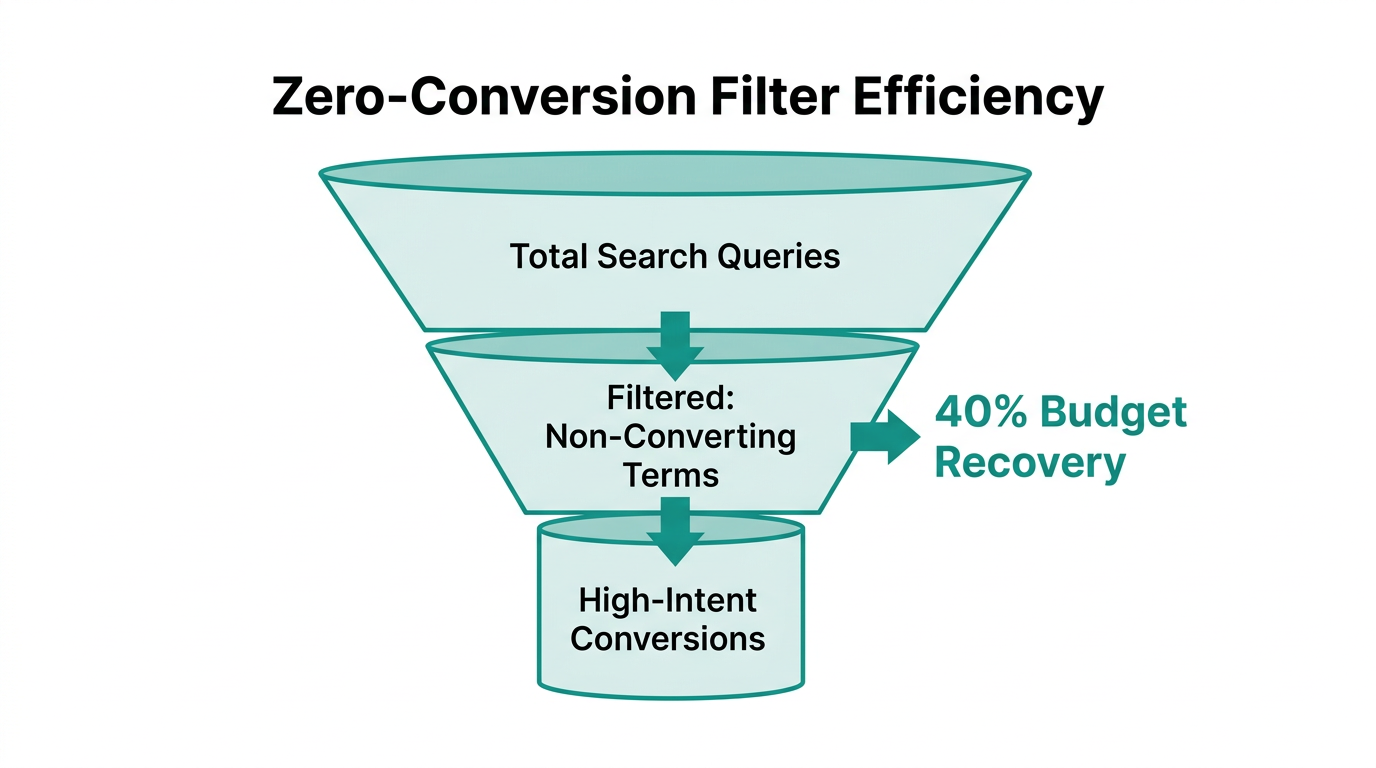
One of the most immediate ways to see ROI from automated PPC management is the Zero-Conversion Filter. This is a cron job (an automated schedule) that runs within your OpenClaw environment to prune your budget of dead weight.
Step 1: Set the Reasoning Threshold
Configure the agent to scan your account every Monday at 2 AM. The logic should be: "Identify any keyword or asset group that has spent 3x the target CPA without a single conversion in the last 7 days." At 2 AM, the agent is able to process the full data from the preceding weekend—historically the most volatile time for consumer behavior.
Step 2: Automated Execution
The agent doesn't just send an alert. Using the AdWhiz skill set, it pauses the underperforming assets. It then generates a summary report of exactly how much budget was saved and pings your team via Telegram. This ensures your week starts with a lean, optimized budget focused only on what works.
"Efficiency in 2026 isn't about doing more; it's about the machine automatically stopping the things that don't work while you sleep."
Strategy 2: Value-Based Bidding via MCP & CRM
The limitation of standard Google Ads automation is that it often optimizes for "leads" rather than "revenue." To solve this, growth teams are connecting OpenClaw to their CRM (like Salesforce) using the Model Context Protocol.
By bridging the gap between ad spend and actual margin data, the AI marketing execution agents can execute Value-Based Bidding (VBB). The agent pulls LTV (Lifetime Value) data from your database and feeds it back into the Google Ads bidding engine. This tells Google to bid aggressively for users who look like your highest-margin customers, not just anyone who will click a button. This level of integration is a cornerstone of modern growth frameworks.
Strategy 3: The Creative Refresh Loop
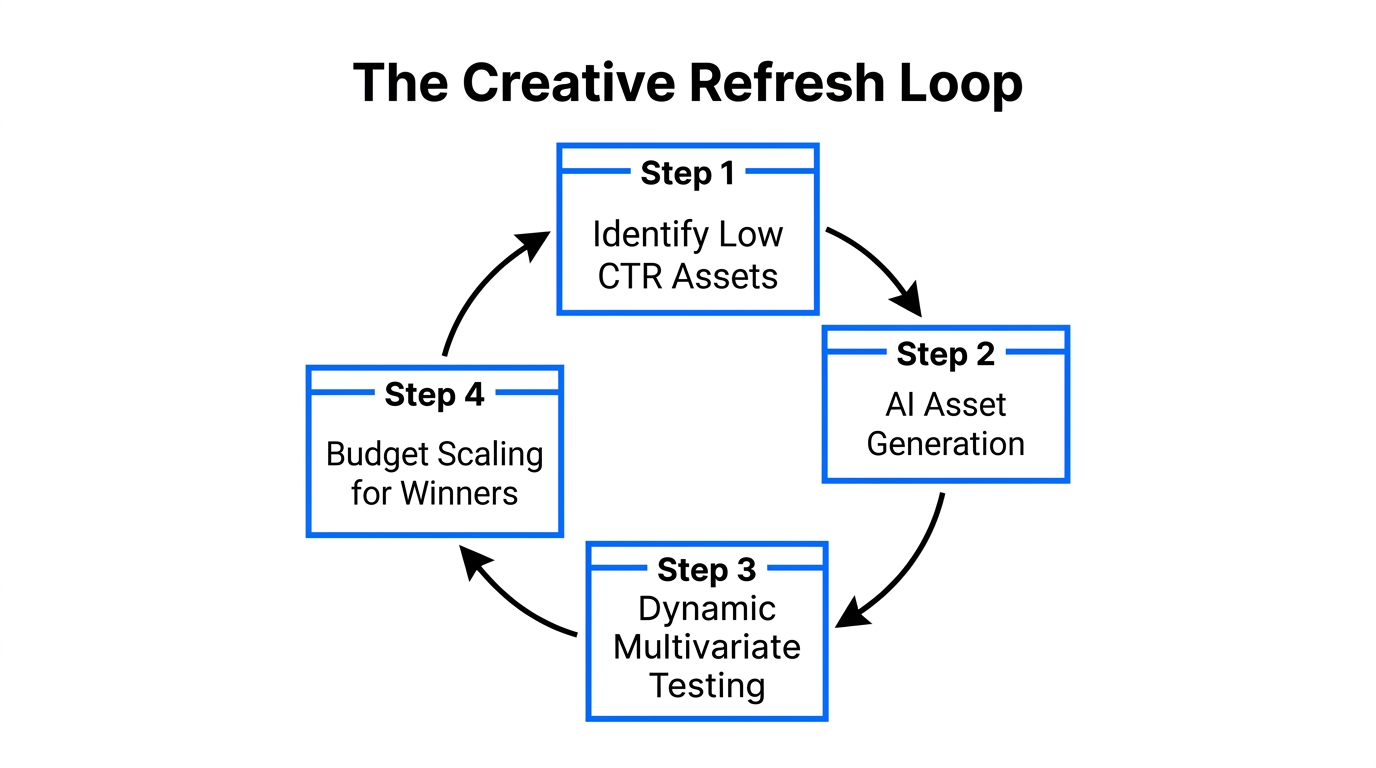
Ad fatigue is a silent killer of ROAS. In 2026, manual creative monitoring is obsolete. Instead, marketers use vision models like Claude 3.5 Sonnet or GPT-4o integration within OpenClaw to monitor performance.
The Creative Refresh Loop works as follows:
- Detection: The agent monitors CTR (Click-Through Rate) trends. If it detects a 20% drop in CTR over a rolling 7-day period, it flags the asset for fatigue.
- Generation: The agent automatically drafts three new headline variations and descriptions based on the highest-performing historical copy.
- Approval: The agent pings the growth lead on Telegram with the new drafts. With one tap, the lead can approve, and the agent pushes the new ads live via the Google Ads API.
Strategy 4: Scaling Search Discovery in AI Overviews (SGE)
Search has changed. With Google's AI Overviews (formerly SGE), user queries have become longer and more conversational. Standard keyword research tools often lag behind these trends. OpenClaw agents can be programmed to scan your search term reports for these hyper-specific, high-intent queries.
The agent identifies emerging "natural language" queries that are resulting in impressions and automatically adds them as broad match keywords with tight tCPA (Target Cost Per Acquisition) constraints. This allows you to capture cheap, long-tail traffic before your competitors' manual research catches up.
Security & Maintenance: Protecting Your Agent
Deploying AI marketing execution agents comes with significant risks that many growth teams overlook. In early 2026, the industry saw the emergence of CVE-2026-25253, also known as the "Public Gateway" vulnerability.
Many users mistakenly run OpenClaw on a public port (18789) without adequate password protection. This can lead to WebSocket hijacking, where malicious actors take control of your agent and drain your ad budget. To fix this, security experts recommend binding your gateway to 127.0.0.1 and using an SSH tunnel or Tailscale for remote access.
Furthermore, avoid using "subsidized" developer tokens. In 2026, Google began locking accounts that used developer-only tiers for commercial ad management. Always use paid API keys from OpenAI or Anthropic to ensure account longevity.
MEMORY.md files, pruning any data over 2KB that hasn't been referenced in 14 days, as suggested by Clawdboss.ai.Real-World Example: "Agent Larry" at Fruityo
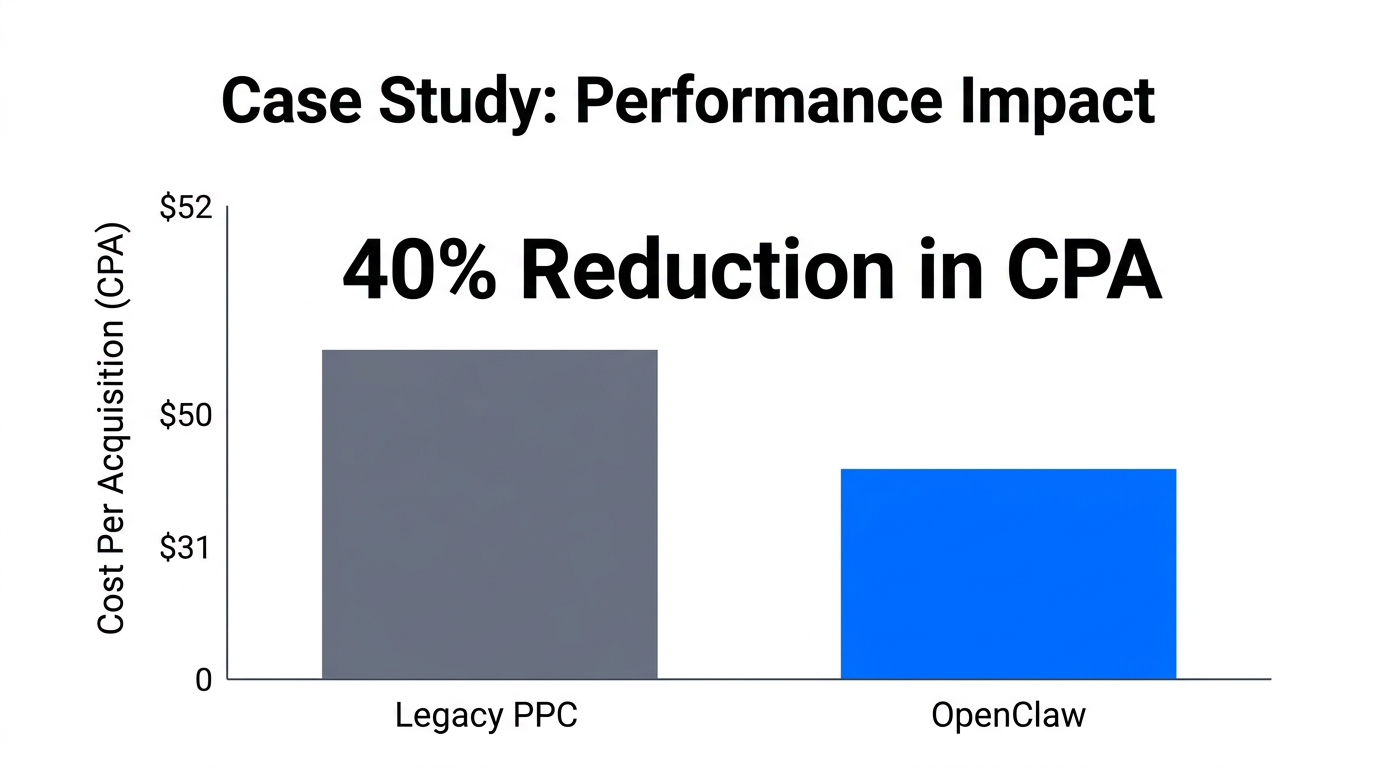
The team at Fruityo, an AI video platform, deployed a multi-agent OpenClaw system named "Larry." Larry wasn't just a script; it was a teammate. One agent drafted copy, another critiqued it for "AI clichés," and a third monitored real-time spend across Google and TikTok.
The results were transformative: Larry managed to scale their Google Ads to a 1.8x ROAS entirely through commands issued via Telegram while the founder was traveling. This demonstrates that the competitive advantage in 2026 goes to the marketer who deploys the most efficient autonomous systems, not necessarily the one with the biggest team.
"In 2026, the competitive advantage doesn't go to the marketer who writes the best prompts, but to the one who deploys the most efficient autonomous systems." — Industry Insight from Stormy AI.
Conclusion: Your Path to Agentic Growth
The era of manual PPC management is drawing to a close. To stay competitive, growth teams must embrace AI marketing execution agents like OpenClaw. By implementing the strategies outlined here—from the Zero-Conversion Filter to Value-Based Bidding—you can reduce your manual workload by hours each week while simultaneously improving your ROAS.
As you begin your journey into agentic marketing, remember that the goal is not to replace the marketer, but to amplify their strategy. Use tools like Stormy AI for discovery and outreach, and let OpenClaw handle the execution. In 2026, the most successful brands will be those that treat their AI agents not as tools, but as vital members of their performance marketing team.