In 2026, the digital marketing landscape has shifted from the "Chatbot Era" to the Age of Execution Agents. Google's Search Generative Experience (SGE) has fundamentally rewritten the rules of engagement, turning traditional search results into dynamic AI-generated answers. To win the search war today, marketers are moving away from manual spreadsheets and toward autonomous frameworks like OpenClaw. By leveraging a Keyword Opportunity Finder, brands can now identify high-intent queries within Google AI Overviews before the competition even realizes they exist.
The SGE Frontier: Why AI Search Marketing Strategy 2026 is Different
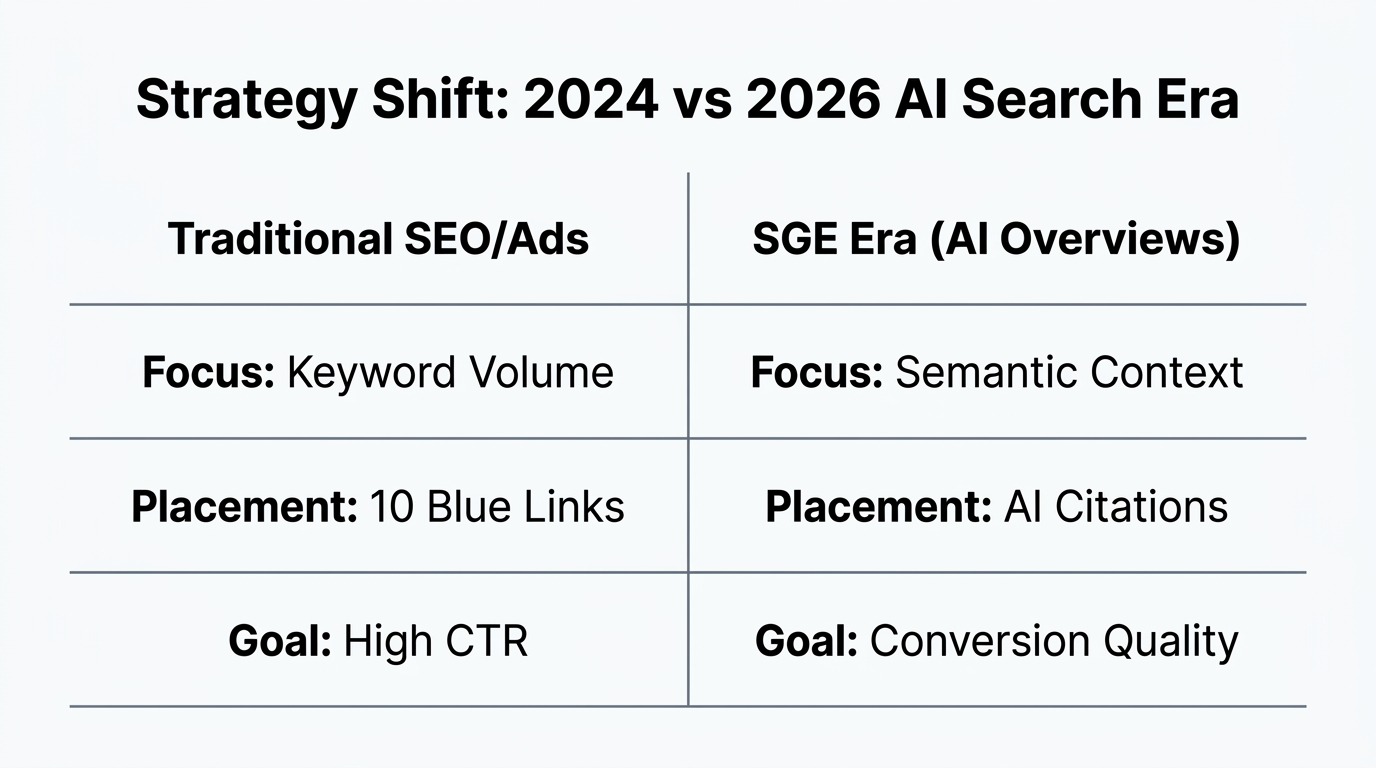
Google AI Overviews (formerly SGE) now dictate the majority of click-through patterns on mobile and desktop. These AI-generated summaries don't just answer questions; they shape user intent in real-time. For performance marketers, the challenge is no longer just ranking #1—it is appearing as a cited source or a relevant ad within the AI's synthesized response.
By using OpenClaw, an open-source agent framework that has surpassed 247,000 GitHub stars, advertisers can run proactive, system-level execution for Google Ads. This allows for a level of precision that manual account management simply cannot match in the current 2026 environment.
"The focus has shifted from agents that talk to agents that do. If your marketing stack isn't executing autonomously in 2026, you're already behind." — Rithik Motupalli, AI Marketing Researcher.
Scanning AI Overviews: The Keyword Opportunity Finder
The core of a winning AI search marketing strategy involves the "Keyword Opportunity Finder" skill. This agent autonomously scans Search Term Reports (STR) and correlates them with the citations appearing in Google's AI Overviews.
Identifying High-Intent Clusters
Instead of bidding on broad categories, the agent identifies specific phrases that Google's AI uses to solve complex user problems. For example, if the AI Overview for "best CRM for startups" begins highlighting "low-code automation features," the agent identifies that specific long-tail intent and adds it as an exact-match keyword to your campaign instantly.
- Real-time Detection: Captures queries as they emerge from AI-generated dialogue.
- Automated Expansion: Converts informational intent into transactional ad groups.
- Competitive Edge: Bids on keywords with low historical competition but high current relevance.
According to research on scaling agencies with OpenClaw, marketers utilizing agentic search discovery have reported a massive 22% boost in ROAS by capturing these trends before they become saturated.
The Qualification Criteria Logic: Filtering for Profit
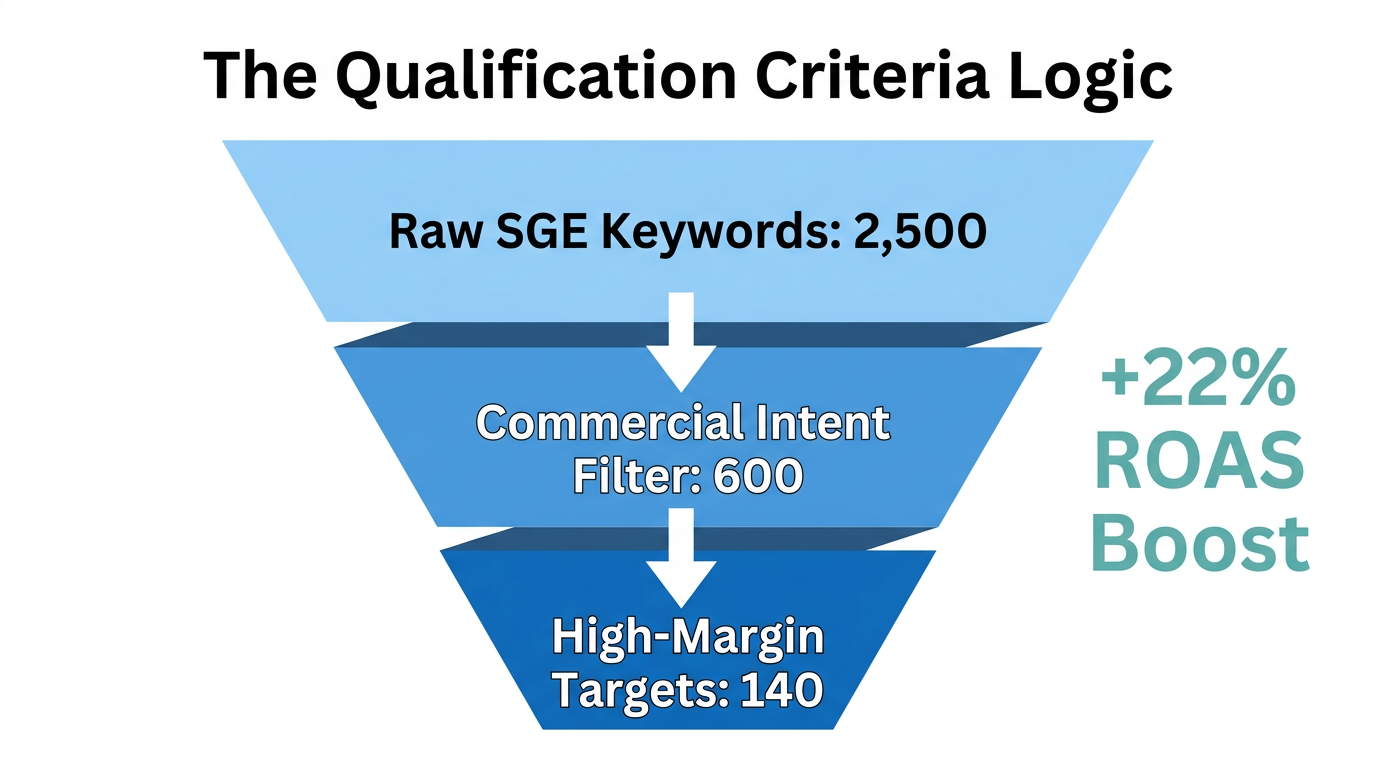
One of the biggest risks with automated keyword research is "keyword bloat"—the tendency for AI to add thousands of informational queries that don't actually convert. To prevent this, elite marketers implement "Qualification Criteria" logic within their OpenClaw agents.
| Feature | Manual Research | OpenClaw Agentic Research |
|---|---|---|
| Speed | Weekly/Monthly | Real-time / 24-7 |
| Intent Filter | Subjective | Data-driven (Qualification Logic) |
| ROAS Impact | Baseline | +22% Average Improvement |
| Time Saved | 0 Hours | ~13 Hours/Week per Manager |
By setting strict parameters—such as requiring terms like "buy," "pricing," "vs," or "best for [use-case]"—the agent ignores the millions of "how-to" queries that plague Google AI Overviews. This ensures that your budget is strictly allocated to users at the bottom of the funnel. This strategy is particularly effective when managed via platforms like Ryze AI, which provides a managed implementation of these agentic skills.
"The 22% ROAS boost isn't just about finding more keywords; it's about the machine-speed rejection of keywords that don't pay."
The Search Term Analyzer: Specialized Negative Keyword Mining
Finding what to target is only half the battle. The other half is knowing what to exclude. The Search Term Analyzer is a specialized OpenClaw skill designed for aggressive negative keyword mining. It scans for patterns of wasted spend and "internal competition" where your own ads are bidding against each other.
Implementing the Zero-Conversion Filter
A standard playbook for 2026 involves setting a "Zero-Conversion Filter." This agentic rule automatically pauses any keyword that has spent over 2x the Target CPA (tCPA) with zero conversions over a rolling 30-day window. This type of constant pruning is why accounts using automated auditing see a 2.5–4% higher conversion rate on average.
Scaling Agency Operations with Agent-Led Models
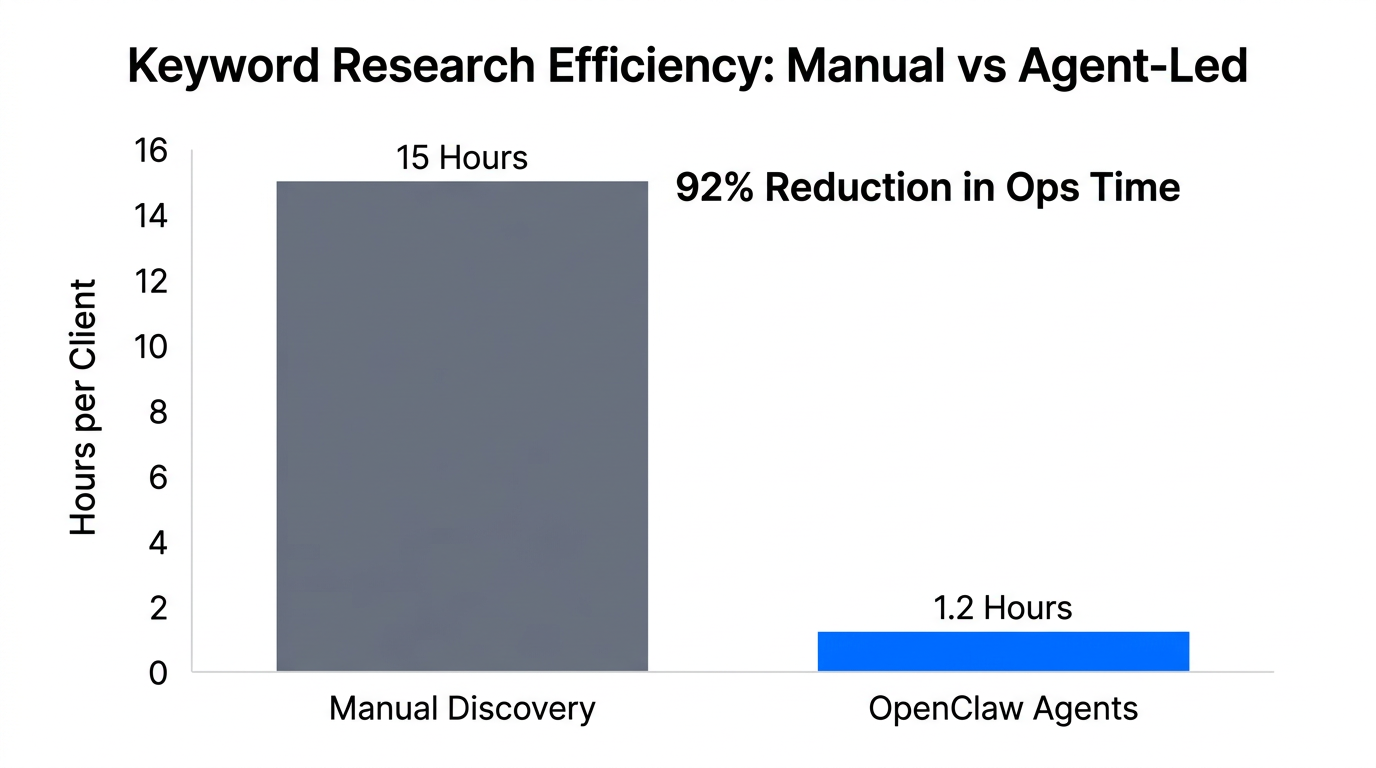
For agencies, the routine analysis of Search Term Reports (STR) used to consume dozens of hours per week. In 2026, this is a fully automated workflow. Agencies are now deploying OpenClaw agents to handle the "Monday 2 AM" audits, generating impact reports that rank ad groups by wasted spend before the team even starts their workday.
This efficiency doesn't just save time; it allows agencies to focus on higher-level creative strategy. For instance, when an agent detects a 20% drop in Click-Through Rate (CTR) due to creative fatigue, it can automatically draft three new headline variations and notify the team via Slack. This "Creative Refresh Loop" saves managers roughly 13 hours per week, according to data from OpenClaw marketing experiments.
Once your agentic search strategy is in place and your high-intent keywords are identified, the next step is populating those ads with high-converting content. This is where tools like Stormy AI become invaluable, allowing brands to quickly discover creators who can produce the niche UGC (user-generated content) required to match the specific long-tail queries your agents have discovered.
Conclusion: The Future of Automated Keyword Research
Winning the AI search war in 2026 requires more than just a large budget; it requires agentic execution. By implementing the OpenClaw Keyword Opportunity Finder and Search Term Analyzer, you move from reactive bidding to proactive market capture. Whether you are a startup founder managing spend via a Telegram bot or a global agency scaling hundreds of accounts, the integration of AI agents into your Google Ads workflow is no longer optional—it is the baseline for survival.