The marketing landscape has shifted. We are no longer in the era of simple chatbots that answer questions; we have entered the age of execution agents. In 2026, the competitive advantage doesn't go to the marketer who writes the best prompts, but to the one who deploys the most efficient autonomous systems. Leading this revolution is OpenClaw, an open-source framework that has fundamentally changed how growth teams approach automated ad management. With over 196,000 GitHub stars, it is clear that the industry is moving away from reactive manual adjustments toward proactive, agentic execution.
Understanding the 'Agentic Shift' in 2026: Execution over Conversation
As industry leaders like Sam Altman and Mark Zuckerberg have noted, the "Chatbot Era" has officially peaked. The focus has moved toward agentic marketing—a paradigm where AI agents don't just suggest a 5% bid increase; they log into the dashboard, verify the tracking, and execute the change while you sleep. Research on Substack highlights that OpenClaw is the infrastructure behind this shift, acting as the "hands" for digital marketing teams.
Unlike traditional automation which follows rigid rules, AI agents for Google Ads leverage large language models (LLMs) to understand context. If a sudden trend spikes on TikTok, an agent can recognize the search volume increase in Google Ads and autonomously reallocate budget from underperforming campaigns to capture the new demand. This is the hallmark of marketing automation 2026: a system that is proactive rather than reactive.
"The focus has shifted from agents that talk to agents that do. In 2026, if your marketing stack isn't executing autonomously, you're already behind."
Choosing Your Mode: API vs. Browser Automation
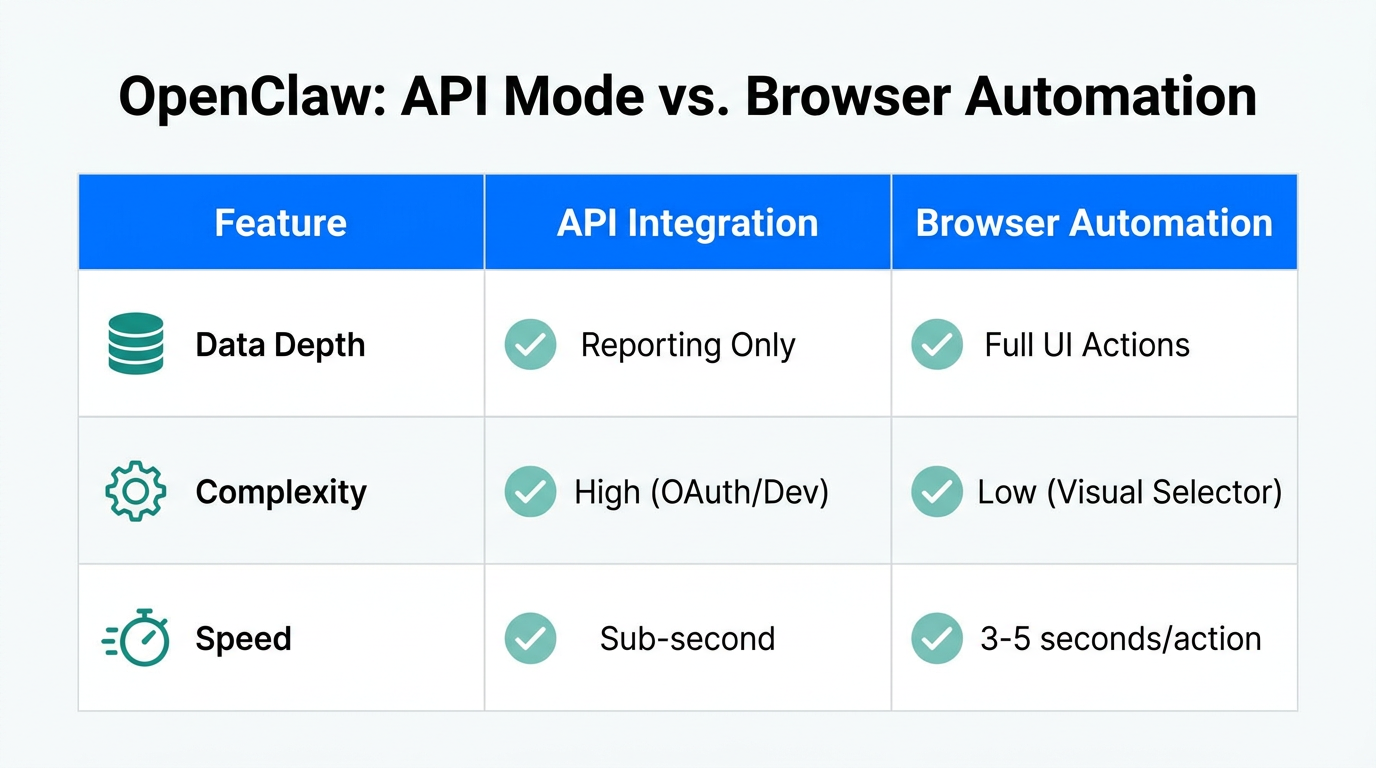
Before deploying your first agent, you must decide how it will interact with Google's ecosystem. OpenClaw offers two distinct pathways, and choosing the right one depends on your technical resources and the scale of your operations.
| Feature | API Mode | Browser Automation Mode |
|---|---|---|
| Core Tech | Google Ads Python SDK | Playwright / Browser Relay |
| Best For | Agencies managing 100+ accounts | Indie hackers and boutique setups |
| Speed | Instantaneous GAQL queries | Simulated human interaction speeds |
| Requirement | API Developer Token | No Developer Token needed |
For large-scale agencies, API Mode is non-negotiable. It allows for bulk operations and high-speed data retrieval. However, for smaller teams who cannot wait for Google's stringent API approval process, Browser Automation Mode is a game-changer. It uses the "Clawdbot Browser Relay" to drive the actual ads.google.com interface, performing tasks exactly like a human would, but with the precision of a machine. Discussion on Reddit suggests that this mode has democratized access to high-level automation for small business owners.
Workflow: Setting Up the Performance Auditor
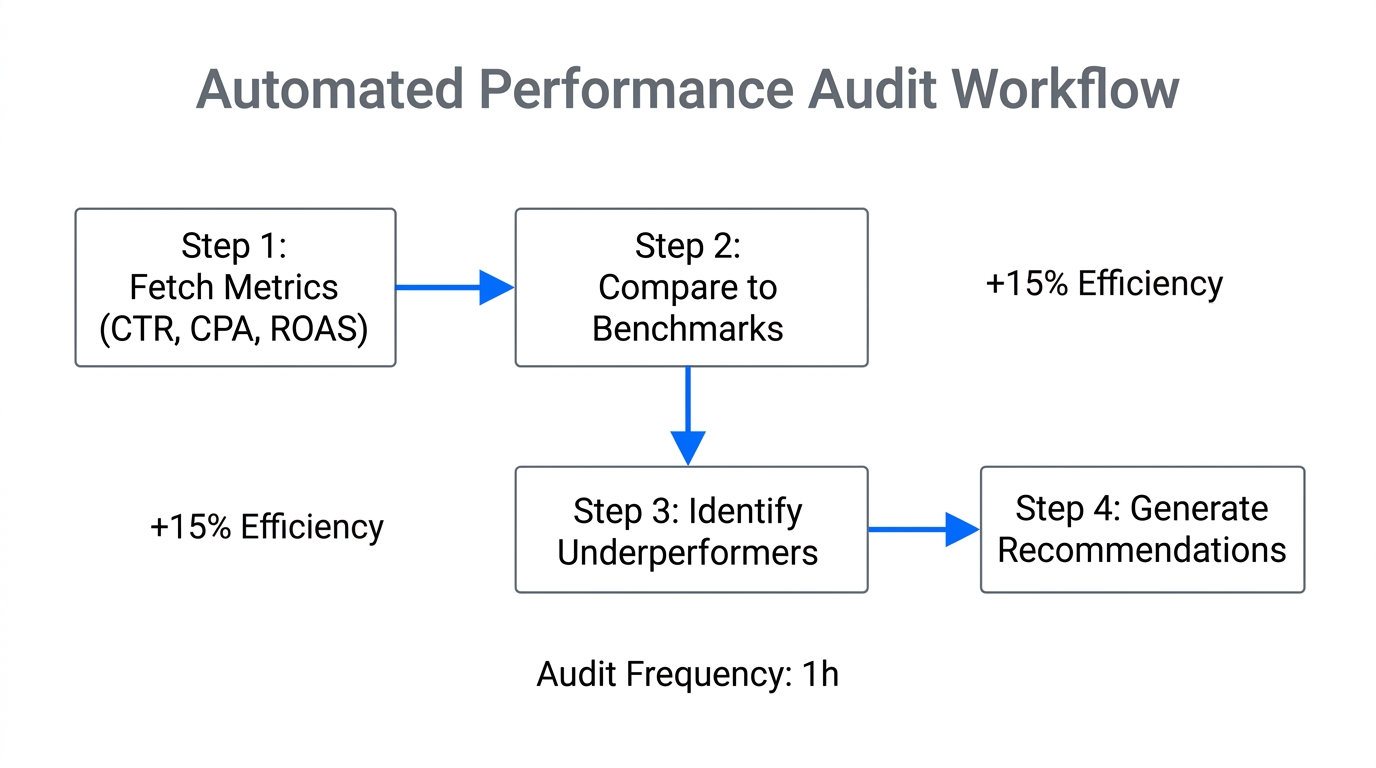
One of the most powerful skills in the OpenClaw Skill Registry is the Performance Auditor. This skill performs Google Ads performance auditing with a depth that manual checks rarely reach. Here is how to implement it:
Step 1: Install the Skill
Pull the latest performance-auditor.md from ClawHub. This file contains the logic for identifying conversion tracking gaps and ROI anomalies.
Step 2: Configure ROI Thresholds
Define your Target CPA (tCPA) or Return on Ad Spend (ROAS) targets within the agent's memory. The agent will use these benchmarks to flag "bleeding" ad groups.
Step 3: Schedule the Cron Job
Set a weekly schedule (e.g., every Monday at 2 AM) for the auditor to "wake up," scan the account, and identify keywords with high spend but zero conversions over the last 30 days. According to performance data, agent-optimized accounts see a 2.5–4% higher conversion rate due to this constant pruning.
Implementing the 'Human-in-the-loop' (HITL) Safety Layer
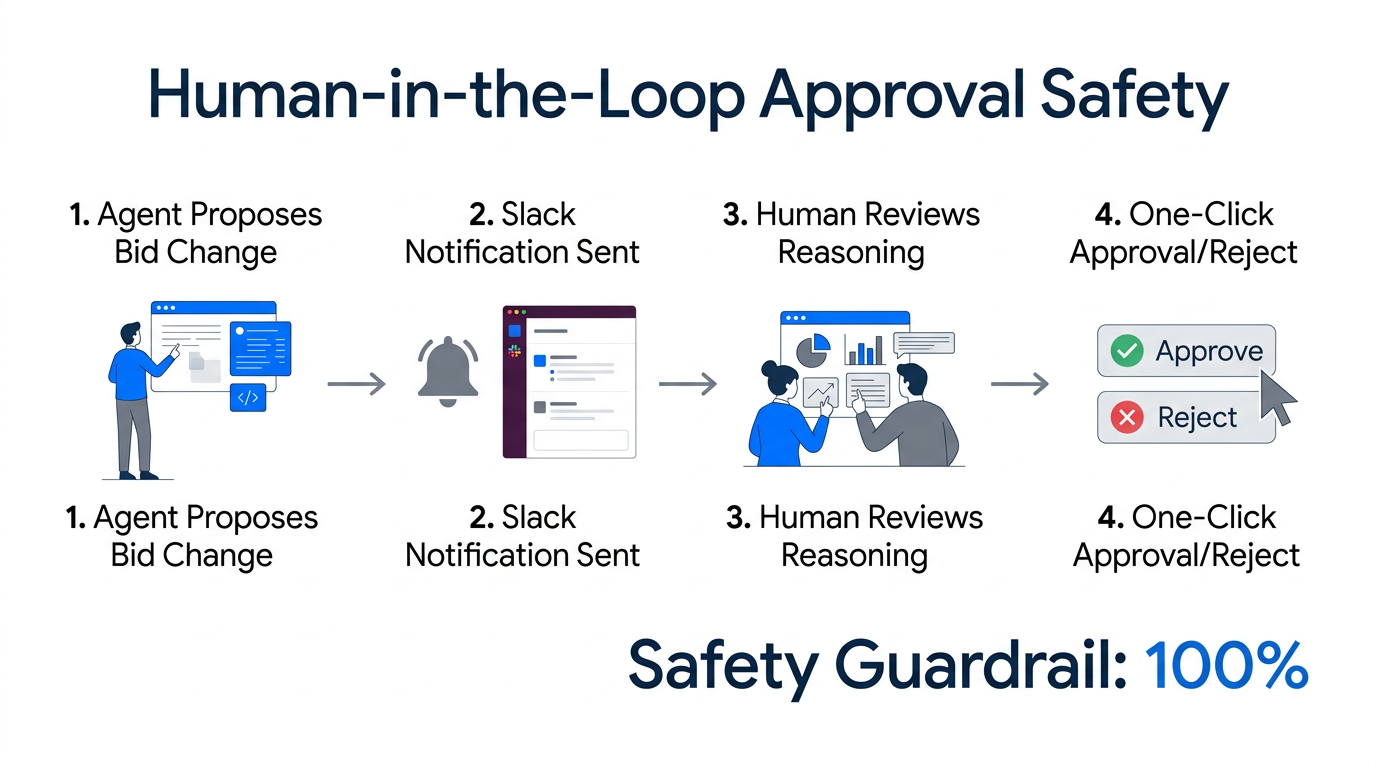
While autonomy is the goal, high-stakes decisions—like increasing a daily budget by 50%—require a safety net. OpenClaw utilizes a configuration known as SOUL.md to implement a Human-in-the-loop (HITL) protocol.
Instead of executing a massive change immediately, the agent can be programmed to send a "Draft Approval" message via Telegram or Slack. The marketer simply clicks "Approve" or "Reject" from their phone. This ensures that while the agent does the heavy lifting of data analysis, the human retains final strategic control. For agencies using platforms like Monday.com to manage client communications, integrating these agent approvals into the workflow ensures total transparency.
The Creative Analyst: Diagnosing Creative Fatigue
Creative fatigue is the silent killer of ROAS. The Creative Analyst skill in OpenClaw diagnoses this by tracking Click-Through Rate (CTR) trends over 7, 14, and 30-day windows. When an asset's performance begins to decay, the agent flags it for a refresh.
To keep the content engine running, many growth marketers use Stormy AI to source high-performing UGC creators. Once OpenClaw identifies that a Responsive Search Ad (RSA) asset is no longer "Best" performing, the marketer can quickly find new creators on Stormy AI to produce fresh video assets or headlines, which are then fed back into the campaign. This loop has been shown to improve CTR by 2-4% compared to manual creative management.
"If your RSA asset hasn't changed in three weeks, you aren't optimizing; you're stagnating. Let the agent flag the fatigue, then use AI discovery tools to find the solution."
Security & Security: The VPS Requirement
Because OpenClaw requires significant system access to drive browsers and execute API calls, security researchers on Cybernews warn against running it on a local personal machine. It is highly recommended to deploy your agent on a dedicated Virtual Private Server (VPS).
Providers like Hostinger or DigitalOcean offer the isolated environment necessary to protect your ad account credentials. Furthermore, you must avoid the common mistake of exposing the OpenClaw Gateway (typically on port 18789) without a password. A public gateway is an open invitation for malicious actors to hijack your Google Ads budget.
Conclusion: The Future of Pacing and Bidding
Transitioning to AI agents for Google Ads is no longer a futuristic concept—it is a 2026 reality. By leveraging OpenClaw's proactive execution, marketers can move from spending hours in the Google Ads dashboard to acting as "Agent Architects." Whether you are using the Keyword Opportunity Finder to surface high-intent queries or the Pacing Monitor to ensure your budget lasts the full month, the goal is the same: higher efficiency and better ROI.
For those looking to scale their creator-led ad strategies, tools like Stormy AI provide the essential human-centric content that powers these automated engines. As you build your agentic stack, remember to start small: master one skill, like performance reporting, before granting your agents the permission to mutate and spend your budget. The future belongs to those who can manage the machines.