In the high-stakes world of performance marketing in 2026, the traditional role of the media buyer has been permanently disrupted. We have officially moved beyond the era of simply using AI to write ad copy; we are now firmly in the age of Agentic Marketing. Leading this charge is OpenClaw, an open-source framework that has amassed over 300,000 GitHub stars by allowing growth hackers and founders to automate their entire paid media stack. If you are still manually adjusting bids in Meta Ads Manager or Google Ads at 11:00 PM on a Friday, you are not just working harder—you are losing to competitors who have deployed autonomous agents to do the heavy lifting.
The Death of the "20% Rule": Why Step Scaling is the 2026 Standard
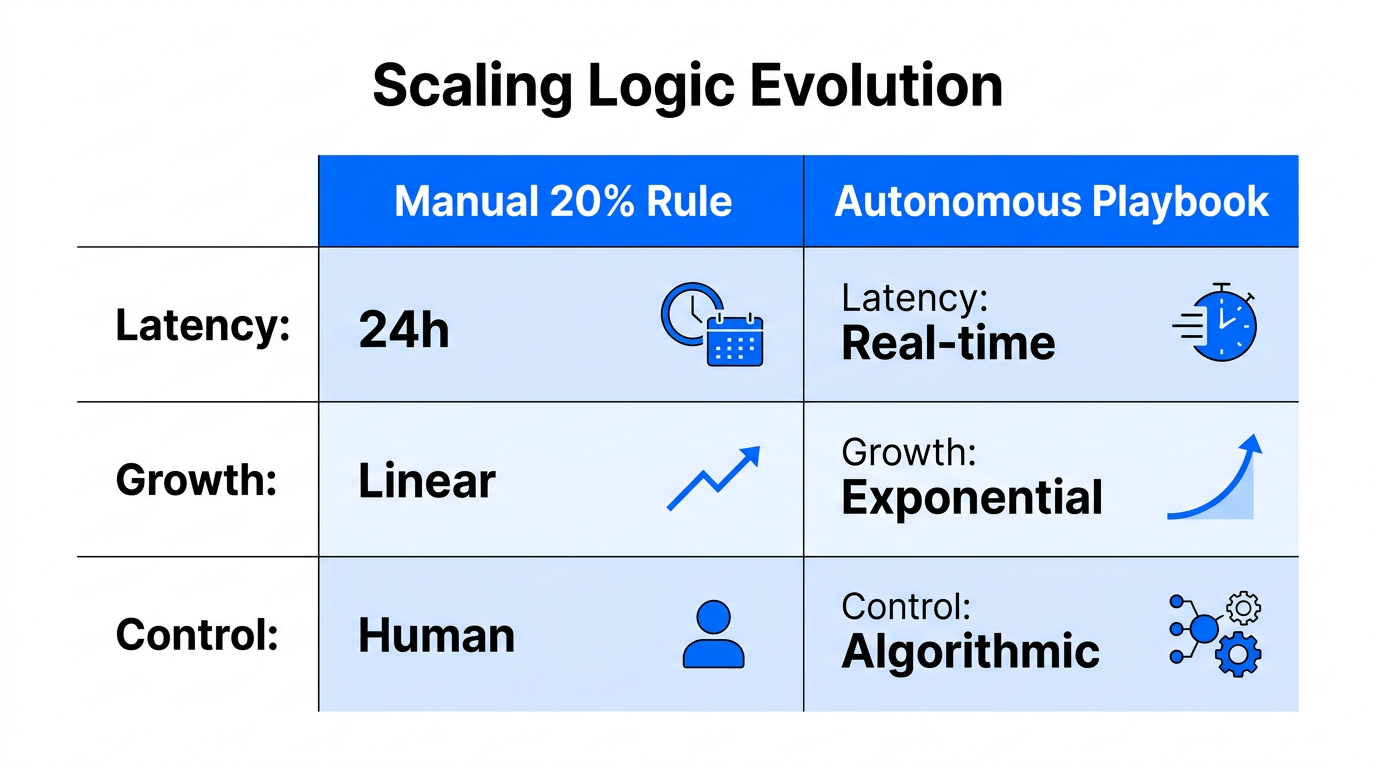
For years, the industry standard for autonomous ad scaling was the "20% rule"—increasing budgets by no more than 20% every 48 to 72 hours to avoid re-triggering the learning phase. In 2026, this approach is considered archaic and painfully slow. Modern algorithms, enhanced by creative fatigue monitoring, are far more resilient than they used to be. The primary bottleneck today isn't the platform's learning phase; it's the human buyer's reaction time.
Enter Step Scaling. Using OpenClaw’s Bid & Budget Manager skill, sophisticated marketers now deploy logic that scales winning ad sets based on a sliding 7-day conversion window rather than arbitrary percentage caps. This allows for aggressive scaling of "alpha" creatives while simultaneously trimming "laggards" that fail to hit ROAS targets. According to Stormy AI research, brands that move from manual increases to agent-led step scaling see a significant reduction in wasted spend during the scaling process.
| Metric | Manual Scaling (Legacy) | Autonomous Step Scaling (2026) |
|---|---|---|
| Scaling Velocity | +20% every 48-72 hours | Real-time adjustments based on ROAS triggers |
| Budget Management | Reactive (based on yesterday's data) | Predictive (pacing alerts & intra-day shifts) |
| Effort Required | High (Daily dashboard logins) | Zero (Agent manages via GitHub SOUL.md/Telegram) |
| Protection | Manual checks | Automated pacing & budget watchers |
"Setting broad scaling rules like 'Increase all budgets by 20%' is the fastest way to blow through your capital. The future belongs to those using granular, 7-day conversion window logic."
Setting up 'Friday Night Overspend' Protection
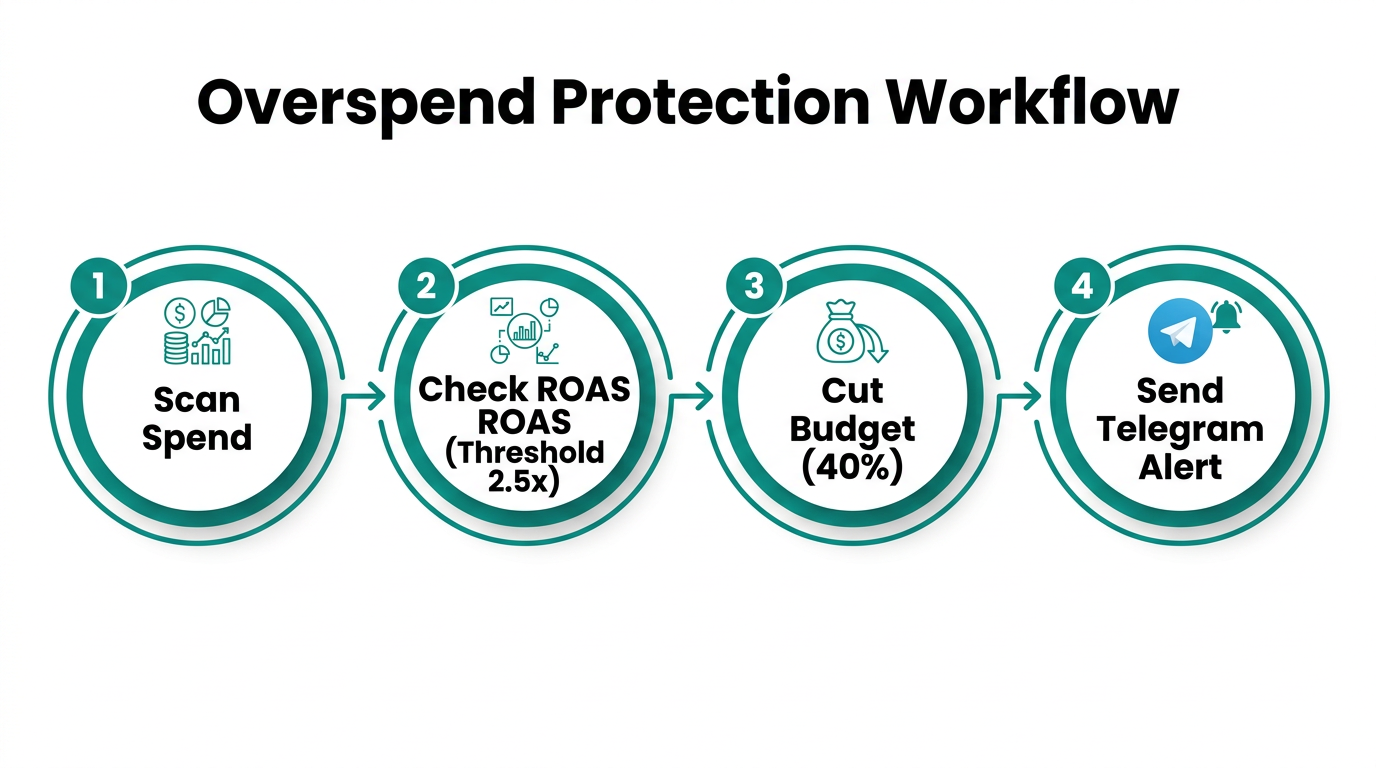
One of the most common nightmares for growth marketers is the dreaded "Friday night overspend," where a campaign hits a streak of high-cost, low-intent traffic while the team is offline. To combat this, OpenClaw’s Pacing & Budget Watcher acts as a digital sentinel. This skill monitors daily spend pacing and triggers automated pacing alerts if a campaign is likely to exhaust its monthly budget prematurely. Preventing budget bleeding is the first step toward true ROAS optimization in 2026.
By connecting this skill to the Ad Context Protocol (AdCP), your OpenClaw agent gains the ability to read performance signals across 100+ different ad platforms through a single, unified interface. This is critical for cross-platform campaigns where Meta might be over-performing but Google is draining the communal pool. You can learn more about these advanced configurations in the Agentic Ad Ops Guide.
Managing 1.8x ROAS Without Opening a Dashboard
The true power of AI budget management is best illustrated through the "Telegram Workflow." We recently tracked a B2B SaaS founder who successfully maintained a 1.8x ROAS while traveling, without ever opening a Meta or Google Ads dashboard. He achieved this by connecting his OpenClaw instance to a private Telegram bot. The agent would send a message: "Campaign X has hit a 2.4x ROAS over the last 6 hours. Should I increase budget by $500? [Approve/Deny]"
This "Human-in-the-Loop" (HITL) model, facilitated by automation workflows, ensures that while the agent does the analysis and execution, the founder retains final strategic control. For high-growth startups, this setup saves an average of 10–13 hours per week per account, according to early adoption data from 2026 marketing automation experts.
"The era of the manual PPC agency is over; the era of the 'Agent Architect' has begun. If your agent isn't talking to you on Telegram, you're living in the past." — Peter Steinberger, Creator of OpenClaw.
The Ad Context Protocol (AdCP): The Unified Signal Layer
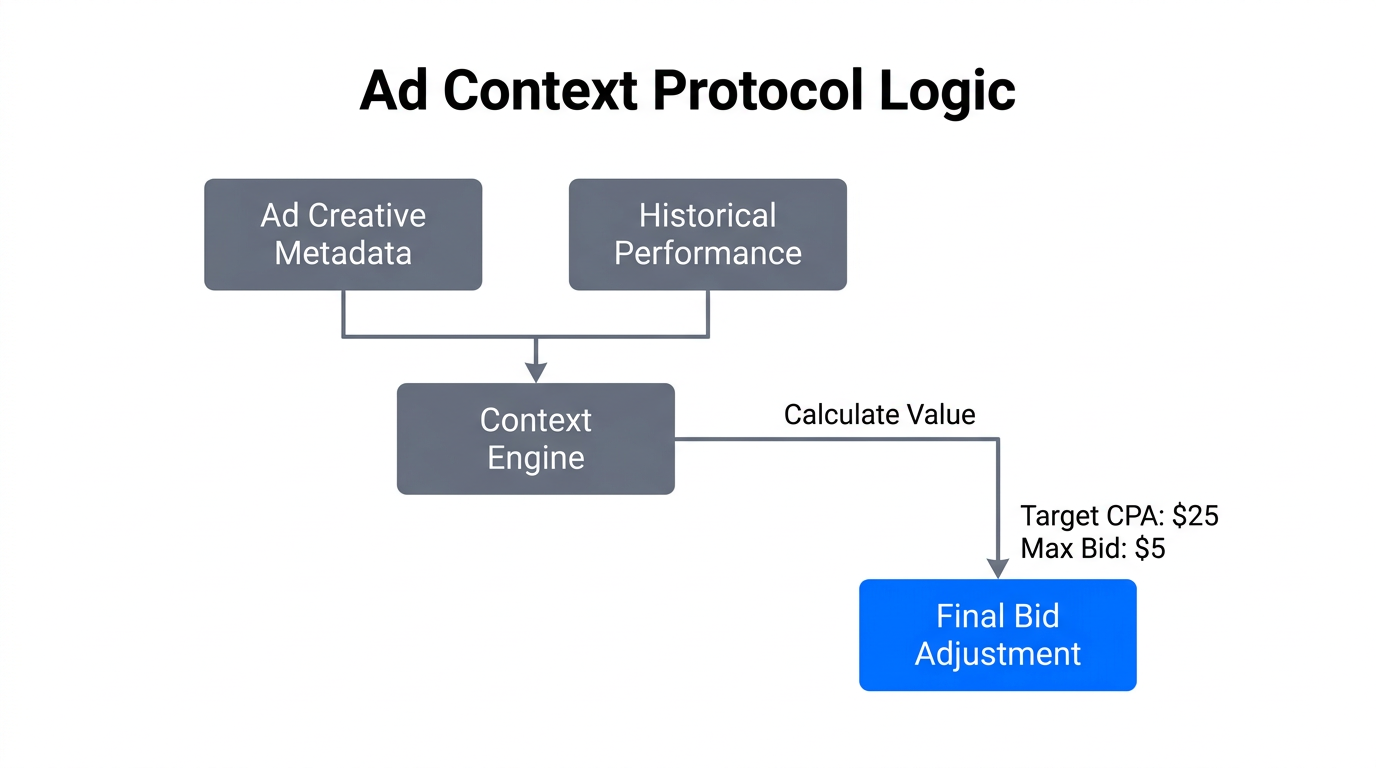
Effective ROAS optimization in 2026 requires more than just looking at a single platform's data. Most brands suffer from "platform silos" where Meta, Google, and TikTok are all claiming credit for the same conversion. The Ad Context Protocol (AdCP) allows OpenClaw agents to unify spend and conversion signals across the entire ecosystem. This is vital for Audience Architecting—preventing the "overlap tax" by excluding recent purchasers across all platforms simultaneously.
When you integrate OpenClaw with your CRM and ad platforms, the Audience Architect skill can detect audience overlap and suggest new "Custom Intent" segments by analyzing real-time search volume trends. This holistic view is what differentiates a basic bot from a true AI budget management system. Research suggests that 26% of ad budgets are typically wasted on ineffective targeting—a gap that AdCP is specifically designed to close.
Common Mistakes: Moving from 'Read-Only' to 'Write' Too Quickly
As tempting as it is to give your new "Lobster" (the OpenClaw mascot) full autonomy on day one, the most successful implementations follow a strict 14-day trust-building phase. One of the biggest mistakes founders make is granting "Write" access before the agent has had time to audit the account. Always start with the Performance Auditor skill in read-only mode.
The Performance Auditor scans your accounts for structural issues, broken tracking, and low-quality scores without making changes. Only once the auditor's "Health Score" remains stable should you transition to active OpenClaw bid management. For those sourcing high-quality UGC content to fuel these campaigns, using platforms like Stormy AI to find creators ensures that your agents are scaling content that is actually worth the spend.
Conclusion: Implementing Your Autonomous Playbook
Scaling ROAS in 2026 is no longer about human intuition; it is about architecture and protocols. By moving away from legacy scaling rules and embracing agentic frameworks like OpenClaw, you can build a self-healing ad account that protects your budget while you sleep. Start by deploying a Performance Auditor, connect your pacing alerts to Telegram, and use the Ad Context Protocol to unify your signals. The future of growth is autonomous—it’s time to let the agents take the wheel.