In 2026, the marketing landscape is no longer about who has the largest headcount, but who has the most efficient OpenAI growth framework. As we’ve seen over the last decade, human nature tends to overestimate risk and underestimate opportunity. Just as Jeff Bezos once thought Amazon might only reach $100 million in revenue, many modern founders are underestimating the sheer scale of the AI-led labor market. We are currently witnessing a shift from Software-as-a-Service (SaaS) to AI-as-a-Service, where the product isn't just a tool, but the labor itself.
The $10 Trillion Labor Opportunity: Why AI is Bigger Than Cloud
 34:20
34:20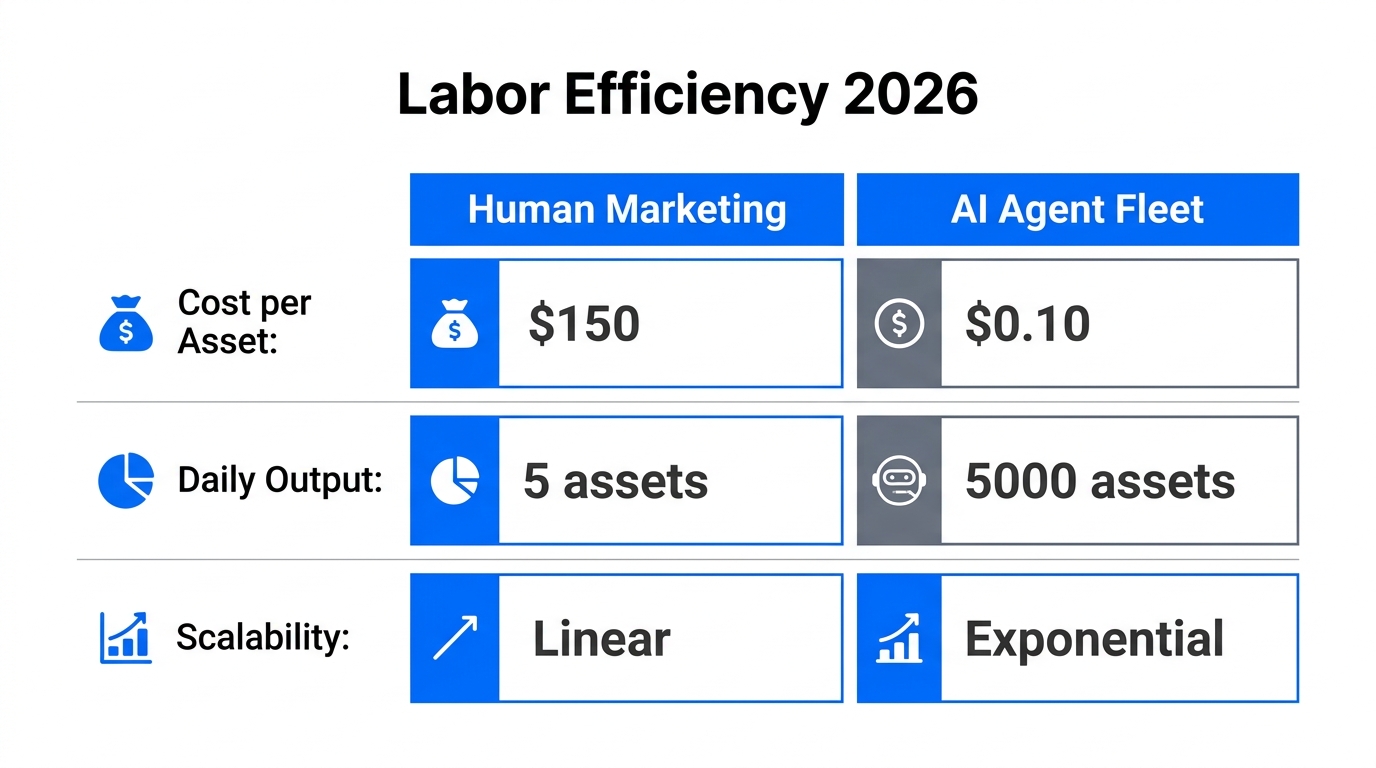
To understand the AI marketing strategy of 2026, we must look at a seminal insight from Pat Grady, a partner at Sequoia. In a recent breakdown of the technological waves, Grady pointed out that while the cloud market was massive—exceeding the $350 billion legacy software market—AI is poised to be significantly larger because it doesn't just replace software; it eats into the $10 trillion global labor market.
Historically, software was a tool that a human used to do work. In 2026, AI agents for growth are the workers. This transition is fundamental to scaling customer acquisition with AI. When you move from buying a seat in a CRM to buying the output of a sales sequence, you are no longer constrained by the speed or cost of human hiring.
| Era | Core Delivery | Economic Impact | Primary Constraint |
|---|---|---|---|
| Software 1.0 | CD-ROMs / Local Servers | Static Productivity | Physical Distribution |
| Software 2.0 (Cloud) | SaaS / Subscriptions | $400B+ Market | Human Labor to Operate |
| AI-Led Growth (2026) | Autonomous Agents | $10T Labor Market | Compute & Strategy |
"AI doesn’t just take share of the existing software market; it expands the market by doing tasks that were previously too expensive to hire a human for."
The Uber Effect: Expanding the Addressable Market
36:00A common mistake in scaling customer acquisition with AI is sizing the market based on current human-led processes. As Bill Gurley famously argued in his How to Miss by a Mile analysis of Uber, disruptors don't just take a piece of the pie—they explode the size of the pie. Uber didn't just compete with taxis; by being more convenient and cheaper, it unlocked use cases that never existed before, like people selling their cars entirely because on-demand transport became a ubiquitous utility.
In 2026, OpenAI for business growth works the same way. You might not have hired a full-time research assistant to vet 5,000 influencers manually, but you will pay an AI agent to do it for $50. This is the market-expander force of AI. When the price point of a high-value task drops by 99%, the frequency of that task increases by 100x. This is how brands are scaling faster than ever before using platforms like Stormy AI to automate creator discovery and outreach at a scale that was physically impossible for a human team.
Buying the "Park Avenue" of Startups
14:20When implementing an AI marketing strategy in 2026, valuation and cost often scare off the timid. However, as Josh Kushner of Thrive Capital has noted, in the real estate world, you can't really overspend on Park Avenue. The best assets—whether it's OpenAI, Cursor, or digital Manhattan assets like Bitcoin—tend to outperform everything else because they are the foundation upon which the rest of the industry is built.
For a growth lead, this means investing in the "Park Avenue" tools of the AI stack. Don't settle for the seventh-best tool because it’s cheaper today. In the future of marketing labor, the winner-take-most dynamics of AI mean that the highest-quality models and agents will deliver 10,000x the value of mediocre alternatives.
The 'Intermittent Fasting' Model of AI Adoption
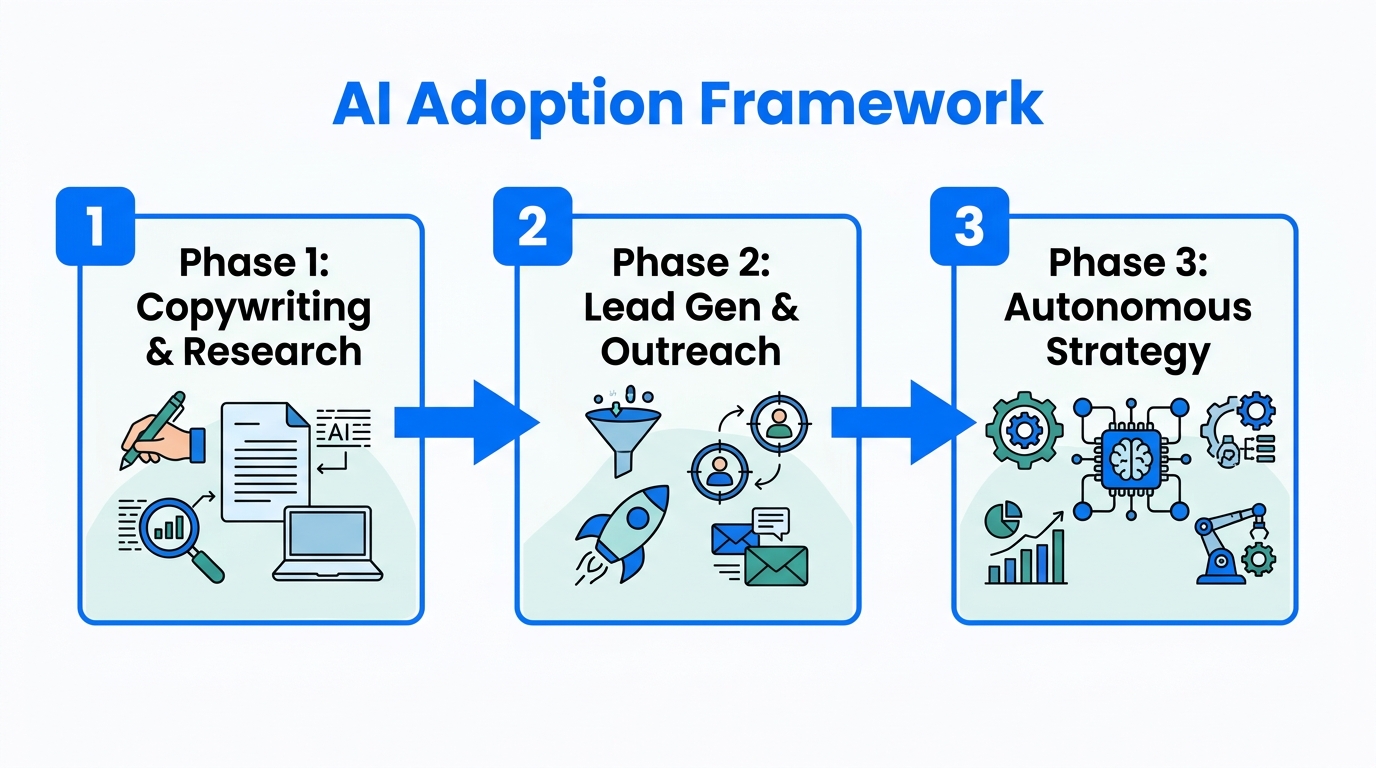
The future of marketing labor is moving so fast that "AI whiplash" is a real threat to productivity. In 2026, the most successful growth teams use an intermittent fasting model for learning. Instead of constantly reacting to every new model drop or X/Twitter demo, they batch their learning.
- Just-in-Time Learning: Only deep-dive into a new tool (like the latest Claude or OpenAI agent) when you have a specific bottleneck to solve.
- AI Hack Weeks: Dedicate one week per quarter to "thinking time" where you clear your calendar and rebuild one core workflow from scratch using tools like Make.com or the latest tech.
- Avoid the Noise: Ignore the "intellectual jacking off" of constant demo-watching and focus on deploying agents that solve revenue-generating problems.
"The risk of ruin isn't losing money; it's losing the ability to evolve your labor model while your competitors are running at 100x your speed."
The AI-Labor Audit: A 2026 Playbook
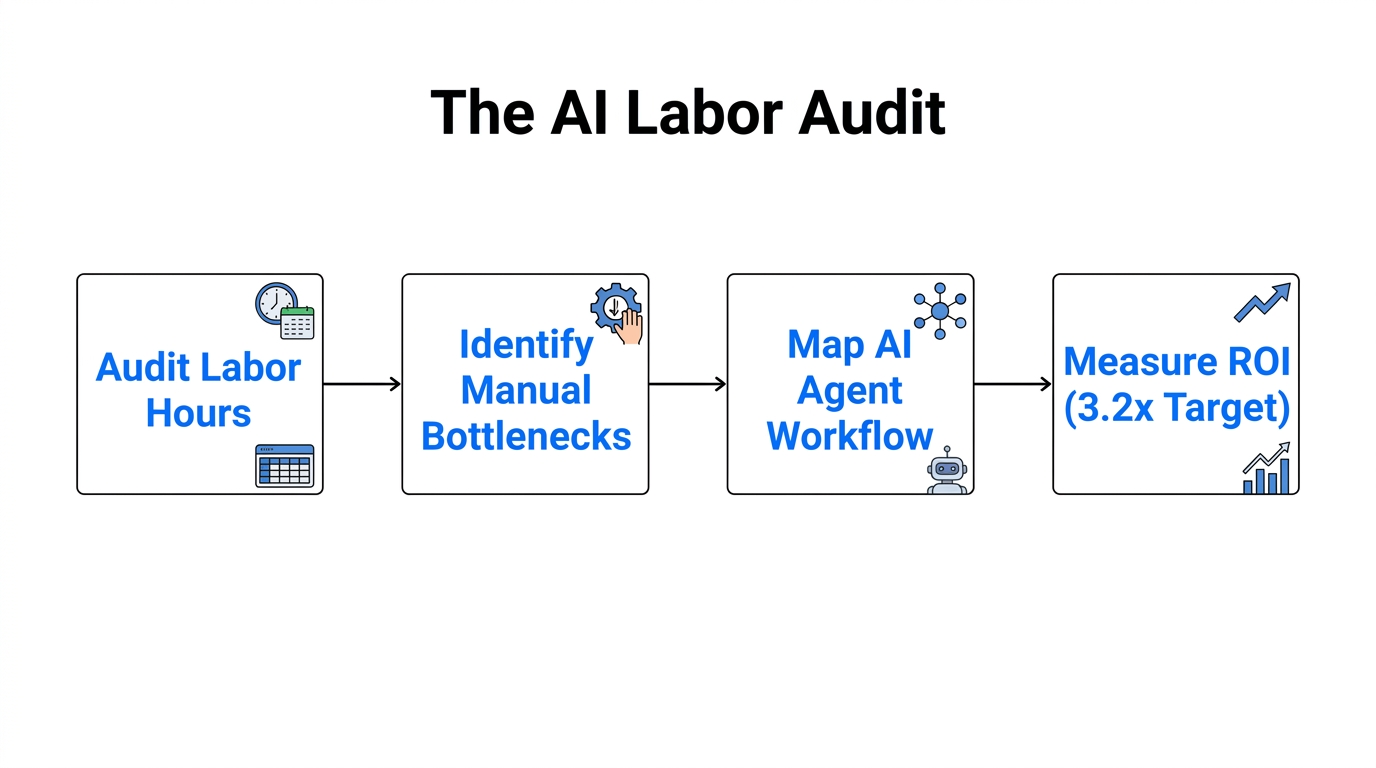
To truly leverage OpenAI for business growth, you must perform a radical audit of your current headcount and growth bottlenecks. The goal is to identify tasks that you previously wouldn't have hired a human for because the ROI was too thin, but which an AI agent for growth can now execute profitably.
Step 1: Identify Low-Leverage, High-Volume Tasks
Look at your current stack. Are you using Meta Ads Manager or TikTok Ads Manager? If so, how much human time is spent on creative testing, caption writing, and creator outreach? These are your first targets for AI-led labor replacement.
Step 2: Deploy Autonomous Agents
In 2026, we are moving beyond simple automation (Zapier) to autonomous agents. For example, instead of a VA manually searching for partners, an AI agent on Stormy AI can discover creators, analyze their audience quality, and send hyper-personalized outreach while you sleep. This is the OpenAI growth framework in action: replacing a $40,000/year role with a $100/month agentic workflow.
Step 3: Shift Budget from Headcount to Compute
As you scale, your AI marketing strategy should shift its P&L. Instead of a growing payroll, you should see a growing "compute and API" budget. This is infinitely more scalable because compute doesn't require benefits, doesn't quit, and works 24/7.
Conclusion: Scaling into the Unknown
As we navigate this year, remember the lesson of the Bessemer Anti-Portfolio: even the smartest people in the world miss the biggest opportunities because they think too small. They sized Shopify at a $400 million exit; it became a $140 billion titan. They sized the taxi market at $100 billion; Uber made it a trillion-dollar industry.
Don't make the same mistake with the future of marketing labor. The current $10 trillion labor market is being re-indexed by AI. By using an OpenAI growth framework and deploying AI agents for growth today, you aren't just saving money—you are building a fundamentally different type of company that can scale at the speed of thought. Whether you are managing Google Ads or searching for the next big UGC creator, the winner of 2026 is the one who embraces the "digital Manhattan" of AI labor early and with total conviction.