In the high-stakes world of SaaS, most founders are obsessed with the top of the funnel. They spend millions on Google Ads and aggressive acquisition, only to watch their revenue bleed out the bottom. But in 2026, the game has changed. The most significant growth story of the decade isn't about how many users signed up—it’s about how many stayed. OpenAI recently crossed the $10 billion Net Recurring Revenue (NRR) milestone, doubling its valuation in record time. The secret? A retention curve that transformed from a leaky bucket into a compounding engine, skyrocketing from 60% to an unprecedented 90% one-month retention.
The Heartbeat of SaaS: Decoding OpenAI’s 2026 Retention Curve
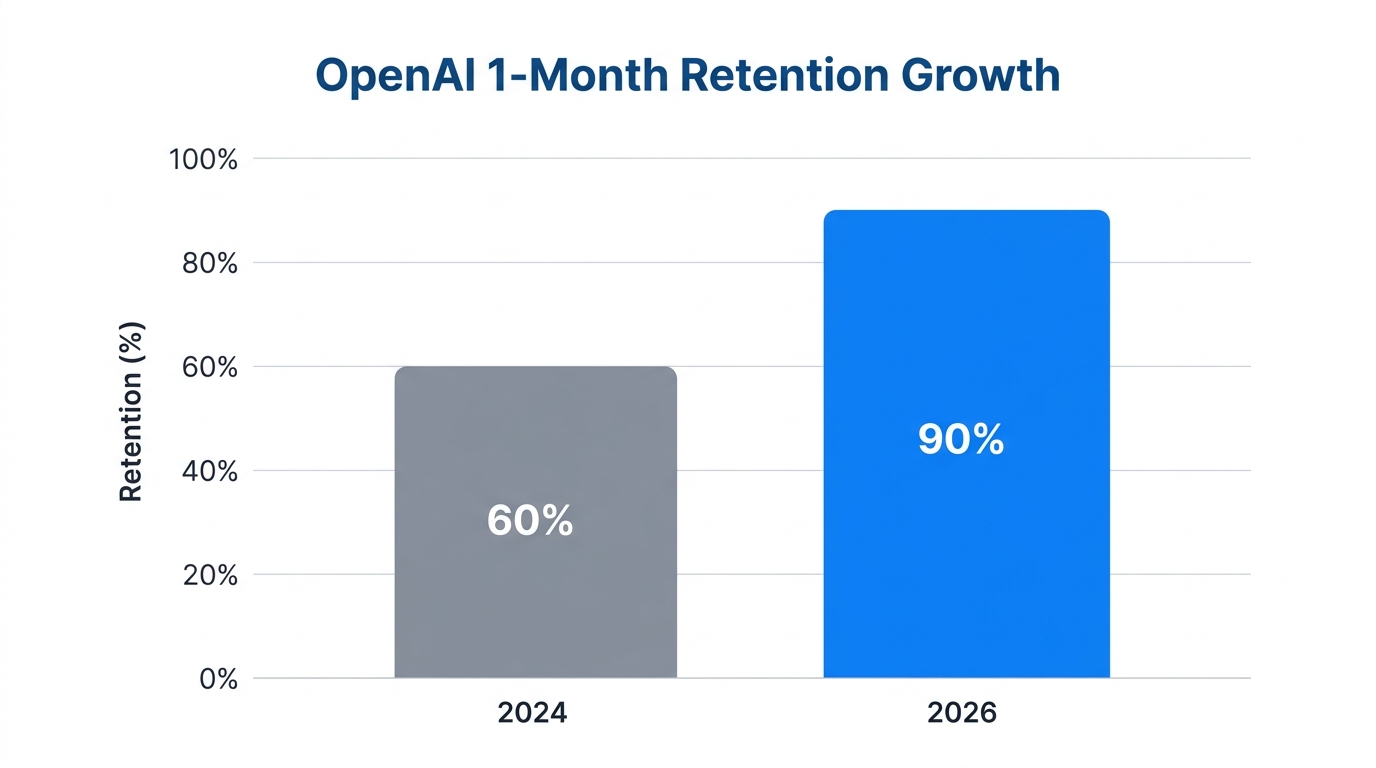
To understand the OpenAI growth strategy, you have to look at the "heart monitor" of the business: the retention curve. Two years ago, OpenAI’s one-month retention sat at roughly 60%. While impressive for most, it meant that 40% of new users were churning after their first month. For a product-led growth (PLG) company, that is a dangerous trajectory. However, by the start of 2026, they hit a 90% one-month retention rate, outperforming even legacy giants like YouTube, which long held the gold standard of 85% [source: ProfitWell Retention Study].
OpenAI’s six-month retention is now trending toward 80%. This isn't just a sign of a popular tool; it's the signature of a product that has achieved deep functional utility. Users no longer "try" ChatGPT; they integrate it into their daily workflows, much like they would use Notion or Slack. This shift is the primary driver behind the OpenAI revenue model reaching $10B NRR—a 2x increase since the end of 2024.
"OpenAI is the Facebook of this current generation. We are going to look back and wonder why we didn't buy the stock when it was only valued at $60 billion."
The Step-by-Step Guide to Cohort Analysis and 'Magic Moments'
Learn how users find immediate value through product magic moments for better retention.
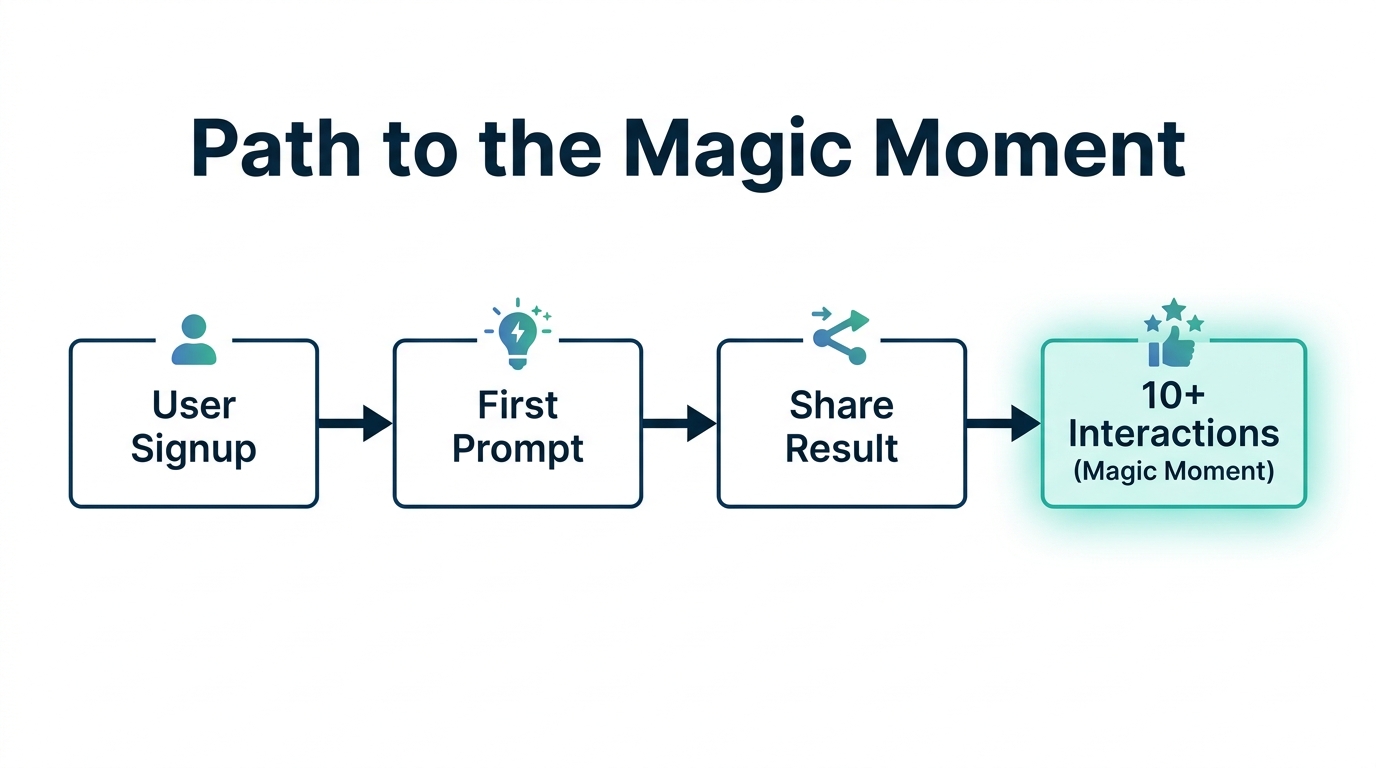
To replicate OpenAI's success, growth marketers must master product-led growth metrics beyond simple churn. You need to identify the "Magic Moment"—the exact action a user takes that correlates with long-term retention. Using Mixpanel or Amplitude, you can break down your user base into cohorts to see where the drop-off happens.
Step 1: Identify the Day-1 Drop-Off
If your curve looks like a steep cliff in the first 24 hours, your onboarding is broken. OpenAI fixed this by moving from a blank chat box to proactive suggestions and specialized GPTs. They reduced the cognitive load required to find value. In 2026, if a user doesn't see value within the first 60 seconds, they are gone.
Step 2: Find the Inflection Point
OpenAI discovered that users who interacted with more than three distinct features (e.g., image generation, coding, and web search) had a 70% higher LTV. Once you find this magic moment, your entire marketing and product experience should be engineered to push users toward that specific behavior.
| Retention Phase | 2024 Benchmark | 2026 Best-in-Class (OpenAI) | Focus Action |
|---|---|---|---|
| One-Month | 55-65% | 90% | Aha! Moment realization |
| Six-Month | 30-40% | 80% | Workflow Integration |
| Annual NRR | 110% | 150%+ | Expansion & Upsell |
SaaS Retention Benchmarks 2026: Why Hype is a Leaky Bucket
Discover the surprising retention statistics and benchmarks driving OpenAI's massive growth.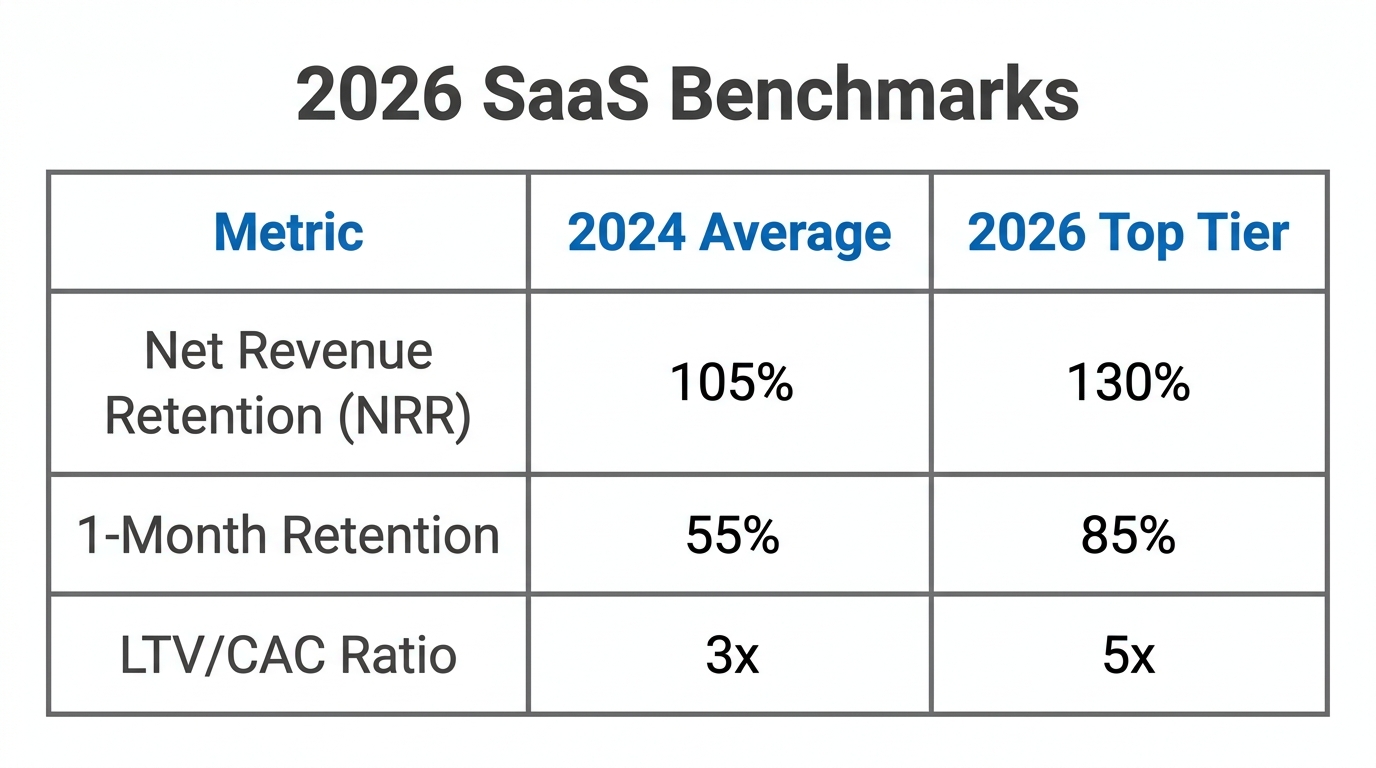
In 2024, many AI startups survived on hype. In 2026, the market has matured. SaaS retention benchmarks have shifted because users are more discerning about their software budgets. You cannot achieve $10B NRR by simply acquiring users; you must maximize how to increase NRR through expansion and multi-seat licensing.
OpenAI’s strategy involved moving from "Rational Cold" metrics—pure efficiency and cost-cutting—to "Rational Warm" product design. They built a fatherly, influential presence in the tech ecosystem, much like the leadership style of Les Schwab. They didn't just provide a tool; they provided a partnership that made users feel more capable. When your product makes the user better at their job, the cost of switching becomes too high to contemplate.
"If you are not part of the solution, there is good money to be made in prolonging the problem—but the real wealth is built by the people in the arena actually solving it."
Leveraging UGC and AI for Sustainable Acquisition
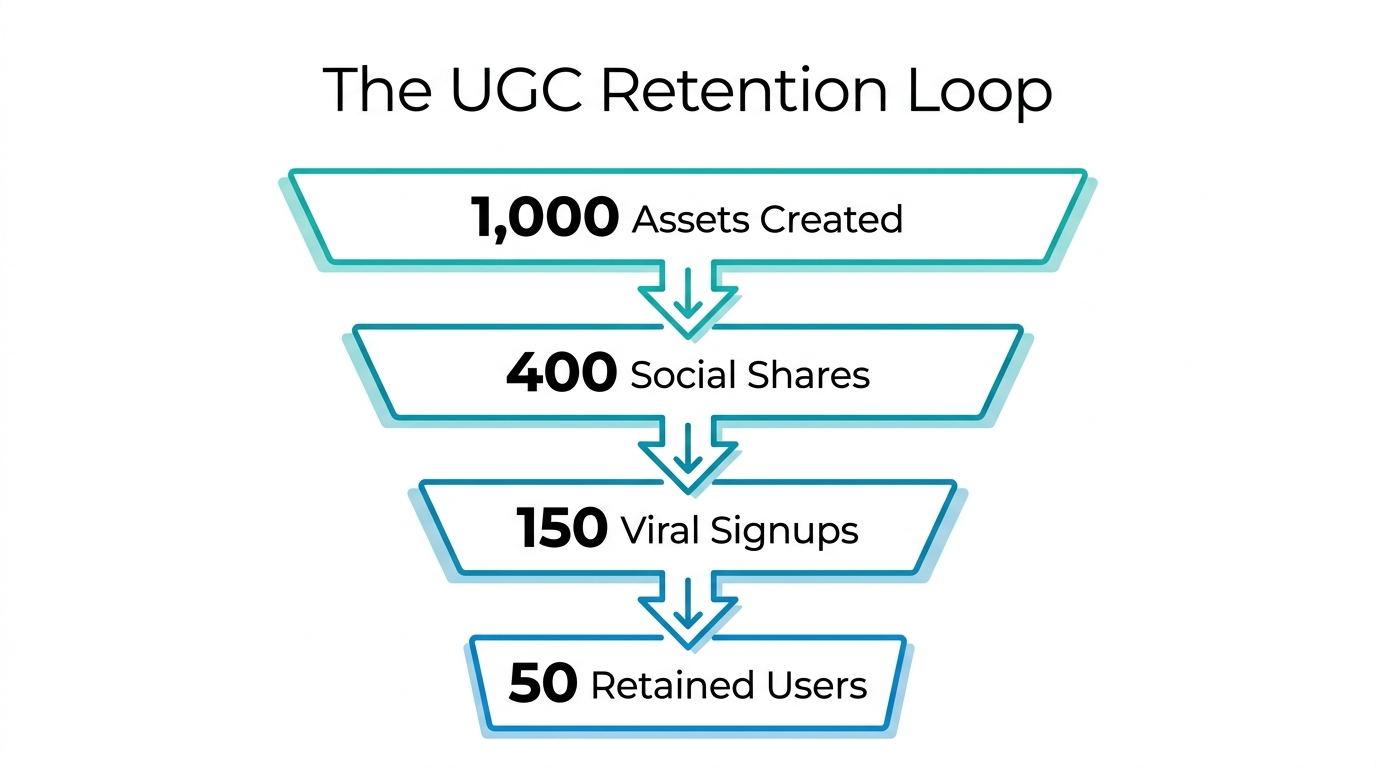
While retention is king, you still need a steady stream of high-quality cohorts to feed the engine. In 2026, traditional ads are often ignored. Modern growth teams are turning to UGC (User-Generated Content) and creator partnerships to find high-intent users. Platforms like Stormy AI streamline this process by allowing brands to discover creators across TikTok and YouTube who already have the trust of your target audience.
By using Stormy AI to source creators who demonstrate your product’s utility, you bring in users who already understand the value proposition. This leads to higher day-one retention because the education happens before the sign-up. Pair this creator-led acquisition with a tool like Klaviyo for automated re-engagement, and you have a growth stack that mimics the OpenAI model.
The 2026 Playbook: Functional Utility is the Only Moat
Analyzing the unprecedented journey of OpenAI reaching ten billion dollars in revenue.OpenAI’s path to $10B NRR wasn't accidental. It was the result of a ruthless focus on product-market fit over pure acquisition. By moving from a 60% retention rate to 90%, they essentially stopped the leak in their bucket, allowing every dollar spent on growth to compound infinitely. For SaaS founders in 2026, the lesson is clear: don't be the "observer" or the "consultant"—be the one in the arena building something so useful that it becomes a non-negotiable part of the user’s life.
To start building your own high-retention cohorts, you need to find the right voices to tell your story. Whether you are scaling an app or a B2B SaaS, Stormy AI provides the discovery and outreach tools needed to connect with creators who can drive meaningful, long-term growth.