Sam Altman once famously predicted that the first one-person billion-dollar company is coming. Not long ago, this sounded like Silicon Valley hyperbole. Today, it feels like a mathematical certainty. We have entered the era of "generative business," where the traditional barriers of technical debt and hiring cycles are being dismantled by AI-powered development tools and autonomous agents. The secret isn't just working harder; it is about leveraging a new one-person startup strategy that prioritizes velocity and quantity over the old-school obsession with a single, polished MVP.
The Rise of "Vibe Coding": Speed as the Ultimate Moat
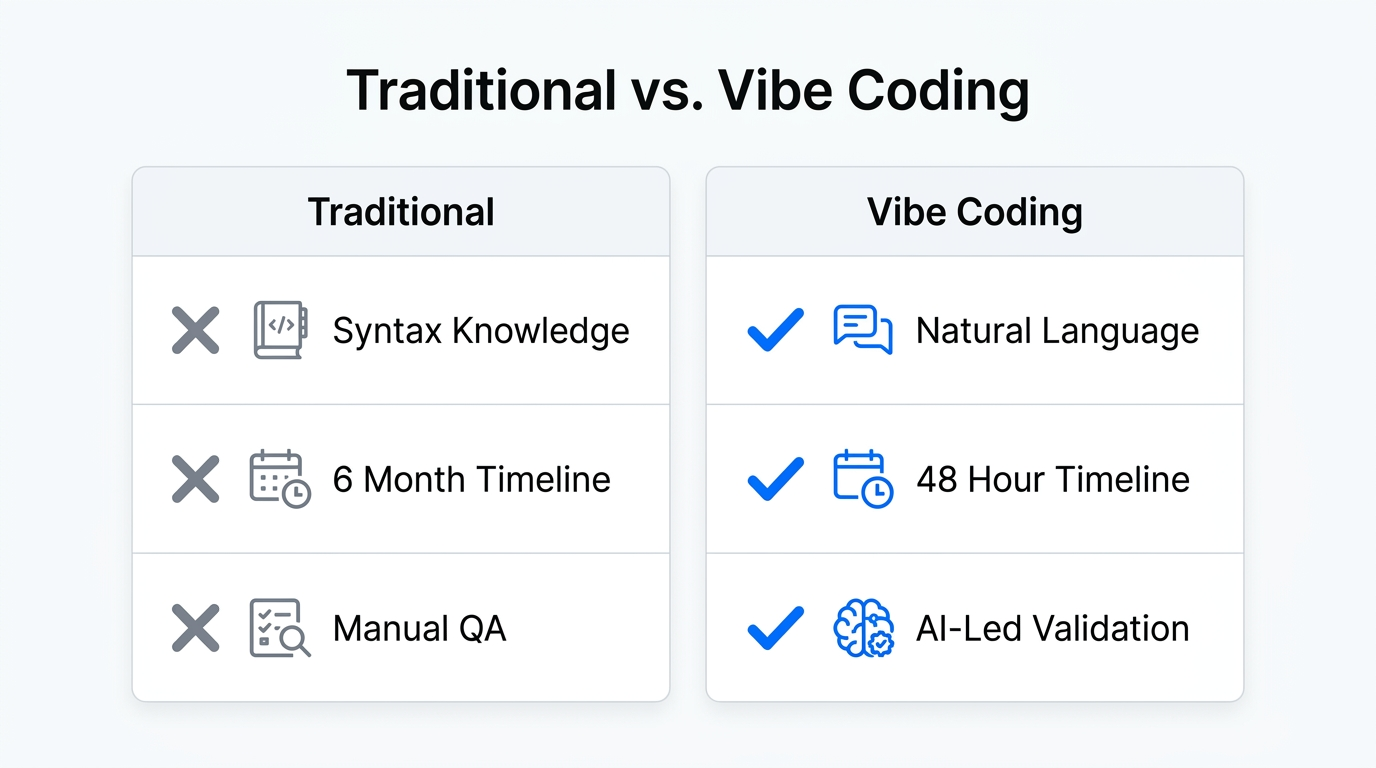
For decades, software development was a game of precision, syntax, and rigorous documentation. Enter "vibe coding." This shift, popularized by the success of tools like Claude Code and Cursor, allows founders to build entire applications by describing their "vibe" or intent rather than writing every line of logic. You are no longer just a coder; you are an architect of prompts.
Vibe coding is the core of modern indie hacker growth. It allows a solo founder to move at the speed of thought. When you don't have to spend three weeks debugging a React component, you can spend those three weeks testing three different business models. This isn't just about efficiency; it's about reducing the cost of failure to near zero. As discussed in recent deep dives on the My First Million podcast, the most successful creators today are those who treat their code as a disposable asset meant to find product-market fit rapidly.
"You don't find purpose, you create it. And in the AI era, you create it by shipping more pots than the competition can even imagine."
Case Study: Pete, OpenClaw, and the OpenAI Acquisition
Perhaps the most striking example of the power of Claude Code for business is the story of Peter Steinberger, an Austrian developer who previously built PSPDFKit, the gold standard for PDF libraries. After selling a majority stake for an estimated $100 million, Pete didn't retire to a beach. Instead, he entered a prolific building phase that eventually led to OpenClaw (formerly Claudebot).
Pete's approach was revolutionary. He wanted to give AI "God Mode"—the ability to control apps, send messages, and manage accounts locally on a computer. By using AI to build AI, he created one of the fastest-growing projects on GitHub. The result? A massive acquisition by OpenAI for a sum speculated to be in the hundreds of millions, if not billions. Pete's story proves that a single, highly leveraged individual can build technology that the world's largest AI companies find indispensable.
| Feature | Traditional Startup | One-Person AI Startup |
|---|---|---|
| Team Size | 10–50 employees | 1 founder + AI Agents |
| Development Time | 6–12 months | 2–4 weeks |
| Iterative Loops | Slow (Sprint cycles) | Instant (Vibe coding) |
| Overhead | High (Office, payroll) | Low (API costs) |
The Quantity Over Quality Principle: Why You Need 70+ Projects
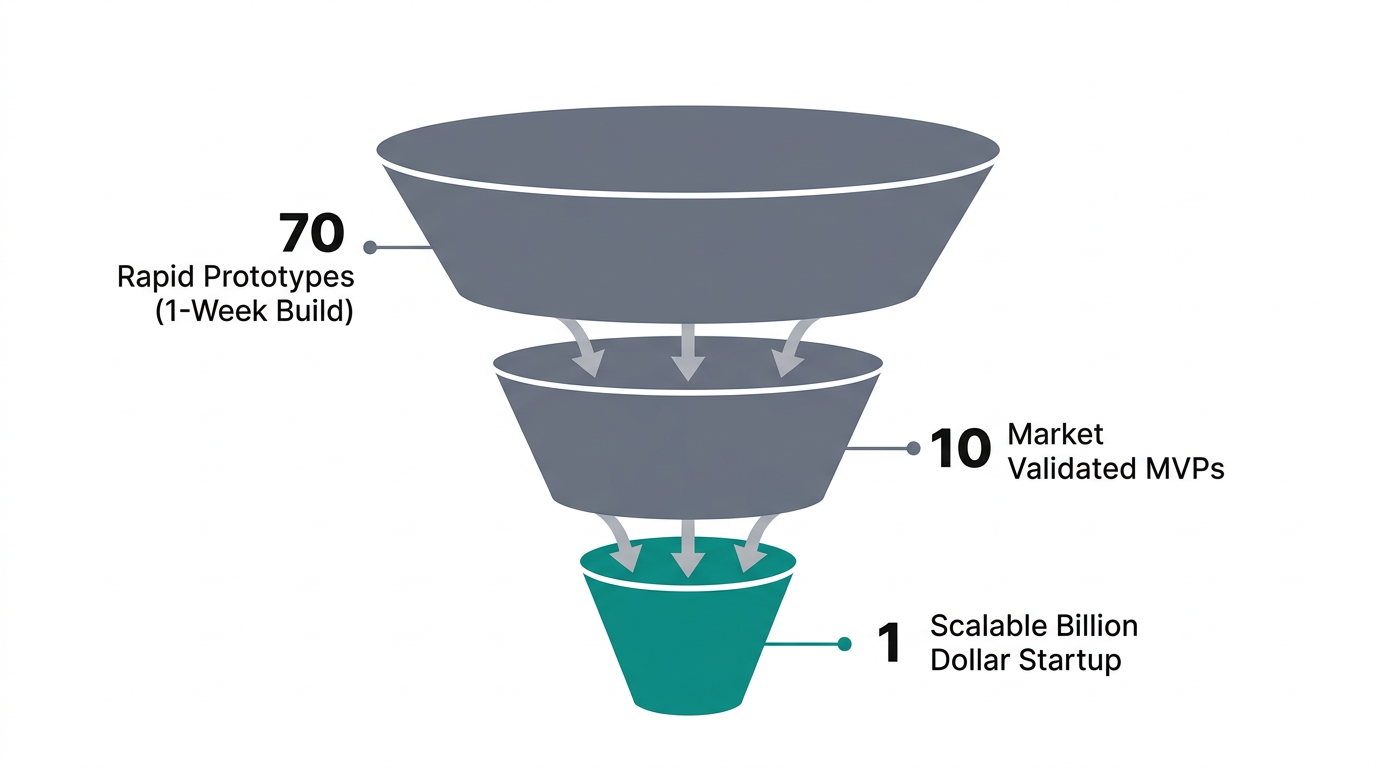
One of the biggest traps for new entrepreneurs is the desire for perfection. However, data from the most successful solo founders suggests a different path. Peter Levels, perhaps the most famous indie hacker in the world, has a hit rate of only 5%. Out of over 70 projects he has shipped, only four—including Nomad List and Remote OK—became major revenue generators.
This follows the famous "Pottery Experiment" logic detailed in the book Art and Fear: a group of students graded on the quantity of pots they produced ended up making higher quality work than the group graded on a single "perfect" pot. By making more "pots," you remove your internal filters and gain the skills necessary to eventually create a masterpiece. Christina Cacioppo, CEO of the multi-billion dollar company Vanta, followed a similar path, building over 25 mini-projects before finding the one that scaled into a security compliance giant.
"The function of the overwhelming majority of work is simply to teach you how to make the small fraction of your art that soars." — Art and Fear
The AI Agent Automation Playbook: Scaling Without a Team
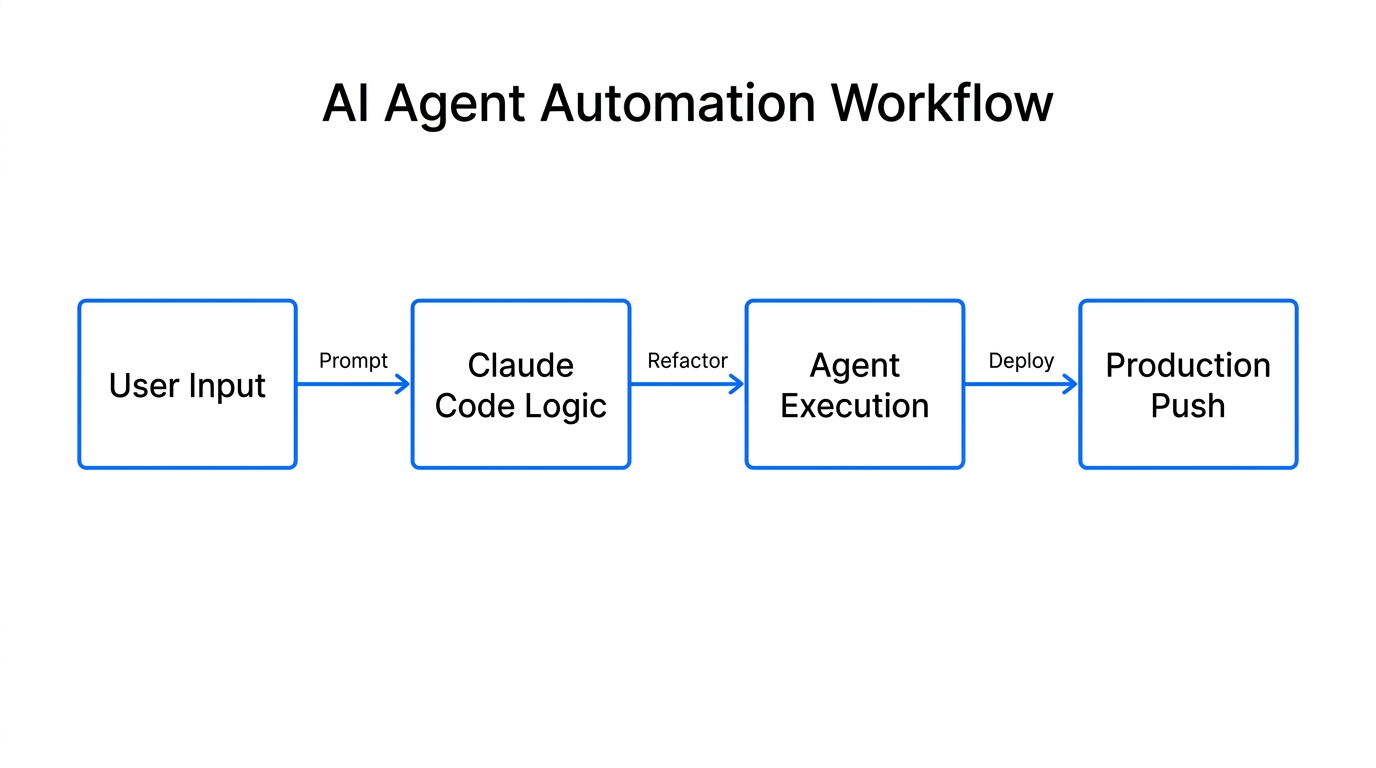
If you want to reach a billion-dollar valuation as a solo founder, you cannot spend your day answering support tickets or manually sourcing leads. You must deploy AI agent automation. These agents act as your "digital employees," handling repetitive tasks while you focus on high-level strategy and vision.
Step 1: Automate Content and Growth Loops
Growth is the hardest part of any one-person startup strategy. Modern founders use AI agents to handle the top-of-funnel marketing. For instance, platforms like Stormy AI can help source and manage UGC creators at scale, allowing you to find influencers who fit your niche without manual searching. By automating the outreach and vetting process, you can maintain a massive marketing presence while you continue to build product.
Step 2: Implement Autonomous Reporting
Your internal operations should be just as automated as your marketing. Use AI agents to monitor your Slack or database and provide proactive updates. A well-configured AI agent can analyze sign-up trends using tools like PostHog, identify bugs, and even "fire" other underperforming scripts to optimize itself. This creates a self-healing business infrastructure that requires minimal human intervention.
Step 3: Leverage the Modern Growth Stack
Pair your AI agents with a robust ecosystem of tools to handle the heavy lifting of a global business:
- Payments: Use Stripe to handle global transactions and subscriptions seamlessly.
- Communication: Use Beehiiv for high-scale newsletter growth and automated sponsorship management.
- Workflow: Connect everything via Zapier or Make to ensure data flows between your AI agents and your CRM.
The Mindset of the Billion-Dollar Soloist
Building a one-person startup isn't just a technical challenge; it's a mental one. You must be comfortable with the "failed" 95% of your projects. You must also be wary of the "Guru Trap." Many self-help books, from Think and Grow Rich to modern monk-podcasters, rely on manufactured backstories. As an entrepreneur, your focus should be on the art, not the artist. Whether a strategy comes from a flawed source or a flawless one, its value is determined only by its results in the marketplace.
Focus on persistence and grit. Research from Angela Duckworth has shown that grit is a higher predictor of success than IQ. In the era of AI, where anyone can generate code, the winner is the person who refuses to stop shipping. You are building the "oven that burns hotter," a brain and a business capable of processing ideas at a frequency others find exhausting.
"You don't need to be right 100 times. In business, you only need to be right once, and the AI allows you to fail 99 times faster than ever before."
Conclusion: Start Making Your Pots
The path to a one-person billion-dollar startup is paved with 70 "failed" projects, thousands of lines of AI-generated code, and an unshakeable commitment to velocity over perfection. Stop overthinking your first idea. Use Claude Code for business to build something small today. Use AI agents to automate your reporting. Leverage tools like Stormy AI to find your first 1,000 customers via creators. The tools are here, the cost is low, and the upside is infinite. The only thing left to do is ship.