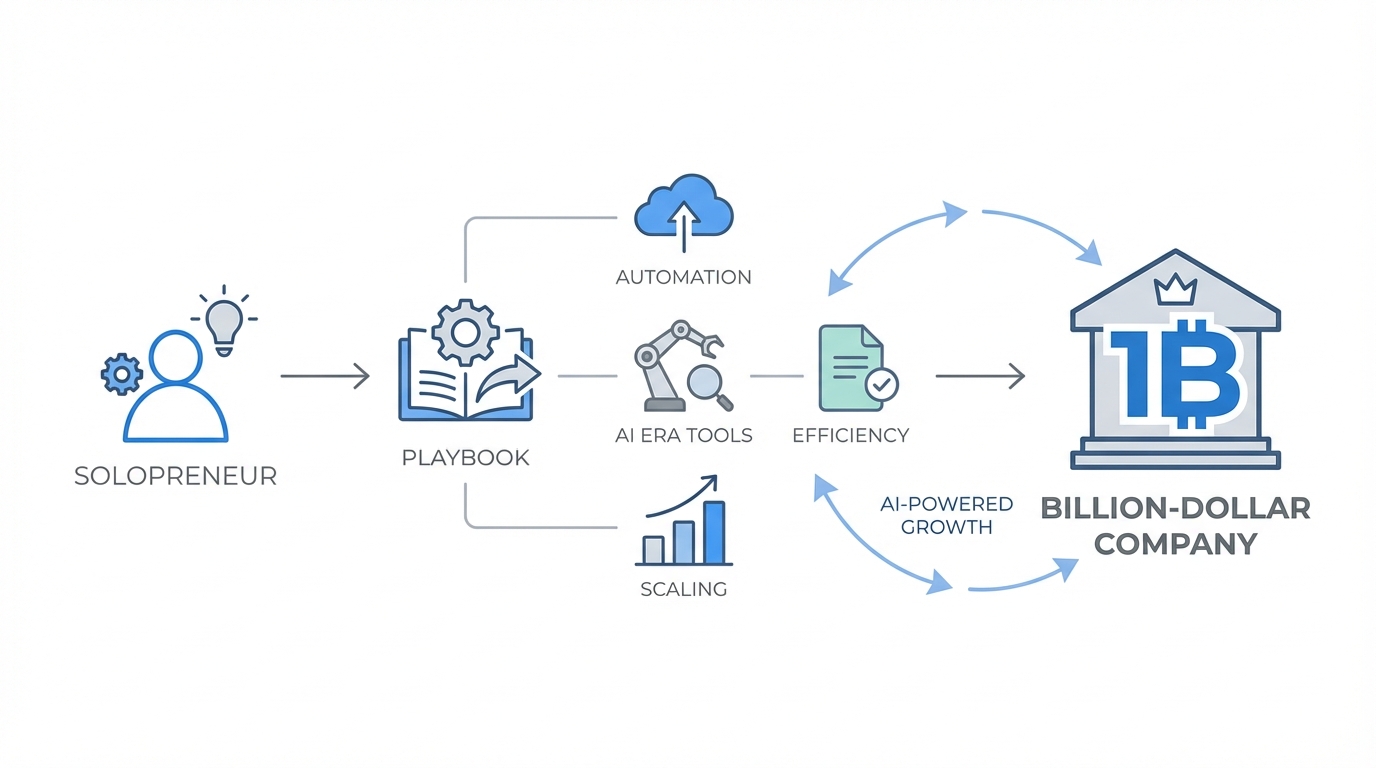
For decades, the standard path to a billion-dollar valuation—the coveted 'unicorn' status—involved hundreds of employees, massive office spaces, and layers of middle management. But a seismic shift is occurring in the venture landscape. Sam Altman, the co-founder of OpenAI, recently sparked a global conversation by predicting the rise of the one-person billion-dollar company. According to Altman, in a widely cited interview, we are rapidly approaching an era where a single founder, armed with a fleet of AI agents and massive compute power, can achieve what used to require a small army. This Sam Altman startup thesis isn't just a provocative thought experiment; it is a blueprint for the next generation of solopreneur leverage.
Unpacking the Sam Altman Startup Thesis

The core of the one-person billion-dollar company concept lies in the radical expansion of individual productivity. Altman noted in a recent interview that his group of tech CEO friends already has a betting pool for the first year we see a solo unicorn. He suggested that 10-person companies with billion-dollar valuations will arrive first, followed shortly by the solo founder giant. This is made possible because we are moving away from traditional 'people-managing-people' structures toward an AI first company architecture. In this model, the founder’s primary role shifts from human resources management to agent orchestration.
As Altman famously put it, the future of startups could simply be "one person and 10,000 GPUs." This implies that the bottleneck for growth is no longer hiring speed or head count, but the availability of compute—often provided by hardware leaders like NVIDIA—and the quality of the founder's prompts and systems. By leveraging models from OpenAI, Anthropic, and other frontier labs, entrepreneurs can now access billions of dollars in R&D with a simple API call, effectively standing on the shoulders of giants to build massive value with zero traditional overhead.
The Fundamental Shift: Managing Agents vs. Managing Employees
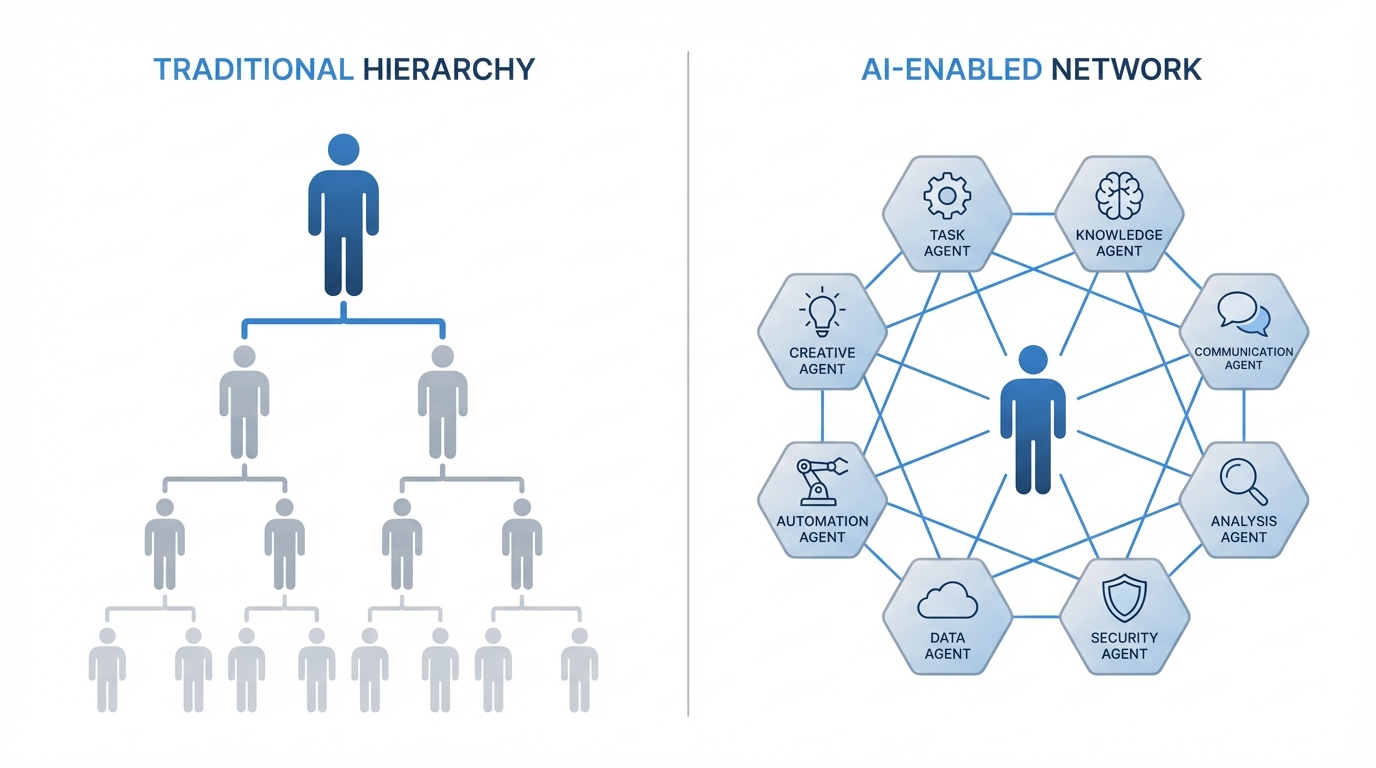
To understand the solopreneur business model of the future, one must recognize the difference between traditional and AI-first organizational structures. In a traditional startup, the founder hires an executive team: a VP of Sales to manage a sales team, a VP of Engineering to manage developers, and a VP of Marketing to manage creatives. This creates a 'people-managing-people' loop that often slows down decision-making and increases burn rates.
In an AI first company, the founder manages autonomous agents. Instead of a human marketing team, the founder deploys agents to handle content creation, SEO, and social media scheduling. Instead of a support department, they deploy LLM-powered systems that handle ticket triage and documentation. This shift allows for instant scaling; an agent doesn't need to be onboarded, doesn't require benefits, and can work 24/7 without burnout. The founder becomes a 'systems architect,' spending their time refining the rules and feedback loops that govern these agents rather than dealing with interpersonal office politics.
The 'New Path' Framework: From Audience to Automation
The old path of building a startup followed a linear, high-risk progression: napkin idea, fundraising from friends and family, hiring a core team, building a product over 12 months, and then launching to see if anyone cared. The one-person billion-dollar company follows a New Path framework that prioritizes distribution and speed over capital and headcount.
Step 1: Start with an Audience
Distribution is the ultimate hedge against failure. Instead of building in a vacuum, modern solopreneurs start by building a presence on platforms like X, TikTok, or Instagram. By sharing insights, data, or startup ideas—similar to the approach used by Idea Browser—the founder validates demand before a single line of code is written. Audience leverage ensures that when the product is ready, there is an immediate feedback loop and a customer base waiting to buy.
Step 2: 'Vibe Coding' and Rapid Prototyping
We are entering the era of the 'Idea Guy' because the barrier to execution has collapsed. With tools like Cursor and LLMs, founders can engage in vibe coding—describing a feature's 'vibe' and functionality to an AI and having the code generated instantly. This allows a solo founder to build a micro SaaS or a functional MVP in a weekend rather than months. The goal is to get a working product into the hands of the audience as quickly as possible to iterate based on real-world usage.
Step 3: Building Community and Automation
Once a product has traction, the focus shifts from a passive audience to an active community. This involves creating private groups or IRL events for 'hardcore' fans who love the brand. Simultaneously, the founder begins automating the fulfillment. If the business is a service, AI agents are used to perform the tasks. If it’s a software product, agents handle the testing, QA, and DevOps using platforms like Supabase for backend management and Netlify for deployment.
The Solopreneur Org Chart: Designing Your Agent Hierarchy
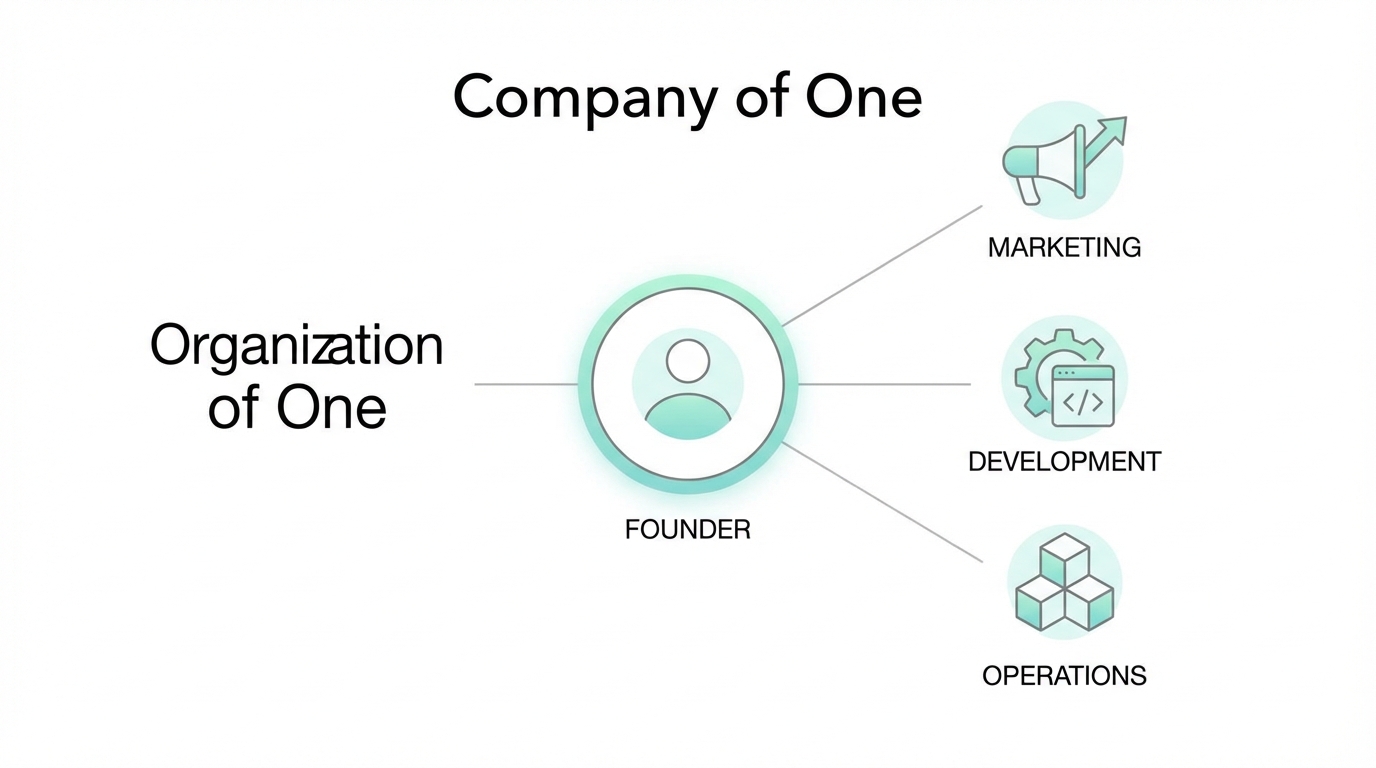
A one-person billion-dollar company still needs to perform the functions of a massive corporation; it just does so through a digital hierarchy. A solo founder's 'org chart' today looks vastly different than it did five years ago. At the top is the Solo Founder, who interacts with a central 'Strategist' LLM that coordinates specialized agents across various departments.
- Engineering Agents: Responsible for code generation, testing, bug fixing, and automated deployments.
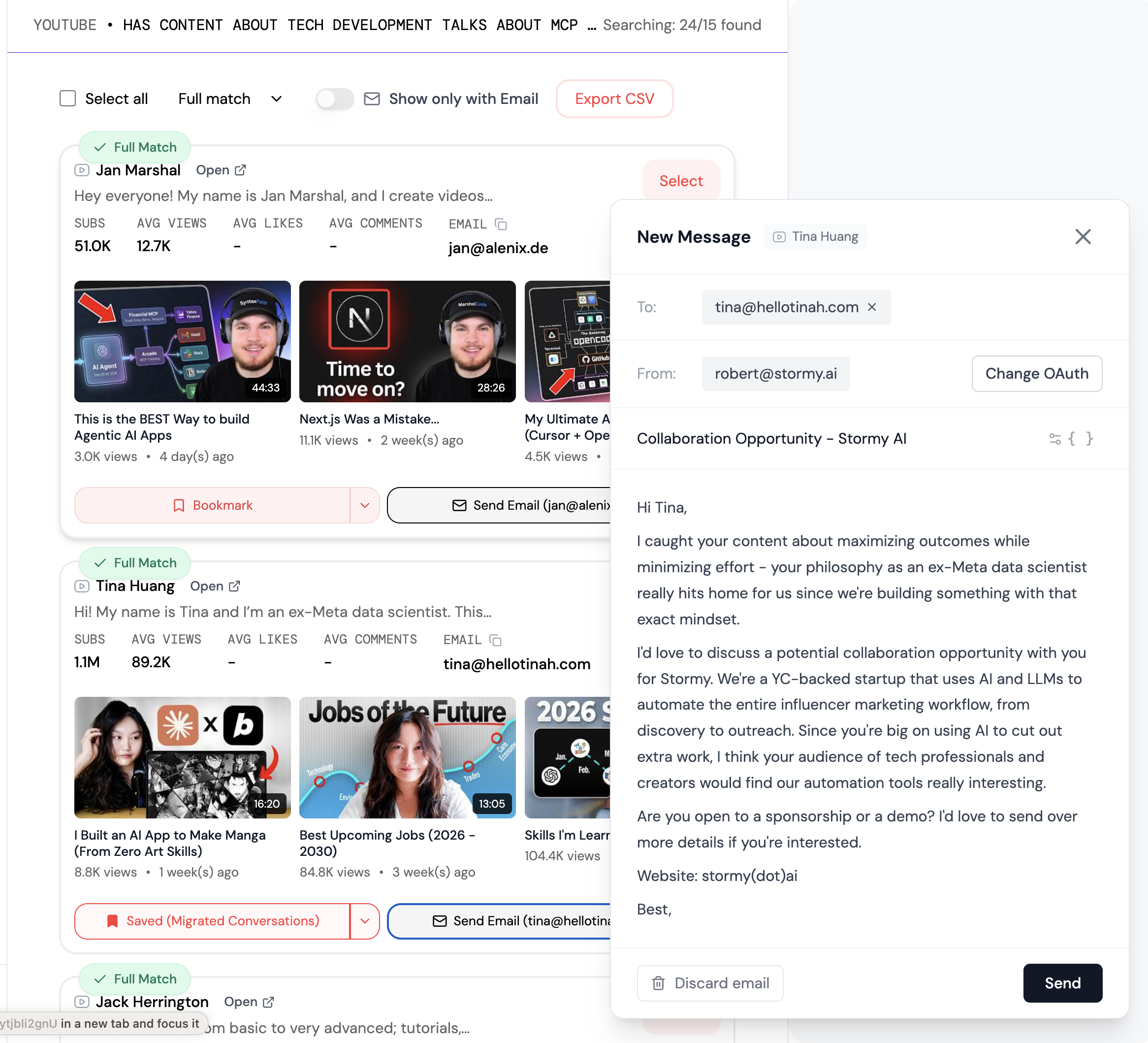
- Marketing & Content Agents: These agents handle SEO, social media management, and ad copy. For founders focused on distribution, platforms like Stormy AI streamline creator sourcing and outreach, providing the human-centric content needed to fuel viral growth while the founder remains solo.
- Sales & Outreach Agents: Managing lead qualification and automated email sequences to close deals without a human sales rep.
- Support & Success Agents: Handling ticket triage and customer documentation 24/7.
- Data Analyst Agents: Processing metrics from Google Ads and internal databases to make real-time pivoting decisions.
By creating this hierarchy, the founder gains code leverage and capital leverage simultaneously. The productivity gain from having agents work 24/7—feeding data, generating content, and processing metrics—is what enables a single individual to reach a valuation previously reserved for corporations with 500+ employees.
Checklist for 'Billion-Dollar' Potential: Is Your Idea Scalable?
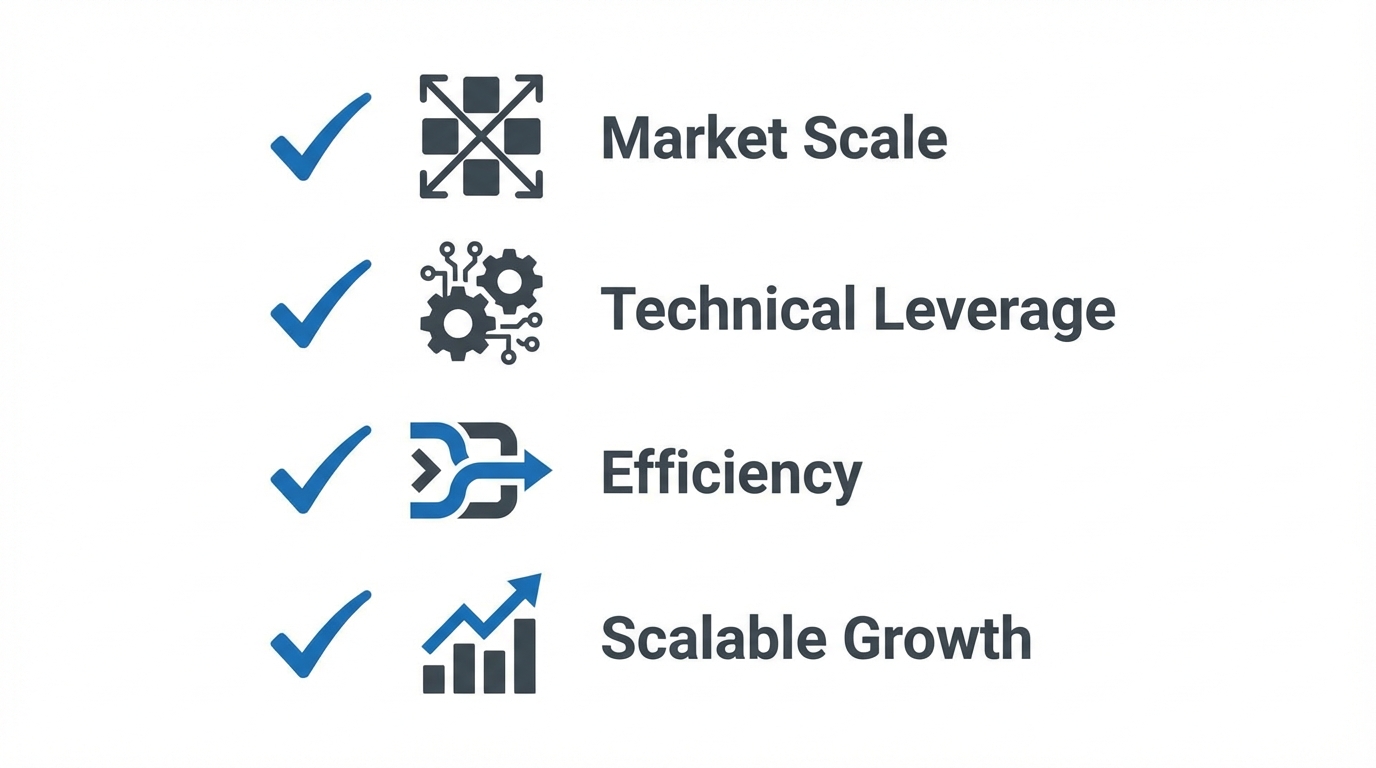
Not every business is suited for the solopreneur business model. To reach a billion-dollar valuation alone, a business must meet specific criteria that allow for infinite leverage without a corresponding increase in human labor. If you are aiming for a solo unicorn, use this checklist to vet your idea:
- Digital Product Focus: Does your product have near-zero marginal cost of reproduction? Digital products, software, and AI-driven services can scale infinitely through platforms like Gumroad or custom SaaS builds. Physical products require logistics and human labor that usually break the solo model.
- Low Regulatory Requirements: High-regulation industries like Healthcare or Fintech often require massive compliance and legal teams. Solo founders should aim for niches with light regulation to avoid being bogged down by paperwork.
- AI Fulfillment: Can the core value of the product be fulfilled by an AI agent? If you need human specialists for every delivery (e.g., high-end legal consulting), the model won't scale to a billion dollars without a team.
- Network Effects: Does the product become more valuable as more people use it? Network effects are the ultimate catalyst for exponential growth, allowing a solo founder to capture a market rapidly once a tipping point is reached.
- Automated Distribution: Are you using high-precision ad platforms like Google Ads or viral social loops to acquire customers without a manual sales team?
Navigating the Timeline: From 2026 to the Solo Giant
When will we see the first one-person billion-dollar company? The consensus among tech leaders like Sam Altman is that the timeline is closer than we think—likely between 2026 and 2028. Currently, we are seeing the rise of Indie Hackers reaching millions in annual recurring revenue (ARR) with zero employees. As LLMs become more 'agentic'—meaning they can not only generate text but also execute complex, multi-step tasks across different software tools—the ceiling for solo revenue will explode.
We are already seeing small teams of 2-3 people hitting valuations in the hundreds of millions by using AI first company principles. The transition to a true solo unicorn requires 'perfect conditions': a high-margin digital offer, a massive pre-built audience, and a highly sophisticated agent stack. While it remains extremely rare today, the technical infrastructure is being laid right now through platforms like Shopify for commerce and OpenAI for intelligence.
Conclusion: The Era of the Individual
The Sam Altman startup thesis represents more than just a financial milestone; it represents the ultimate democratization of solopreneur leverage. In the AI era, the 'One-Person Billion-Dollar Company' is the logical conclusion of software eating the world. By focusing on audience building, mastering agent orchestration, and choosing business models with network effects, the individual founder now possesses the power once held only by massive institutions.
Whether the first solo unicorn arrives in 2026 or 2028, the tools to build it are available today. Start by building your audience, experiment with vibe coding, and look for ways to turn services into software using infrastructure like Stripe for global payments. The era of the 'Idea Guy' who can execute at a global scale is here. It is time to stop managing people and start managing systems. Happy building.