In 2026, the digital storefront is no longer a static catalogue; it is a living, breathing conversational interface. The era of 'search-and-click' is rapidly giving way to 'agentic commerce,' where AI agents find and research products autonomously. For Shopify merchants, the 'gold rush of creativity,' as Shopify VP Vanessa Lee puts it, is being fueled by a shift from broad targeting to deep, 1-to-1 personalization. As Harley Finkelstein, President of Shopify, recently noted, AI is the engine driving the biggest shift in technology since the internet itself. This playbook explores how growth marketers are utilizing Octane AI quizzes and Shopify marketing automation AI to capture the most valuable asset in the modern economy: zero-party data.
The Zero-Party Data Advantage in 2026
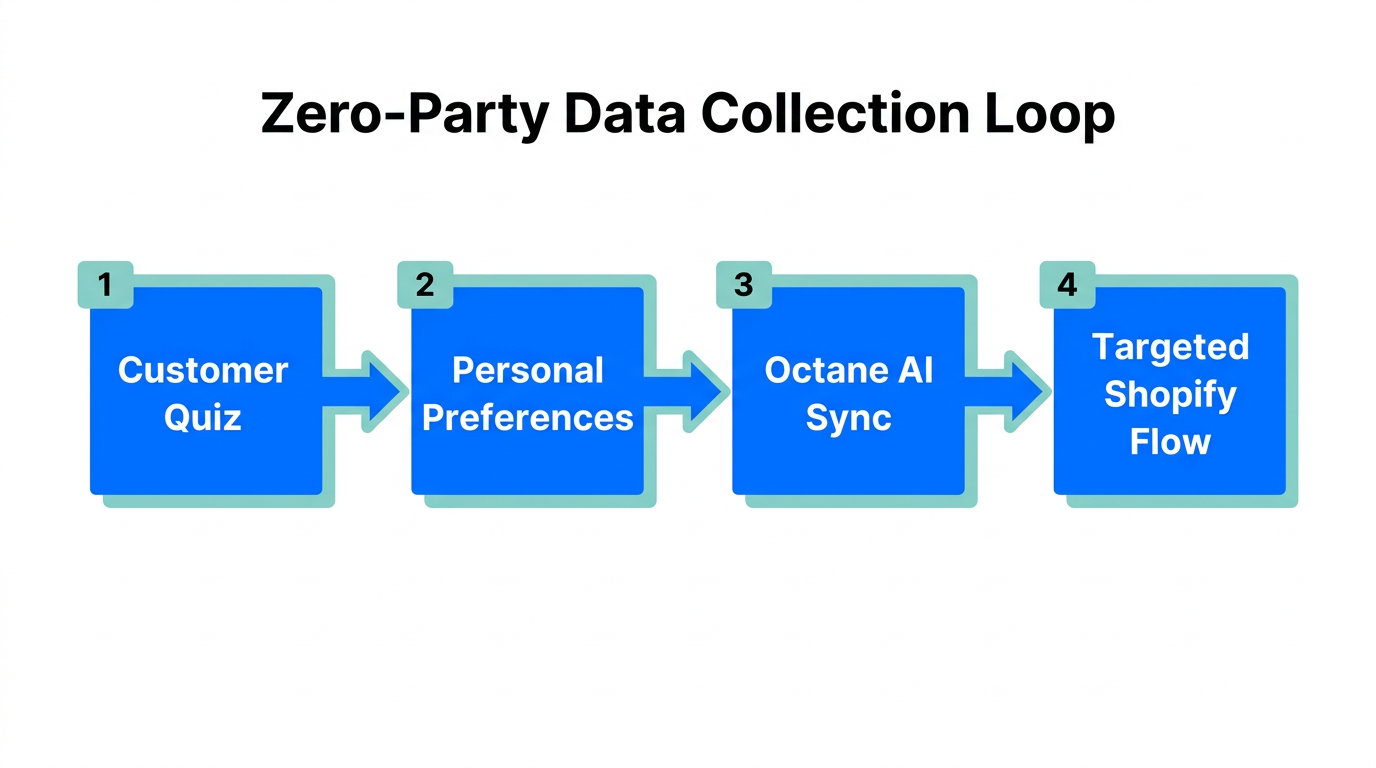
As privacy regulations tighten and third-party cookies remain a relic of the past, the focus has shifted entirely to first-party and zero-party data. Zero-party data is information that a customer intentionally and proactively shares with a brand—their preferences, skin type, flavor profile, or fitness goals. By 2026, 78% of organizations have integrated AI into their marketing functions, according to Shopify's latest data, with the most successful brands using this data to build a competitive 'moat.'
Integrating these data points into your Shopify marketing automation AI workflow allows for a level of precision that was previously impossible. Instead of guessing what a customer wants based on a single click, you are building a profile based on a direct conversation. This shift is critical as AI-driven traffic to Shopify stores has surged 7x since the beginning of last year, making the ability to convert that traffic through personalization a survival requirement.
Playbook: Building Smart Product Discovery Quizzes with Octane AI
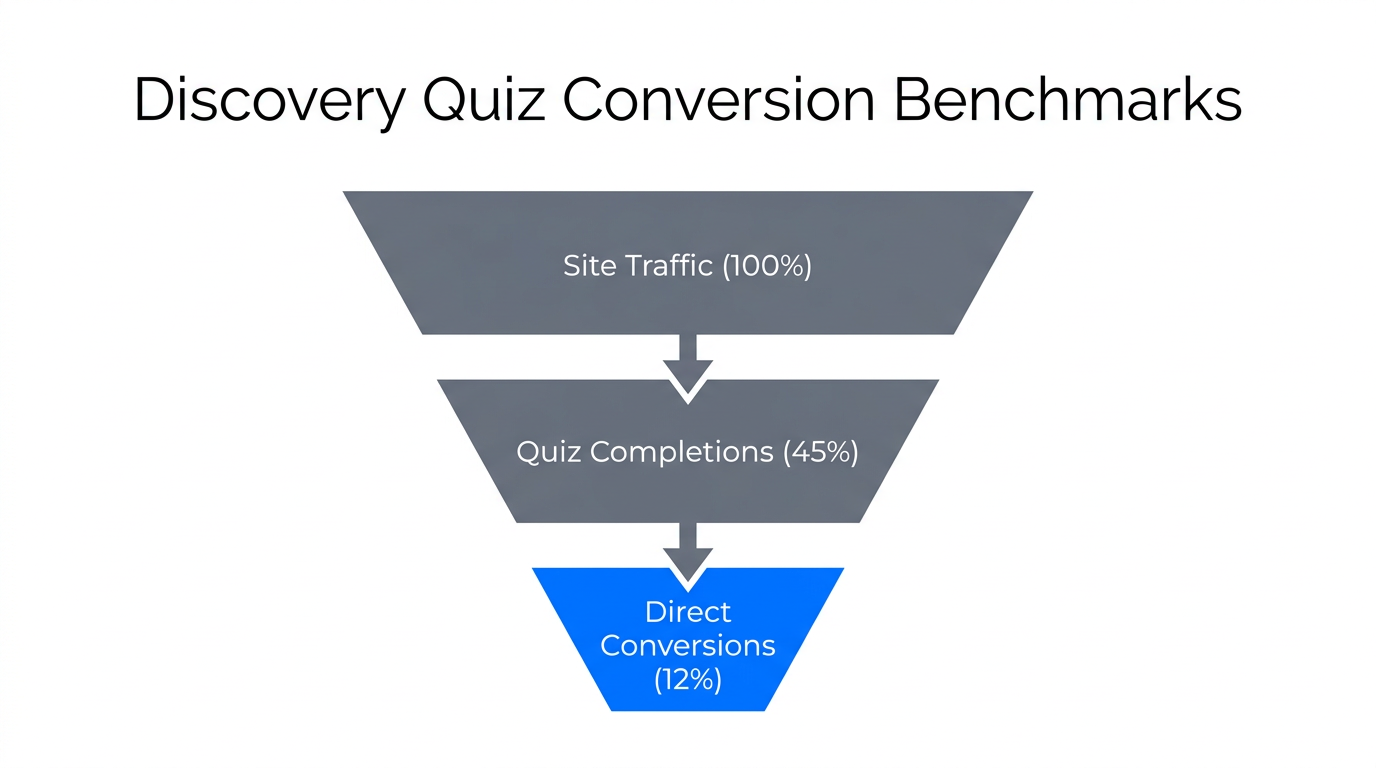
The shortest path to a purchase in 2026 is a conversation. Octane AI has pioneered the use of conversational quizzes that do more than just recommend a product—they gather the data needed to fuel your entire marketing ecosystem. By asking 4-6 targeted questions, brands can reduce 'choice paralysis' and guide users toward the 'Add to Cart' button in seconds.
Step 1: Identify the Persona-Defining Question
Your quiz shouldn't just be a survey; it should be a diagnostic tool. Follow the lead of brands like Jones Road Beauty, which uses AI to analyze thousands of customer reviews to identify real-world 'personas.' Your quiz should ask questions that bucket users into these specific personas immediately.
Step 2: Dynamic Logic and AI Recommendations
Use Octane AI’s branching logic to ensure no two customers have the same experience. If a customer indicates they have sensitive skin, the AI should immediately filter out products with harsh ingredients. This level of ecommerce personalization 2026 standards require means that the product recommendation at the end of the quiz feels like a prescription, not a pitch.
Step 3: Syncing to the Shopify Backend
Ensure every answer is tagged and sent to your CRM. Whether you use Klaviyo for email or Gorgias for support, these tags allow your Shopify marketing automation AI to trigger personalized flows. For instance, if a user abandons their cart after taking a quiz, your follow-up email shouldn't be 'You forgot something'—it should be 'We found the perfect match for your oily skin type.'
"The strongest brands are treating AI as operations, not experiments... Unified first-party data is the AI advantage."Scaling 1-to-1 Storefront Experiences and Retention
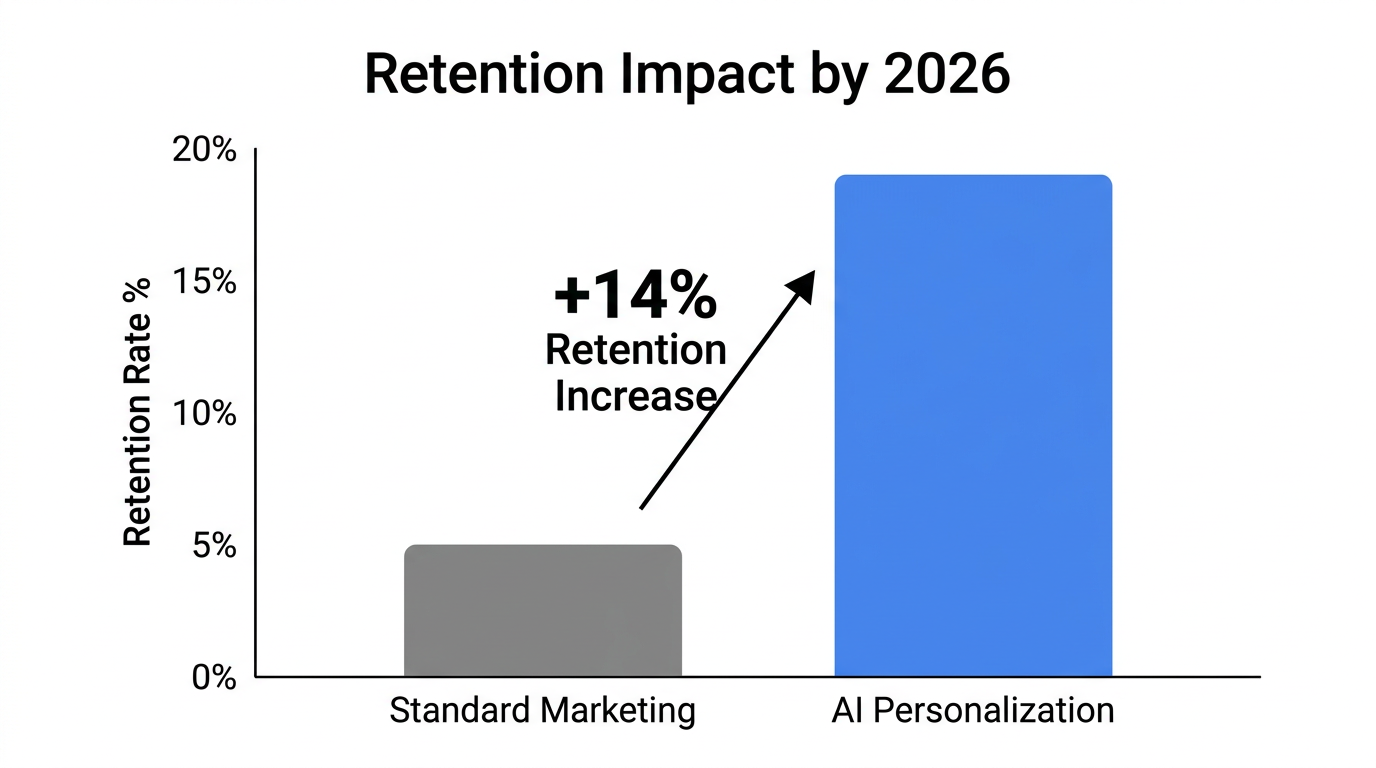
Capturing the data is only half the battle; the real ROI comes from using it to create a dynamic storefront. AI-powered personalization has been shown to increase customer retention rates by approximately 14%, according to research from SuperAGI. In 2026, this means your homepage should look different for a first-time visitor than it does for a loyal subscriber who prefers vegan products.
| Metric | Traditional Marketing | AI-Driven Automation |
|---|---|---|
| Email Open Rates | Standard Benchmarks | 52% Higher |
| Retention Rate Lift | 0-2% | 14% |
| Revenue Growth | Flat/Linear | 5-10% Increase |
| Customer Path | Linear Funnel | 1-to-1 Personalization |
Tools like Akohub and Enrich Labs allow merchants to automate these experiences across the entire lifecycle. By leveraging over 130 behavioral signals—including past purchases, local weather patterns, and quiz data—AI can adjust email send times and content in real-time. For example, automated email flows achieve 332% higher click-through rates when they are personalized and sent at the 'predicted optimal time' via AI.
Social Commerce: Integrating Shoppable AI with Shopify
The top of the funnel has moved to social platforms. Experts at Wiro Agency correctly predicted that by 2026, 'shoppable' AI posts on TikTok and Instagram would account for a massive portion of Shopify revenue. These posts use AI to identify products in videos and provide a direct-to-checkout experience within the social app, powered by the Universal Commerce Protocol (UCP).
To fuel this engine, brands need a constant stream of high-quality, authentic content. This is where discovery becomes automated as well; platforms like Stormy AI streamline creator sourcing and outreach by using natural language search to find the perfect UGC creators. Once a creator posts, the AI-driven traffic can be directed straight to an Octane AI quiz via a link in bio, creating a seamless loop from discovery to data capture.
Case Study: Jones Road Beauty's Persona-Based Automation
Jones Road Beauty stands as a masterclass in zero-party data strategy. They don't just guess what their customers want; they use OpenAI-driven deep research to analyze thousands of Reddit threads and reviews. This qualitative data is used to 'train' their Octane AI quizzes, ensuring the questions resonate with real customer pain points.
The results are integrated into their Shopify marketing automation AI stack. If a customer identifies as a 'minimalist,' their post-purchase education series focuses on '3-minute makeup routines.' If they identify as 'pro-aging,' the content shifts to 'hydrating for mature skin.' By treating AI as an operational core rather than a marketing gimmick, they have built a brand that feels deeply human while being 90% automated.
"AI is not just a feature at Shopify. It is central to our engine... the biggest shift in technology since the internet."Avoiding the 'Uncanny Valley' of Automation
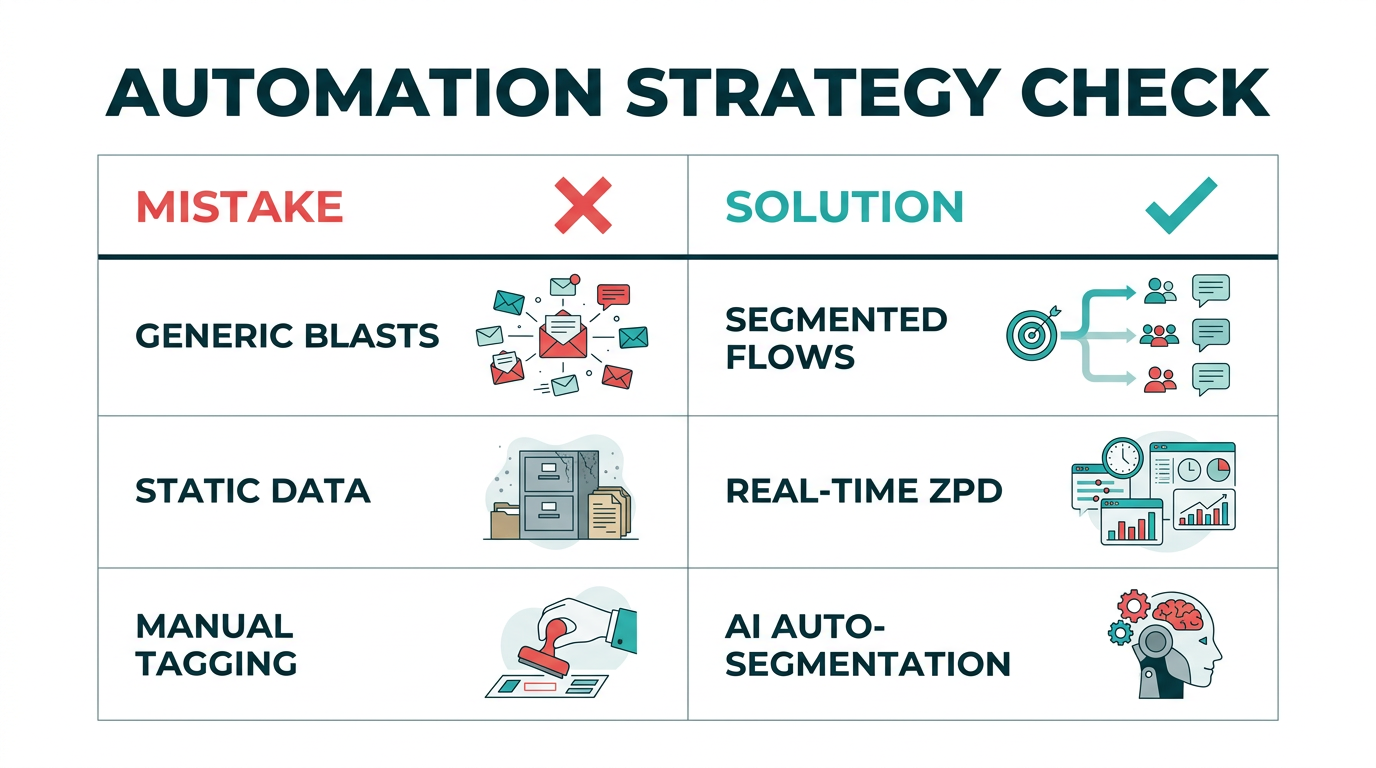
While the goal is to automate 90% of the top-of-funnel discovery, the biggest mistake a brand can make is losing its 'soul.' Over-automation without human review can lead to robotic branding that alienates customers. As noted by Eesel AI, unedited AI-generated content can even lead to SEO penalties if not carefully managed.
- Don't treat AI as a final draft: Use tools like Shopify Magic to generate descriptions, but always have a human editor apply the final brand voice.
- Avoid Data Silos: Ensure your quiz data from Octane AI isn't stuck in a vacuum. It must sync with your Klaviyo or Tidio accounts to ensure a unified experience.
- Focus on KPIs: Don't implement an AI tool just because it's 'smart.' Ensure it is actively reducing support tickets (like Loftie, which handles 50% of support via AI) or increasing AOV.
The Future of Personalized Acquisition
As we navigate 2026, the brands that win will be those that use AI to listen, not just to speak. By combining the conversational power of Octane AI quizzes with the robust capabilities of Shopify marketing automation AI, merchants can build acquisition funnels that are both highly efficient and deeply personal. Start by identifying your key customer personas, building a diagnostic quiz to capture zero-party data, and then leveraging that data to create 1-to-1 storefront experiences that keep customers coming back. In the era of agentic commerce, your data is your moat—build it wisely.