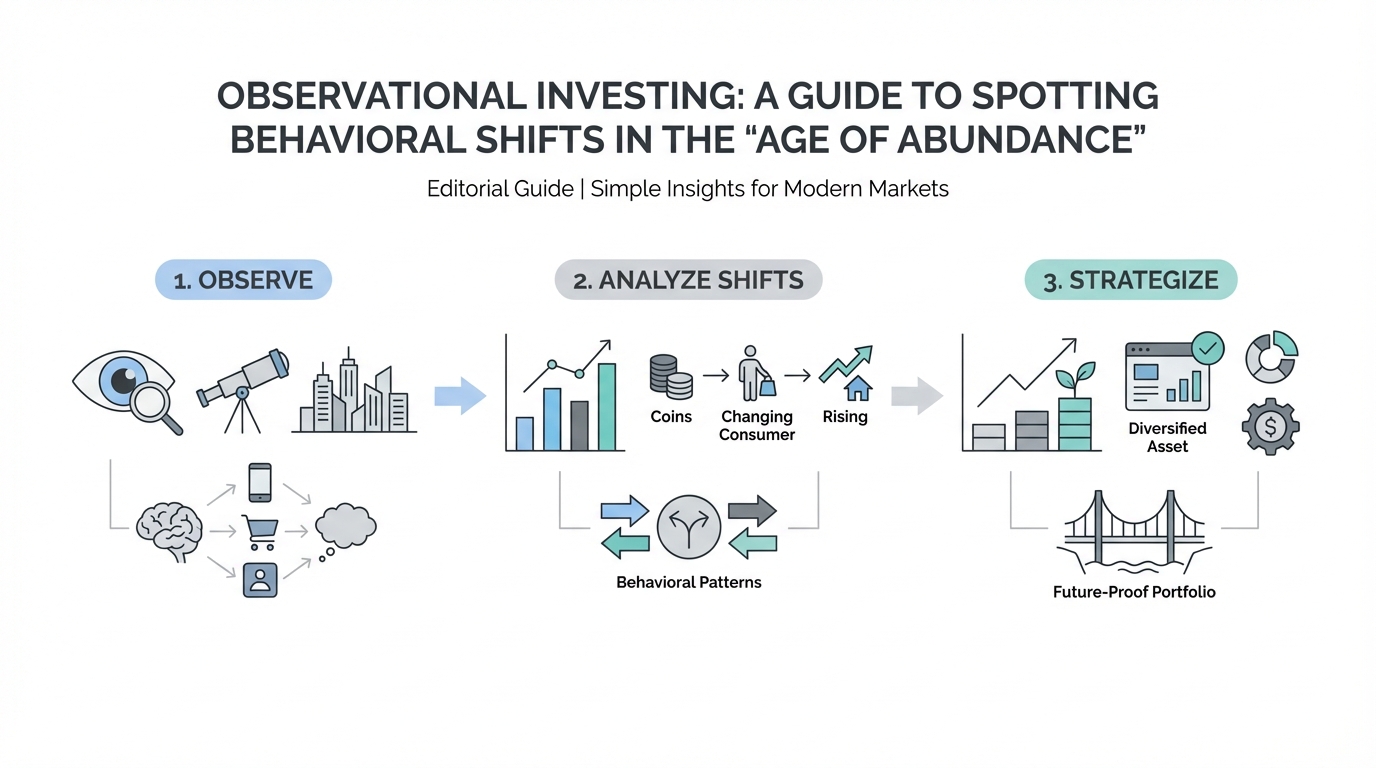
In the world of high-stakes finance, there is a pervasive myth that you need a Wharton MBA or a direct line to a Bloomberg terminal to achieve market-beating returns. We are taught to obsess over price-to-earnings ratios, complex technical charts, and macroeconomic forecasts. But what if the most valuable data wasn't hidden in a balance sheet, but in the comment section of a viral video? True alpha—the kind that turns a modest $20,000 into $70 million—often comes from spotting consumer behavior shifts before the rest of the world even realizes they are happening. As we transition into what experts call the 'Age of Abundance,' the ability to connect cultural dots will separate the top 1% of investors from the rest.
What is Observational Investing?

Observational investing is a methodology centered on identifying information asymmetry. It is the art of surfacing a change in the world—whether that is a shift in technology, a new cultural obsession, or even a specific weather pattern—and connecting that change to a publicly traded company before that information is 'priced in.' Unlike traditional fundamental analysis, which looks at what a company has done in the past, observational investing focuses on future market trends 2025 and beyond by watching how people live their lives in real-time.
The core principle is simple: You enter a position at the point of information asymmetry (when you know something few others do) and exit at the point of information parity (when the rest of the market catches on). This often involves ignoring the stock price entirely and focusing on the cultural trend analysis. For instance, while institutional investors are busy analyzing credit card receipts or 'transactional data,' observational investors are looking at 'conversational data'—what people are talking about before they open their wallets.
The COVID-19 Retrospective: A Lesson in Forced Behavioral Shifts

To understand the power of observing consumer habits, we only need to look back at the 2020 pandemic. This period served as a 'fast-forward' button for several consumer behavior shifts. When the world was suddenly gifted an abundance of time and a surplus of stimulus capital, their actions provided a blueprint for future winners. While the broader market panicked, observers noticed that people were still spending; they were just spending differently.
Consider the rise of niche hobbies. Trends like DIY Slime or the sudden obsession with home bread-making weren't just passing fancies; they were indicators of massive demand for specific raw materials. A surge in 'slime' content on YouTube meant a massive spike in sales for Elmer’s Glue, a subsidiary of Newell Brands. Similarly, the inability to go to the gym led to an obvious tailwind for Peloton, while the desire for safe travel created a boom for companies like Camping World.
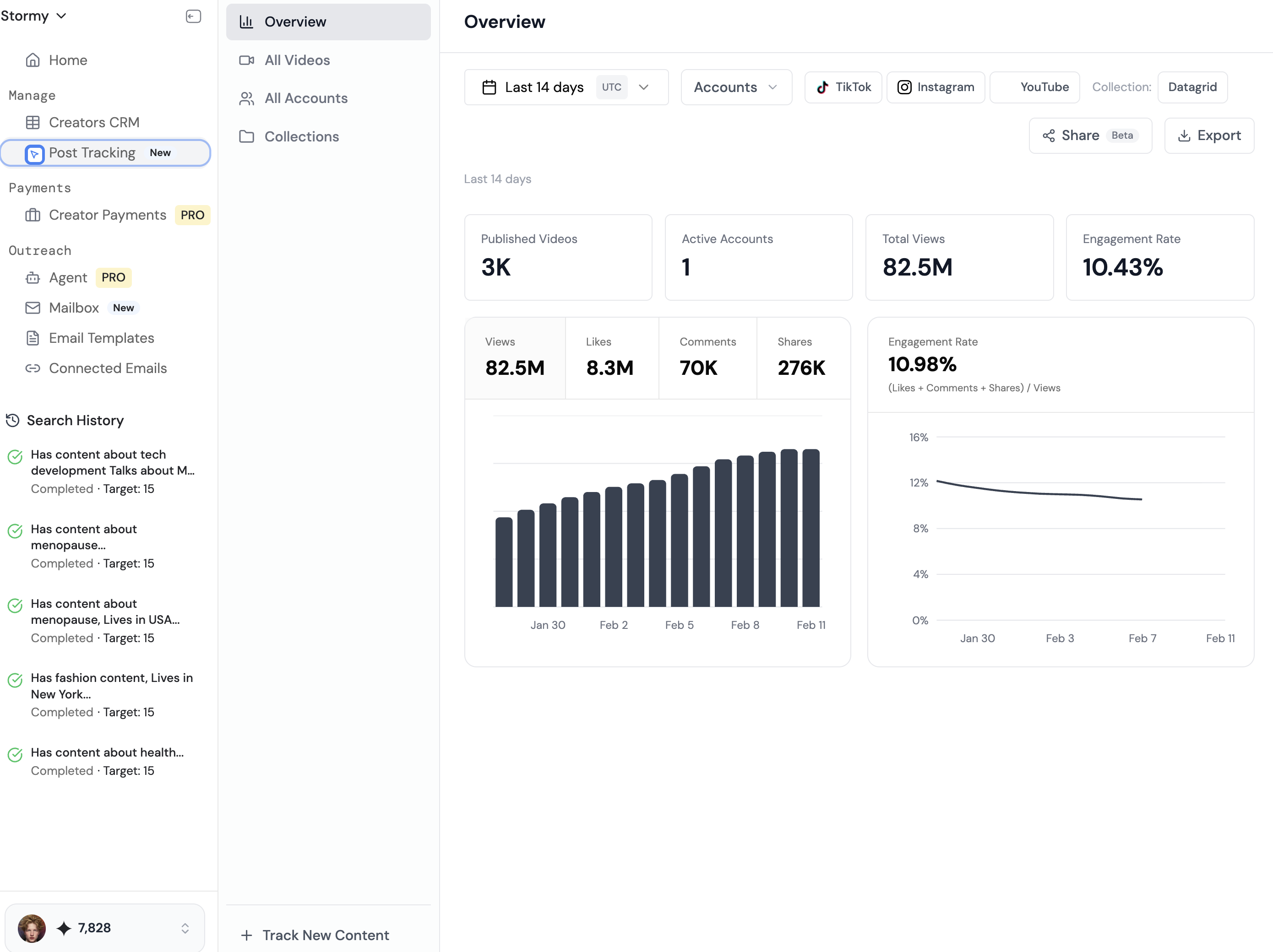
In this environment, platforms like Stormy AI, an all-in-one AI-powered platform for creator discovery, become invaluable for marketers and investors alike. By identifying the right UGC creators who are driving these subculture trends, brands can capitalize on the same shifts that observational investors use to pick stocks. For example, discovering creators on Stormy AI who are pioneering new mobile app trends can provide early signals for which app-based companies are about to see a surge in user acquisition.
Entering the Age of Abundance: Future Market Trends 2025

We are currently entering the 'Age of Abundance.' As AI and automation reduce the time we spend on repetitive tasks, the global population will gradually gain more free time and flexibility. This shift is not just a social change; it is a fundamental economic reorganization. When people have more time, they invest more heavily in their passions, their travel, and their personal 'wealth signaling.'
One sector poised for a massive breakout in this era is private aviation. As wealth increases and time becomes the ultimate luxury, the private jet sector is transitioning from an ultra-exclusive niche to a broader high-end utility. While many investors overlook this due to its high barrier to entry, an observer looks at the increasing volume of conversation around travel flexibility and the 'work-from-anywhere' lifestyle. As repetitive labor is offloaded to AI tools, we can expect a world that is more creative, more mobile, and more focused on leisure-driven consumption, a concept championed by authors exploring the Age of Abundance.
Connecting the Dots: A Playbook for Observational Investing
How do you actually translate a random observation into a profitable trade? It requires a disciplined process of dot-connecting. You must ask: "Who benefits from this specific change?" and "Is the market already aware of it?" Here is a clear playbook for cultural trend analysis:
Step 1: Identify the Anomaly
Look for speech patterns or behaviors that deviate from the norm. This could be a sudden spike in search volume on Google Trends for terms like 'roof repair' after a localized hail storm. While Wall Street waits for insurance reports that are delayed by weeks, you can see the demand in real-time through search data.
Step 2: Verify Information Asymmetry
Once you find a trend, you must determine if it’s 'off-radar.' A great way to do this is by checking the sentiment on platforms like TikTok or Reddit. If the core consumer base is buzzing about a product but the financial analysts are still asking, "Who is that influencer?", you have found your edge. A classic example is the E.L.F. Cosmetics 'putty primer' trend. When beauty influencer Jeffree Star endorsed a $8 drugstore product as being better than a $60 luxury equivalent, the 'boots on the ground' observation of moms and teens clearing out CVS shelves was a signal that Wall Street missed for months.
Step 3: Assess the 'Needle Mover' Potential
Is the information actually meaningful for the company's bottom line? A viral trend for a small product at a massive conglomerate like Procter & Gamble might not move the needle. However, that same trend at a mid-cap company can lead to triple-digit earnings surprises. Always verify the scale of the impact before committing risk capital.
The Power of 'Niche' Knowledge vs. Wall Street Generalism
The biggest disadvantage hedge funds have is their demographics. Most institutional investors are geographically and culturally clustered in the Northeast, often sharing the same age, gender, and educational background. This creates massive blind spots in alternative data for investors. They excel at analyzing spreadsheets, but they struggle to interpret the nuances of youth culture, female-led beauty trends, or niche hobbyist subcultures.
As a retail investor, your niche knowledge is your superpower. By using Stormy AI, you can instantly vet any creator profile and detect fake followers or engagement fraud before the market realizes the trend is real. If you are a parent, a gamer, a tech enthusiast, or a fashionista, you are part of a 'research group' that Wall Street can only access via expensive, lagging reports. By the time a hedge fund pays for credit card data to see that a new brand is winning, you have already seen the 30,000 comments from women saying they plan to buy that specific piece of apparel next week. This is why being an 'observer' of specific subcultures is far more lucrative than being a 'generalist' who only reads financial manuals.
Why the Game is 'Rigged in Your Favor'
We often hear that the stock market is rigged against the little guy. In terms of high-frequency trading or access to IPOs, that may be true. But in terms of real-time cultural data, the retail investor has never had a greater advantage. You don't need millions of dollars to see what is trending; you just need to pay attention to your surroundings and the digital platforms you already use.
Hedge funds are scared of conversational data because it isn't 'certain.' They prefer historical correlations and proof. But as an individual, you can act on alternative data with agility. Whether it's tracking seat sales for a new show at the Las Vegas Sphere through user reviews or realizing that Palantir is finally finding product-market fit in the AI sector before the earnings call, you can out-maneuver the giants. Using tools like Stormy AI to track which UGC creators are gaining traction can be the final piece of the puzzle, allowing you to see which apps and products are truly capturing the cultural zeitgeist.
Conclusion: Investing with Your Eyes Open
The 'Age of Abundance' will provide a new set of challenges and opportunities for investors. As future market trends 2025 unfold, the most successful individuals won't be those who can calculate a DCF model the fastest, but those who can most accurately interpret consumer behavior shifts. Success in this style of investing requires a shift in mindset: Stop looking at the ticker symbol and start looking at the world. By identifying information asymmetry, staying comprehensive in your research, and leveraging your own niche observations and an AI-native discovery engine like Stormy AI, you can find the 'one great trade' that changes your financial life. The data is all around you—on your phone, in your local stores, and in your own hobbies. All you have to do is look.