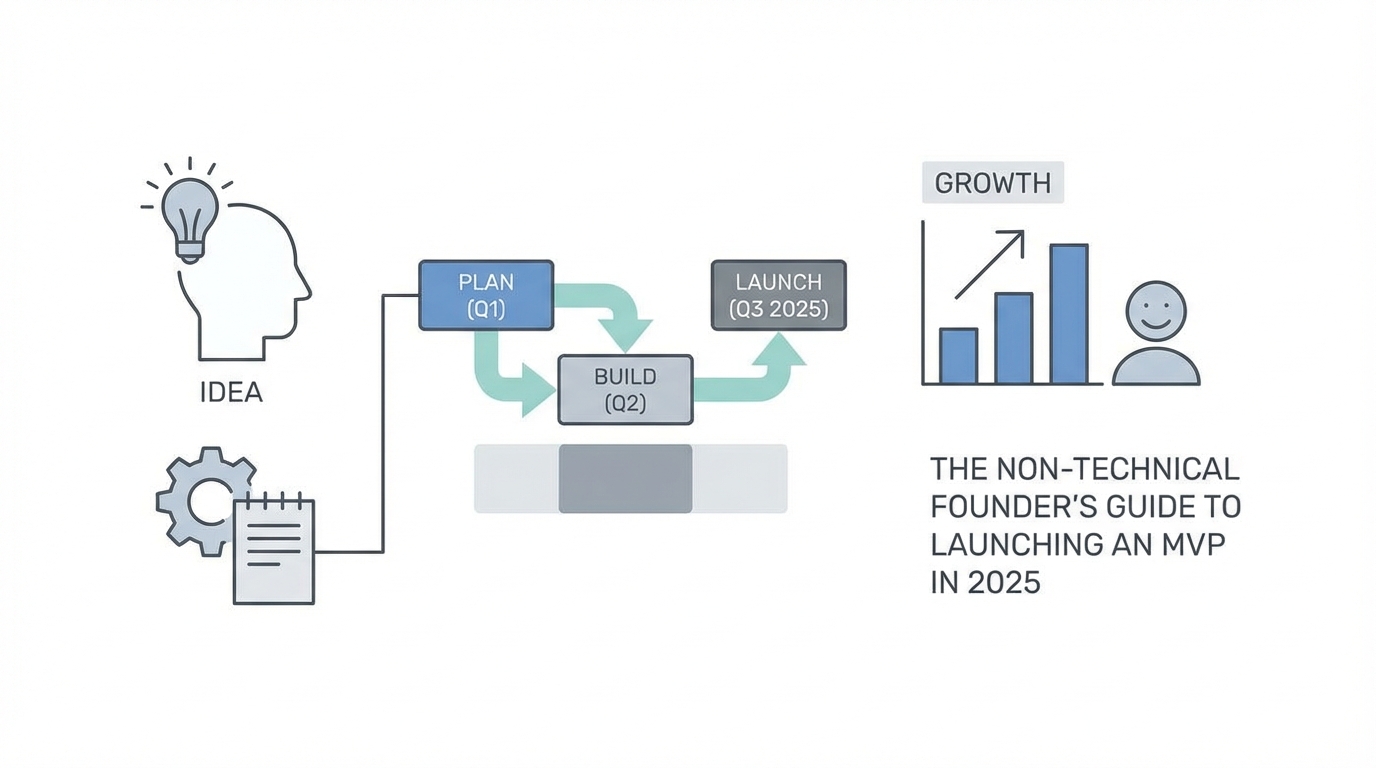
In the previous decade, if you had a world-changing idea for a software startup but couldn't write a line of code, your journey usually began with a frantic search for a technical co-founder or a $50,000 invoice from a development agency. For most, the dream died in the spreadsheet before a single pixel was rendered. But as we move into 2025, the barrier between 'idea' and 'execution' has effectively collapsed. The rise of AI agents has ushered in an era where non-technical founders are no longer just 'idea people'—they are the lead architects of functional, scalable products. This guide explores how you can leverage low cost software development through AI to launch your MVP without a massive capital injection.
The Shift from 'Coding' to 'Orchestrating': Why Logic Matters More Than Syntax

For a non-technical founder guide to be relevant in 2025, it must acknowledge that the traditional definition of 'coding' is becoming obsolete for the initial phases of a startup. As Amjad Masad, CEO of Replit, suggests, the fundamental wall of coding difficulty is being replaced by an open door. The challenge is no longer memorizing the syntax of Python or JavaScript; it is orchestrating the logic of your application.
When you use modern platforms like Replit, you aren't just typing commands; you are describing your vision to an AI agent that handles the grunt work. The transition from developer to 'orchestrator' means your value lies in how well you understand your user's problem and how clearly you can define the workflow to solve it. In 2025, ai for entrepreneurs means that having a high "Product IQ" is significantly more valuable than having a high technical proficiency in any specific language.
This shift is democratizing the internet. Founders from Ohio to Mumbai are using saas mvp development tools to build databases, set up servers, and manage production-grade deployments with a few clicks. This allows creators to focus on no code startup ideas that can be validated in days, not months. By focusing on the why and the what, rather than the how, non-technical founders can now move at the same speed as Silicon Valley engineers.

Case Study: How a School Teacher Built Magic School AI and Raised $20M
There is no better proof of the power of low cost software development than the story of Adil Khan. Khan was a school teacher who, during the pandemic, decided to address the administrative burden on educators. Despite not being a professional software engineer, he used Replit to build the first version of Magic School AI.
The platform, which helps teachers use generative AI for assignments and grading, gained massive traction almost immediately after its launch in mid-2023. Because the initial overhead was so low, Khan could iterate based on real user feedback rather than theoretical requirements. By early 2024, Magic School AI had raised $20 million in venture capital and was seeing phenomenal revenue growth. This isn't just a success story; it's a blueprint for ai for entrepreneurs. It proves that the 'non-technical' label is no longer a permanent disability in the tech world.
Khan’s journey highlights a critical lesson: the initial MVP doesn't need to be a masterpiece of engineering. It needs to solve a painful problem. By using AI agents to scaffold the application, he bypassed the need for a massive engineering team in the early days, allowing him to keep equity and maintain control over the product's direction.
Prototyping vs. Pitch Decks: The New Investor Standard
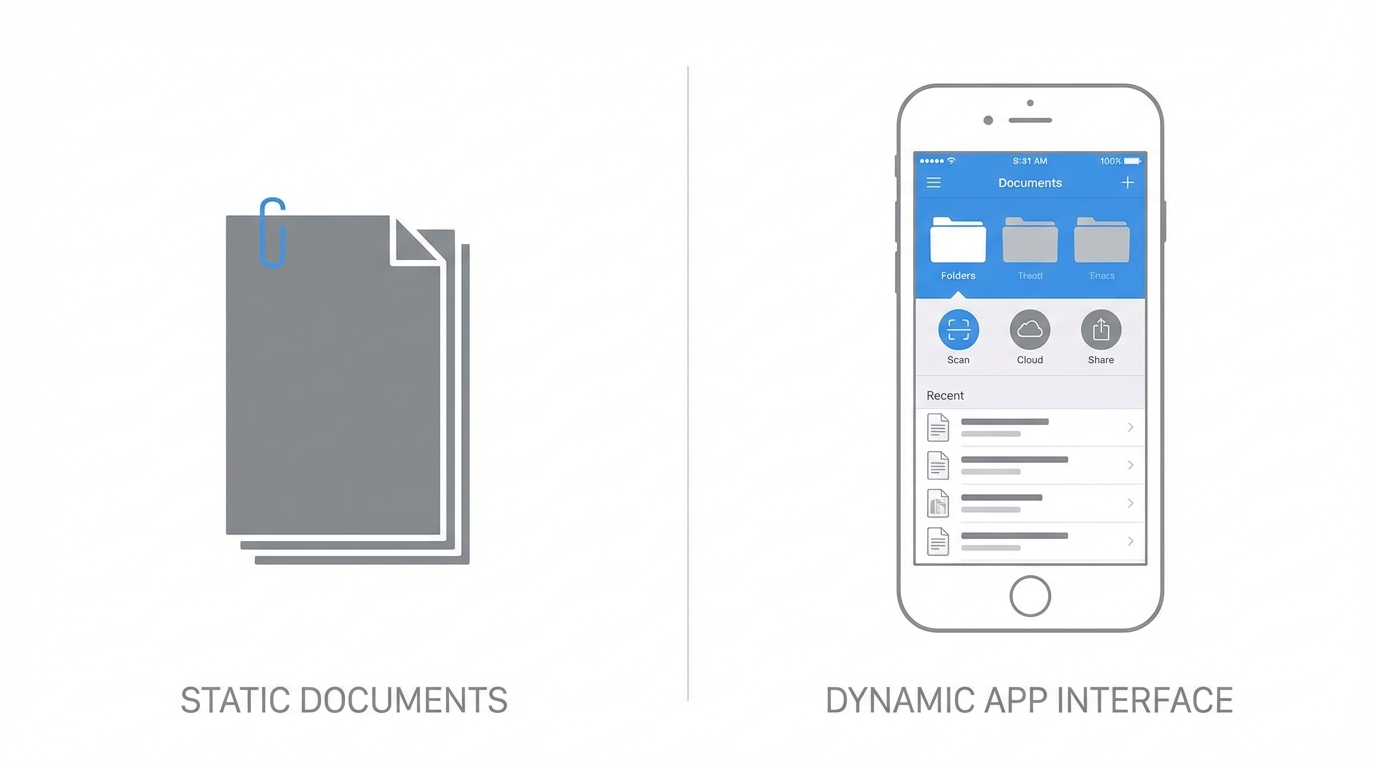
In the past, a well-designed PowerPoint could secure a seed round. In 2025, investors have become increasingly skeptical of 'vaporware.' A functional AI-built prototype is the new standard for investor meetings. When you can show a live URL, explain the data flow, and demonstrate actual user interaction, you're not just pitching an idea—you're pitching a running business.
Tools like Replit Agent allow you to deploy a production-ready application to the cloud instantly. This deployment often uses high-level infrastructure like Google Cloud, ensuring that your prototype isn't just a toy, but a secure, scalable platform. When you can point to a production deployment and show real-time analytics, your credibility as a founder skyrockets.
Furthermore, prototyping allows for rapid validation. If a feature isn't working, you can ask an AI agent to remove it or pivot the logic in minutes. This agility is something large, legacy-bound companies can't compete with. By the time a traditional startup has finished their 'technical requirements document,' the AI-enabled founder has already iterated through three different versions of their saas mvp development process.
The 2025 MVP Playbook: Step-by-Step for the Non-Technical Founder
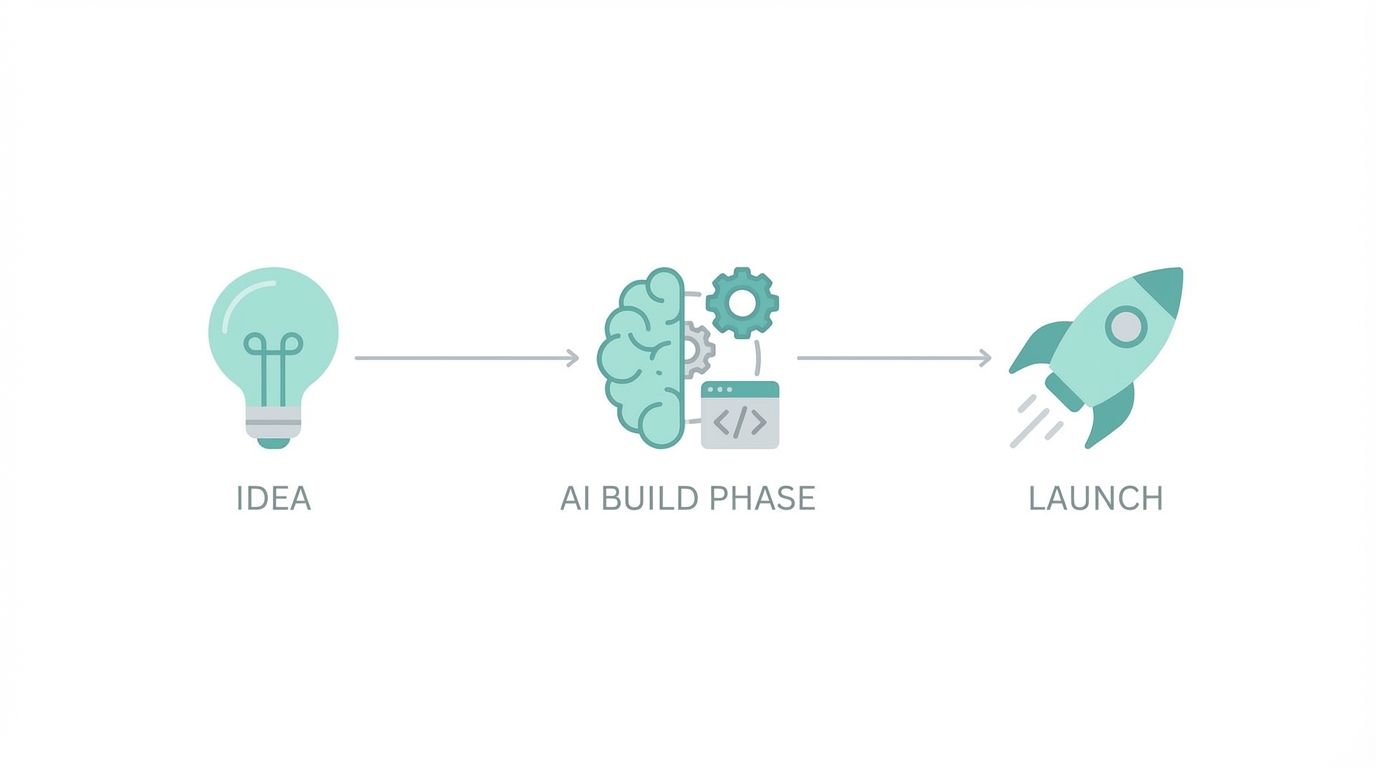
Building a product from scratch can feel overwhelming. Follow this structured playbook to turn your no code startup ideas into a reality using AI agents.
Step 1: Define Your Core Logic
Don't start with code; start with logic. Map out exactly what the user does and what the system returns. If you are building a map of scenic drives, as demonstrated by the CEO of Replit, you need to know where the data comes from and what the interactive markers should do. Use short, iterative prompts to guide your AI agent through this discovery phase.
Step 2: Scaffolding with an AI Agent
Use an agent to set up your environment. Instead of manual configuration, the agent can install packages, set up your Python or JavaScript environment, and create the initial UI components. If the agent makes a mistake—like trying to render a broken image—don't panic. Treat the agent like a junior software developer; give it specific feedback, ask it to remove unnecessary features, and iterate until the core functionality works.
Step 3: Database Integration and Security
A real MVP needs a way to store data. Move beyond simple CSV files and ask your agent to set up a Postgres database. Platforms like Replit or Supabase make this a one-click process. This ensures your app is ready for actual users. Remember to keep your API keys and secrets secure; AI agents can now handle this configuration for you, abstracting away the complexity of environment variables.
Step 4: Instant Deployment
Deployment used to be the scariest part of development. Today, it's a single click. Deploy your app to a permanent URL (like a .app or .dev domain) so it stays live. This separates your development environment from your production environment, allowing you to tinker without breaking what your users are seeing. Ensure you are using a scalable back-end like Google Cloud to handle potential traffic spikes.
Managing Technical Debt: When to Use Agents and When to Hire
While AI agents are revolutionary for low cost software development, they have limitations. As your application grows to 10 or 20 complex features, large language models can sometimes 'confuse themselves' with long histories. This is what developers call technical debt. As a non-technical founder, you need to know when the agent has reached its limit.
Once your prototype has actual users and potentially revenue, you should transition from purely agent-based development to a hybrid model. This might involve learning enough code to use AI-assisted editors (like Cursor or Replit AI) or hiring a professional engineer to refactor the codebase for long-term stability. The goal of the MVP is validation, not perfection. Once you have validation, you can use the data (and perhaps the funding) to bring in human expertise to clean up the code and manage version control via GitHub.
Distribution Strategies: Getting Your First 100 Users
Building the app is only 50% of the battle. The other 50% is distribution. For ai for entrepreneurs, distribution often starts within the communities of the tools you use. Sharing your project on the Replit community or on X (Twitter) can provide initial traffic. However, to scale beyond the 'builder' crowd, you need a marketing strategy.
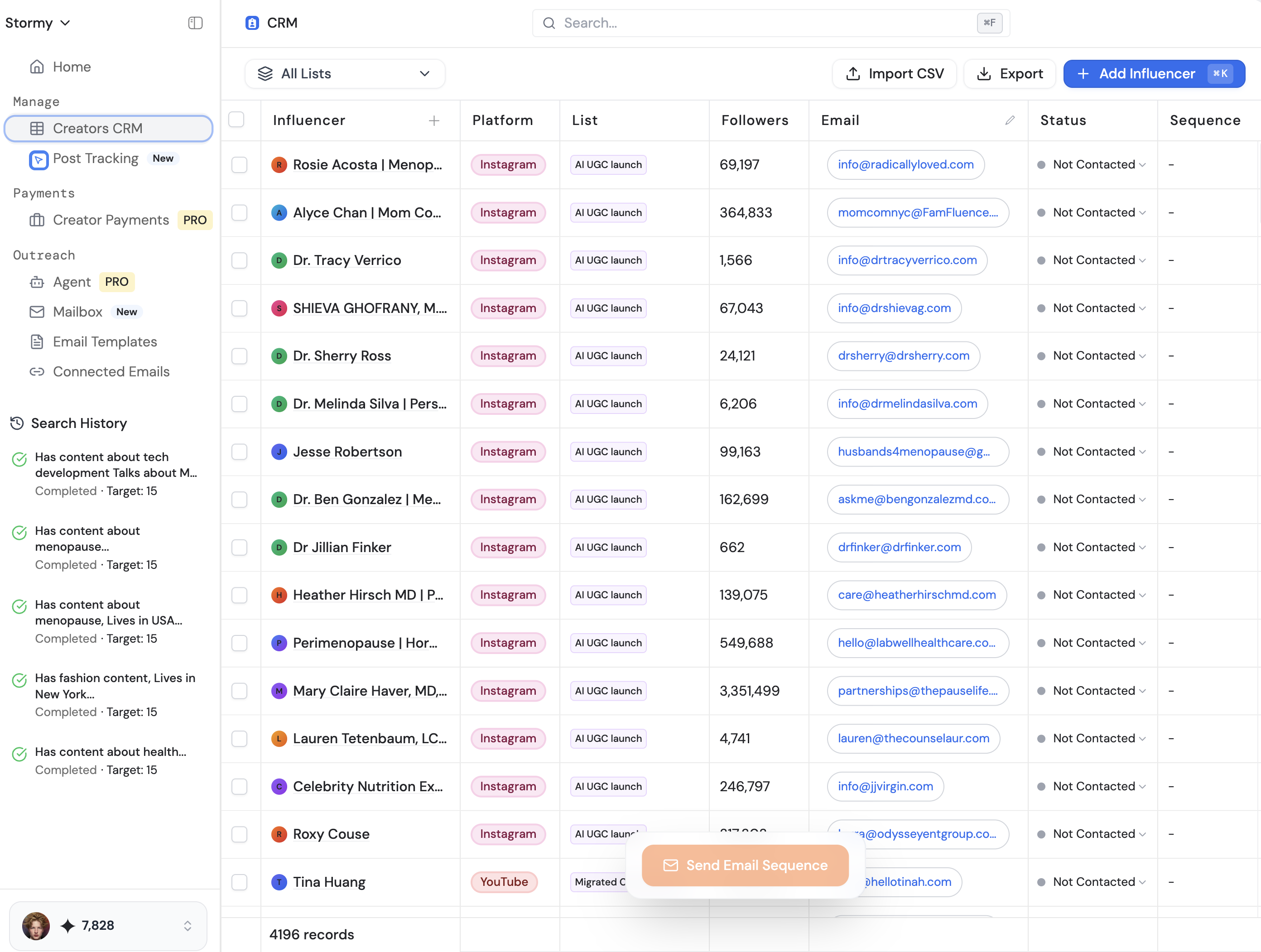
For founders launching mobile-centric apps or niche SaaS products, User-Generated Content (UGC) is the most effective way to drive app installs. This is where tools like Stormy AI become invaluable. Once your MVP is live, you can use Stormy to discover and vet creators who can showcase your product to their audience. Instead of manual outreach, you can use AI to manage the entire creator relationship, ensuring your saas mvp development efforts aren't wasted on a product no one sees.
You can also leverage SEO to maintain a steady stream of traffic. Services like Boring Marketing specialize in using AI-driven SEO to help startups outrank established competitors without spending thousands on ads. Combining low cost software development with high-efficiency AI marketing platforms like Stormy AI allows a single founder to do the work of a 20-person agency.
Conclusion: The Era of the Solopreneur Architect
The non-technical founder guide for 2025 is simple: Just start building. The cost of failure has never been lower, and the potential for impact has never been higher. By leveraging AI agents on platforms like Replit, you can transform a spark of an idea into a functional, deployed application in under an hour. Whether you are a teacher, a designer, or a marketer, the tools to change your circumstances are now at your fingertips.
Don't wait for a technical co-founder to validate your dream. Build the prototype, deploy it to the world, and let the market tell you what to do next. If you can orchestrate the logic, you can build the future.