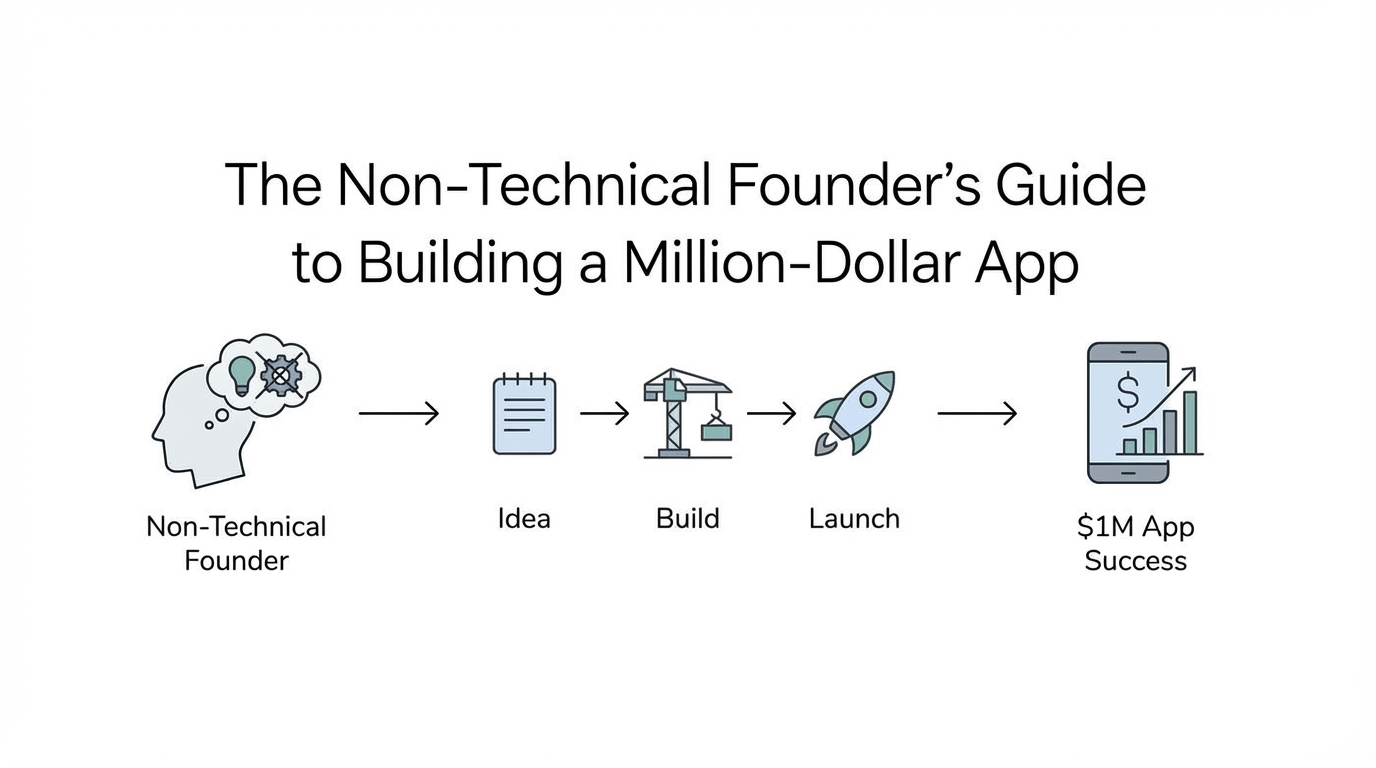
Building a successful mobile application is often portrayed as a feat reserved for elite software engineers and Silicon Valley veterans. However, the story of Anya, the founder of Rootd, proves that you don’t need to write a single line of code to reach four million downloads and generate over a million dollars in revenue. For many aspiring entrepreneurs, the biggest hurdle isn't the technology—it is the uncertainty of where to begin. This guide provides a practical roadmap for the non technical founder who wants to learn how to build an app without coding, moving from a simple notebook sketch to a profitable, high-growth business. By following a structured startup validation framework, you can mitigate risk and focus on solving real human problems rather than getting lost in the syntax of programming languages.
Validating the 'Pain Point' Through Personal Struggle

Every million-dollar app begins with a problem that is painfully real. For Anya, that problem was a sudden, debilitating panic attack during her fourth year of university. Isolated from her family doctor and overwhelmed by clinical or outdated resources, she realized the market had a massive gap. According to the National Institute of Mental Health, millions of adults suffer from panic disorders, yet digital tools often fall short. This is the first step for any beginner building an app: identifying a personal friction point that existing solutions fail to address. To validate your idea, you must move beyond your own experience and look at what others are saying. Anya analyzed user reviews for existing mental health tools on the App Store and noticed a recurring complaint: users felt abandoned in the heat of the moment. They didn't want hypnosis or clinical theory; they wanted immediate relief.
A successful startup validation framework involves deep-diving into competitor weaknesses. When you see users complaining about 'laggy interfaces' or 'missing features' in popular apps, you are looking at your future roadmap. To refine your understanding of these market gaps, you can use Stormy's AI search to discover which creators and influencers are discussing these specific pain points across TikTok, YouTube, and Instagram. By analyzing the comments on high-engagement social posts, you can gather qualitative data on what potential users are truly desperate for. This data-driven approach ensures that your app mvp development is rooted in actual demand rather than just a hunch. Remember, validation isn't about asking your friends if they like your idea—it is about finding people who are already complaining about the lack of a solution.
Low-Fidelity Prototyping: Communicating Vision Without Code
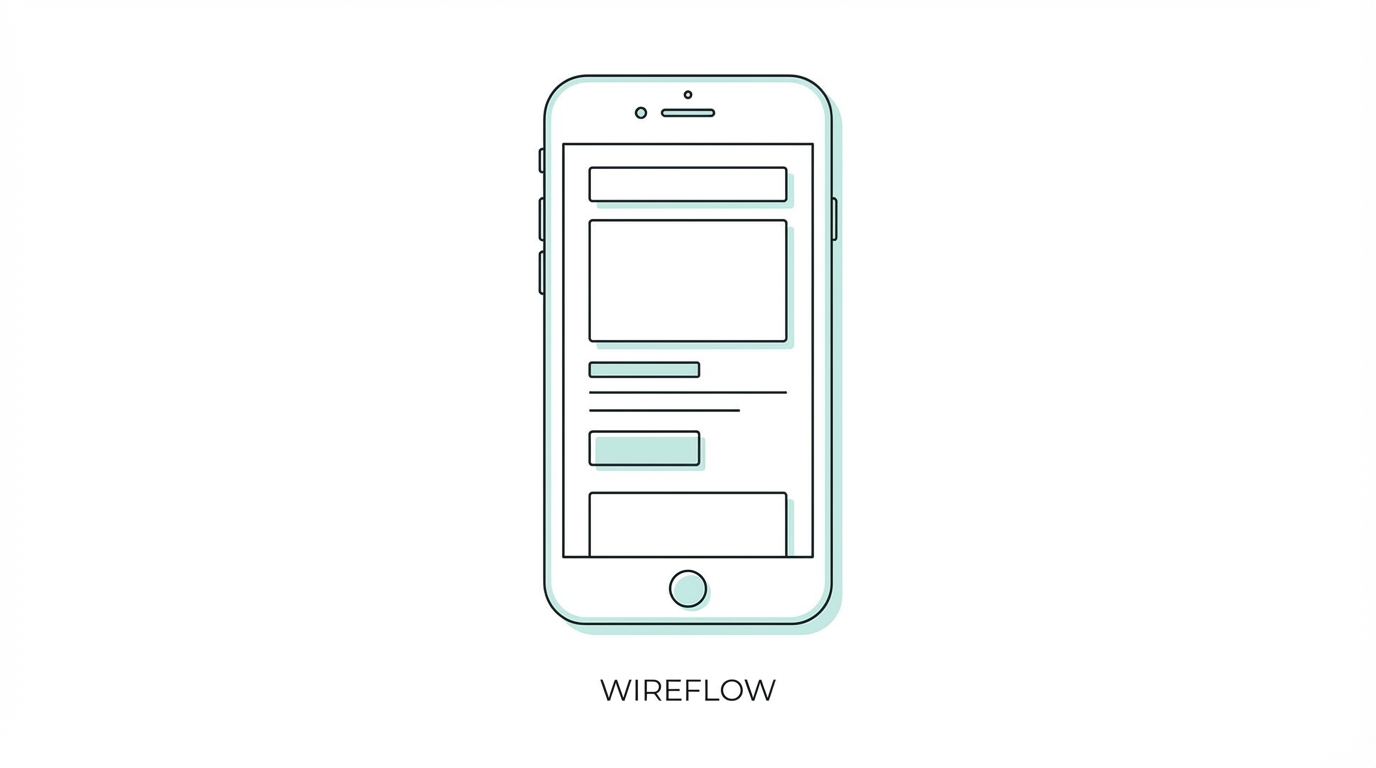
Once you have validated the problem, the next step is to translate your vision into a visual language that a developer can understand. You do not need to be a UI/UX expert to do this. Anya started by drawing her ideas in a simple notebook, focusing on the user journey: 'What would be most helpful for me in the moment of a panic attack?' For a non technical founder, simplicity is your greatest asset. If the app is too complex for you to draw, it is likely too complex for a user in distress to navigate. After sketching the flow, she taught herself the basics of Adobe Photoshop and Illustrator to create high-fidelity wireframes. These wireframes serve as the blueprint for your application, ensuring that there is no ambiguity when you eventually hand the project off to a technical partner.
While creating these wireframes, consider the 'aha moment'—the single feature that will make a user keep the app on their phone. For Rooted, it was the 'panic button.' If you are unsure which features to prioritize, Stormy AI provides influencer vetting and fake follower detection to help you identify which voices in your niche are actually driving trends. By looking at what content creators are highlighting in similar apps, you can identify which features drive the most word-of-mouth engagement. This allows you to build a low-fidelity prototype that isn't just a collection of buttons, but a targeted solution designed for viral potential. Visualizing the app first helps you 'feel' the user experience before you spend a single dollar on development, which is a critical phase in how to build an app as a beginner.
The Student Developer Framework: Finding Affordable Talent
One of the biggest traps for a non technical founder is hiring a high-priced agency too early. Anya initially approached agencies but quickly found their costs prohibitive. Instead, she pivoted to a 'Student Developer Framework.' This involves finding hungry, talented individuals who are looking to build their portfolios. Students often have the latest technical knowledge but lack the professional project experience that your app can provide. By offering a combination of a modest budget and a compelling mission, you can find developers who are more invested in the product's success than a faceless agency might be. This approach is essential for lean app mvp development, allowing you to iterate without burning through your life savings.
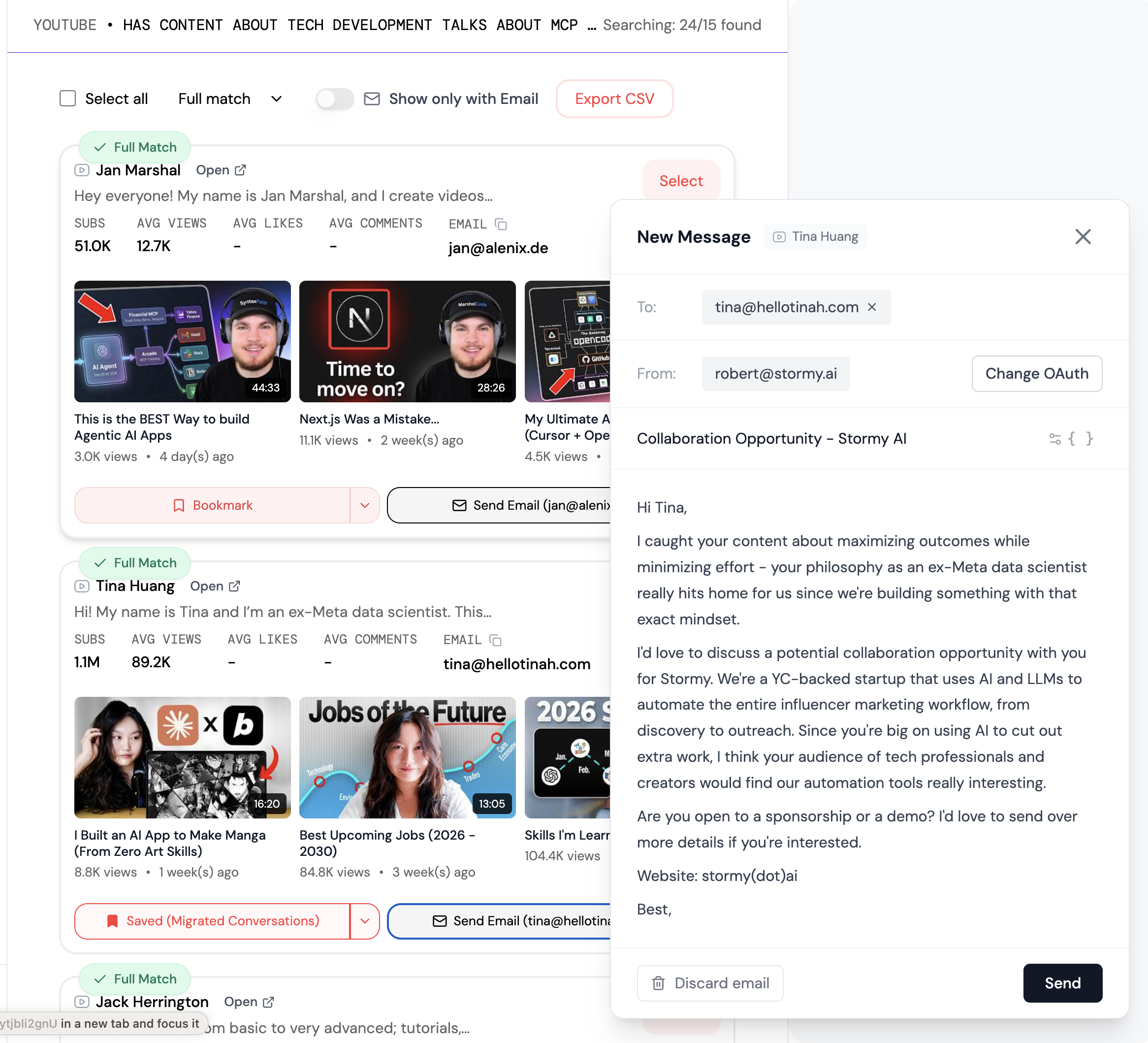
Communication is the currency of this relationship. Because you aren't coding, your job is to be the ultimate project manager. Use tools like Notion or Trello to track progress and ensure the wireframes you created in the previous step are being followed to the letter. If you struggle to find the right technical partner through traditional boards, consider using Stormy's AI outreach to contact tech-focused creators or developers on platforms like LinkedIn. Stormy’s ability to generate hyper-personalized emails and automate follow-ups can help you stand out to high-quality talent who might otherwise ignore a generic 'help me build my app' message. Finding the right partner is about selling the vision, not just the technical specifications.
Defining Your MVP: Why the Panic Button Was Enough
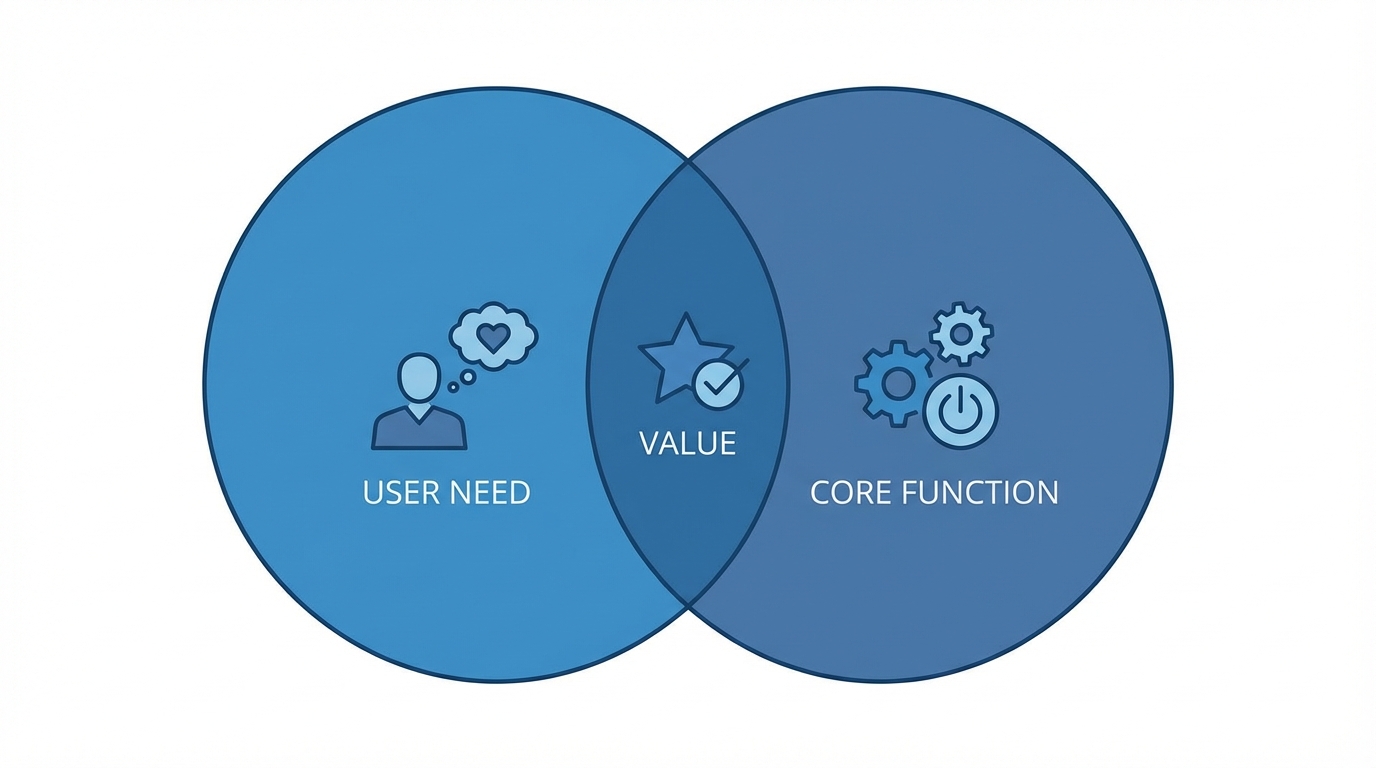
A common mistake in startup validation frameworks is 'feature creep'—trying to build everything at once. Anya’s MVP (Minimum Viable Product) was focused almost entirely on the SOS 'panic button.' It didn't have the 100+ visualizations or the games that the app has today. It had one job: to walk a user through a panic attack using the parasympathetic nervous system. This singular focus allowed her to reach her first 10,000 downloads within the first year. By launching a simple tool, she was able to gather real-world feedback and identify bugs without the complexity of a massive codebase. This is the essence of how to build an app as a beginner: solve one problem perfectly before trying to solve ten problems poorly.
As you scale from your MVP, let your users tell you what to build next. Anya notes that she still reads every single user review to this day. If users are asking for a journal or a deep breathing tool, that becomes the next priority. To manage these requests and track how users are sharing your app on social media, you can utilize Stormy's post tracking and analytics. This feature allows you to see every mention of your app across TikTok and Instagram, giving you a real-time feed of what features people love and what they are struggling with. Your MVP is not the final product; it is a conversation-starter with your market. Use that conversation to guide your development efforts and ensure every new feature has a guaranteed audience.
Balancing a 9-to-5 with an App Side-Hustle
The journey from non technical founder to full-time CEO rarely happens overnight. Anya worked four days a week at a regular job while spending the other three days—and almost every weekend—on Rooted. This period of 'no social life' lasted for years, but it provided the financial safety net needed to keep the app alive during its slow growth phase. It took three years to reach a million downloads. Managing your time during this phase requires extreme discipline. You must treat your app like a second job, not a hobby. Set specific blocks of time for development meetings, marketing outreach, and user support to avoid burnout while maintaining your primary income.
To make the most of your limited time, automation is your best friend. Instead of spending hours manually searching for journalists or influencers to cover your app, you can set up Stormy's autonomous AI agent. This agent can discover relevant creators, send outreach emails, and handle follow-ups while you are at your 9-to-5. This allows you to maintain a consistent marketing presence without needing to be at your desk 24/7. Anya’s success with press outlets like Cosmopolitan and Time Magazine came from persistent, organic cold emailing. By using AI to handle the volume of this outreach, a solo founder can achieve the output of a full-scale marketing team, making the transition to full-time entrepreneurship much faster.
The 2025 Playbook for App Success
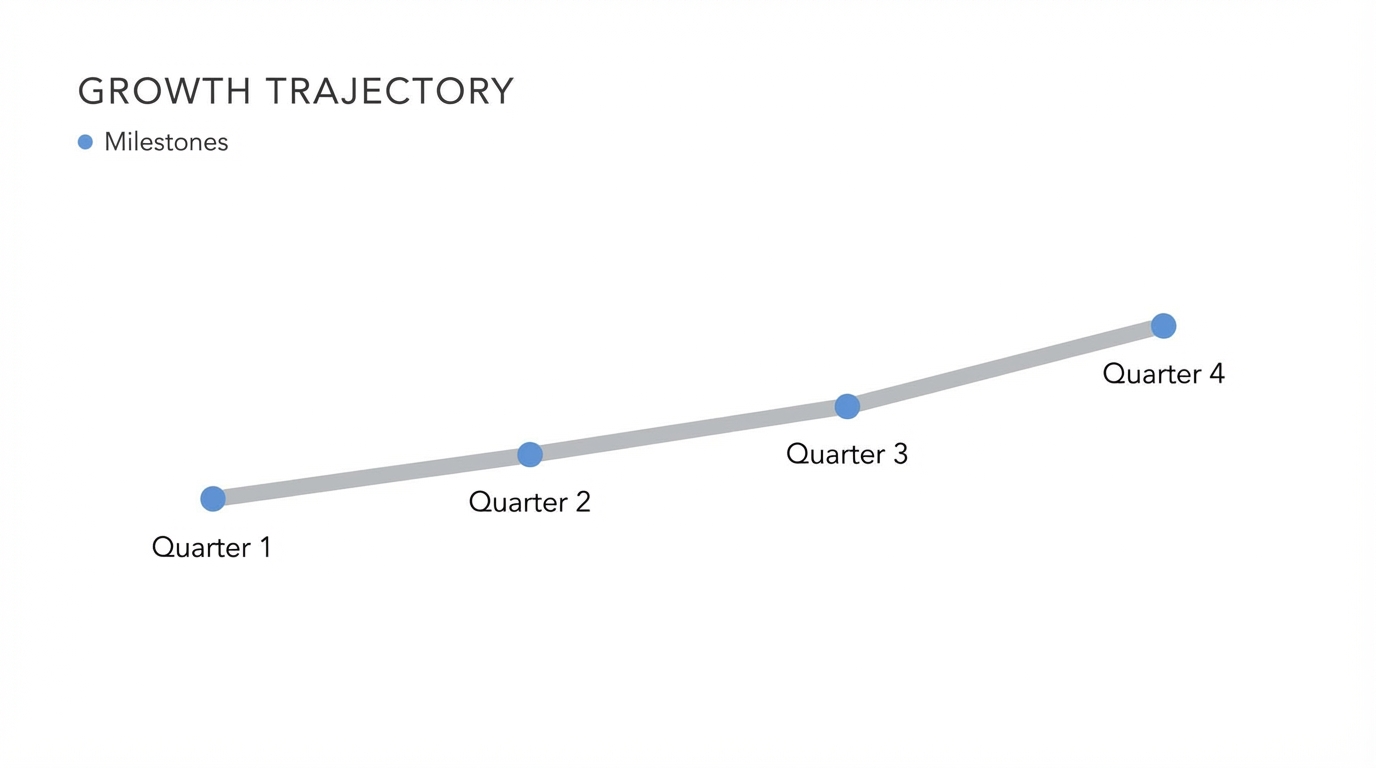
Building a successful app in today’s market requires more than just a good idea; it requires a commitment to App Store Optimization (ASO) and community building. Anya’s four-step playbook for 2025 is a masterclass in modern growth. First, build a product that delivers exactly what the page promises—word-of-mouth is still the most powerful growth lever. Second, listen to user reviews religiously, as they contain the answers to your most difficult strategic questions. Third, optimize your ASO continuously; Anya releases updates once a week to show the Google Play and Apple algorithms that the app is actively maintained. Frequent updates improve search rankings and signal reliability to potential users.
The fourth step is strategic partnerships. Rooted partnered with wellness organizations and therapy groups to get the app recommended by professionals. For a non technical founder, these B2B relationships provide a layer of credibility that is hard to build through advertising alone. If you are struggling to manage these relationships, Stormy's creator CRM can help you track every interaction, negotiation, and payment in one place. Whether you are working with a local therapy clinic or a major TikTok influencer, having a centralized dashboard for your collaborations ensures that nothing falls through the cracks. In 2025, the 'holy circle' of growth is a product that matches the keywords, leading to reviews that use those same keywords, which in turn drives more organic traffic.
Conclusion: Your Path to a Million-Dollar App
Anya’s journey from a notebook sketch to a million-dollar app is a testament to the power of persistence and problem-solving. For any non technical founder, the lesson is clear: you do not need to be an expert in how to build an app without coding if you are an expert in understanding your user. By following a rigorous startup validation framework, leveraging affordable talent through the student developer model, and focusing on a high-impact MVP, you can build a sustainable and profitable business. According to Statista, the global app market continues to grow, leaving plenty of room for niche solutions. Success isn't about the complexity of your code; it's about the depth of the relief you provide to your users. Start with the problem, draw the solution, and use modern tools to bridge the technical gap. Your million-dollar app is waiting to be sketched.