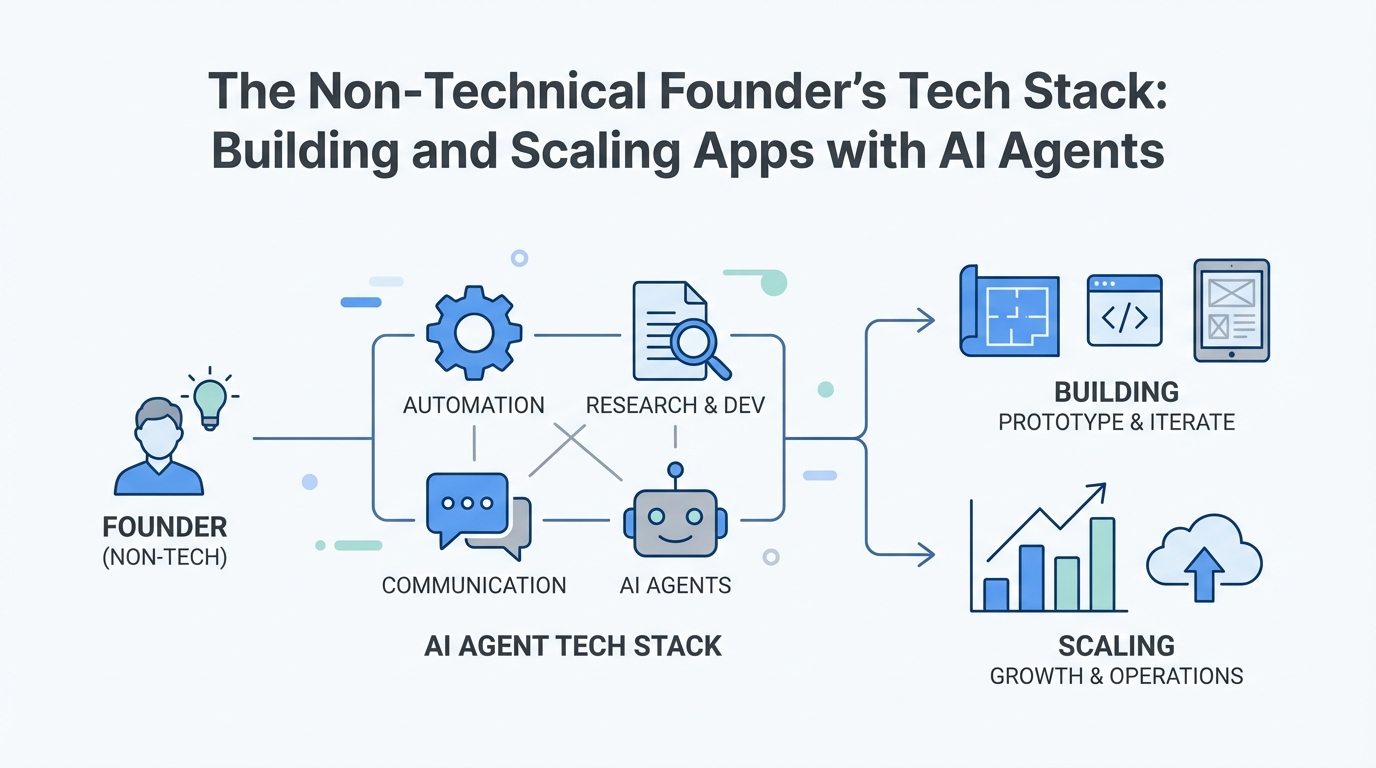
For years, the barrier to entry for the software world was a high-level mastery of languages like Swift, Kotlin, or JavaScript. If you couldn’t code, you were relegated to finding a technical co-founder or burning through thousands of dollars on outsourced development teams. That era is officially over. We are entering the age of the non-technical founder, where the ability to articulate a problem and orchestrate AI agents is more valuable than the ability to write a syntax-perfect loop. Look no further than Jack and Nick Sweeney, who built Coherence, a nervous system regulation app that generated $85,000 in revenue and 15,000 downloads within its first eight months—all without the founders writing a single line of original code. This article provides a comprehensive playbook on how to build an app with AI, the exact mobile app tech stack required for scale, and how to manage the operations of a high-margin mobile business.
The Content-First Validation: Why Coding is the Last Step
Most founders make the mistake of building in a vacuum. They spend six months perfecting a codebase only to launch to the sound of crickets. The Sweeney brothers flipped this script by using what they call content-first validation. Before a single line was generated in an IDE, they used X (formerly Twitter) as an "idea battleground." They would post threads about breathwork and spiritual topics, monitoring which hooks gained the most traction. When a specific post about "Vortex Breath" went viral, they knew they had a validated product idea.
This methodology acts as a form of organic App Store Optimization (ASO) before the app even hits the store. By understanding the language and pain points that resonate with a specific audience, you can tailor your app’s features to solve real problems. Beyond content validation, founders use Stormy AI to vet potential creator partners, analyzing deep audience demographics and detecting fake followers to ensure every marketing dollar is spent on high-quality engagement. Once an idea wins on X, the brothers would move it "upstream": turning successful tweets into short-form scripts for Instagram and TikTok, and eventually long-form content for YouTube. Only after 8 million views across platforms did they commit to building the actual software.
The 'No-Line-of-Code' Reality: AI Agents as Your Engineering Team

When it came time to build, the founders didn't hire a dev shop. Instead, they utilized AI for non-technical founders to handle the heavy lifting. The centerpiece of this workflow is Cursor, an AI-powered code editor that allows you to describe features in plain English and have the AI generate the necessary files. By pairing Cursor with other agents like CloudCode and Codex, non-technical individuals can maintain a production-ready codebase without deep technical expertise.
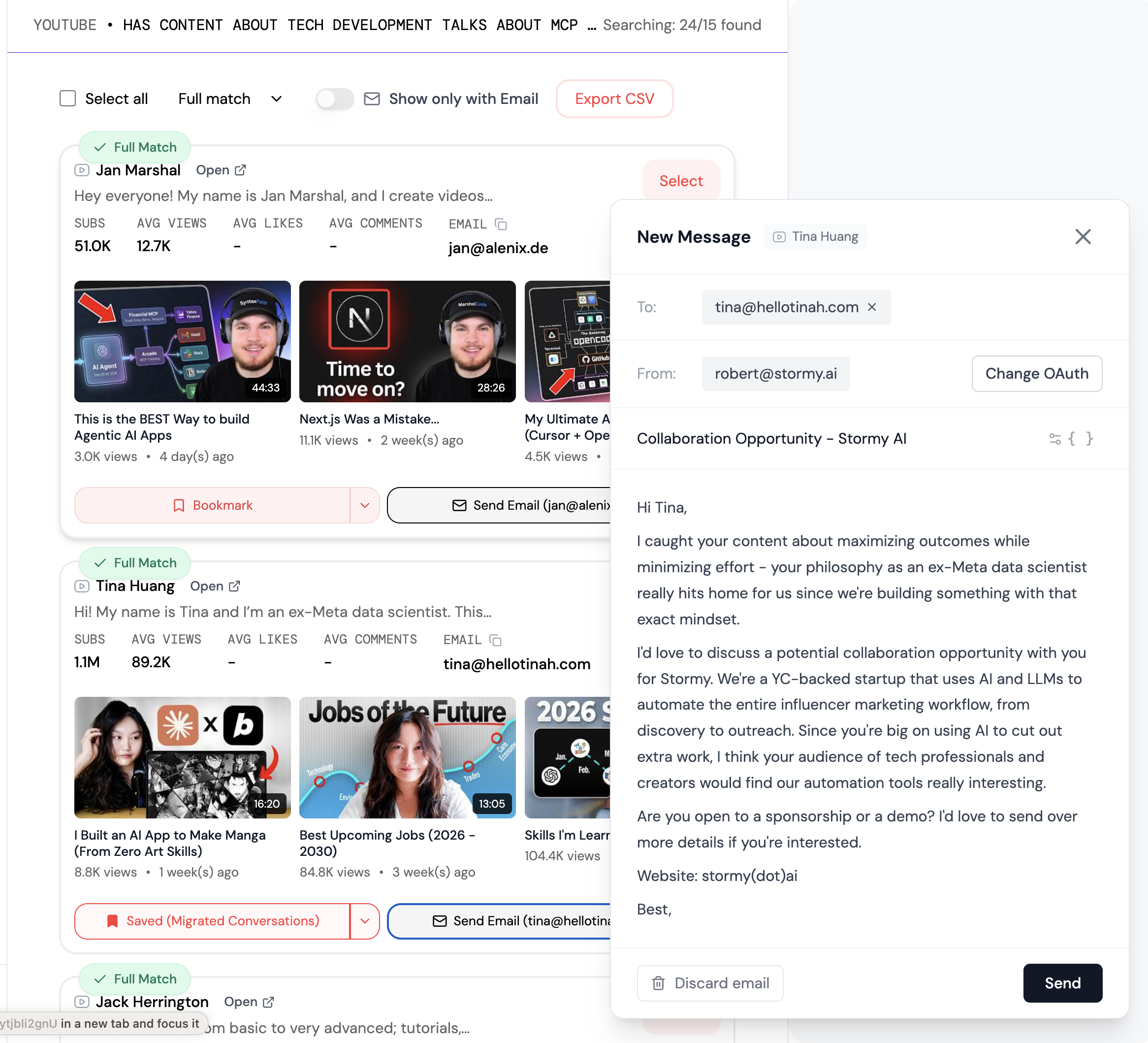
To fuel the growth of these AI-built apps, founders often leverage platforms like Stormy AI, an AI search engine that allows you to find influencers across TikTok, Instagram, and YouTube by typing natural-language prompts. Just as AI handles the code, Stormy AI handles the discovery of UGC creators who can produce the high-performing video ads needed to lower customer acquisition costs (CAC). This allows a solo founder or a small team to act like a much larger organization.
The 5-Step Framework for Finding Your App Idea
- Pick a Painful Niche: Focus on a problem that causes genuine distress or high friction for a specific group of people.
- Batch Ideas Weekly: Don't wait for inspiration. Commit to a high volume of content ideas to test the waters.
- Film in Bulk: Produce 30 to 60 short-form videos at a time to ensure you have a consistent presence on social feeds.
- Amplify the Winners: Identify the top 5% of your content and put "spark money" (small ad spend) behind them to see if they convert into users.
- Outmarket Everyone: Use a combination of organic reach and paid partnerships to dominate the niche.
Modern Mobile Architecture: React Native, Expo, and Supabase
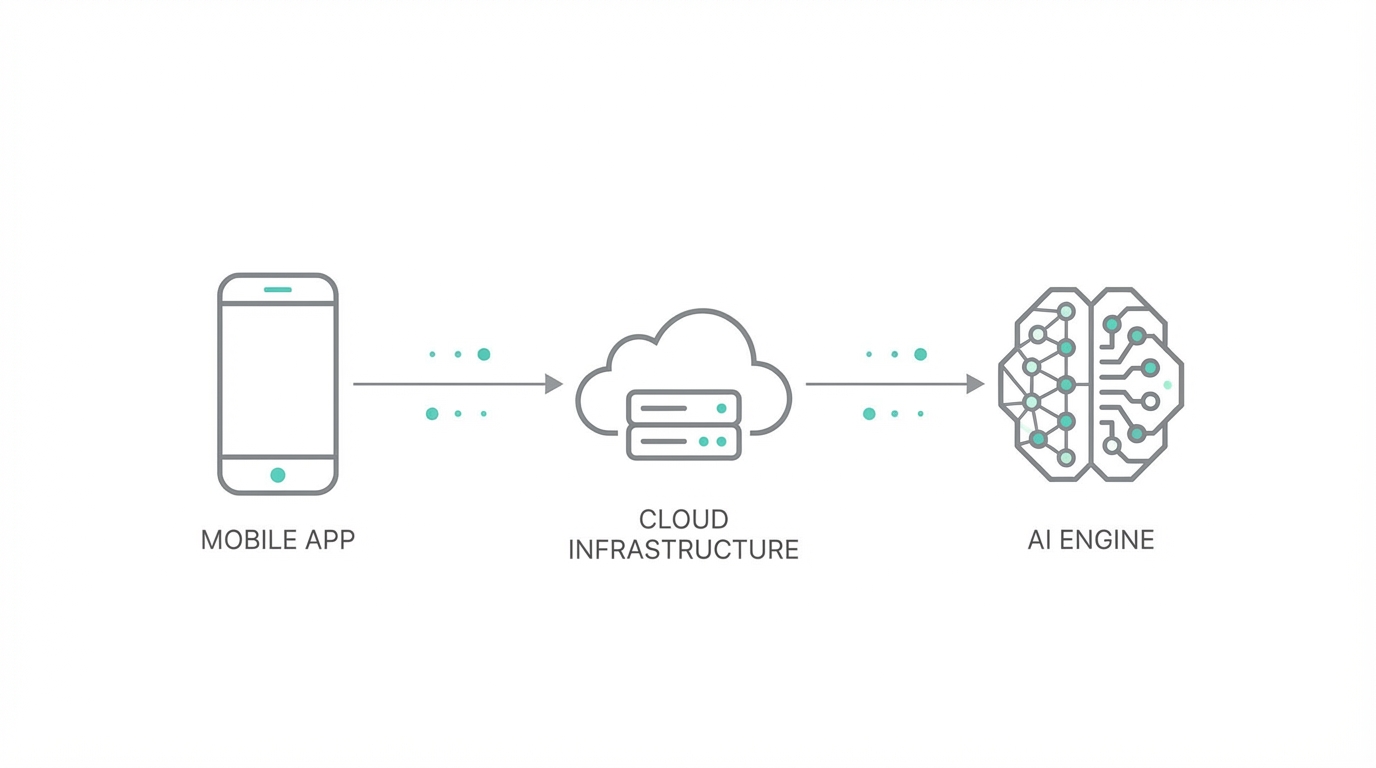
For a non-technical founder, the choice of a mobile app tech stack is critical. You need tools that are well-documented, widely supported by AI models, and fast to deploy. The Coherence team settled on a stack that has become the gold standard for rapid app development: React Native paired with Expo.
React Native allows you to build for both iOS and Android simultaneously using a single codebase. Expo simplifies the process further by handling the complex build configurations and providing a suite of tools for over-the-air updates. This means you can fix a bug or change a UI element without waiting for the App Store’s lengthy review process. For the backend, the team utilized Supabase. Often called an open-source alternative to Firebase, Supabase provides an instant Postgres database, authentication, and edge functions. It is particularly effective for AI-assisted development because its structure is highly predictable for LLMs like GPT-4 or Claude.
Using this react native expo supabase tutorial approach, the founders finished their Minimum Viable Product (MVP) in just a few weeks. By avoiding native Swift or Java, they ensured that their AI agents could provide more accurate code suggestions, as the training data for React Native is significantly more vast on the open web.
Essential Growth Tools: Subscriptions and Analytics
Building the app is only half the battle; the other half is monetization and retention. To handle the complexities of the Apple and Google billing systems, the team implemented RevenueCat. This tool is essential for managing subscriptions, providing a unified API for in-app purchases and powerful data on Monthly Recurring Revenue (MRR) and churn. Without RevenueCat, a non-technical founder could spend weeks trying to debug receipt validation and subscription state logic.
For data-driven decision making, Mixpanel was integrated to track user behavior. In a mobile environment, knowing where a user drops off in the onboarding funnel is the difference between a failing app and a scaling one. By analyzing which breathwork techniques were most popular, the founders could double down on the content that kept users coming back. Additionally, they used ManyChat for Instagram automation, allowing them to instantly DM users who commented on their reels. For scaling beyond DMs, founders can also use Stormy AI to automate their entire creator outreach process using AI agents that find and email influencers on a daily schedule. These automated app marketing tools create a seamless bridge between social media discovery and app installation.
The 50% Margin Blueprint: Managing Operations

One of the most impressive aspects of the Coherence story is their operational efficiency. They operate at a 50% profit margin while generating roughly $11,000 per month. This is achieved by outsourcing non-core tasks to a global team while the founders focus on high-level strategy and being the "face" of the brand. Their overhead breakdown includes:
- Video Editors ($2,500/mo): Essential for maintaining the volume of high-quality organic content.
- Influencer Partnerships ($1,000 - $2,000/mo): Strategic collaborations to reach new audiences.
- Ghostwriters ($800/mo): Assisting with the high volume of educational threads and newsletter content.
- Virtual Assistants ($500/mo): Handling administrative tasks, customer support, and basic community management.
- AI & Coding Tools ($400/mo): Subscriptions to Cursor, ChatGPT, and database hosting.
For brands looking to replicate this model, using Stormy AI for finding UGC creators and influencers can significantly reduce the time spent on creator research. By managing relationships in the Stormy AI creator CRM, founders can track every negotiation, payment, and post performance in one centralized place. This is particularly useful for mobile app ads and app install campaigns, where the creative asset is the primary driver of performance.
Gamification and Retention: The Psychology of the Streak
Retention is the lifeblood of any subscription app. The Coherence app utilizes a minimalist UI/UX designed to reduce friction. Instead of a cluttered dashboard, users are greeted with a simple streak counter. This small element of gamification encourages daily use, tapping into the user's desire to maintain their progress. The app focuses on six core techniques, such as stress relief and sleep, each with a very simple interface featuring just a timer and volume controls.
By keeping the design simple through tools like Figma and Rotato (for 3D mockups), the founders ensured that the app felt premium without needing a massive design team. This "minimalist but functional" approach is perfect for AI-assisted builds, as it reduces the complexity of the frontend code and makes the app more stable across various devices.
Conclusion: The New Era of App Development
The journey of Jack and Nick Sweeney proves that you don't need to be a developer to build a successful mobile business in 2024. By leveraging AI agents like Cursor, adopting a robust mobile app tech stack (React Native, Expo, Supabase), and focusing on content-first validation, non-technical founders can compete with established tech companies. The key is to treat the app as a vehicle for the value you provide through your content, rather than an end in itself. If you focus on a painful niche, validate with organic content, and use automated app marketing tools to scale, the path to a high-margin, revenue-generating app is clearer than ever. Start by identifying your winning content today, and let the AI handle the code tomorrow.