In 2026, the landscape of the creator economy has undergone a tectonic shift. We are no longer in the era of simple brand deals and sponsored posts. The most sophisticated influencer marketing strategy 2026 revolves around one word: Equity. High-profile figures are no longer waiting for businesses to invest in them; instead, they are aggressively investing in businesses. No one has executed this transition more brilliantly than former Alabama coach Nick Saban. By moving beyond his 10-year, $100 million coaching contract to build a multi-billion dollar car dealership empire, Saban has provided the ultimate playbook for the modern creator.
The New Paradigm: Creators Investing in Business
 0:30
0:30The traditional model of the last decade followed a predictable path: a company would pay a creator to promote a product, hoping for a return on ad spend. However, as 2026 arrives, the 'Business-Invest-in-Creator' model is rapidly being replaced by the 'Creator-Invest-in-Business' model. As discussed on John Coogan's TBPN, the most bullish trend is creators leveraging their personal brand authority to buy pieces of existing, cash-flowing assets that they can accelerate.
This isn't about starting a new brand from scratch—a high-risk endeavor that often fails—but rather identifying bank-friendly businesses with proven unit economics. Nick Saban didn't invent the car dealership; he used his god-tier status in Alabama and beyond to take a piece of the Mercedes-Benz distribution network and scale it into a local monopoly.
"The shift in 2026 isn't just about influence; it's about ownership. Nick Saban didn't just endorse Mercedes; he became the distribution channel."
| Feature | Traditional Sponsorship (2020-2024) | The Saban Equity Model (2026) |
|---|---|---|
| Revenue Source | Flat fee per post/campaign | Net Profit & Asset Appreciation |
| Longevity | Ends when the contract expires | Generational Wealth through Ownership |
| Operating Role | Content Producer | Strategic Partner / Owner |
| Scalability | Limited by time and follower count | Unlimited by rolling up physical assets |
The Saban Strategy: Partnering with 'God-Tier' Operators
7:30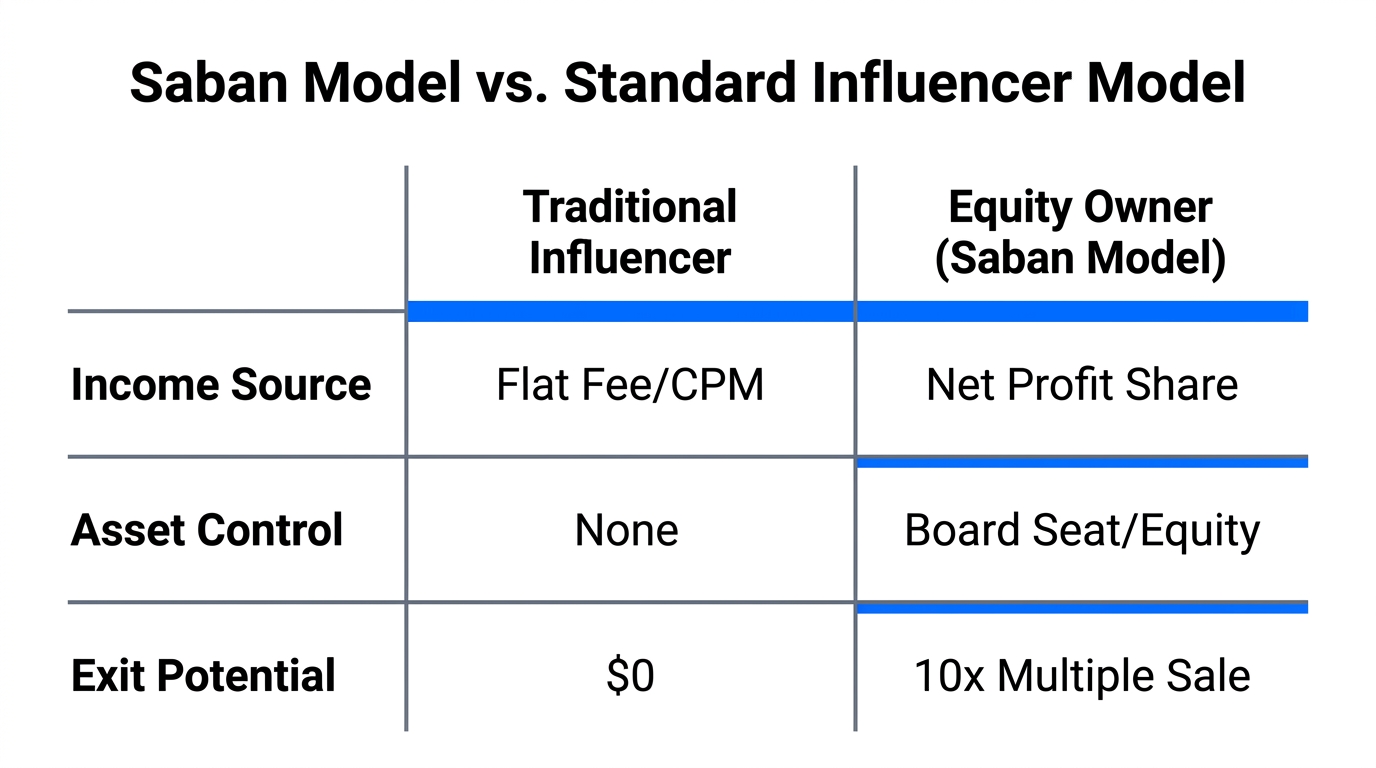
The secret to the Nick Saban business model isn't that Saban is selling cars himself. He isn't walking the floor of a showroom in Miami or Nashville. The key to this celebrity equity deal is the partnership with John Agresti, a former accountant and obsessive operator within the Dream Motor Group. Saban reportedly interviewed Agresti like he was hiring an offensive coordinator—once he knew the operator was a master of the financial details, he committed.
Agresti manages the granular details, tracking every sale on parabolic curves to ensure pricing efficiency, while Saban provides the capital and the Mercedes brand building authority. Together, they have built a group that sells over 22,000 cars a year, generating nearly $2 billion in annual revenue. This allows Saban to stay in his zone of genius—leadership and strategy—while his money works in a high-yield physical asset.
Dominating Local Monopolies: The Miami Mercedes Case
4:30In a stunning move that redefined creator economy investment, Saban’s group reportedly acquired two Mercedes-Benz dealerships in Miami for a staggering $700 million. This highlights the power of local monopolies. Car dealerships are often granted specific territories, making them the sole provider for a luxury brand in a high-wealth radius. When you combine the prestige of Mercedes with the legendary status of a name like Saban or John Elway, you create a moat that digital-only brands cannot replicate.
John Elway’s previous success serves as a precursor to this model. Elway sold his first dealership group to AutoNation for $87 million in stock. While he missed out on a 20% stake in the Denver Broncos due to illiquidity and bad advice (a lesson for all creators to stay liquid), he eventually returned to the dealership space. His Chevrolet dealership is currently one of the top performers in the country, proving that "hometown hero" status translates directly into trust at the point of purchase.
"$700 million for two dealerships in Miami is a testament to the value of physical distribution in a world where digital reach is increasingly fragmented."
The Economics of Dealership Roll-ups: Why Physical Assets Win
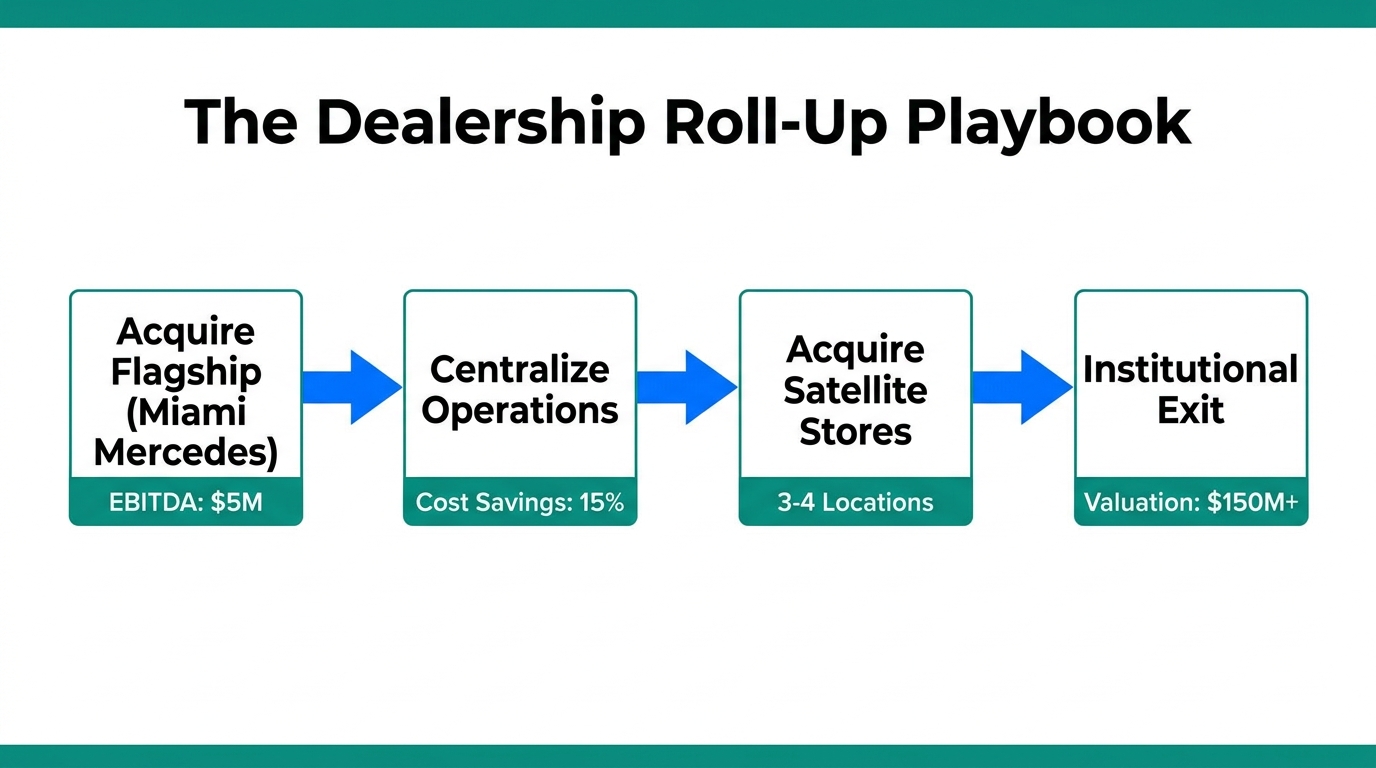
Why are car dealerships the preferred vehicle for this influencer marketing strategy 2026? It comes down to two factors: Floor Financing and Bank-Friendliness. Unlike a SaaS startup or a crypto project, banks understand the dealership model perfectly. Manufacturers often provide floor plan financing to hold the inventory, meaning the business is highly leveraged but predictable.
As revealed in Forbes' profile of 'the car dealership billionaire no one knows,' Terry Taylor, owning a network of dealerships allows for massive real estate accumulation. Taylor owns over 120 dealerships and hundreds of millions in high-end real estate. For a creator, this is the ultimate hedge against the volatility of social media algorithms. Platforms like Stormy AI can help creators identify their audience demographics and quality, which is the first step in proving to a brand like Mercedes that you have the right 'territory' of influence to warrant an equity partnership.
Avoiding the 'Local Maxima' in Creator Business
Many creators hit a 'local maxima'—a point where their growth plateaus because they are only selling their time. To break through to a 'global maxima,' creators must diversify into assets with different dimensions. As Patrick Collison of Stripe has noted, business isn't just a 2D hill; it's a multi-dimensional space. By moving into physical dealerships, Saban added a dimension of 'physical retail' and 'real estate' to his 'media' dimension, unlocking a path to billionaire status.
| Metric | Digital Media Asset | Physical Dealership Asset |
|---|---|---|
| Bankability | Low / Speculative | High / Asset-Backed |
| Operating Margin | High, but volatile | Steady / Service-based |
| Resale Multiple | 3x - 10x Earnings | 8x - 15x + Real Estate Value |
How to Identify 'Bank-Friendly' Businesses: A Playbook
6:30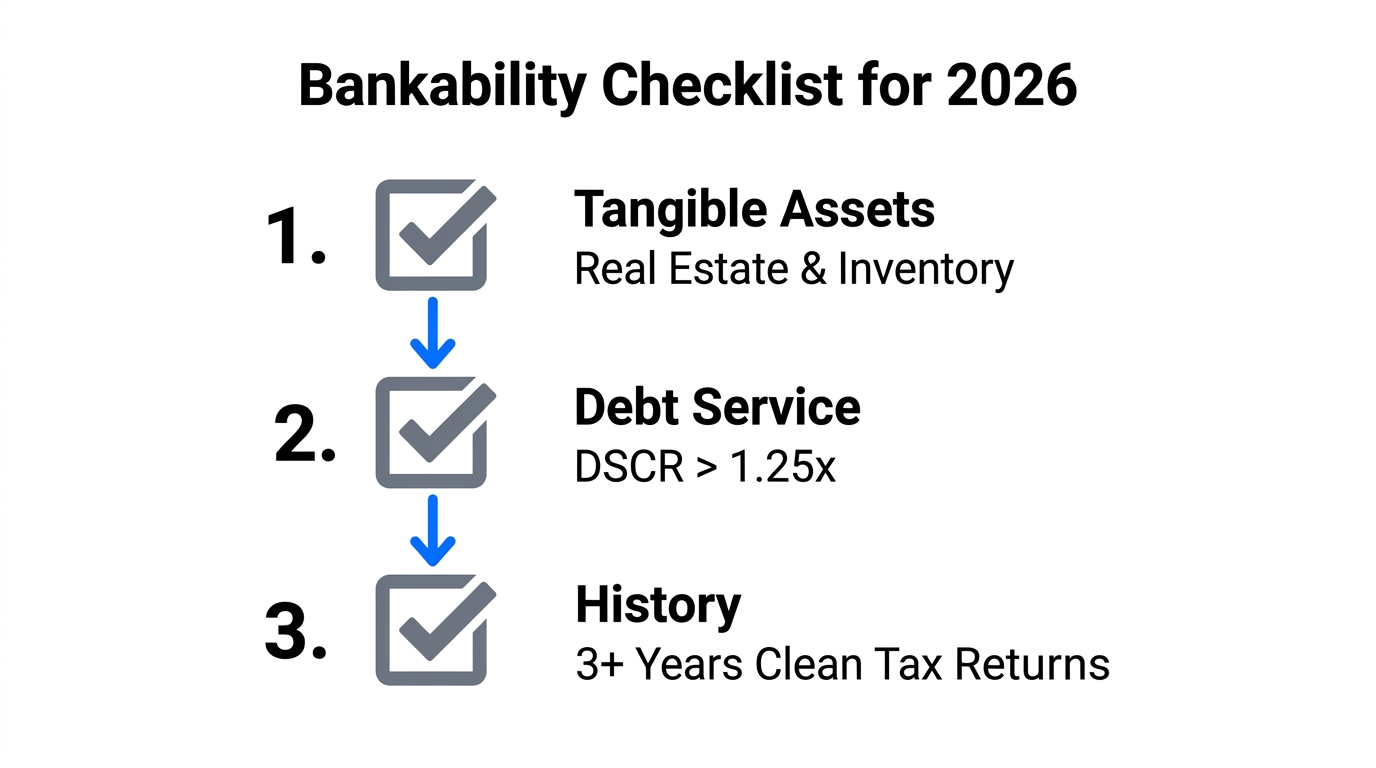
If you are a creator looking to emulate the Nick Saban business model, you need to look for businesses that are 'ripe for brand-led acceleration.' These are typically traditional industries that lack modern marketing flair but have robust cash flows. Use these steps to find your equity play:
Step 1: Look for Fragmented Markets
Industries like HVAC, local car dealerships, landscaping franchises, or even specialized medical supplies (like the PPE business Saban's partner ran) are highly fragmented. They are often run by older operators who aren't using Google Ads or TikTok Ads Manager effectively. Your brand is the unfair advantage that lowers the customer acquisition cost (CAC).
Step 2: Vet the Operator First
Don't try to run the shop. Find an operator who is obsessed with the financial statements. Like Saban's partner John Agresti, they should know every name, every sale, and every parabolic growth curve. Relationship management platforms like Pipedrive can help you manage these high-level relationships and track the lead flow you are generating for the business.
Step 3: Secure the Distribution
Focus on businesses with 'territorial' rights or local monopolies. This protects you from the commoditization seen in e-commerce. Whether it's a dealership territory or a regional franchise agreement, ensure that your influence is being funneled into a protected market.
"The problem with most businesses adopting AI and new tech is a problem of imagination, not capability. Creators provide the imagination; operators provide the capability."
Conclusion: The Future of Creator Equity
By the end of 2026, the distinction between 'celebrity' and 'conglomerate owner' will have vanished. Nick Saban’s journey from a $12M/year coach to a billionaire car mogul is the blueprint for every creator with a loyal audience. Whether you're using Stormy AI to find the right creators for your own brand roll-up or you're a creator looking to trade your reach for a piece of a Mercedes-Benz franchise, the goal is the same: own the asset, don't just rent the attention.
Stop looking for the next sponsorship deal and start looking for the next dealership. The most successful entrepreneurs of the next decade won't be the ones with the most followers, but the ones who used those followers to buy the most 'boring,' cash-flowing businesses in the world.