In the high-stakes world of software marketing, most founders view technical documentation as a necessary chore—a post-sale requirement to reduce support tickets. However, for elite growth teams, documentation isn't just a manual; it is a high-converting saas seo strategy. Take the case of Lucas Hermann, the founder of StageTimer, who turned a simple countdown tool into a $25,000 per month business, as detailed in his growth story on Indie Hackers. By treating his help docs as landing pages for long tail keywords for software, Hermann attracted 86,000 unique visitors per month. This approach shifts the focus from broad, expensive industry terms to hyper-specific user pain points where the competition is low and the intent to buy is extraordinarily high.
The Integration SEO Playbook: Targeting Hardware-Software Synergy
The most effective way to dominate niche search results is by targeting "integration keywords." These are queries where a user is trying to make two specific things work together—usually a piece of software and a physical device or another platform. For StageTimer, this meant creating documentation specifically for the Elgato Stream Deck integration. Instead of trying to rank for generic terms like "timer app," which are flooded with low-intent traffic, Hermann focused on "countdown timer Stream Deck companion."
This is a masterclass in content marketing for saas. When a user searches for an integration guide, they are already deep in the solution-seeking phase. They have the hardware, they have a problem, and they are looking for the software bridge. By providing a software documentation seo page that provides a step-by-step solution, you aren't just giving information—you are demonstrating product-market fit in real-time. This strategy allowed StageTimer to capture users who were significantly more likely to purchase because the tool solved a concrete, immediate technical friction point.
Mining Google Search Console for Unintentional Wins


Success in b2b lead generation often comes from doubling down on what is already working, even if you didn't plan for it. Hermann’s strategy involves putting up documentation and then using Google Search Console to see what people are actually clicking on. Often, users will find your site through "unintentional" keywords—phrases you didn't explicitly target but that Google's algorithm deemed your content relevant for.
Once these hidden gems are identified, the next step is to double down. If you see traffic coming in for a specific use case, such as "timer for horse races" or "TV broadcast election clocks," you create dedicated documentation pages for those niches. To scale this discovery, many modern teams use Stormy's AI search for discovery across TikTok, YouTube, Instagram, LinkedIn, TikTok Shop, and newsletters to identify niche influencers and creators who are already discussing these specific technical problems, providing fresh ideas for documentation topics that solve real-world issues.
Content Synergy: Combining Documentation with Video Tutorials
Text-based documentation is excellent for software documentation seo, but it becomes a lead generation powerhouse when paired with video. Hermann noted that while his YouTube tutorials might not get millions of views, the views they do get are from people with a concrete problem. A 10-minute video showing exactly how to set up a remote-controlled timer for a TED talk acts as a functional demo that builds trust before the user even signs up.
This synergy is vital for b2b lead generation. When you embed these videos directly into your documentation, you keep users on your site longer, which signals to Google that your content is high-quality. If you are looking to amplify these tutorials, you can use Stormy AI for influencer vetting and fake follower detection to find technical creators in the video production or event planning space. By vetting their audience quality and engagement, you can partner with them to create even more "how-to" content that links back to your documentation, creating a powerful backlink profile that boosts your overall domain authority.
Why Low-Volume, High-Intent Keywords Lead to Higher Conversion
In content marketing for saas, it is tempting to chase high-volume keywords found in tools like Ahrefs. However, ranking for "project management" is nearly impossible and often brings in "tire-kickers" who aren't ready to buy. Conversely, long tail keywords for software—like "remote control timer for vMix"—might only get 50 searches a month, but 10 of those searchers might become paying customers immediately. Hermann found that by focusing on these niches, he could build a $25k MRR business with a lean infrastructure.
For solopreneurs and small teams, this is the ultimate saas seo strategy. It allows you to compete with giants by being more relevant to a smaller group of people. To manage the influx of leads and partnerships generated by these niche pages, Stormy's creator CRM can help you track every interaction and collaboration with the experts who find your documentation, ensuring that no potential partnership or lead falls through the cracks.
The Documentation SEO Funnel: A Step-by-Step Playbook

To turn your technical guides into a lead generation engine, follow this structured playbook. This approach ensures your documentation serves both as a support resource and a high-performance marketing asset.
Step 1: Identify Integration Touchpoints
List every piece of hardware, software, or API your product touches. Use Reddit to find subreddits where users are complaining about the friction between these tools. These complaints are your future documentation titles.
Step 2: Create Solution-Oriented Documentation
Write your documentation using long tail keywords for software in the H1 and H2 tags. Instead of "How to use the API," use "How to connect [Product A] to [Product B] using [Language]." If you use a framework like Vue.js, create guides specifically for developers in that ecosystem.
Step 3: Automate Niche Outreach
Once your documentation is live, you need to get it in front of the right people. Use Stormy's AI outreach to find and contact niche creators who have previously made content about your competitors or the hardware integrations you've documented. The platform handles AI email outreach with auto follow-ups and generates hyper-personalized emails that invite them to check out your new integration guide, driving immediate high-quality traffic.
Step 4: Analyze and Iterate
Check your software documentation seo performance regularly. See which pages have the highest click-through rate but high bounce rates; this usually means the documentation is ranking well but isn't solving the problem effectively. Use tools like Airtable to track customer feedback and link it directly to documentation updates.
Step 5: Track Conversion and Post Performance
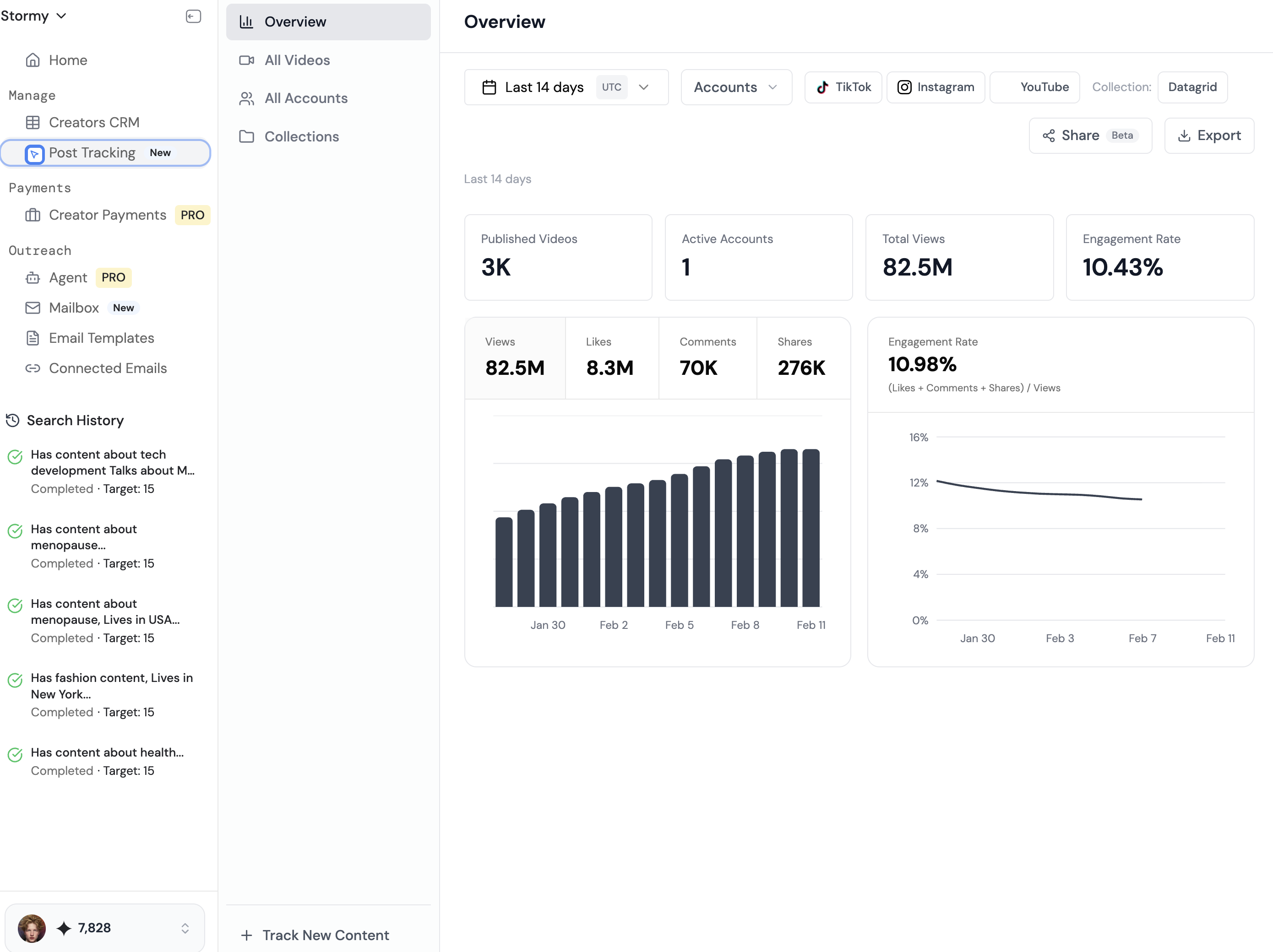
Finally, monitor how these pages contribute to your bottom line. With Stormy's post tracking and campaign analytics, you can see how individual posts or videos mentioning your documentation are performing in real-time. This allows you to see which technical guides are actually driving app installs or sign-ups, helping you refine your b2b lead generation efforts.
Conclusion: From Manuals to Marketing Engines
Technical documentation is often the most undervalued asset in a SaaS company's marketing arsenal. By shifting your perspective and viewing every help article as a landing page for long tail keywords for software, you can build a sustainable, low-cost saas seo strategy that delivers high-intent leads. Lucas Hermann’s journey with StageTimer proves that you don't need a massive team or a million-dollar ad budget to succeed. You just need to find the specific technical problems people are already searching for and provide the best possible guide to solving them. Stop writing manuals for your current users and start writing them for your future ones.