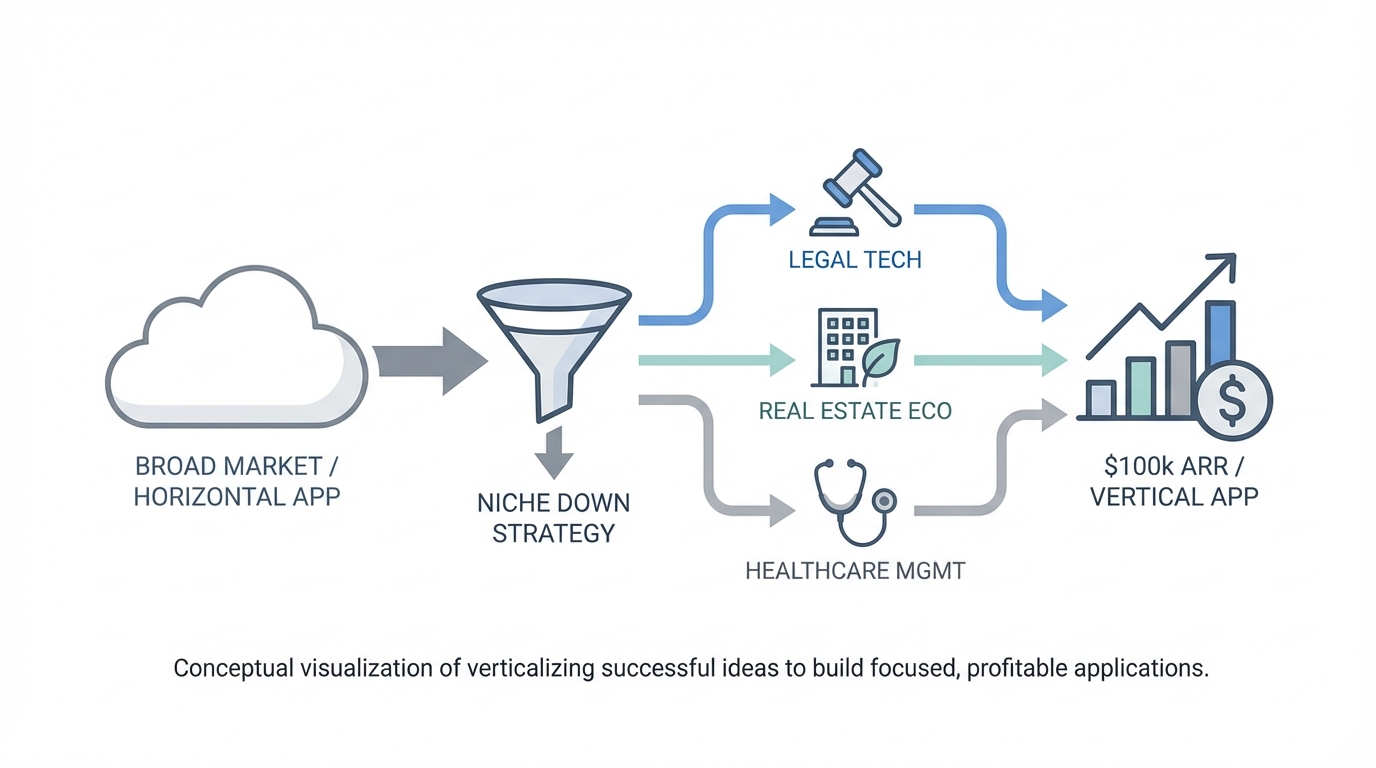
Most founders believe that to build a successful mobile app, they need to invent a brand-new category or solve a problem that has never been addressed before. This is one of the most common misconceptions in the software-as-a-service (SaaS) world. In reality, some of the most profitable apps of the last decade weren't original inventions; they were clever verticalizations of existing broad-market winners. By using niche market research to identify successful utility apps and applying those core mechanics to an underserved community, developers can bypass the risky phase of product-market fit discovery. This strategy, often called the 'copy-and-improve' model, allows you to build a $100k ARR app by simply narrowing the focus and deepening the resonance with a specific target audience.
Competitive Auditing: Identifying Broad Market Winners

The first step in this playbook is identifying apps that are already generating significant revenue. When conducting a competitor analysis tools check, you shouldn't look for unique features; you should look for validated human behaviors. For instance, the app Opal has seen massive success, generating over $5 million in ARR by helping people manage their screen time. Similarly, an app called 1sec has been generating roughly $100,000 per month by forcing users to take a deep breath for three seconds before opening distracting apps like Instagram or TikTok.
These apps prove that people are willing to pay for friction. They want the 'bad' habits to be harder to access. Instead of trying to compete directly with these giants, smart developers look at how these mechanics can be adapted for specific subcultures. For example, if a general focus app works by using a 'breathing' prompt, what would a specific focus app look like for a religious community, a fitness community, or students? Platforms like Stormy AI (an AI-powered platform for creator discovery) are incredibly useful at this stage for identifying which UGC creators are already making content about these 'friction' apps, giving you a clear signal of where the market sentiment is trending. To ensure your verticalization strategy works, you can use Stormy AI to analyze creator profiles, detecting fake followers and evaluating engagement quality before reaching out. By analyzing the comments on viral videos about Opal or 1sec, you can find target audience identification gaps where users say, 'I wish this worked better for my specific needs.'
The Faith-Based Case Study: From Breathing to Praying
A perfect example of this verticalization strategy is the app PreyScreen. The founder noticed the success of 1sec and realized that the 'deep breath' mechanic could be easily swapped for a 'prayer' mechanic. While 1sec was making $100k a month with a secular focus on mindfulness, PreyScreen targeted the Christian niche by requiring users to pray for a few seconds before unlocking their social media apps. This simple shift in saas product strategy transformed a generic utility into a deeply personal spiritual tool. The results were staggering: the app hit $120,000 ARR in just six months and was acquired within a week of the founder tweeting about its success.
This case study highlights why underserved markets like the Christian niche are prime for this model. These communities often have high levels of brand loyalty and are looking for tools that align with their values. When you take a proven mechanic and wrap it in the language, imagery, and community values of a specific group, your app store optimization (ASO) becomes much more effective. Instead of ranking for broad terms like 'focus app,' you can dominate keywords like 'Bible focus' or 'Christian screen time.' In the case of PreyScreen, they were initially the only listing for certain faith-based focus keywords, giving them a massive organic advantage before the market became saturated.
Mapping Features to a Specific Persona for 60% Retention
One of the biggest challenges in the app world is retention. A general-purpose app might see a Day-30 retention rate of 10-15%, which is considered decent. However, PreyScreen achieved a 60% Day-30 retention rate. The secret was mapping the features so closely to the persona that the app became part of the user's daily identity. Because the users identified as Christians first and smartphone users second, the 'prayer' prompt wasn't seen as an annoying interruption—it was seen as a spiritual habit-builder.
To achieve this, you must look beyond the primary feature. For PreyScreen, they didn't just show a blank screen; they focused on the splash page. By creating a beautiful animation of a halo or a cross, they established a brand feeling within the first half-second of the app opening. They also utilized hyper-niche gamification by showing a 'congratulations' page after a prayer was completed. This emotional payoff is what drives high retention. Using app analytics through tools like Superwall allowed the team to test different paywalls and onboarding flows to ensure that the transition from 'free user' to 'dedicated daily user' was seamless. When your app feels like it was built specifically for one person, they are 60% more likely to keep using it a month later.
The Niche Down Playbook: A Step-by-Step Guide
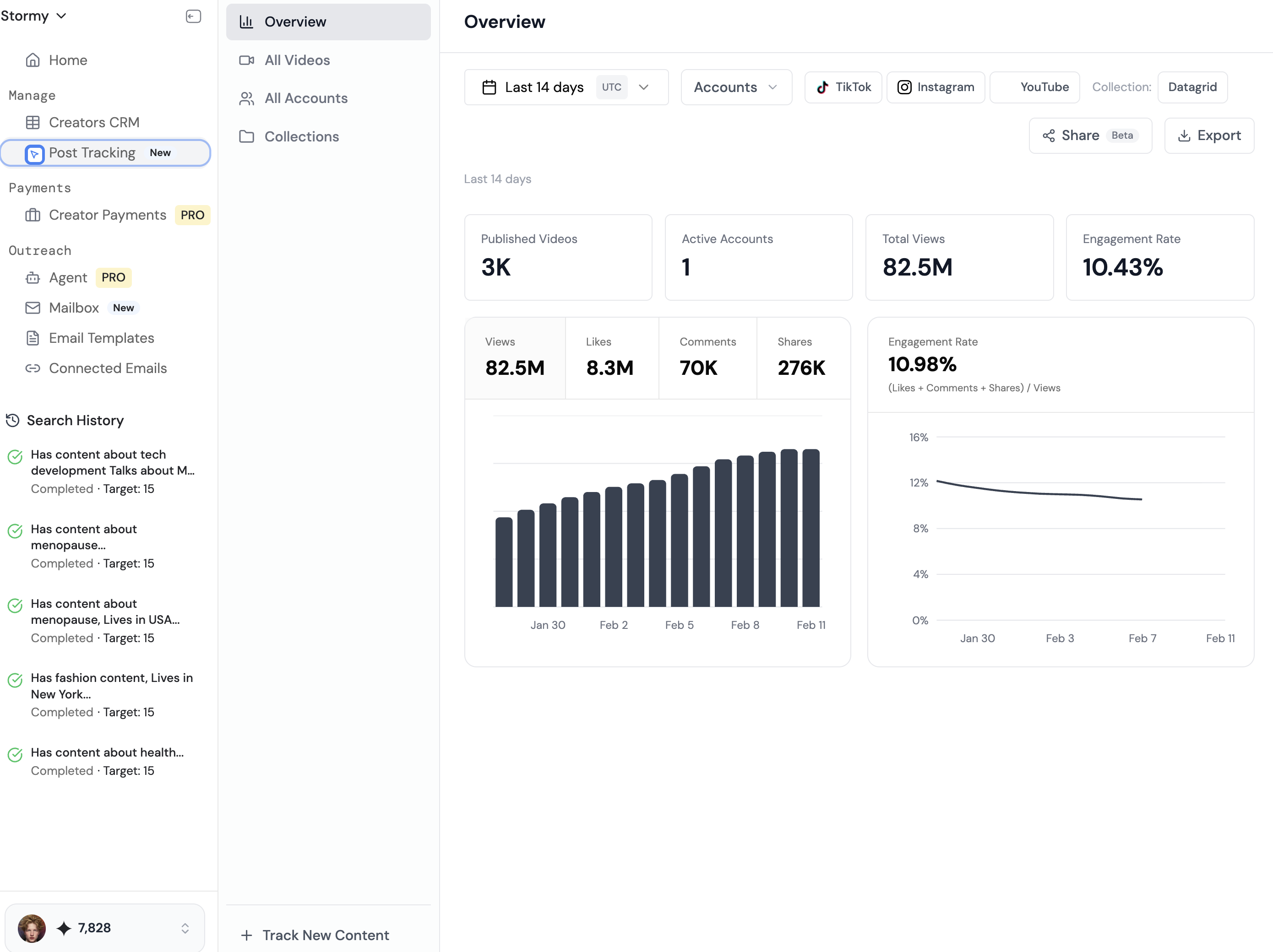
If you want to replicate this success, you need a repeatable system. You can use Stormy AI for finding UGC creators for mobile app ads to see what content is currently going viral in broad categories. You can even set up an autonomous AI agent within Stormy AI to discover and contact these creators every day on autopilot. Here is the clear playbook to follow:
Step 1: Audit the Top Charts
Open the App Store or use a tool like Sensor Tower to find apps in the top 100 of their category that have a simple core utility. Look for apps making at least $50k-$100k per month. Examples include habit trackers, AI journals, or screen blockers.
Step 2: Identify an Underserved Vertical
Ask yourself: 'Who would benefit from this core utility but feels alienated by the current general-market branding?' Common verticals include religious groups, specific professional trades (e.g., nurses or truckers), or hobbyists with high spending power (e.g., classic car collectors).
Step 3: Repurpose the Hook
Take the 'viral hook' of the original app and translate it. If the original app uses 'AI to write emails,' your niche version might use 'AI to write sermons' or 'AI to write legal briefs for paralegals.' The technology is the same; the target audience identification is different.
Step 4: Build for Speed over Perfection
The PreyScreen story shows that the app was built and scaled within months. Don't spend a year in development. Use a saas product strategy that prioritizes a 'Minimum Viable Product' that looks high-quality. Focus on the splash screen and the 'success' screen, as these are the most shareable parts of the app for social media marketing.
Leveraging Underpriced Marketing Channels
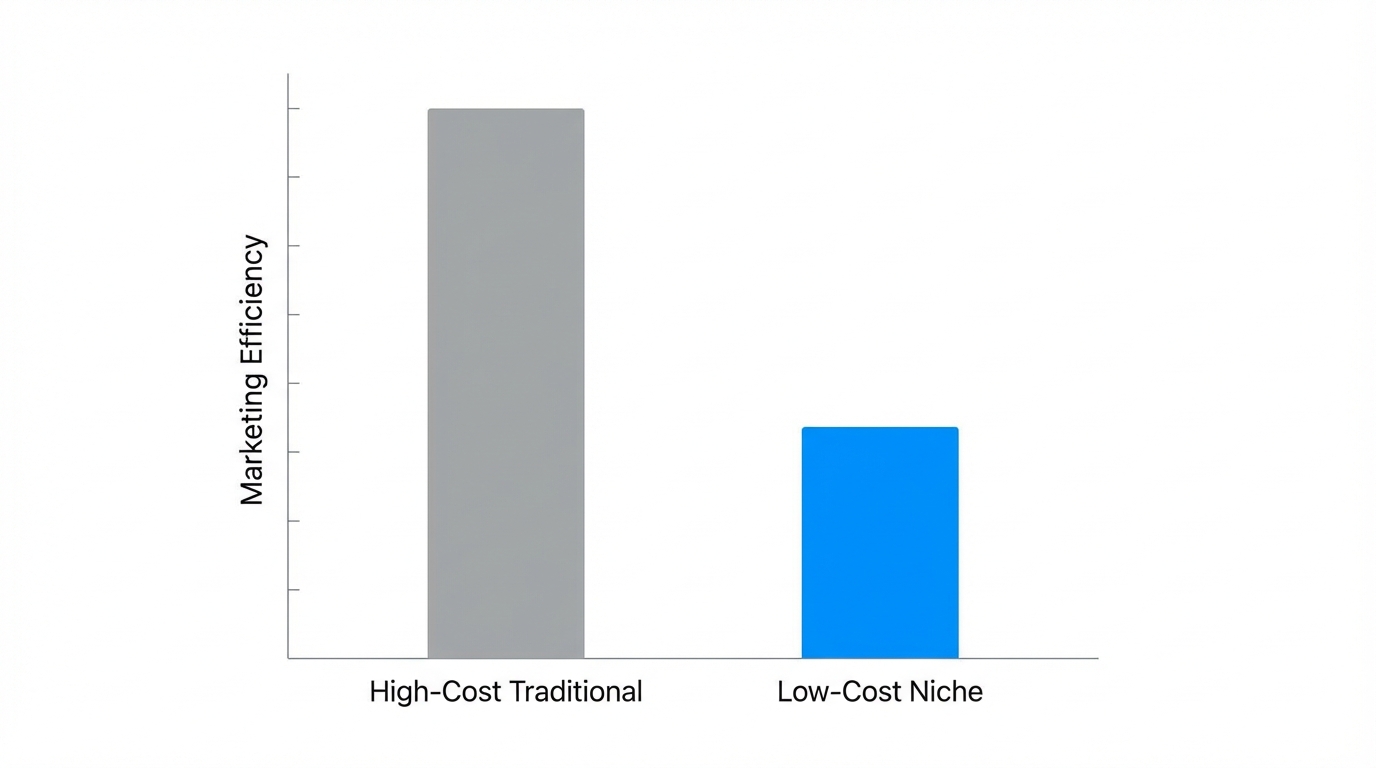
Once you have a niche app, your marketing costs should be significantly lower than a general-market app. While a general fitness app might pay $2.00 or more per install in the US, PreyScreen achieved a sub-$0.50 Cost Per Install (CPI), with some days as low as $0.39 per install. The key is finding channels where your niche congregates. The founder of PreyScreen discovered a 'secret' weapon on the X (Twitter) Ads platform: Follower Lookalike targeting.
By targeting the followers of celebrity pastors, they were able to show their ads to a pre-vetted group of people who were almost guaranteed to be interested in a Christian prayer app. This level of precision is impossible with broad-market targeting. You can apply this to any niche: if you're building an app for car enthusiasts, target the followers of famous automotive journalists or YouTubers. Additionally, TikTok organic content can be used as a testing ground. The PreyScreen team managed over 10 different TikTok accounts, using an agency to find different 'hooks' and 'rage bait' angles. When one video went viral organically, they immediately moved it into Meta Ads Manager to scale the results. This hybrid approach—testing organically and scaling with paid—is the fastest way to hit $10k MRR and beyond.
Monetizing the 'Waste': Beyond the Subscription
Not everyone will subscribe to your app, but in a niche market, even the 'non-converters' are valuable. PreyScreen had a conversion rate of about 2.5%, which meant 97.5% of users were not paying for the premium version. Instead of ignoring this 'waste,' the team realized that their high retention (60% at Day 30) meant these users were still opening the app four times a day to pray. By implementing in-app ads for the free tier, they were able to generate roughly $0.05 per user per day. While that sounds small, across a large user base, it meant the app broke even on its $0.50 acquisition cost within just 15 days. This allowed the business to scale infinitely because the Customer Acquisition Cost (CAC) was fully subsidized by ad revenue, leaving the subscription revenue as pure profit. This is a critical component of app store optimization and revenue scaling—understanding the lifetime value of even your free users.
The Exit Strategy: Speed Beats Price
Building a $100k ARR app is only half the battle; the final step is the exit. In the niche app world, acquisitions happen fast. PreyScreen was sold within a single week. The founder’s advice for exits is contrary to what many believe: prioritize closing speed over the absolute highest multiple. Most deals fall through during long due diligence periods. If a buyer can close in five days at a 3x-4x ARR multiple, it is often better to take that deal than to wait for a 6x multiple that might never materialize.
Furthermore, keep your app 'growth-ready' for the buyer. One common tactic is to avoid internationalization. By only launching in the US, you leave an obvious 'lever' for the buyer to pull. When you sell the app, you can say, 'We are making $120k ARR in the US alone; you can double this just by translating it into Spanish and Portuguese.' This gives the buyer a clear path to an immediate return on their investment, making your app a much more attractive purchase. Whether you are using Stormy AI for creator search or building a simple habit tracker, always leave some 'low-hanging fruit' for the next owner.
Conclusion: Focus on Your First Win
The journey to a $100k ARR app doesn't require a genius-level invention. It requires strategic niche market research and the discipline to execute a proven model for an underserved group. Don't try to be the next Mark Zuckerberg on your first try. Aim for a 'small' win—a specialized app that generates $5k to $10k a month. This 'first nut' gives you the capital, the skills, and the network to take much bigger swings later. By verticalizing successful ideas, leveraging underpriced channels like Google Ads and X Follower Lookalikes, and maintaining hyper-focus on a single persona, you can build a highly profitable, highly acquirable business in record time.