The 2026 Entrepreneur’s Playbook for Niche Category Creation: Lessons from the FTX Claims Market
Learn niche category creation in 2026 using the FTX claims trade as a guide. Discover market positioning strategies and how to build high-margin service businesses.
In the high-stakes world of venture capital and distressed assets, most players are content to follow the herd. When a titan like FTX collapsed, the global narrative was one of disgrace and irreversible loss. However, for a select group of entrepreneurs in 2026, such "disasters" are actually the birthplace of entirely new market categories. By identifying informational arbitrage where institutional players are too slow or fearful to tread, these individuals are building eight-figure lifestyle businesses from the wreckage of yesterday's giants. This is the art of niche category creation—a strategy that moves beyond mere service provision to owning a specialized corner of the financial universe.
Identifying Informational Arbitrage in 2026
Understand why exotic and niche investments provide superior informational arbitrage for modern entrepreneurs.
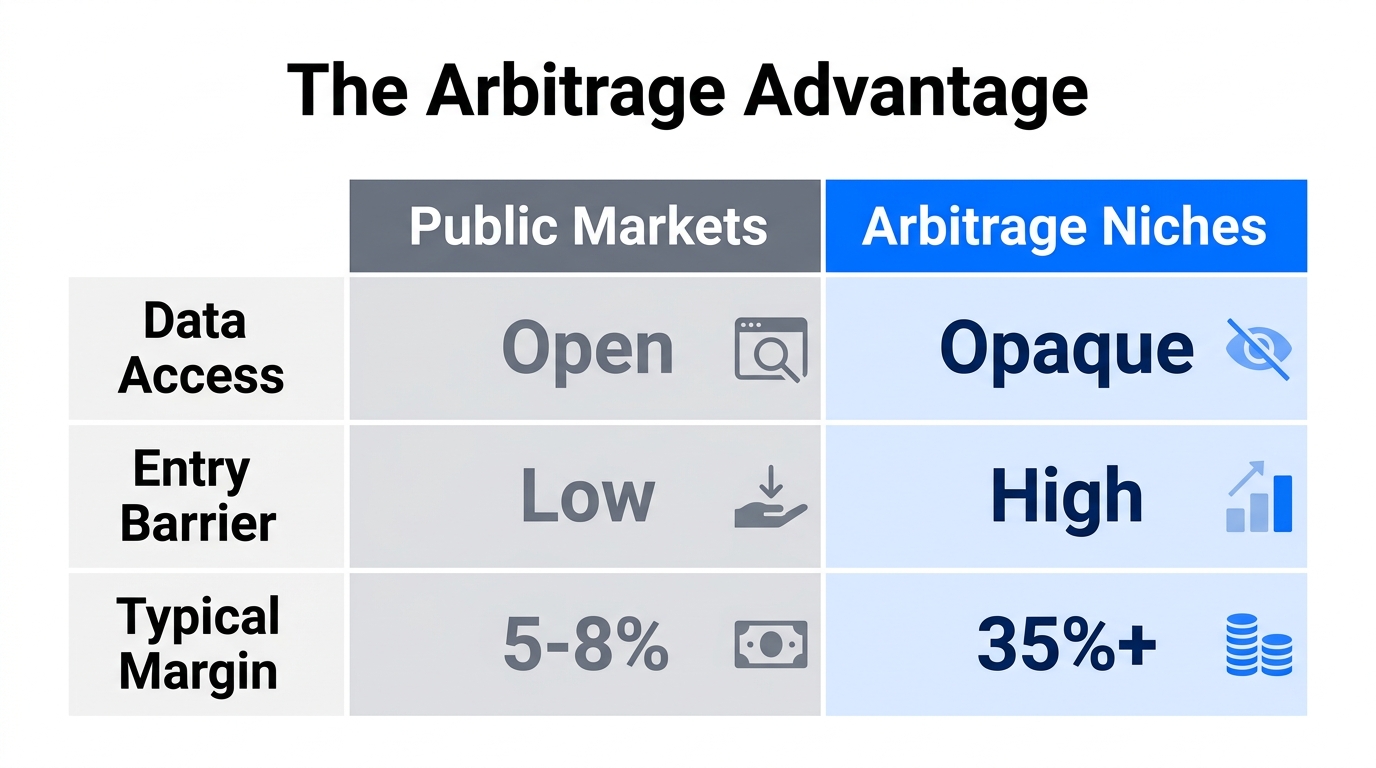
The core of any successful niche category in 2026 is the ability to distinguish between what Tommy, the "distressed guy in Europe," calls the "steak" and the "sizzle." In the context of the FTX bankruptcy, the steak was the known substance—the recovered assets and equity in companies like Anthropic that provided a margin of safety. The sizzle was the crypto optionality: the potential for Bitcoin and Solana prices to skyrocket during the multi-year bankruptcy proceedings. Entrepreneurs who find these opportunities are engaging in market positioning strategies that capitalize on institutional lag.
"When you're investing, you always want the steak and the sizzle. The steak is the known value that gives you a margin of safety; the sizzle is the upside of how good this could be if things go right."
Institutional firms like Apollo or Oaktree often have a cost of capital or a reputational risk profile that prevents them from touching "radioactive" assets early on. For a solo entrepreneur or a lean team, this gap is where the money is made. You aren't just looking for cheap assets; you are looking for misunderstood risk. In 2026, this might look like buying distressed AI compute credits or niche SaaS bankruptcy claims before the broader market realizes the underlying recovery value.
The Step-by-Step Process of Category Design
Explore how inventing a unique niche leads to massive long-term investment returns.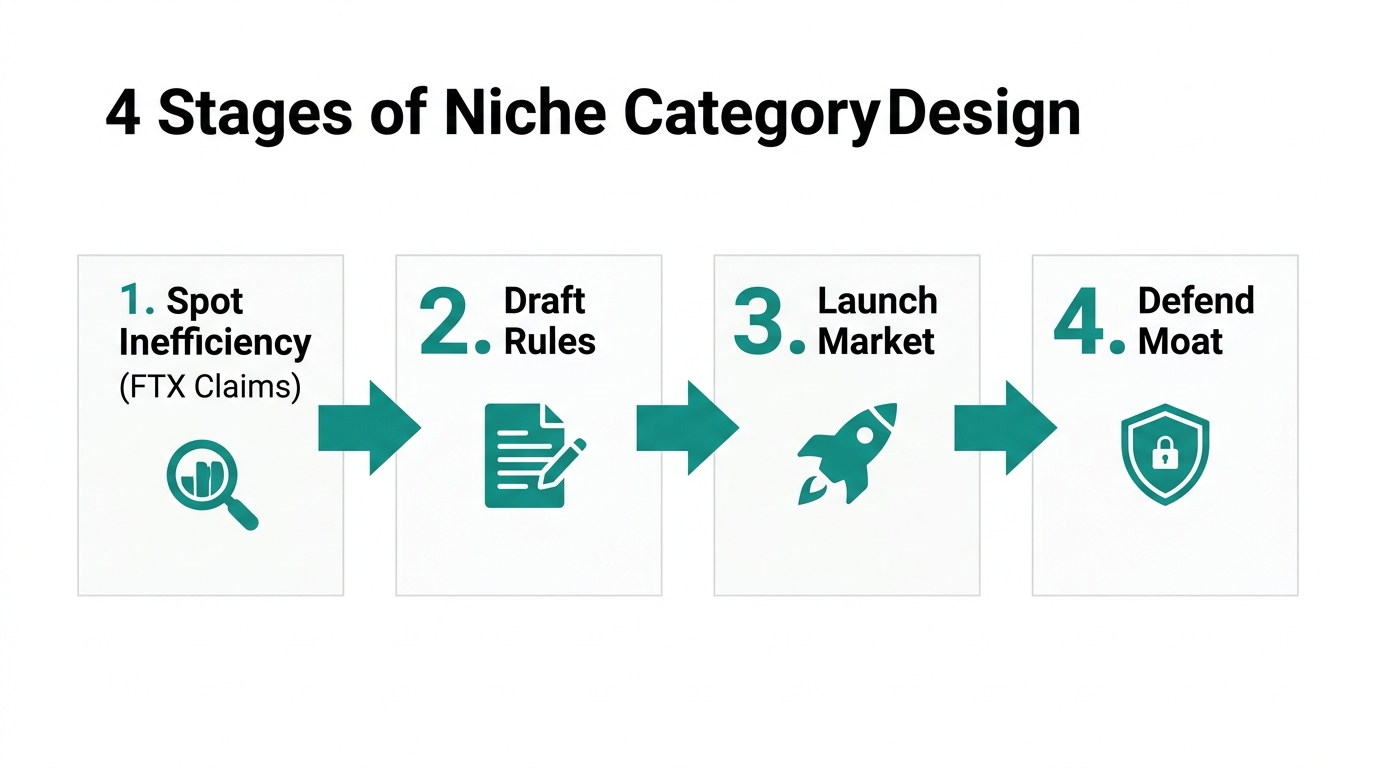
Moving from a generalist to a category-defining specialist requires a deliberate shift in how you present your expertise. Tommy didn't just "invest in stuff"; he became the world's leading specialist in crypto distressed claims. This process follows a specific evolution that any 2026 entrepreneur can replicate in fields like legal tech, renewable energy, or specialized marketing services.
- Step 1: Identify the Vacuum. Find a sector where a massive amount of capital is trapped but no clear mechanism for liquidity exists. In the FTX case, it was 14,000 creditors with no way to cash out.
- Step 2: Master the Native Tongue. To own the category, you must speak the "native tongue" of the niche. For Tommy, this was the legal code of bankruptcy courts. For a modern growth marketer, this might mean mastering the API logic of TikTok Ads Manager to find inefficiencies others miss.
- Step 3: Solve the "Grunt Work" Problem. Category creation is rarely about high-level theory; it’s about the hustle. This involves scraping leak lists, cold-calling creditors, and verifying ownership—work that big firms find too tedious to scale.
By the time the market matures, the category creator has already established a reputation as the "go-to" person. This creates a moat that is nearly impossible for latecomers to cross. Whether you are using tools like Stormy AI to discover creators in a specific sub-niche or manually digging through court dockets, the goal is the same: be the first to provide liquidity to a frozen market.
| Phase | Generalist Approach | Category Specialist Approach (Stormy Method) |
|---|---|---|
| Discovery | Broad market searches for "good deals." | Targeted scuttlebutt using AI to find specific distressed holders. |
| Positioning | "We do distressed investing." | "We are the #1 buyers of FTX claims in Europe." |
| Operations | Wait for brokers to bring deals. | Proactive outreach and symbiotic shark relationships. |
Building a Lifestyle Business with 8-Figure Deal Flow
One of the most compelling aspects of Tommy’s FTX strategy was the ability to run an eight-figure operation as a "guy in Italy." In 2026, the dream of the lifestyle business is no longer just about selling digital courses; it's about commanding high-stakes deal flow by leveraging specific knowledge. This requires a unique Venn diagram of skills: legal expertise, deep value investing, and entrepreneurial hustle.
"A position well bought is already half sold. In niche distress, you don't need to be the smartest guy in the room—you just need to be the one who did the most scuttlebutt."
To scale without adding massive overhead, entrepreneurs must use a modern tech stack. This involves automating the top-of-funnel discovery. For example, while Tommy used LinkedIn and leak lists to find Bitcoin group members under 35, modern founders use platforms like Stormy AI to instantly identify and outreach to micro-influencers or specialists who hold the keys to a niche market. By automating the "grunt work" of outreach through AI agents, you can maintain a lean team while processing millions in transactions.
Leveraging Symbiotic Relationships with Industry Sharks
Learn how small players thrive by building symbiotic relationships with massive industry sharks.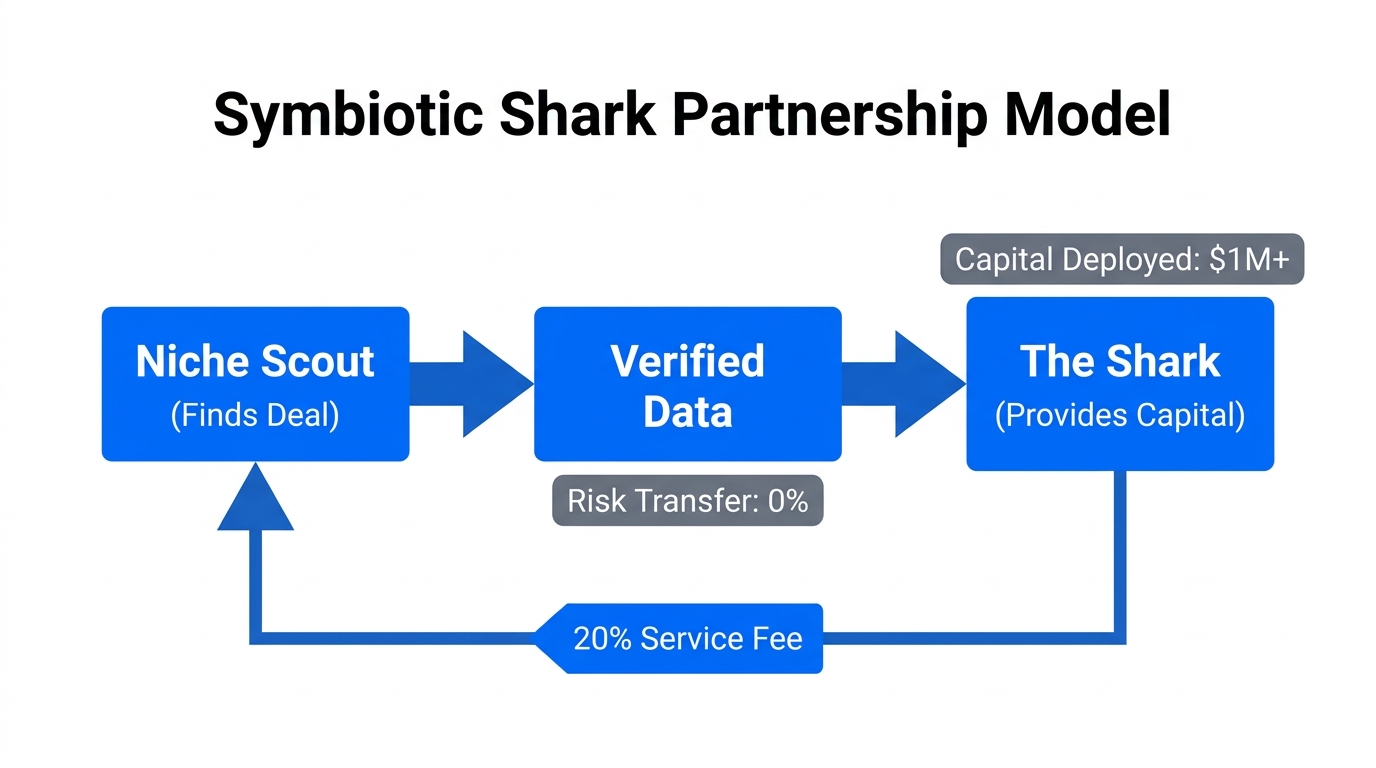
You don't need $100 million of your own capital to play in 8-figure markets. The secret to niche category creation is co-opetition—forming symbiotic relationships with the "sharks" of the industry. In the distressed world, this means calling firms like Oak Tree when you find a $10 million deal that is too big for your personal balance sheet but too small for their internal sourcing teams.
As the "little fish" that eats the barnacles off the shark, you provide value by doing the due diligence and cleanup work that the giants can't be bothered with. In exchange, you get allocation or a carried interest fee. This allows you to "swing above your weight class" and build a track record using other people's capital. In the world of software and e-commerce, this is equivalent to partnering with a platform like Shopify or Salesforce to handle the infrastructure while you own the specific customer relationship.
"You call the big firms with stuff they can't do, and they call you with the tiny stuff they can't handle. It's a symbiotic loop that mints fortunes."
Conclusion: The 2026 Outlook for Category Creators
The lessons from the FTX claims market are a masterclass in niche category creation. Whether you are investing in distressed crypto, building a specialized agency for Apple Search Ads, or launching a targeted SaaS, the principles remain the same: find the stake, exploit the sizzle, and do the work that others find too messy. As we move further into 2026, the tools for scuttlebutt—like the scuttlebutt method enhanced by AI-powered search engines and automated outreach agents—will only become more powerful.
Entrepreneurs who succeed this year will be those who stop trying to be the best at a general task and start trying to be the only one in a specific, high-value category. By mastering the art of the "special situation," you can build a business that is not only highly profitable but also personally fulfilling, allowing you to choose your projects, your partners, and your location. The next FTX is always around the corner; the question is, will you be the one running away from the fire, or the one finding the value in the ashes?