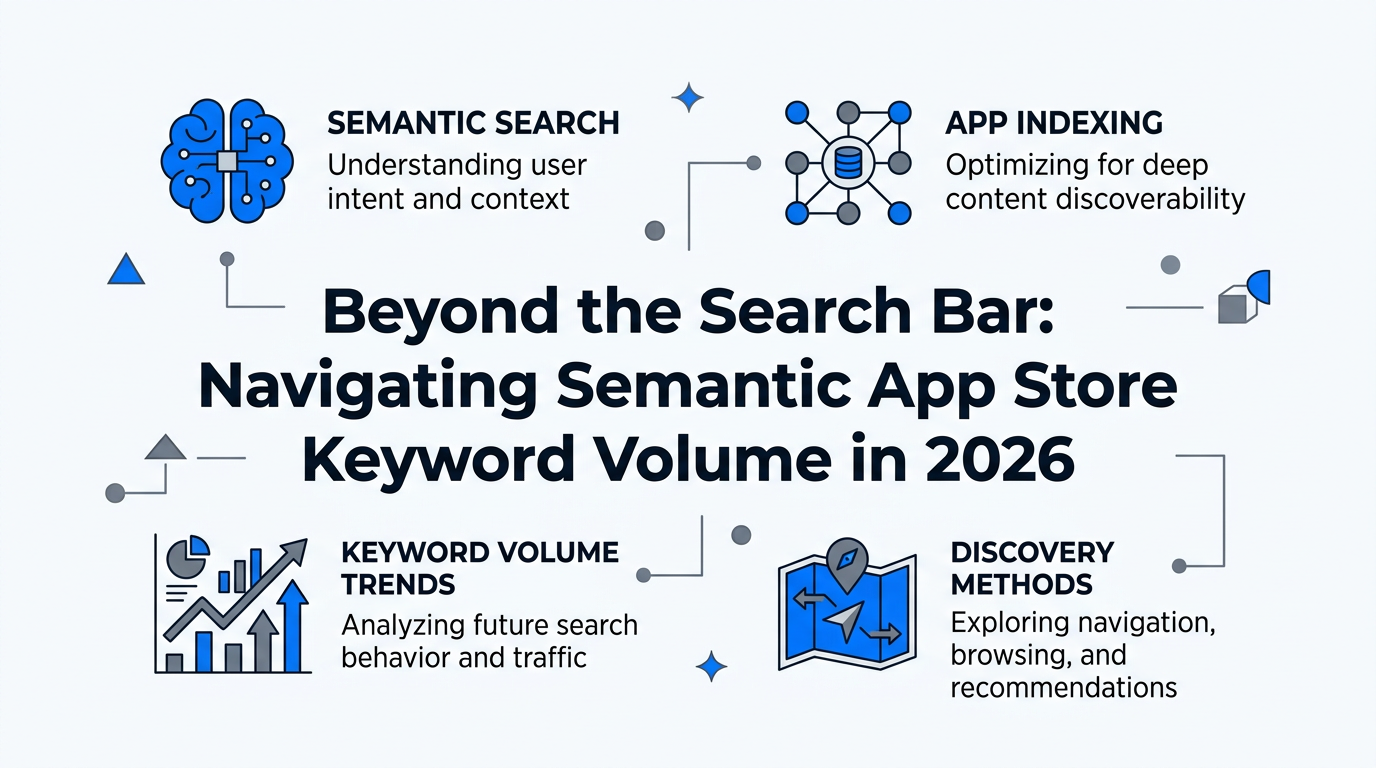
In the digital landscape of 2026, the traditional approach to App Store Optimization (ASO) has undergone a fundamental transformation. We have officially moved past the era of simple keyword matching. Today, success in the App Store is dictated by semantic intent and algorithmic intelligence rather than just lexical density. As of 2026, research continues to show that 65% to 70% of all app downloads originate directly from App Store searches, according to data from MobileAction and AppTweak. However, the way users search—and how Apple interprets those searches—has changed forever.
The Death of Lexical Matching: Understanding App Store Semantic Indexing
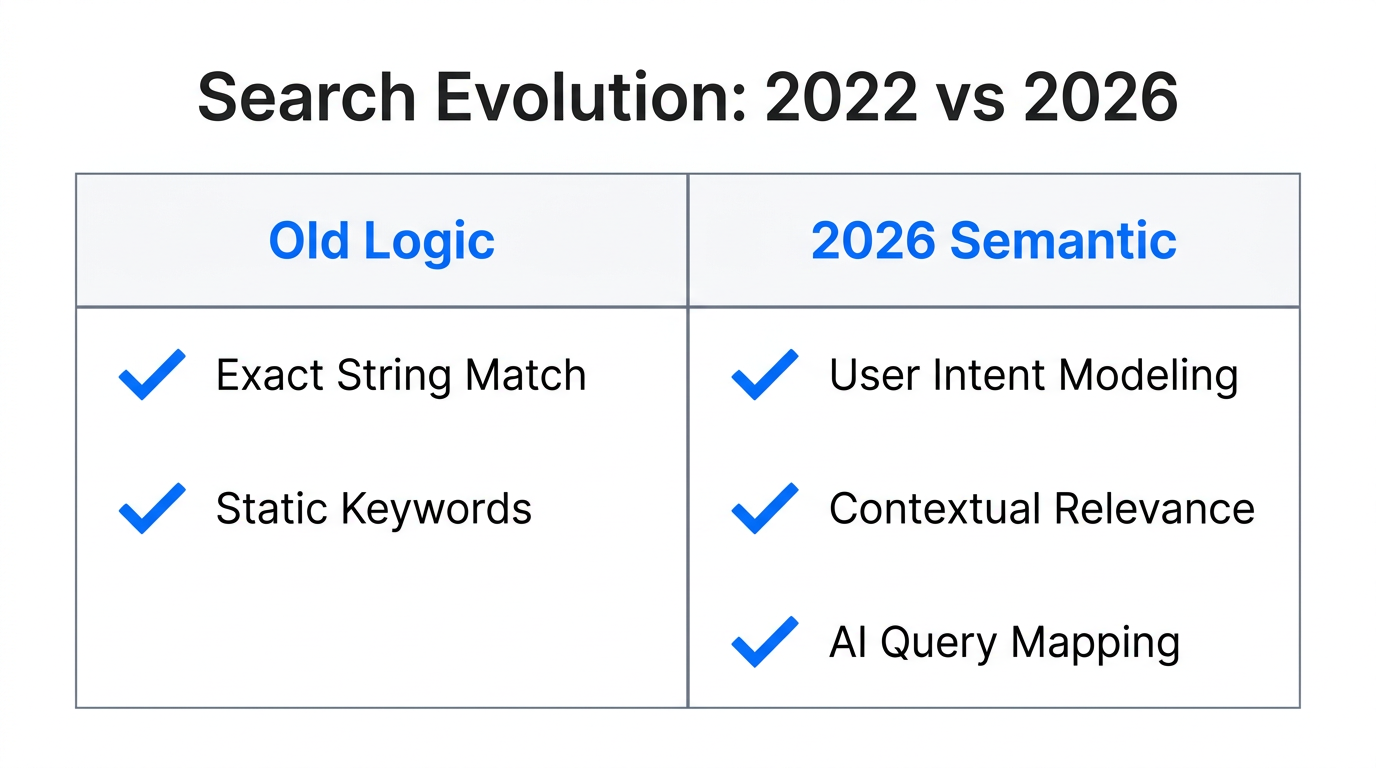
For years, ASO specialists focused on exact-match keywords, meticulously placing terms like "photo editor" or "fitness tracker" in titles and subtitles. In 2026, Apple’s algorithm has fully evolved from simple lexical matching to advanced app store semantic indexing. This means the algorithm now ranks apps for related terms and concepts even if those specific words aren't present in your metadata.
"The algorithm no longer just reads your keywords; it understands your app's purpose through a neural mesh of user behavior and contextual relationships."
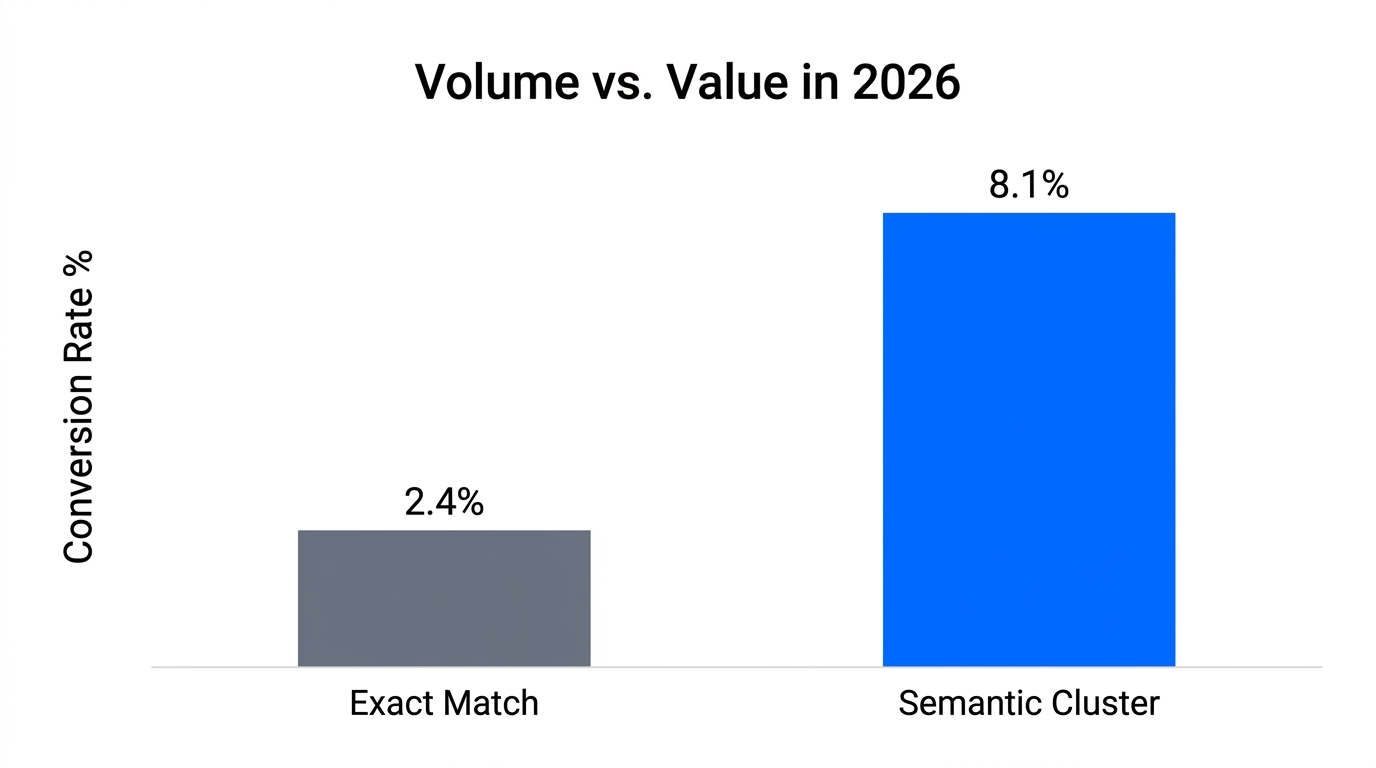
According to ConsultMyApp, Apple now utilizes a semantic understanding that groups keywords into clusters. If your app is indexed for "weight loss," the algorithm automatically understands your relevance for "calorie counter" or "diet planner." This shift requires a broader strategy where you target topic clusters rather than individual, isolated strings of text. Ranking in 2026 is about dominating a niche's vocabulary, not just winning a single high-volume word.
Capitalizing on the 300% Spike in App Store AI Search Trends
The search landscape has been disrupted by a massive surge in AI-related queries. In the past year alone, app store ai search trends have seen a staggering 300% volume spike for terms like "AI headshot generator," "AI writing assistant," and "AI personal trainer," as reported by AppRadar. While established brands like TikTok and Instagram still command the highest absolute volume, the fastest-growing segment of the market is driven by high-intent AI searches.
To pivot your brand messaging effectively, you must understand how these AI searches function. Users are no longer just looking for a tool; they are looking for an agent. This change in intent means your Subtitle and Title should reflect the autonomy and intelligence of your app. For developers, this represents a golden opportunity to capture "discoverable" organic growth by targeting generic AI terms that are currently less competitive than legacy branded keywords.
"AI-driven discovery has created a new 'Long-Tail' where users describe complex problems to the search bar, expecting the algorithm to find a sophisticated solution."
Decoding Search Popularity: How to Read the 2026 Data
Apple does not provide exact search numbers. Instead, they provide a Search Popularity (SP) score. Understanding these tiers is critical for any growth team trying to allocate budget between Apple Search Ads and organic ASO efforts. Most modern tools, such as ASOMobile, mirror these metrics to provide a clear picture of competitiveness.
| Search Popularity (SP) | Volume Description | Strategy for 2026 |
|---|---|---|
| SP < 20 | Very Low | Only target for highly specific, high-conversion long-tail niches. |
| SP 20–40 | Low-to-Mid | Ideal for new apps to build initial ranking authority and download velocity. |
| SP 40–60 | High Volume | Very competitive; requires strong conversion rates (CRO) to maintain rank. |
| SP > 60 | Extreme Volume | Dominated by giants. Requires massive off-platform traffic to break into the Top 3. |
For the most accurate data, experts recommend using the Apple Search Ads Official Site keyword tool. It provides a five-dot popularity indicator that remains the ultimate source of truth for keyword demand. Apps ranking in the Top 3 for high-volume keywords capture over 50% of the total clicks, making the pursuit of these scores a high-stakes game of precision.
Localization 2.0 Strategy: Beyond Direct Translation
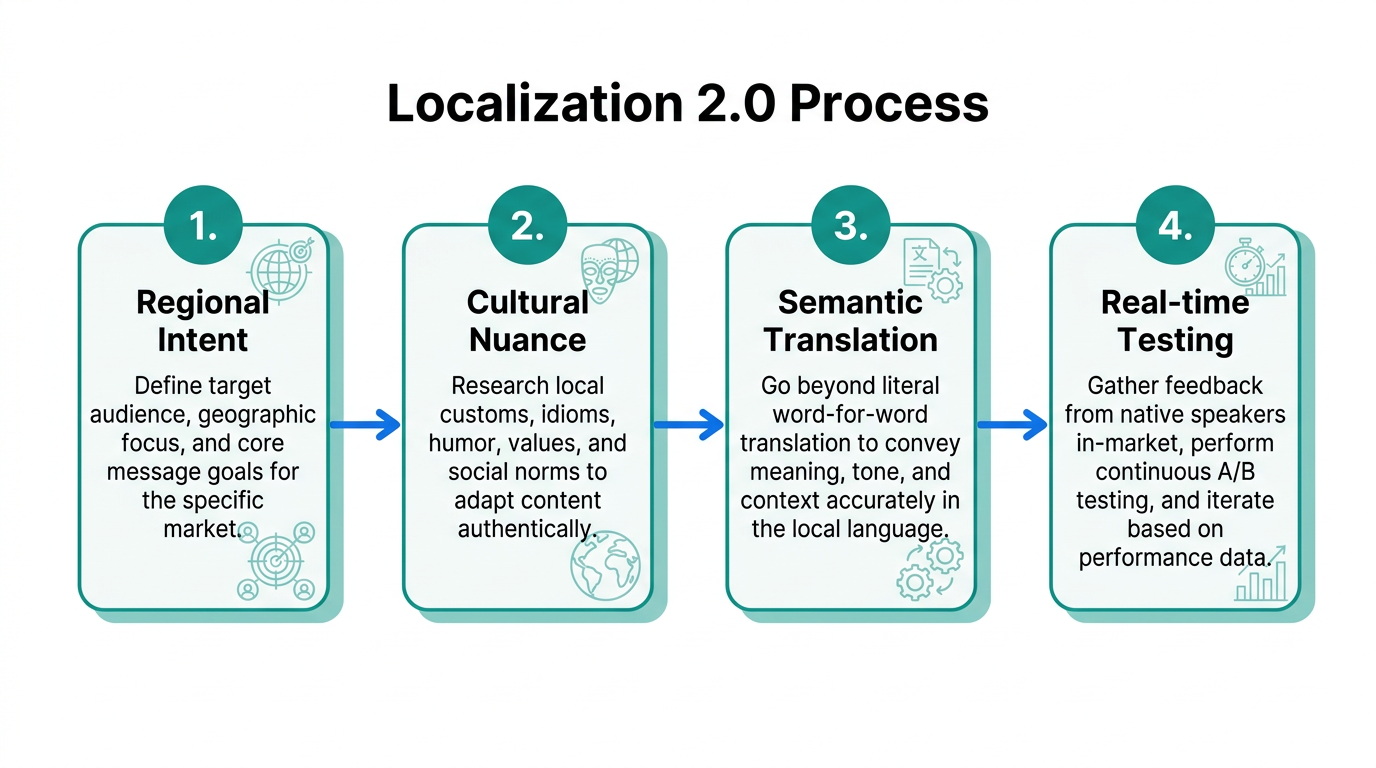
In 2026, the "set it and forget it" translation model is dead. We have entered the era of localization 2.0 strategy. This approach moves beyond simply swapping English words for Spanish or French equivalents. Instead, it involves deep research into regional slang, cultural nuances, and hyper-local search intent. As MobileAction emphasizes, keyword volume is no longer viewed through a global lens.
For example, a fitness app targeting the UK might find higher volume for "gym tracker," while the same app in the US might see more success with "workout logger." Localization 2.0 requires understanding the 'vibe' of the local market. You aren't just translating your app; you are trans-creating the search experience. This includes researching what users in specific territories call certain features—terms that often never appear in a dictionary but dominate search volume on Reddit or YouTube.
The iSharing Model: Real-Time Volume Tracking
Static ASO is a recipe for stagnation. Leading apps in 2026, such as iSharing, have pioneered a high-frequency update model. By updating their metadata every 2–3 weeks based on real-time volume trends, iSharing successfully increased their visibility by 20%, according to Business of Apps.
Top-performing apps now update their keywords **2–4 times per year** at a minimum just to handle seasonal shifts, but the most aggressive growth teams are tracking volume changes bi-weekly. This allows them to capture emerging trends—like a sudden interest in "travel safety apps" during peak holiday seasons—before the competition can react. To manage this volume of content and creator outreach, many of these brands use platforms like Stormy AI to discover trending UGC creators who can drive "branded search" volume, which AppTweak notes accounts for 50% of top-volume keywords.
"ASO is no longer a quarterly task; it is a weekly pulse-check on the collective consciousness of your target audience."
Debunking App Store Optimization Myths in 2026
Despite the wealth of data available, several app store optimization myths continue to plague marketing departments. The most damaging of these is the "Myth of the Description." Many developers still waste hours keyword-stuffing their App Store description, believing it impacts their rank. Apple does not index the description for search. This practice is only effective on Google Play, as noted by Gummicube.
Another common error is the 100-character keyword field. You should never repeat keywords that are already in your Title or Subtitle. Apple’s algorithm automatically combines these fields; repeating terms is a waste of precious space that could be used for long-tail variants. As AppRadar highlights, the 100-character rule is about expansion, not repetition.
1. Targeting "Head Terms" like "Games" (impossible to rank for new apps).
2. Ignoring Keyword Difficulty (volume is useless if the difficulty is 80+).
3. Set-it-and-forget-it metadata (ignoring seasonality).
Advanced Strategy: The KOB Analysis and Long-Tail Expansion
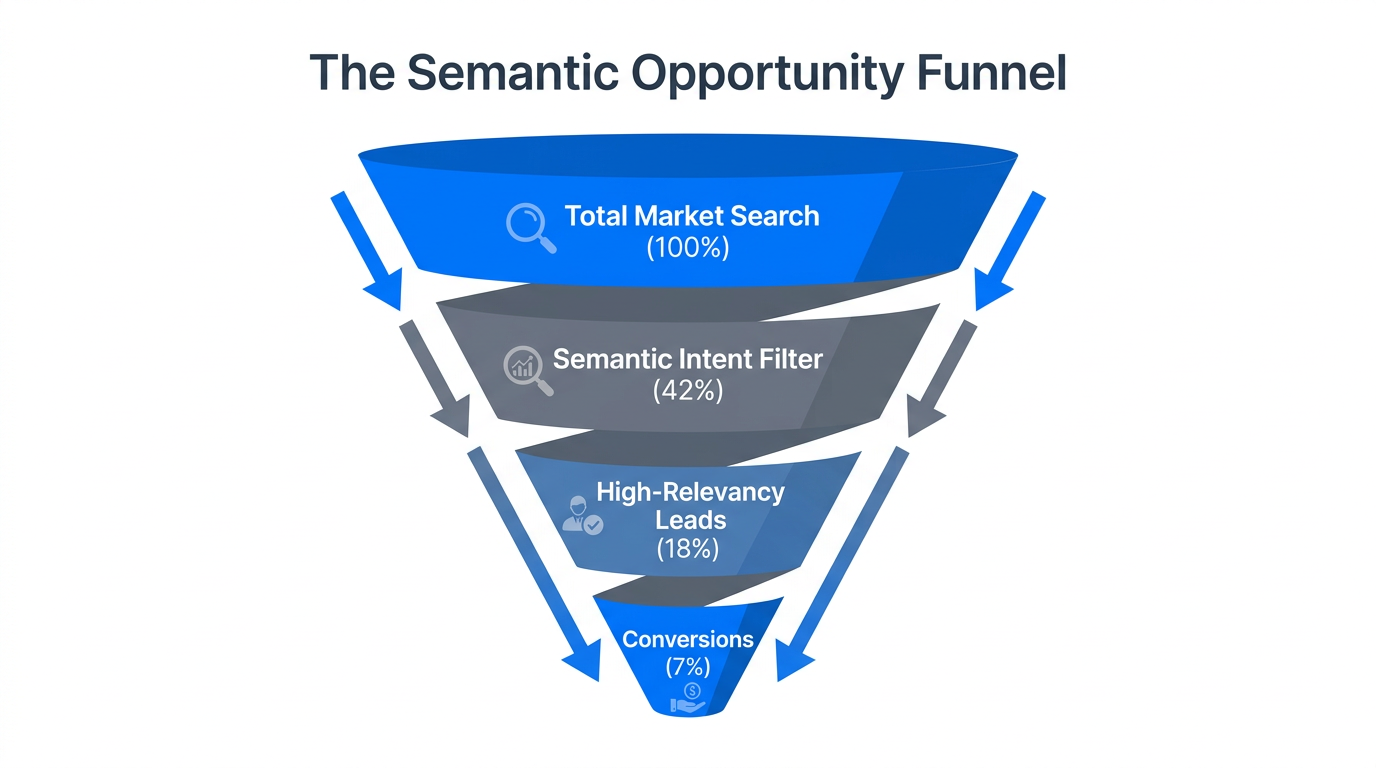
To truly win in 2026, you must employ the Keyword Opportunity Benchmark (KOB). This is a data-driven ratio of Search Volume to Keyword Difficulty. According to Sensor Tower, you should prioritize keywords with a Volume score > 30 and a Difficulty score < 40. This represents the "sweet spot" where you can gain significant traffic without fighting the trillion-dollar giants.
Furthermore, stop chasing single-word "seed" keywords. Instead, use them to find long-tail variants. For instance, rather than fighting for the keyword "Fitness," AppFollow suggests targeting "home bodyweight workout for beginners." These long-tail terms capture users with higher intent and higher conversion potential. This strategy was famously used by FitnessPro, which grew from 50k to 1.2M users in just 9 months by shifting to seasonal long-tails.
Finally, utilize a "Competitor Gap Analysis." Tools like ASOdesk can identify keywords where your competitors rank in the Top 10 but you are nowhere to be found. Stealing this traffic is often the fastest way to accelerate organic growth. To further boost this, consider leveraging Stormy AI to find influencers who can create video content around those specific gap keywords, driving direct-to-app-store traffic that signals relevance to Apple's algorithm.
Conclusion: The Future of ASO is Contextual
The App Store of 2026 is an ecosystem driven by semantic relevance and AI-driven intent. To succeed, you must move beyond the search bar and understand the cultural and contextual factors that drive a user to download. By mastering semantic indexing, embracing Localization 2.0, and avoiding outdated myths, you can ensure your app doesn't just exist in the store, but thrives in it. Remember: visibility is earned through data, but ranking is maintained through relevance.