Navigating 2026 Amazon FBA Fees: A Jungle Scout Inventory and Profit Tutorial
Mastering Amazon FBA fees 2026 with Jungle Scout inventory management. Learn to avoid low inventory surcharges and calculate Amazon inbound placement fees.
The Amazon marketplace in 2026 is defined by a ‘professionalization paradox’: while the number of new sellers entering the fray has hit a decade low of roughly 165,000, according to Marketplace Pulse, the elite tier of million-dollar sellers has nearly doubled since 2021. For the modern brand owner, the game is no longer about just finding a ‘winning product.’ It is about mastering the financial mechanics of a system where Amazon fees now consume 30% to 45% of total revenue. Between the new 2026 Inbound Placement Fees and the dreaded Low-Inventory Surcharge, your margins are under constant attack from ‘Fee Creep.’ To survive, you need a high-precision playbook that combines the data of Jungle Scout with the autonomous execution of an AI ecommerce employee.
The New Math of 2026 Amazon FBA Fees
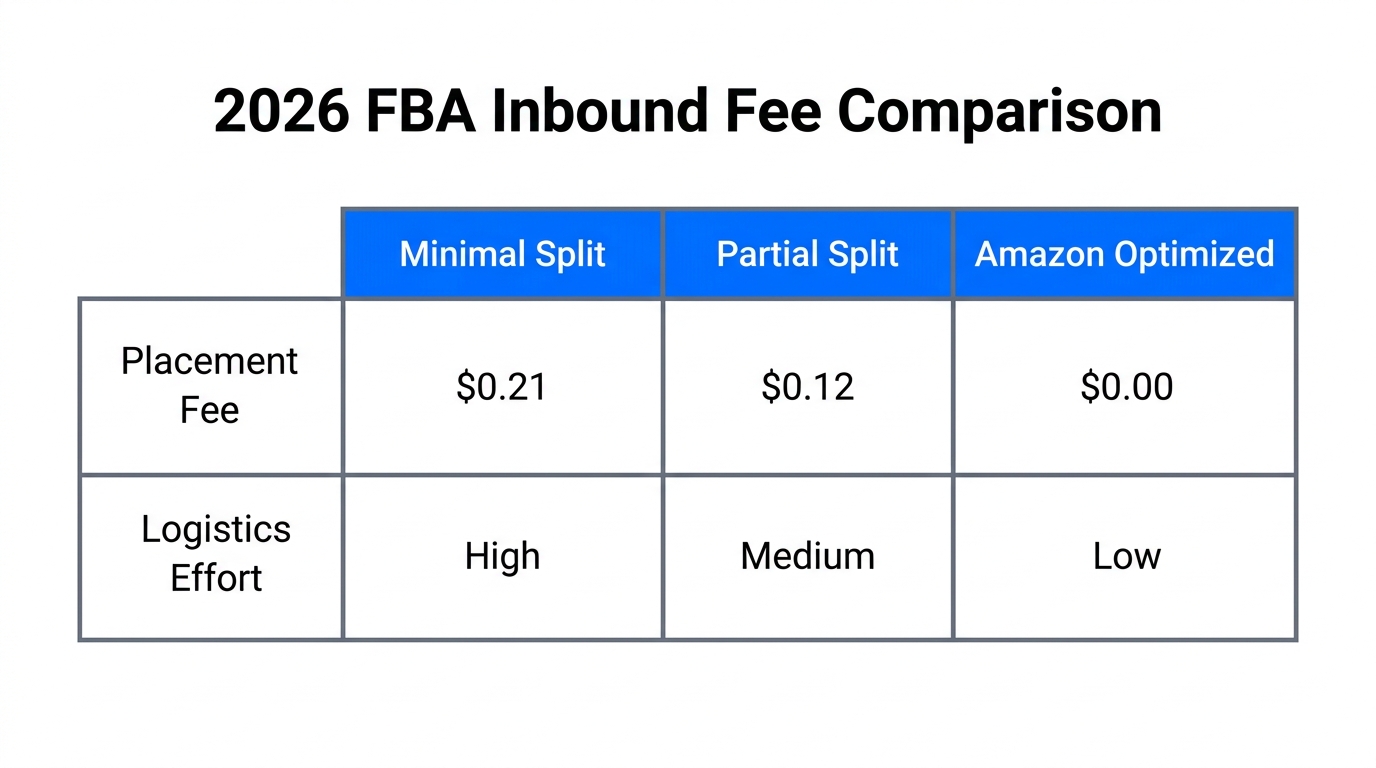
According to recent reports from Marketplace Pulse, third-party sellers now account for 62% of all units sold on Amazon. However, that dominance comes at a steep price. In 2026, the typical seller must account for a ‘baseline’ 35% Amazon Tax before even considering manufacturing or shipping costs. The most significant shift this year is the Amazon Inbound Placement Fee, which ranges from $0.21 to $1.58 per unit depending on size, weight, and how many locations you ship to, as detailed in the Amazon Seller Central fee schedule. If you allow Amazon to distribute your stock across its network for you, you pay the higher end of that spectrum.
| Fee Type | 2026 Rate Range | Impact Level |
|---|---|---|
| Referral Fee | 8% – 15% (Category dependent) | High |
| Inbound Placement Fee | $0.21 – $1.58 / unit | Critical (New for 2026) |
| Fulfillment (FBA) Fee | $3.22 – $6.50+ (Standard) | High |
| Low-Inventory Surcharge | $0.97 / unit (if <28 days stock) | Severe Warning |
Calculating your Amazon FBA profit calculator metrics manually is a recipe for disaster. Professional sellers now use Nova Analytics or Jungle Scout's internal profit dashboards to track these fluctuating costs in real-time. Without this level of detail, a minor $0.08 fulfillment fee hike can wipe out your monthly profit if you are moving high volumes of low-margin items. You can often find deep-dive discussions on these margin pressures in the FBA Reddit community.
"The 'Eight-Cent' Fee Creep is the silent killer of FBA brands in 2026. If your sales estimate is off by 20%, your storage fees will eat your entire margin before you can pivot."
Avoiding the Low-Inventory Surcharge: The ‘Goldilocks Zone’
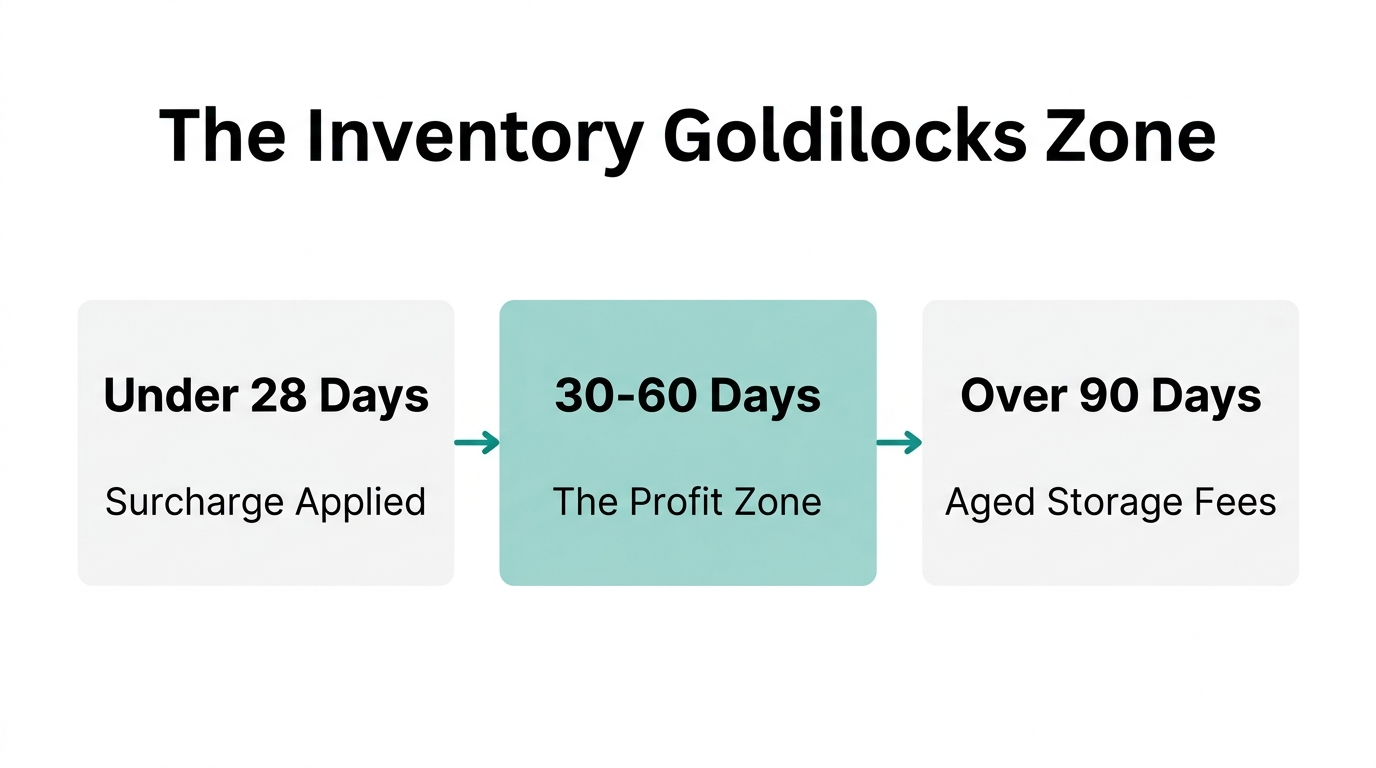
The most punitive change to hit the platform recently is the Amazon low inventory surcharge. Introduced to force sellers into better stock management, this fee penalizes listings that maintain less than 28 days of historical supply. If you fall below this threshold, Amazon hits you with a $0.97 per unit surcharge. This creates a ‘capital trap’: you must over-buy inventory to avoid fees, but over-buying leads to increased storage costs and the risk of dead stock.
The solution is finding the ‘Goldilocks Zone’: maintaining 35 to 45 days of stock. This is where Jungle Scout inventory management becomes essential. Its Predictive Demand engine, launched in early 2026, integrates macro-economic indicators like global inflation rates and housing starts to predict seasonal spikes 120 days in advance with 88% accuracy. By following these forecasts, you can time your reorders to hit the FBA warehouse just as your levels dip toward the 30-day mark.
To make this truly hands-off, many lean brands are now using Stormy AI. As an AI ecommerce employee, Stormy can log into your Jungle Scout and Amazon Seller Central accounts daily. If your inventory levels for a specific SKU drop toward that 28-day danger zone, Stormy AI flags the risk in your shared spreadsheet, drafts a restock PO for your supplier, and alerts you to approve the shipment before the surcharge kicks in.
The ‘Small & Light’ Trap vs. High-Ticket Performance
In previous years, the mantra was "small, light, and cheap." In 2026, that strategy is a graveyard. Because the Amazon inbound placement fees are often flat (or have a high floor), a $0.21 fee on a $10 item is a 2.1% margin hit. On a $50 item, that same fee is negligible. This is why high-ticket items ($50–$150) are outperforming low-margin products this year. The overhead required to manage the logistics of a 1,000-unit shipment is nearly identical to a 100-unit shipment of more expensive goods, but the per-unit fee burden is vastly lower for the latter.
Research from Nova Analytics shows that mid-high ticket products are maintaining net margins of 22–30%, while low-ticket items are being squeezed into the 12–18% range. If you are using a tool like Helium 10 for reverse ASIN lookups, you must look beyond search volume. You need to look at profitability density.
Jungle Scout API 3.0: Syncing the Multi-Channel Stack
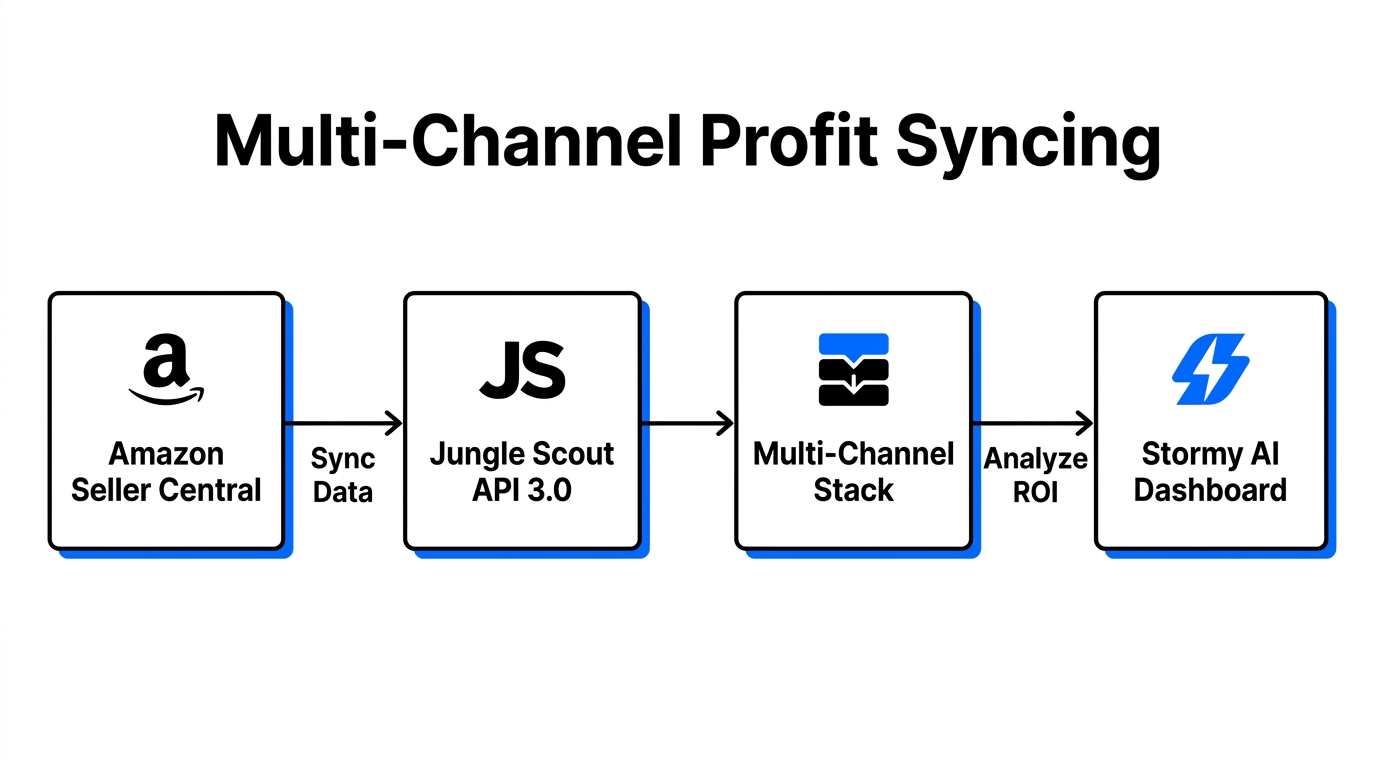
The 2026 seller is rarely just an "Amazon seller." Most brands now run on a stack involving Shopify and TikTok Shop. The release of Jungle Scout API 3.0 has changed the game by allowing real-time inventory syncing across all these platforms. You can find technical documentation for this integration on the Jungle Scout Developer Portal. This is critical because if you run a flash sale on TikTok and it drains your FBA stock, you could inadvertently trigger a low-inventory surcharge on Amazon for the remaining units.
Step-by-Step Multi-Channel Sync
- Connect API 3.0: Navigate to the Jungle Scout settings and generate your API keys.
- Map Your SKUs: Ensure your SKU for ‘Eco-Bottle Blue’ is identical on Amazon Seller Central, Shopify, and TikTok.
- Set Buffer Levels: Define a ‘safety stock’ level in Jungle Scout that, when hit, automatically pauses your TikTok Shop listing to preserve enough stock for Amazon’s 30-day requirement.
Managing this manually is exhausting. This is where Stormy AI shines. Instead of you checking three different dashboards to see if a TikTok influencer's post spiked your sales, Stormy AI monitors all channels 24/7. It pulls the data, updates a central ‘Operations Master’ spreadsheet, and can even adjust your Amazon ad budgets via Amazon Ads if stock levels get too low, slowing down the velocity to avoid the surcharge.
"Keyword research is no longer about volume; it’s about 'relevance density.' You need to rank for the questions Rufus is asking, not just the words people are typing."
The ‘Rufus Era’: Optimizing for AI Search
In early 2026, Amazon’s AI shopping assistant, Rufus, became the primary driver of product discovery. Research has shifted from short-tail keywords to ‘intent clusters.’ According to Keywords.am, nearly 30% of purchases now occur through a Rufus chat interaction without the user ever clicking a traditional search result. Products with the ‘Rufus Recommended’ badge see a 35% lift in CTR.
To win here, you must use AI Sentiment Analysis. Tools like Jungle Scout's AI Review Analysis can summarize 1,000+ competitor reviews into a precise list of pros and cons. You should then ask: "What question does my product solve that the market leader doesn't answer?" If Rufus detects that your listing specifically addresses a common complaint—like "easy to assemble for seniors"—it will prioritize your product in conversational search queries, a strategy often discussed on TechCrunch regarding the evolution of AI retail.
Automating Profit Monitoring with Stormy AI
As we've seen, the complexity of 2026 FBA operations is too high for a solo founder using basic spreadsheets. You need a teammate who never sleeps. Stormy AI acts as that teammate by automating the messiest parts of your back office:
- Fee Audit: Stormy compares your expected FBA fees against the actual charges in Seller Central, flagging any discrepancies for human review.
- Surcharge Prevention: By watching your Jungle Scout Predictive Demand data, Stormy sends you a notification (or a Slack message) 10 days before you hit a low-inventory threshold.
- Supplier Follow-up: If a shipment is late, Stormy drafts a polite email to your supplier to check the status, ensuring your inbound placement doesn't get delayed.
- Performance Reporting: Every Monday, Stormy builds a polished Excel (XLSX) report with charts showing your ROAS, TACOS, and net profit after all 2026 fee adjustments.
By delegating these repetitive tasks to Stormy AI, you can focus on brand building and product development—the only two things that truly create a moat in the 2026 Amazon landscape. In an era where 97% of sellers who skip systematic validation fail, having an autonomous agent managing your inventory and fees isn't just a luxury—it's a requirement for survival.
Conclusion: Winning the 2026 Inventory War
Navigating the jungle of Amazon FBA in 2026 requires a shift from ‘growth at all costs’ to ‘margin protection at all costs.’ By using Jungle Scout to stay in the inventory Goldilocks Zone and leveraging Stormy AI to automate the monitoring of surcharges and multi-channel sync, you can maintain a lean, high-profit operation while your competitors drown in fee creep. Stop guessing your Amazon FBA fees 2026 metrics and start running your store with the precision of an AI-powered enterprise.