Entering a global market is no longer as simple as clicking "translate" in the Google Play Console. As of early 2025, the Apple App Store hosts over 2.2 million apps, while Google Play has approximately 3.7 million, according to data from MobileAction. In this saturated environment, discovery is the ultimate hurdle: roughly 70% of all app installs originate directly from app store searches, per Sensor Tower. To capture these users across 150+ markets, developers are moving away from literal translations toward Localization 2.0: an AI-driven approach that prioritizes semantic intent, regional slang, and cultural resonance.
The Shift to Localization 2.0: Beyond Literal Translation
Traditional app localization strategy often involved sending a spreadsheet of strings to a translation agency. The result? Technically correct but culturally hollow metadata that fails to rank for the terms real users actually type. Today, app stores use behavioral signals and semantic clusters. They reward apps that satisfy user intent rather than just matching keywords. If a user in Mexico searches for a "budget tracker," they aren't just looking for a direct translation of the word; they are looking for terms like "control de gastos" or regional slang that implies financial wellness.
High-converting creative assets driven by these intent-aligned keywords can increase install rates by up to 95%, as noted by Dot Com Infoway. To achieve this at scale without a massive manual overhead, the industry is turning to agentic AI tools like Claude Code.
"Localization 2.0 isn't about speaking the language; it's about speaking the culture. AI agents allow us to bridge that gap in minutes, not months."
What is Claude Code? The New Frontier of International ASO
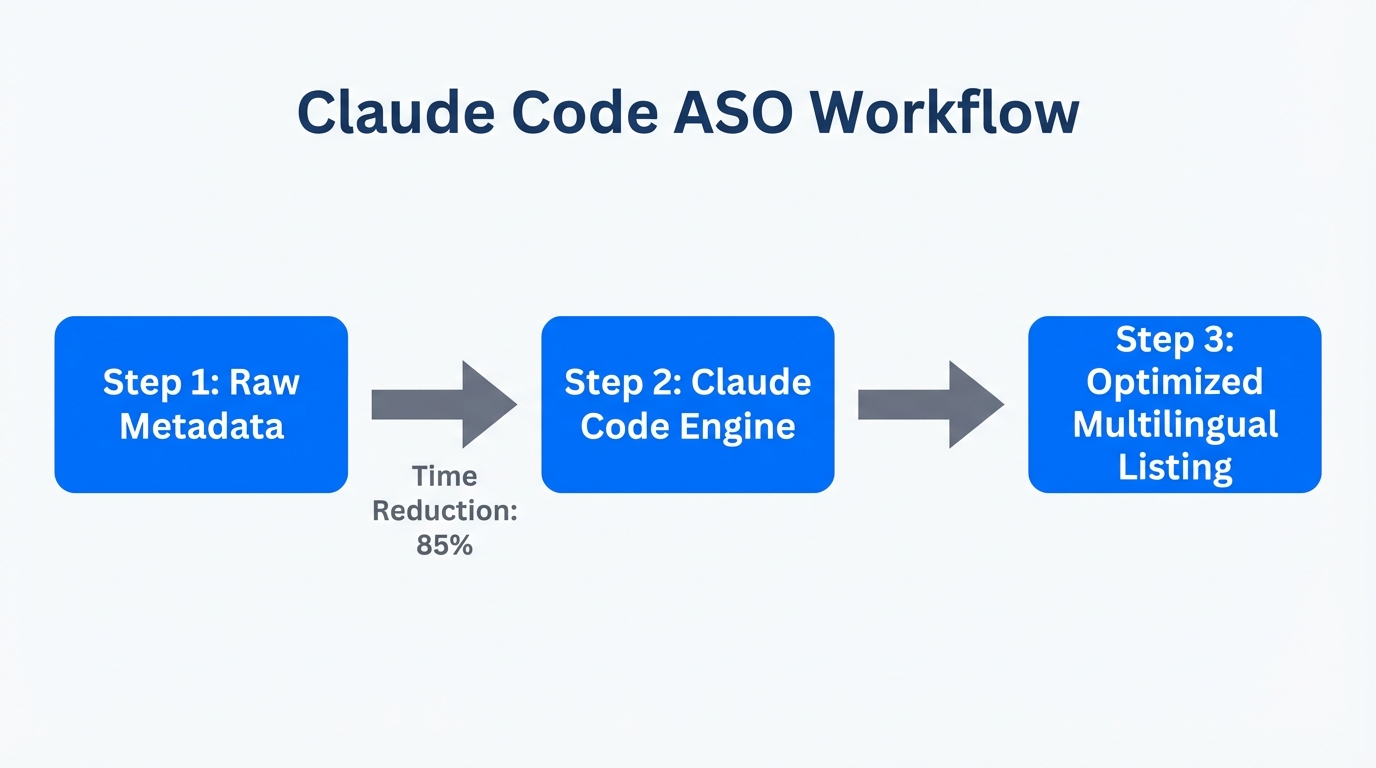
Claude Code is Anthropic’s official CLI (Command Line Interface) and agentic tool designed for developers and growth hackers. Unlike a standard chatbot, Claude Code can execute terminal commands, edit files directly, and use the Model Context Protocol (MCP) to fetch live search data from the web. This makes it an ideal engine for international ASO because it can ingest vast amounts of local market data and output optimized metadata in seconds.
Setting Up Your Agentic Workflow
To begin automating your global app growth, you first need to install the CLI and connect it to live data sources. You can find the full setup guide in the Anthropic Official Documentation. Using tools like the ASO-MCP, which is a specialized server for keyword discovery, allows Claude to see traffic scores and competitor gaps in real-time. This server, available via Libraries.io, provides 13 distinct tools for deep keyword research.
| Strategy Component | Traditional Method | Agentic ASO (Claude Code) |
|---|---|---|
| Keyword Research | Manual scraping & spreadsheets | Live API-driven discovery |
| Cultural Context | Literal translation services | Semantic intent & slang analysis |
| Review Mining | Reading 100s of reviews manually | Instant NLP summary of sentiment |
| Update Frequency | Quarterly or bi-annually | Daily/Weekly autonomous tweaks |
Playbook: Automating Multilingual ASO in 4 Steps
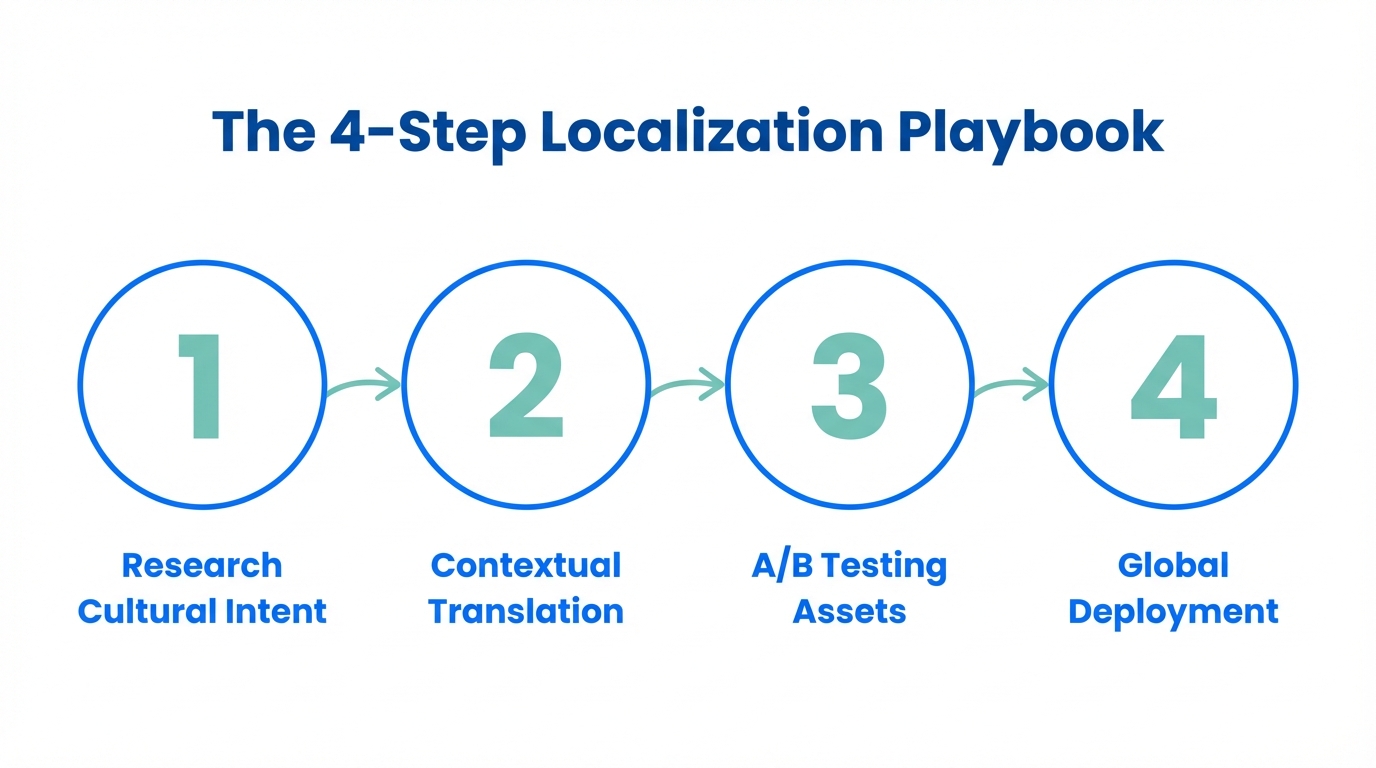
Step 1: Live Data Acquisition
Never rely on an AI's internal knowledge for keyword volume. Use SerpAPI to bridge Claude with live search results. By connecting Claude to live data, you avoid the trap of "dead keywords" that were popular two years ago but are irrelevant today. Developers at NoCode SaaS have demonstrated that this setup can build a 3-month ASO roadmap in under 20 minutes.
Step 2: Mining Localized Reviews for "Hidden" Keywords
Your users are already telling you what keywords to use; they're just doing it in their own language in the reviews section. Use Claude Code to analyze 90 days of localized reviews. For example, a popular health app discovered that Indian users were frequently mentioning "Hindi local recipes" in reviews. By adding this hyper-local term to their metadata, they saw a 12% increase in conversion in the Indian market within just 30 days, as reported by Appbirds. For brands looking to scale this cultural resonance further, platforms like Stormy AI can help source local creators who understand these regional search nuances.
"The most valuable keywords aren't found in a tool; they're found in the frustrations and desires of your actual users."
Step 3: The "6 Circles" Research Method
Instruct your AI agent to score every potential keyword based on six dimensions: Relevance, Difficulty, Volume, Conversion Potential, Competitor Gap, and Semantic Authority. This framework ensures that you aren't just chasing high-volume terms that are impossible to rank for, but rather finding the "low-hanging fruit" in international markets.
Step 4: Automated Metadata Generation
Once you have your keywords, use Claude to generate the title, subtitle, and keyword field. Ensure the prompt specifies "write for humans, optimize for machines." Modern algorithms, particularly on iOS, penalize keyword stuffing and readability issues. Tools like AppTweak can then be used to validate these AI-generated suggestions against real market intelligence.
Managing Global Visibility Without the Overhead
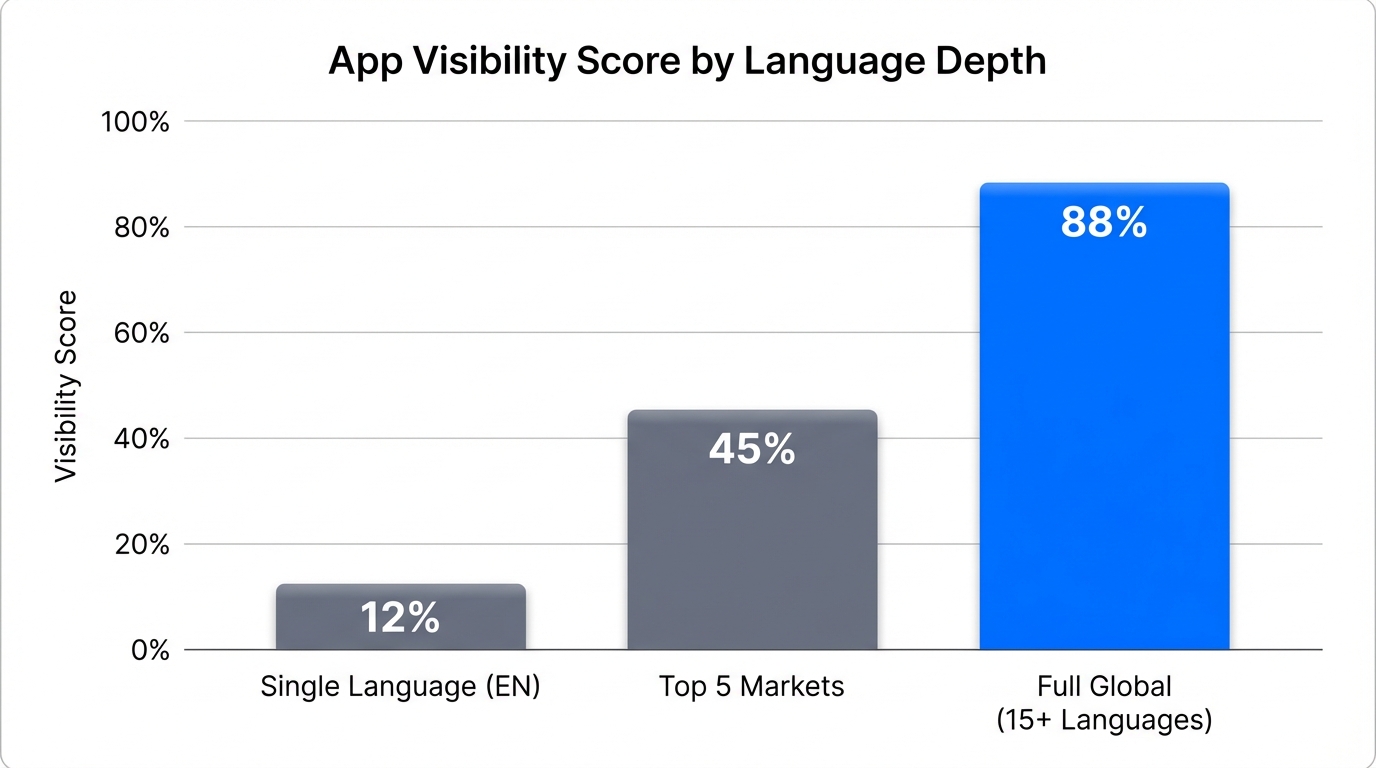
Scaling to 150+ markets manually is impossible for most startups. However, by using a modern growth stack, you can maintain a high-quality presence everywhere. Pair your ASO efforts with design tools like Canva for localized screenshots and Notion to manage your international project roadmaps.
For brands looking to scale this cultural resonance further through creator partnerships, platforms like Stormy AI can help source and manage UGC creators who speak the local language and understand regional trends. This ensures that your top-of-funnel discovery (ASO) is supported by authentic social proof (UGC) in every region you target.
Common Mistakes to Avoid in Multilingual ASO
- Over-Localization: Using AI to translate literally without localizing the "idiomatic" keywords that real users type. As noted by FoxData, literal translation often misses the search intent entirely.
- Ignoring Visual Alignment: Keywords and visual assets must work together. Marina Roglic, Head of ASO at TapNation, emphasizes that Conversion Rate Optimization (CRO) is the new growth engine, and AI must be used to align keywords with icons and screenshots, according to AppAgent.
- Static Strategies: Market trends change. A keyword that ranks well in January might be irrelevant by March. Use automated workflows to perform monthly audits.
Conclusion: The Future of Global App Growth
The era of manual ASO is ending. By leveraging Claude Code and a robust multilingual app marketing strategy, developers can now achieve a level of local relevance that was previously reserved for companies with massive localization budgets. The key is to move from translation to transformation—using AI to understand the semantic intent of your global audience. Start by automating your keyword research today with tools like Zapier and AI agents, and you could see significant conversion gains in your most competitive international markets by next month.