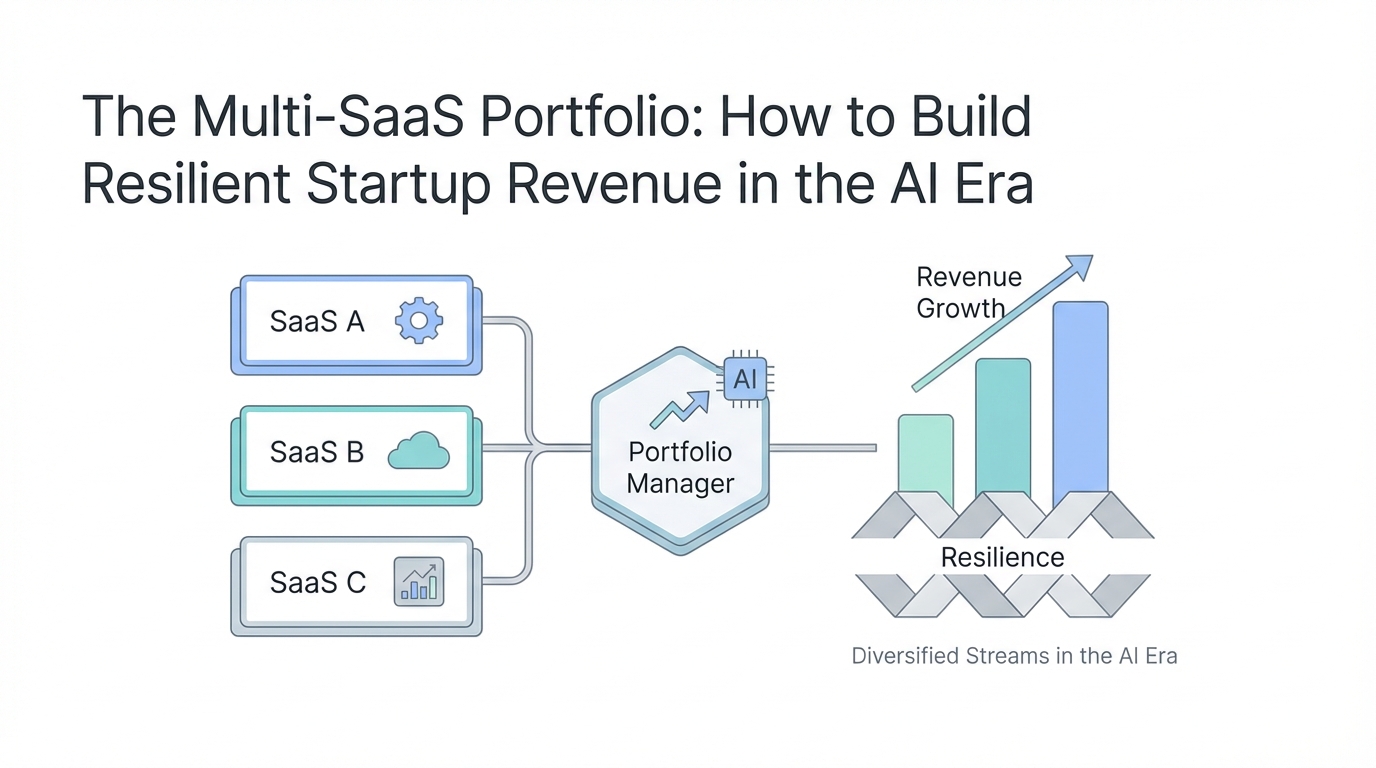
The tech landscape has shifted from a predictable climb to a volatile sprint. For years, the gold standard for software founders was the "One Big App" model—betting everything on a single vision, a single platform, and a single exit. But in the era of rapid AI disruption and platform instability, that model is increasingly becoming a liability. Success today is not about finding one golden goose; it is about building a diversified farm. By adopting a micro-SaaS portfolio strategy, entrepreneurs can mitigate the risks of sudden API changes, competitive AI releases, and market shifts while building a multi-million dollar revenue engine.
The Fragility of the "One Big App" Model

In the traditional startup world, the narrative of "focus at all costs" is preached as gospel. However, the modern software ecosystem is built on shifting sands. When you build a single application, your entire livelihood depends on factors often outside your control. We saw this most clearly with the massive Twitter/X API changes that effectively crippled thousands of businesses overnight. Even successful founders like Tibo, who eventually achieved an $8 million acquisition with Tweet Hunter and Taplio, faced moments of existential dread when platform policies shifted. Relying on a single platform means you are essentially building a house on rented land.
Furthermore, AI-proof business models are now a necessity rather than a luxury. According to research from Starter Story, the release of a single new feature by OpenAI can render entire software categories obsolete in a matter of hours. This is why SaaS diversification is the ultimate survival move. If you have one product and it gets killed by a platform update or a new AI model, you have nothing. If you have six products and one gets hit, you have five others sustaining your growth and your family. Resilience in 2024 means having multiple $10K to $100K MRR apps that act as a safety net against market volatility.
The Portfolio Meta: Diversification as Resilience


Building a micro-SaaS portfolio is not about being unfocused; it is about being strategic. Founders like Tibo have demonstrated that it is possible to manage a portfolio of apps that collectively generate over $700,000 per month with 50,000 paying customers. This "Portfolio Meta" allows you to test multiple hypotheses simultaneously. Instead of spending two years hoping your one idea is the right one, you can spend those same two years launching six different products to see which one the market actually demands. This approach turns serial entrepreneurship into a repeatable science rather than a gamble.
Managing 4-6 different SaaS products requires a shift in how you view resources. You aren't just a developer or a marketer; you are a portfolio manager. By focusing on products like Revit.ai, which specializes in AI-driven video creation, or SEO-focused tools like Outrank, you spread your risk across different niches. When one niche slows down, another often accelerates. This consistent 20% month-over-month growth is only possible because the portfolio is designed to catch tailwinds wherever they appear in the market.
The 12-Step Playbook for SaaS Success

Building a successful portfolio requires a rigid adherence to a proven playbook. Platforms like Stormy AI help founders identify where the attention is moving by using AI-powered search across TikTok, Instagram, and YouTube for mobile app marketing and UGC campaigns, but the internal execution follows a specific sequence of twelve steps designed to maximize speed and minimize waste.
Step 1: Build Your MVP in Days, Not Months
The biggest mistake builders make is over-engineering. You must find ways to take shortcuts, whether that means using no-code tools like Bubble or leveraging pre-made SaaS boilerplates. Remember that you have a 90% failure rate for new ideas. If you take a year to build one thing, you may wait nine years for a win. If you ship every week, you reach success exponentially faster.
Step 2: Find Your Core Ten
Once you have a working prototype, find the 5 to 10 people who are most relevant to your solution. Do not ask for general feedback from friends or family. Use social media, subreddits, or direct email to reach people who feel the specific pain you are solving. If the feedback doesn't come from a relevant target audience, it is noise.
Step 3: Build Deep Relationships
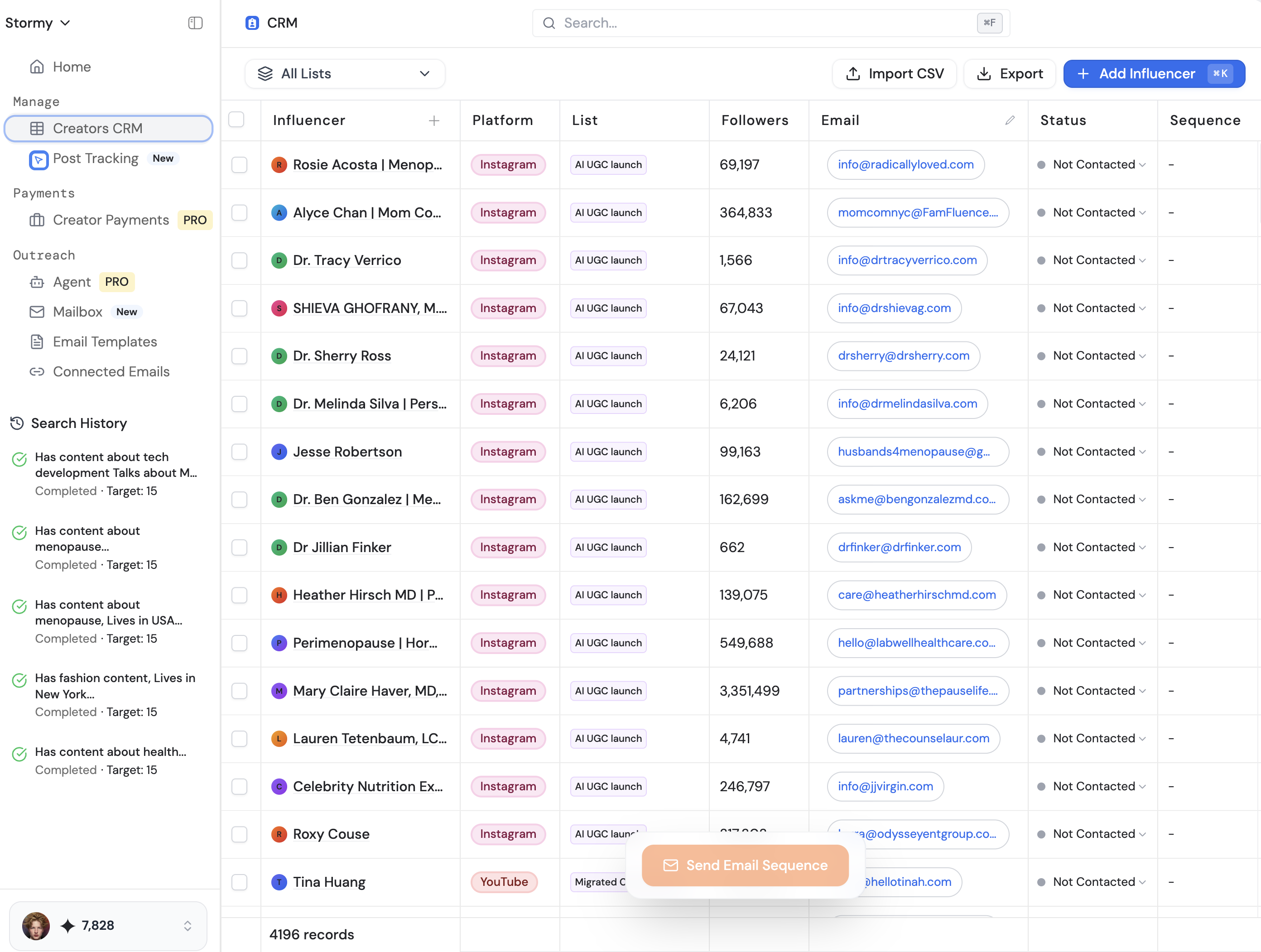
Don't just "test" the users; build a relationship with them. This is the stage where you deeply understand their workflow and their daily struggles. According to data from Stormy AI, whose built-in creator CRM helps founders track these strategic relationships and collaboration history, the most successful companies are those that prioritize strategic relationships over broad, shallow outreach in their early days.
Step 4: Talk to Them Every Single Day
Until a product reaches $10,000 MRR, you should be talking to your users daily. A common tactic used by successful portfolio builders is to direct all support links to their personal Twitter DMs. This creates a daily flow of feedback and makes users feel like they are part of the building process. Fast reactivity—fixing a bug in 10 minutes—creates customers for life.
Step 5: Identify the Ultimate Goal
Understand the difference between what your software does and what your user wants to achieve. If you build a video tool, your user doesn't want a video; they want views and engagement. By helping them achieve that ultimate goal, you increase the value of your product by 10x or 100x.
Step 6: Solve User Problems, Not Your Own
Be the first and most aggressive user of your own product. When you "eat your own dog food," you spot the tiny friction points that annoy customers. By being the user, you become an expert on the problem, which makes your development 10 times more relevant.
Step 7: Iterate Publicly
Use social platforms to share your progress. Maintaining a constant relationship with your audience on X (formerly Twitter) allows you to gather real-time feature requests and keep your brand top-of-mind.
Step 8: Focus on Stickiness Over Growth
Do not try to go broad too soon. If you focus on acquisition while your retention is low, you are pouring water into a leaky bucket. Make sure people cannot live without your software before you spend a single dollar on SaaS diversification marketing.
Step 9: Launch Broadly
Once you have stickiness, it is time to try every acquisition channel. Launch on Product Hunt, leverage your social media following, and "build in public." At this stage, your goal is to get to the $1K-$3K MRR mark which provides the fuel for further development.
Step 10: Become a Media Company
Every software company must eventually become a media company. You need a pipe for shipping content—testimonials, case studies, and industry insights. This content fuels your growth engine and establishes your authority in the space.
Step 11: Implement Sustainable Growth Engines
This is where you move from manual hustle to automated scale. Invest in Google Ads, SEO, and affiliate programs. For example, Outrank grew from $20K to $200K per month by doubling down on these sustainable channels. When scaling mobile apps or social tools, using Stormy AI—an AI-powered platform that automates creator discovery and personalized outreach—to find UGC creators for your ad campaigns can drastically lower your customer acquisition costs.
Step 12: Scale the Winners, Kill the Losers
A portfolio allows you to be ruthless. Identify the one or two acquisition channels that are working best for each product and go all-in. If a product isn't showing signs of life or stickiness despite your best efforts, kill it and move the resources to your "winning horses."
Managing Shared Workflows and Overhead

The secret to running a micro-SaaS portfolio without burning out is shared infrastructure. Successful founders don't reinvent the wheel for every new app. They use shared boilerplates for authentication, billing, and database management. This allows them to focus 100% of their energy on the unique value proposition of the new product rather than the plumbing. By minimizing overhead, you can maintain high margins even on products doing "only" $10K MRR.
Furthermore, managing multiple apps allows for cross-promotion. A user of your SEO tool might also need your social media posting tool. This creates a startup resilience ecosystem where your apps support each other. You aren't just building products; you are building a platform of solutions for a specific type of customer. This synergy is what makes the portfolio model so powerful compared to the single-app approach.
The Future of Startup Resilience
As AI continues to evolve, the ability to pivot and diversify will be the hallmark of the successful entrepreneur. The AI-proof business model isn't one that ignores AI, but one that uses it to build faster and more broadly. Whether you are using AI to generate content or leveraging tools like Stormy AI to vet creator quality and detect engagement fraud, the goal remains the same: deep user understanding and diversified revenue.
For those looking to transition from a single-app mindset to a portfolio strategy, the path is clear. Start by compressing your build cycles, talking to users daily, and being willing to fail fast. The serial entrepreneurship journey is no longer about the one big exit; it's about building a fortress of revenue that no platform change or AI update can take down. By following the 12-step playbook and maintaining a direct line of communication with your customers, you can build a business that is truly resilient in the face of any market shift.