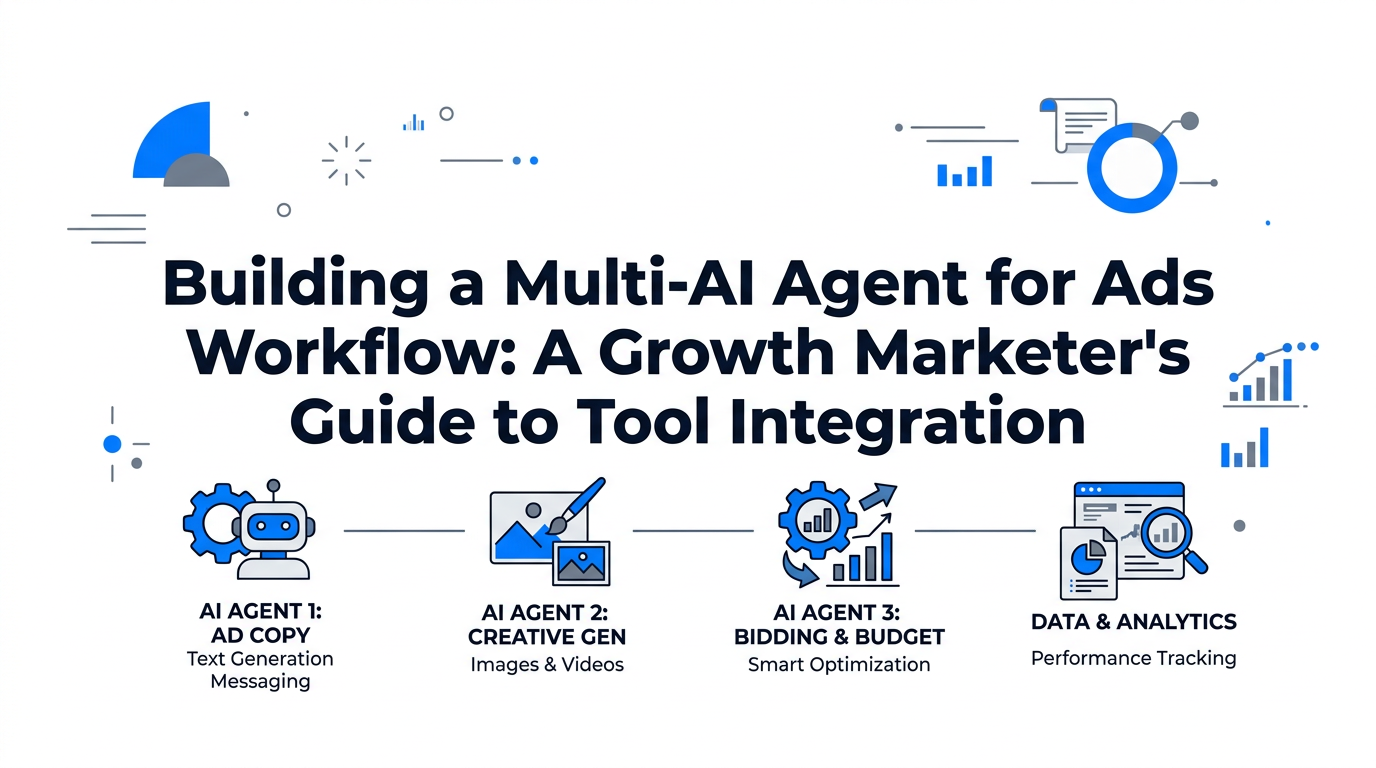
In the rapidly evolving landscape of digital growth, the shift from generative AI to agentic AI marks the beginning of a new era. While 2024 was defined by using tools to generate a clever headline or a static image, the next two years will be defined by autonomous execution. We are no longer just looking for assistance; we are building automated marketing workflows where AI perceives a goal, reasons through complex datasets, and executes cross-channel adjustments without manual interference. With the global AI in marketing market projected to reach $82.23 billion by 2030, the question is no longer if you should use AI, but how sophisticated your marketing AI tech stack truly is.
The Architecture of a Multi-Agent System: Research vs. Creative
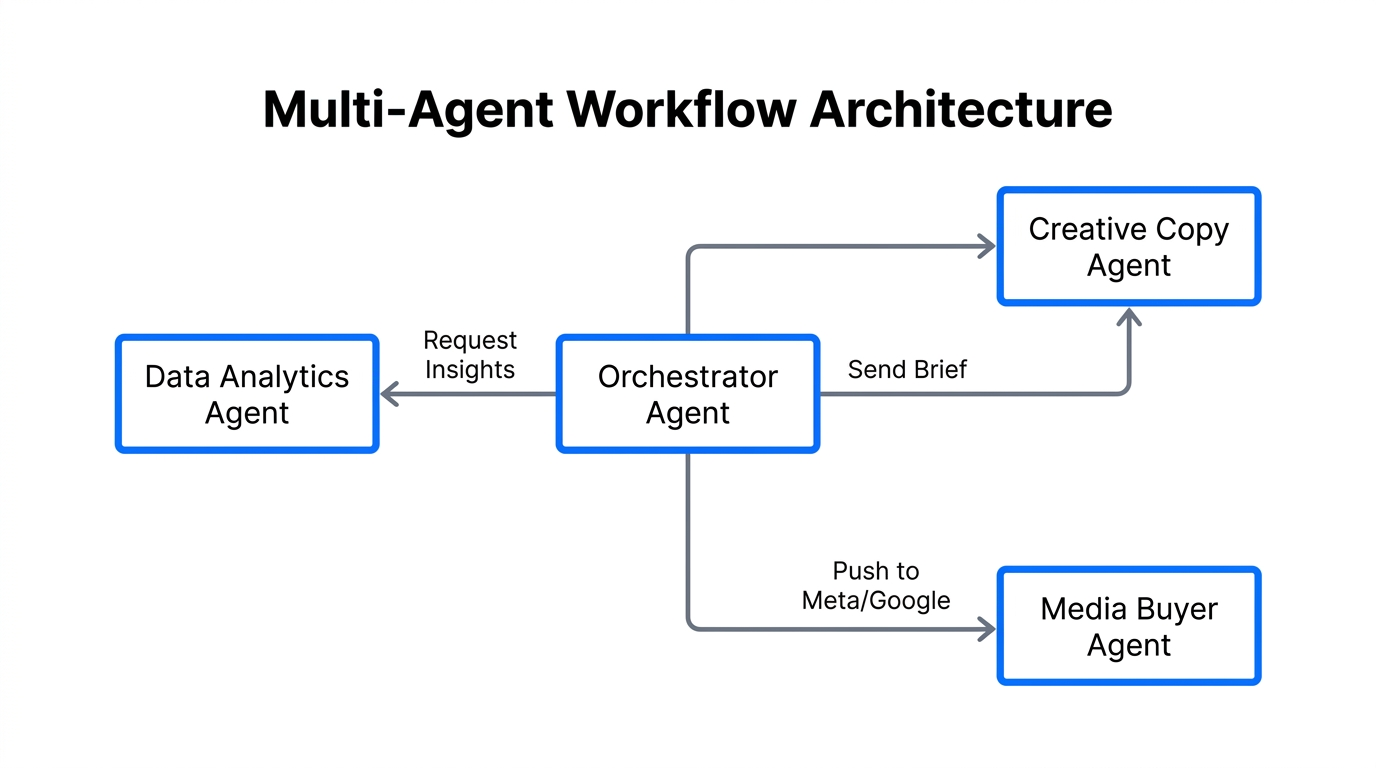
The most effective automated marketing workflows are not built on a single monolithic tool. Instead, they leverage a Multi-Agent System (MAS), where specialized nodes handle distinct parts of the customer journey. Think of this as a virtual marketing department where agents talk to each other to achieve a unified goal. This architecture typically splits into two primary categories: Research Agents and Creative Agents.
- Research Agents: These agents are the data scientists of your stack. They ingest data from sources like Meta Ads Manager and Google Ads to identify patterns. They aren't just looking at clicks; they are identifying "Search Themes" and intent signals that will eventually replace traditional keywords by 2026.
- Creative Agents: Once the research agent identifies a high-intent audience segment, the creative agent takes over. Tools like Jasper AI or Leonardo.ai can then dynamically generate hundreds of ad variants tailored to that specific micro-persona.
"AI agents are about to make the agile marketing debate irrelevant. They don't just plan; they ship in sprints, measure, and iterate constantly." — Deepak Gupta, Growth ExpertWhen these agents work in tandem, they create a feedback loop. A third node, the Optimization Agent, monitors the performance of the creative outputs and feeds that data back to the Research Agent to refine the targeting. This closed-loop system is why companies using AI for customer acquisition report an average 20–30% higher campaign ROI than those relying on manual methods.
Comparative Review: Jasper AI, Albert AI, and HubSpot Breeze
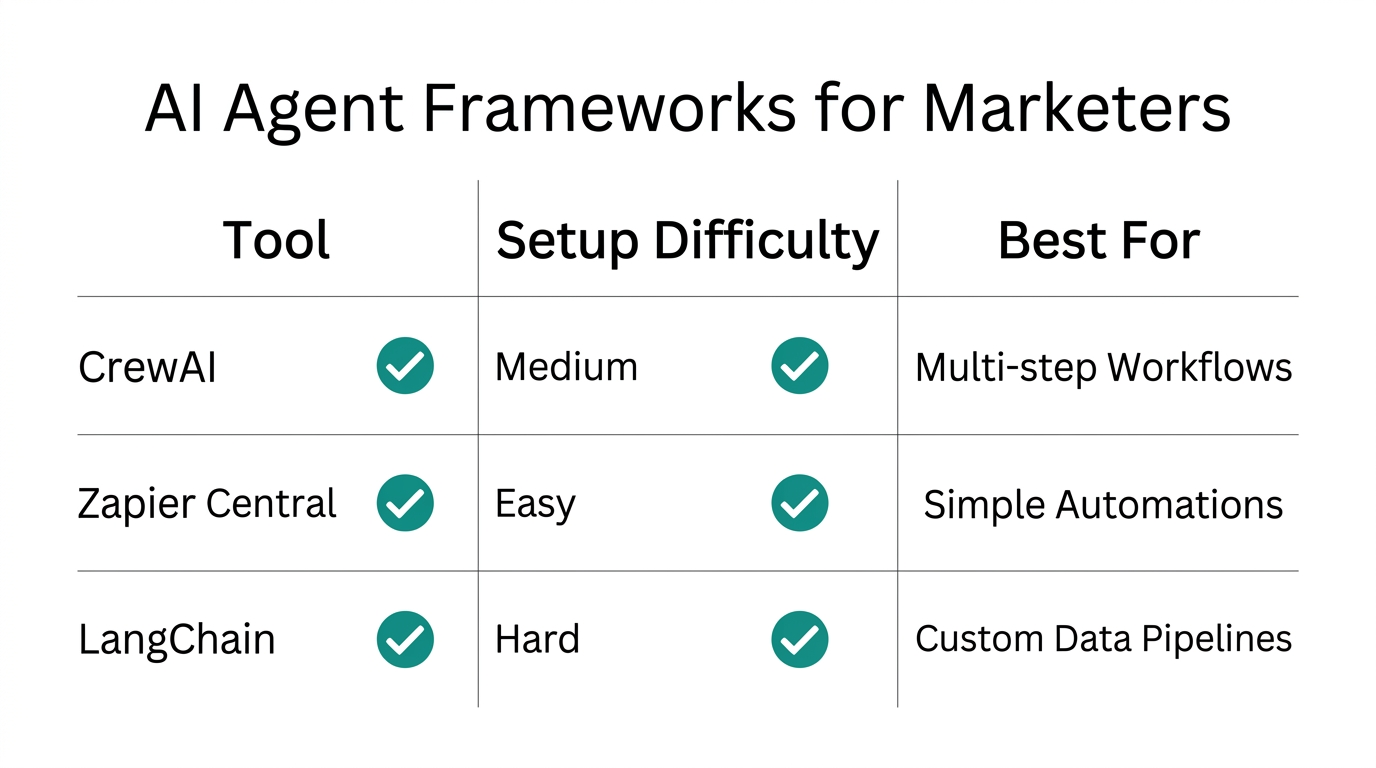
Selecting the right foundation for your marketing AI tech stack requires understanding the core strengths of each "agentic" platform. While some focus on the creative message, others specialize in the autonomous distribution and cross-channel ad optimization.
| Platform | Core Specialty | Best For |
|---|---|---|
| Jasper AI | Campaign Strategy & Copy | End-to-end multi-channel ad creative at scale. |
| Albert AI | Autonomous Media Buying | Complex cross-channel ad optimization and budget pacing. |
| HubSpot Breeze | CRM-Driven Intelligence | AI for customer acquisition through lead scoring and personalized nurture. |
As of late 2024, 69.1% of marketers have already integrated some form of AI into their operations. However, the true winners are using tools like Albert AI to handle real-time bid optimization, which allows their human teams to focus on strategy. On the CRM side, HubSpot Breeze acts as an agent that identifies which leads are most likely to convert, triggering specific ad sequences in Meta Ads Manager or LinkedIn to push them through the funnel.
Integrating AI Agents into the Customer Lifecycle
AI for customer acquisition shouldn't stop at the first click. To achieve sustainable growth, agents must be integrated into the entire lifecycle, from initial lead scoring to long-term retention ads. By feeding your agents Lifetime Value (LTV) data, you can instruct them to find "lookalike" audiences that don't just click, but stay.
For high-growth apps and e-commerce brands, the integration of User-Generated Content (UGC) is a critical part of this lifecycle. While agents can optimize the delivery, they still need high-quality creative inputs. Platforms like Stormy AI streamline creator sourcing and vetting, providing the authentic raw assets that agents then use to generate thousands of ad variations. This ensures that even as you scale to 1,000+ variants, the content remains human-centric and trustworthy.
Moving further down the funnel, agents like Optimove use predictive modeling to identify churn risks. If a high-value customer hasn't engaged in 30 days, the agent can autonomously trigger a retention ad with a personalized discount, significantly improving customer lifetime value without a single manual touchpoint from the marketing team.
Playbook: Scaling to 1,000+ Ad Variants Without Losing Insight
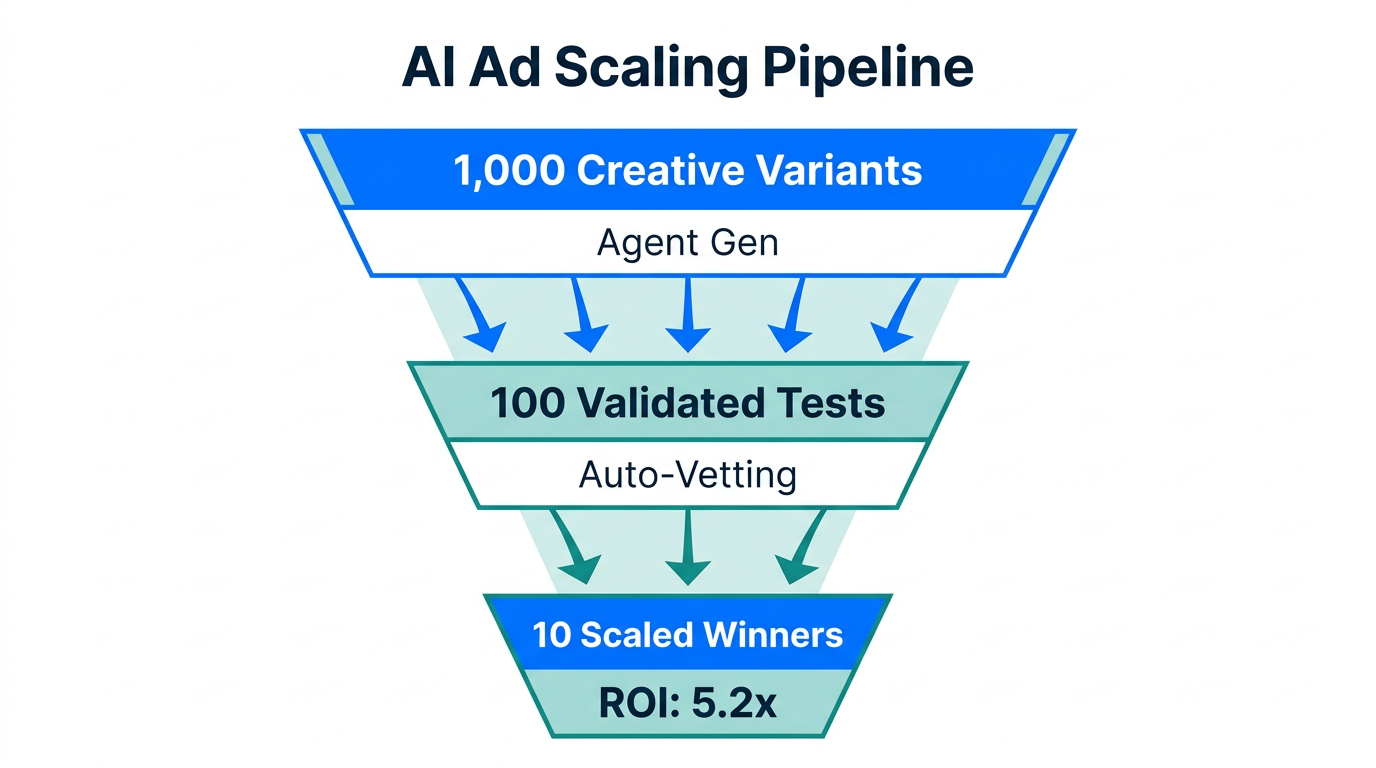
One of the biggest challenges in cross-channel ad optimization is the sheer volume of assets required. To scale effectively, follow this automated marketing workflow playbook:
Step 1: Define Outcomes, Not Tasks
Instead of telling an agent to "write 5 headlines," set a high-level goal: "Optimize headlines to achieve a <$2.00 CPC." This allows the agent the freedom to test hundreds of permutations of tone, length, and call-to-action to find the winning combination.
Step 2: Connect Structured Data Sources
Agents are only as good as the data they consume. Ensure your CRM data from HubSpot or Pipedrive is clean and integrated. Use tools like Relevance AI to build custom no-code agents that pull this data into your ad platforms.
Step 3: Source High-Quality Raw Assets
Agents can remix, crop, and caption, but they can't replicate human authenticity. Use Stormy AI to discover and vet creators who fit your niche. Once you have a library of 10-20 high-quality UGC videos, an agentic tool like Smartly.io can turn them into 1,000+ variants by adjusting the overlays, hooks, and music for different segments.
Step 4: Implement a Monitoring Framework
Use a "Human-in-the-loop" framework. While the agent handles the bidding and variants, humans should review the strategic direction once a week to ensure the brand voice remains consistent and ethical.
"Fast-growing companies generate 40% more revenue from personalization compared to slow-growing peers who fail to automate their creative workflows." — McKinsey & Co AnalysisCommon Pitfalls: Data Creep and Budget Spikes
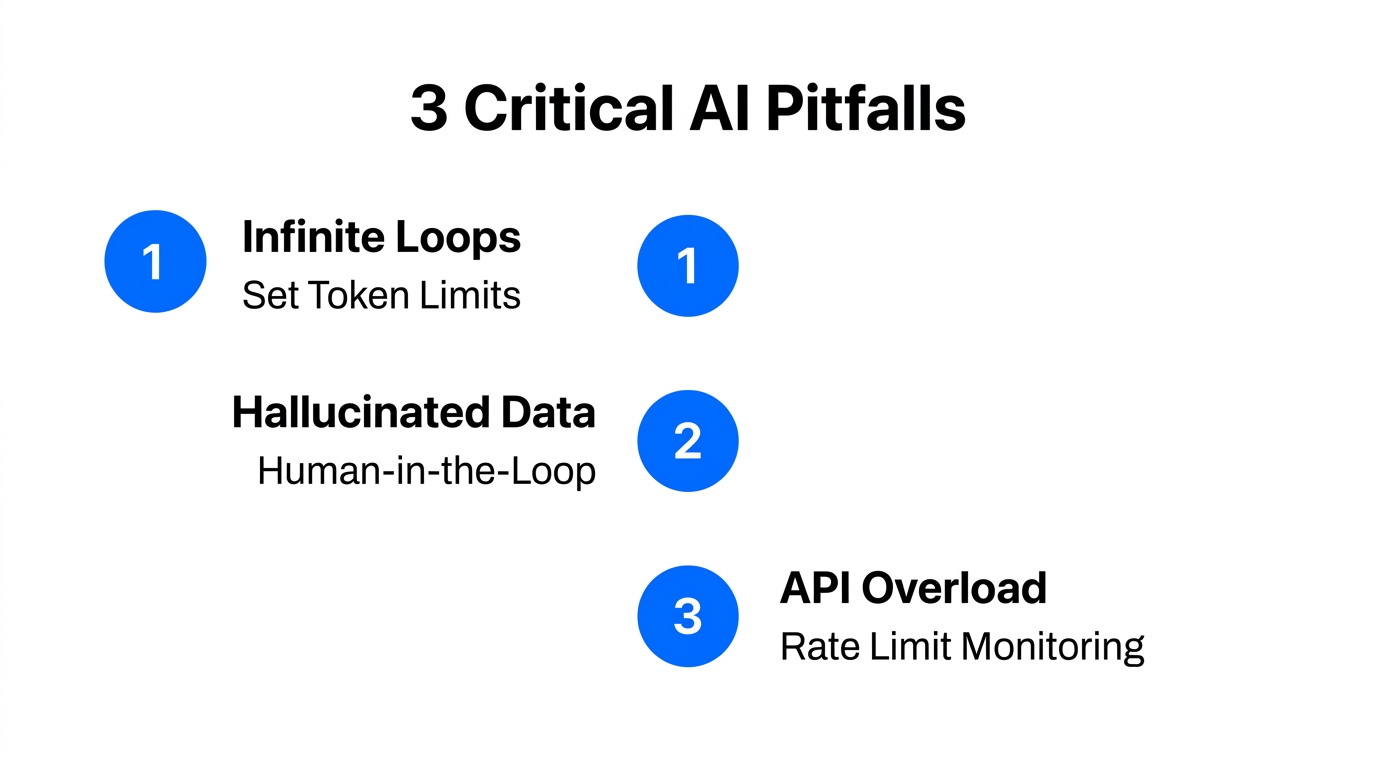
Despite the efficiency gains—with many organizations seeing a 30-50% faster time-to-market—there are significant risks when deploying a multi-agent marketing AI tech stack.
- Data Creep: This occurs when agents optimize for the wrong metrics. If an agent is told to maximize clicks, it might find "cheap" traffic that never converts. Always anchor agent goals to down-funnel revenue metrics.
- Budget Spikes: Autonomous bidding can lead to rapid spending if not capped. Always implement "fail-safes" or daily spend limits within platforms like Adzooma to prevent an agent from over-investing in a temporary trend.
- The "Set and Forget" Mentality: Agents are dynamic, but they aren't sentient. Treating them as 100% autonomous without a monitoring framework can lead to brand voice dilution. Tools like GPTZero can sometimes help in auditing AI-generated copy to ensure it still resonates with human-like quality.
Conclusion: The Future of Agentic Growth
Building a multi-agent marketing AI tech stack is no longer a luxury for enterprise brands; it is a necessity for any growth marketer looking to compete in a world where "The End of the Keyword" is a looming reality. By integrating research agents with creative agents and grounding the entire system in high-quality CRM data, you can achieve a level of cross-channel ad optimization that was physically impossible just a few years ago.
Remember that while the automated marketing workflows handle the execution, your value as a marketer lies in strategy elevation. Use these agents to handle the grunt work of bidding and variant testing, and spend your time where it matters: defining the brand's soul and finding the right human creators to tell your story. As you scale, platforms like Stormy AI will remain your secret weapon for maintaining that human touch in a world of machine-driven precision.